Order Quality Trees Online – Delivered Straight to Your Door
Welcome to Our Online Plant Store
From our nursery to your backyard — it’s never been easier to create the garden you’ve been dreaming of. Whether you’re after statement trees, hedging, or lush planting to fill your outdoor spaces, you can now browse and order directly online.
We provide an extensive range of high-quality plants and trees that are perfect for residential landscapes — all backed by the same expert care and service we’re known for. No trade account needed, no back-and-forth calls. Just beautiful plants, delivered to your door.
Shop by category
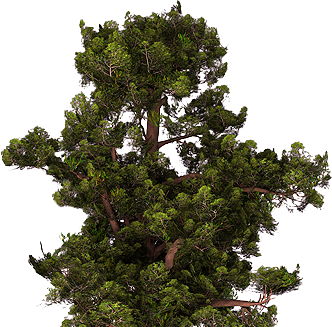
New Zealand Native Trees
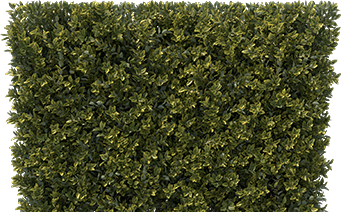
Hedging Plants
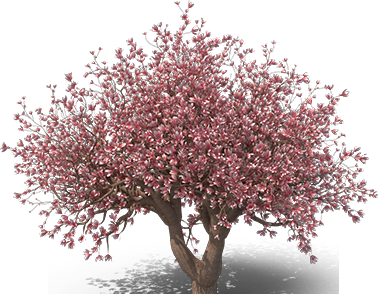
Flowering Trees

Evergreen Exotic Trees
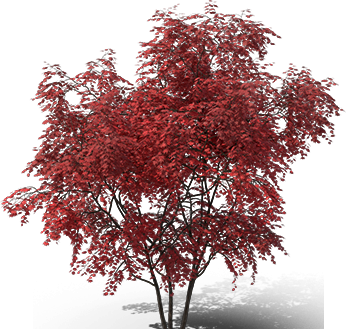
Deciduous trees
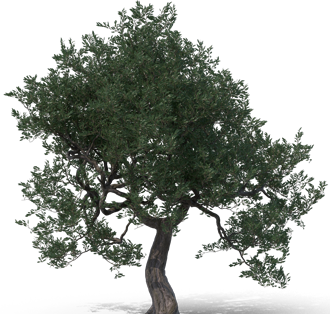
Character Olive Trees
Browse all Trees
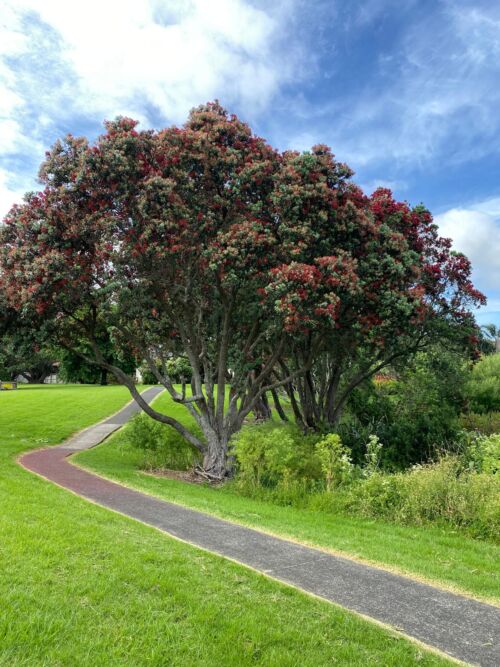
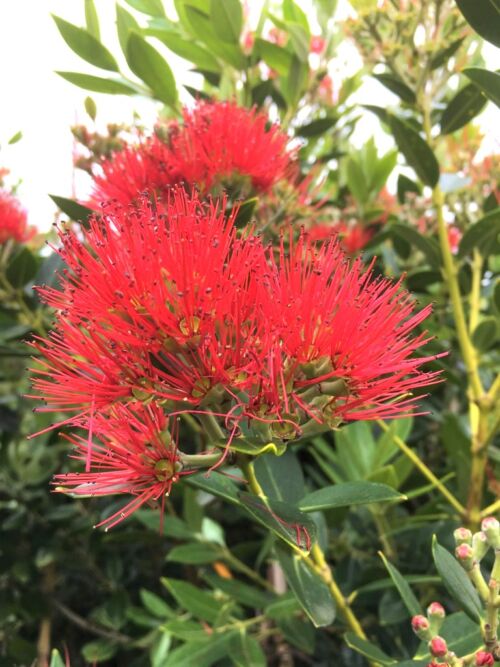
- Metrosideros excelsa, commonly known as Pohutukawa, is one of New Zealand’s most iconic native trees. Excelsa stands out as the giant of the species, with a wide-spreading canopy and olive-green foliage. From December, it bursts into bright crimson, fluffy flowers. For this reason it’s often called the New Zealand Christmas tree. Flowers also attract bees, birds, and beneficial insects. Thriving in coastal environments, Pohutukawa trees are incredibly resilient. They endure poor soil, excess moisture, and even drought. Moreover, they withstand salt-laden winds and dry, exposed landscapes. Their thick roots often anchor into cliff faces, showcasing their strength and adaptability. Pohutukawa prefers moist, well-drained earth, but will grow in a wide range of soils. With proper space, this majestic tree can grow up to 15 metres tall and 10 metres wide, making it a stunning feature in larger gardens or coastal settings.
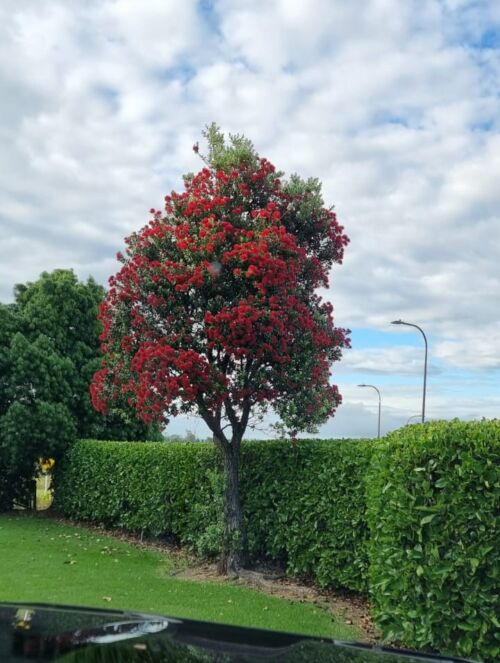
- Metrosideros excelsa 'Scarlet Pimpernel', commonly known as Pohutukawa, is a striking member of New Zealand’s iconic native tree family. This compact evergreen variety features a bushy growth habit and smaller leaves than traditional Pohutukawa, making it ideal for smaller gardens or urban landscapes. Also known as the New Zealand Christmas tree due to its prolific flowering in December when vibrant orange-red flowers bloom which attract bees, birds, and beneficial insects. Renowned for its resilience, 'Scarlet Pimpernel' thrives in coastal environments and tolerates poor soils, excess moisture, drought, and salt-laden winds. It also adapts well to clay and wet conditions, though it prefers moist, well-drained soil for optimal growth. Perfect as a shade tree or trimmed into a screen, this hardy native grows to approximately 4 metres tall and 2 metres wide. A beautiful, low-maintenance choice for coastal and urban planting.
- Metrosideros excelsa x umbellata ‘Maungapiko’ – Pohutukawa is an evergreen tree native to New Zealand. As a cross between Southern Rata and Pohutukawa, it develops a narrow, upright form with an open habit. Its slender, glossy dark‑green leaves create a striking contrast in any landscape. Bright crimson flowers appear in December and January, slightly later than most Pohutukawa varieties. This cultivar also tolerates frost better than others. Additionally, Maungapiko thrives in coastal conditions and withstand poor soils, drought, and salt‑laden winds. Although they cope with clay soils, these trees perform best in moist, well‑drained ground and full sun. Growing up to 8 metres tall and 3 metres wide, ‘Maungapiko’ makes a stunning feature for urban gardens, coastal settings, or cooler regions. Can also be used as a shelter belt.
- Metrosideros excelsa x robusta 'Mistral', commonly known as Pohutukawa, is a stunning native tree discovered on the Coromandel Peninsula, located on the north-western coast of New Zealand’s North Island. As a natural hybrid of Metrosideros excelsa and robusta, Mistral offers a more compact and upright form. Its fresh green foliage matures into a darker shade, creating year-round interest. Moreover, its tidy growth habit makes it ideal for smaller spaces. In late spring, Mistral bursts into deep scarlet red flowers that blanket the entire tree, creating a breathtaking display. Not only are these blooms visually striking, but they also attract native birds, adding ecological value to your garden. Growing to approximately 5 x 3 metres, this tree is easily clipped into shape. Therefore, it works beautifully as a screen, hedge, or standout specimen in compact landscapes. Metrosideros varieties thrive in coastal environments and are impressively resilient. They tolerate poor soils, excess moisture, and even drought conditions. Furthermore, they withstand salt-laden winds and arid climates, making them perfect for exposed sites. While they can grow in clay and wet soils, they perform best in moist, well-drained earth. As a result, Mistral is not only hardy but also an excellent shade tree for smaller gardens.
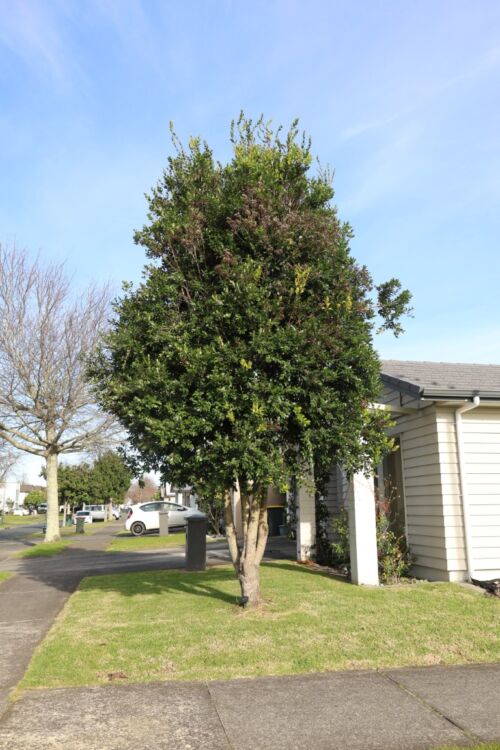
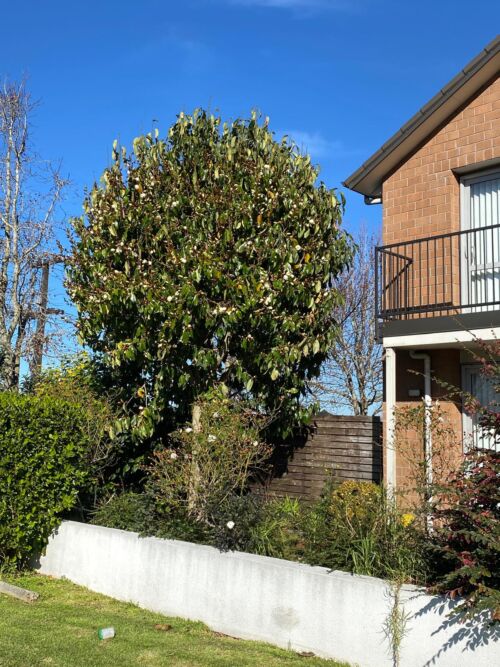
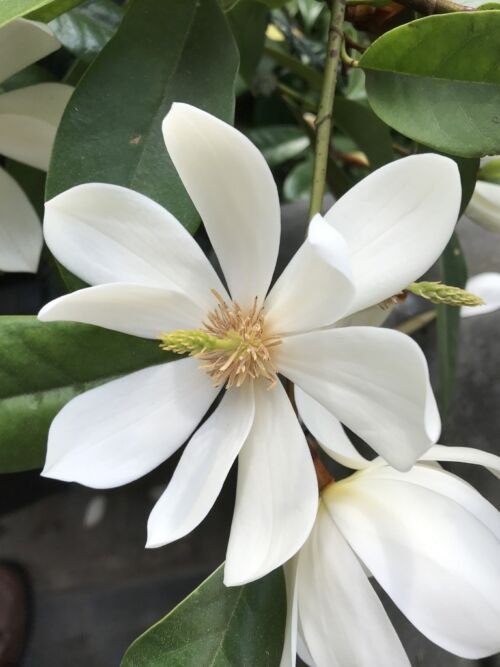
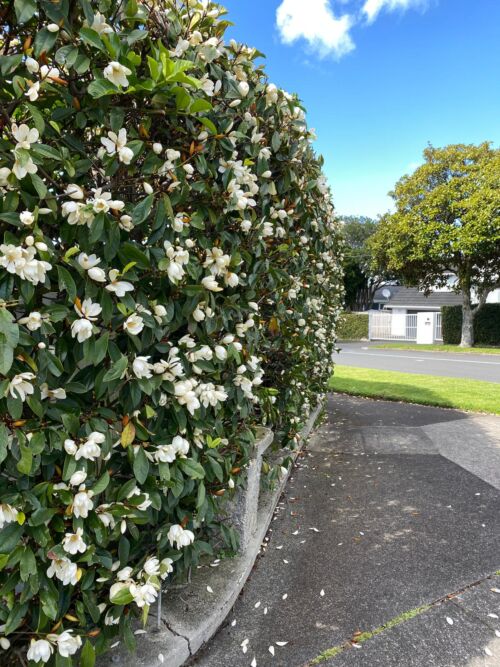
- Michelia ‘Bubbles’ is an evergreen, compact tree that grows to a small or medium size. Its bushy form is enhanced by large, leathery leaves that begin fresh green and mature to a deep, glossy shade. In spring and summer, strongly scented creamy white flowers appear in abundance. They bloom over a long succession, creating a striking display that adds fragrance and beauty to the garden. This cultivar was developed in Whangarei, New Zealand. It is a hybrid of Michelia figo and Michelia doltsopa, both native to Asia, combining their best qualities into one resilient tree. Michelia ‘Bubbles’ thrives in full sun or partial shade. It prefers rich, moisture-retentive yet free-draining soil, making it versatile for different garden conditions. Growing to approximately 4 x 2 metres, it is an excellent choice as a specimen tree. Moreover, it works well as a trimmed shelter screen, offering structure and year-round greenery.
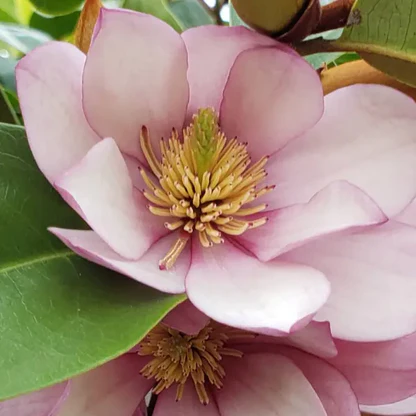
- Michelia ‘Fairy Blush’ is an evergreen, dense, and bushy shrub with soft pale‑green leaves. From late winter to spring, it produces fragrant lilac‑pink flowers that add colour and scent to the garden. Bred by renowned New Zealand nurseryman Mark Jury in Tikorangi, Taranaki, this variety is admired for its reliability and charm. As the plant does not tolerate heavy, waterlogged, or clay soils, excellent drainage is essential. It grows best in slightly acidic, free‑draining ground that keeps the roots healthy. The shrub responds well to pruning, which makes it ideal for hedging or screening. Alternatively, when left to grow as a small specimen tree, it reaches around 3.5 × 2.5 metres. Because of its compact size, it suits smaller gardens, courtyards, or even large containers as a potted feature.
- Michelia ‘Fairy White’ is an evergreen large shrub or small tree with dark green foliage and a naturally bushy habit. From early spring, it forms long brown buds that open into star‑shaped, pure‑white, fragrant flowers from approximately September to November. Bred in 2013 by renowned New Zealand nurseryman Mark Jury in Tikorangi, Taranaki, this variety is valued for its beauty and reliability. Excellent drainage is essential, as the plant cannot tolerate heavy, waterlogged, or clay soils. It performs best in slightly acidic, free‑draining soil that keeps the root zone healthy. The plant responds well to pruning, making it ideal for hedging or screening. Alternatively, if allowed to grow into a small specimen tree, it reaches around 3.5 × 2.5 metres. Its compact form makes it perfect for smaller gardens, courtyards, or use as an attractive potted tree.
- Port Wine Magnolia - Michelia figo is a slow-growing, compact shrub that features a rounded shape and vibrant lime-green foliage. In early spring, it bursts into bloom with masses of small, cream-colored flowers streaked with purple, which release a rich fragrance. As a result, it becomes a standout feature in any garden. Depending on light conditions, the shrub’s form can vary. When grown in shade, it tends to develop a looser, more open structure. Conversely, plants grown in full sun are typically more compact and display denser foliage. Moreover, it thrives in humus-rich, well-drained, slightly acidic soil, making it adaptable to a range of garden environments. Whether planted in sun or shade, Port Wine Magnolia performs beautifully. It can be trimmed into a neat, low hedge, allowed to grow as a striking standalone specimen, or placed in a large decorative pot for added versatility. Originating from Western China, this elegant shrub typically reaches up to 3 metres tall and 2.5 metres wide.
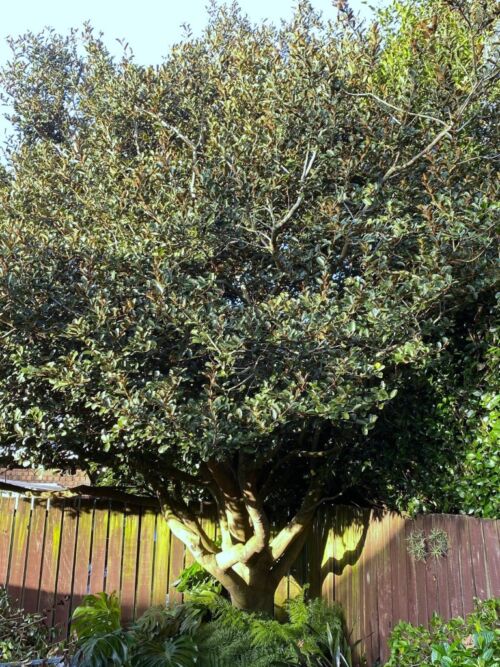
- Michelia ‘Gracipes’ is a compact, evergreen tree with a rounded form, making it ideal for smaller gardens. Its dark, olive-green leaves feature a distinctive brown felt underside, adding subtle texture and year-round interest. From late winter into early spring, this wonderful tree produces small, round, perfumed cream flowers with prominent stamens. These blooms emerge from furry brown buds, creating a charming and fragrant display. For best results, plant in moist, well-drained soil in a sheltered, sunny position. While it is slow-growing, it responds well to trimming and can be shaped into a hedge or left to grow on showcased as a specimen tree. Interestingly, Michelia ‘Gracipes’ was bred and developed in New Zealand. Although its lineage may include Chinese species such as Michelia yunnanensis, this particular cultivar is proudly of New Zealand origin. It prefers protection from strong winds so it’s well-suited to sheltered urban gardens. Reaching approximately 4 x 3 metres at maturity, it offers compact beauty and refined structure.
- Michelia ‘Inspiration’ is a smaller evergreen tree with an pyramidal growth habit. Its shiny, long dark-green leaves form a lush backdrop, while velvet-brown buds open to porcelain-white, star-shaped flowers. These blooms appear from early spring over many weeks, releasing a wonderful fragrance. Originating in Lyttelton, New Zealand, this cultivar thrives in moist, well-drained, slightly acidic soil. It prefers full sun to partial shade and adapts well to subtropical or temperate climates. Fast-growing and frost tolerant, Michelia ‘Inspiration’ trims easily to create larger screening. Reaching approximately 4 x 3 metres, Inspiration is easily trimmed to shape and height making it suitable for smaller gardens, offering both beauty and structure throughout the year
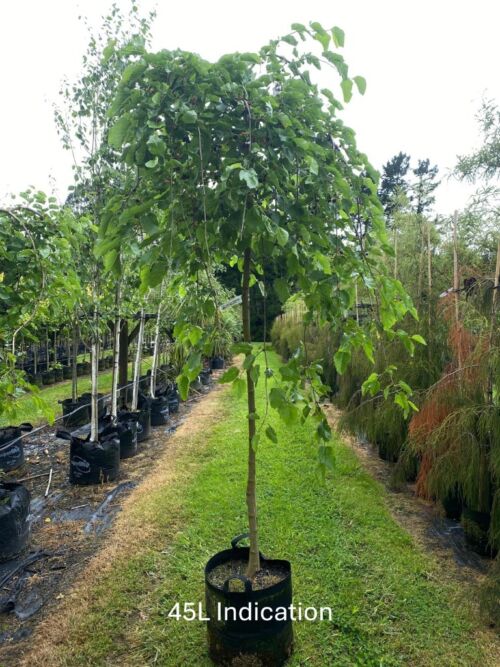
- Morus alba ‘Pendula’ - Weeping White Mulberry, is a deciduous ornamental tree with a cascading, weeping form. Typically grafted onto a standard stem, its arching branches create an elegant silhouette that makes it a standout feature in smaller garden spaces. Throughout the growing season, this tree has large, glossy-green, leaves that shift to golden yellow in autumn, adding seasonal interest. In late spring, very small pale green flowers appear, followed by sweet, edible fruits. These fruits transition from greenish-white to rich pink or deep purple as they ripen—though you’ll need to be quick to get them, as birds are fond of them too. Moreover, this tree is self-fertile and easy to maintain. Height can vary depending on grafting, with our 2025 stock grafted on a clear stem at approximately 1.8 metres. Native to China, Pendula takes its name from the Latin word pendulus, meaning “hanging” or “weeping,” which perfectly describes its graceful form. Whether used as a focal point or tucked into a courtyard, Morus alba ‘Pendula’ brings charm, fruit, and structure to any garden.
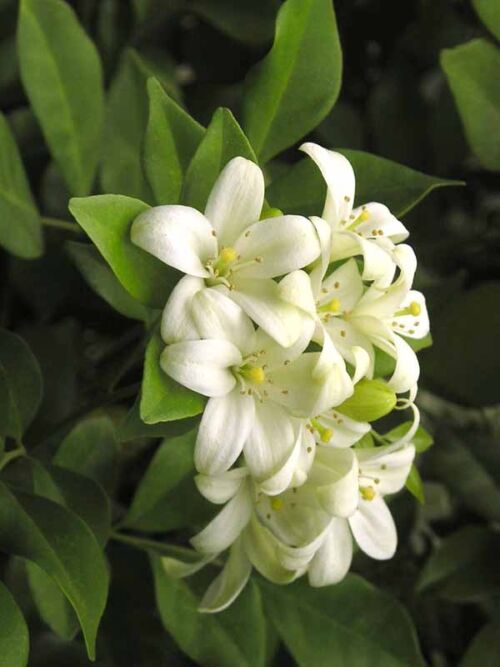
- Murraya paniculata, commonly known as Orange Jessamine, is a small tropical evergreen tree or shrub with glossy, dark green pinnate leaves. It grows densely and compactly, while also maintaining a moderate growth rate. In spring, it produces masses of highly fragrant white flowers with a citrus-like scent. These blooms smell similar to orange blossoms and become most fragrant at night. Orange Jessamine is native to a wide region across tropical and subtropical Asia and Australia and grows best in rich, moist, well-drained soil and thrives in full sun to part shade. Moreover, it performs well in sheltered locations protected from strong winds. This popular shrub is ideal for creating small hedges or borders and is well suited to compact gardens and containers. The common hedging height is 1.0–3.0 m, although it can reach 4 × 3 m when left untrimmed.

Why buy online?
Buying plants and trees online doesn’t have to feel risky or impersonal. At Black Bridge Nurseries, we’ve made it simple, safe, and satisfying — so you can shop with confidence, from the comfort of home.