Order Quality Trees Online – Delivered Straight to Your Door
Welcome to Our Online Plant Store
From our nursery to your backyard — it’s never been easier to create the garden you’ve been dreaming of. Whether you’re after statement trees, hedging, or lush planting to fill your outdoor spaces, you can now browse and order directly online.
We provide an extensive range of high-quality plants and trees that are perfect for residential landscapes — all backed by the same expert care and service we’re known for. No trade account needed, no back-and-forth calls. Just beautiful plants, delivered to your door.
Shop by category
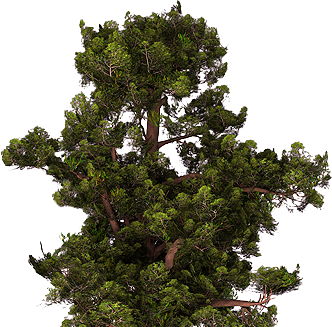
New Zealand Native Trees
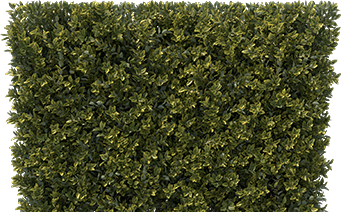
Hedging Plants
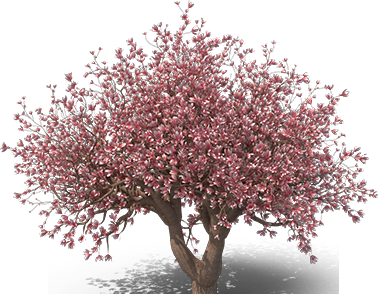
Flowering Trees

Evergreen Exotic Trees
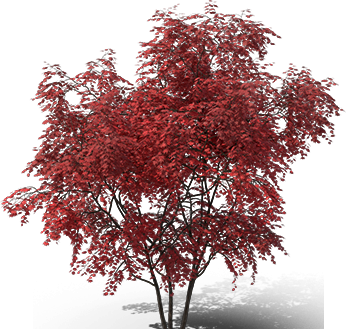
Deciduous trees
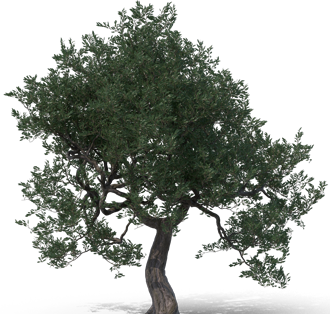
Character Olive Trees
Browse all Trees
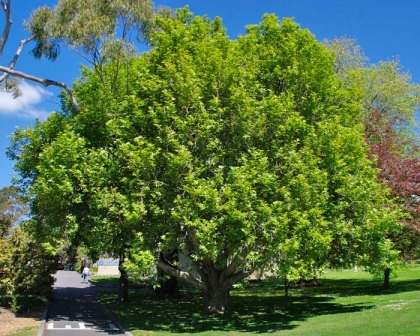
- Platanus orientalis ‘Autumn Glory’ is a selected form of the Oriental Plane, known for its fast growth and impressive structure. This deciduous tree quickly develops a large, rounded crown of branches, making it a standout in spacious landscapes. Its large, palmate green leaves resemble maple foliage and are deeply lobed into three or more sections. In autumn, they add seasonal interest with golden tones. The bark flakes in patches on older branches, revealing a dappled surface that adds year-round texture. While it tolerates most soils, it prefers moist, well-drained conditions for optimal growth. Ideal for parks, farms, avenues, and large properties, it provides excellent shade and visual appeal. Originating from Duncan and Davies in New Zealand, it typically grows to around 9 metres tall and 5 metres wide.
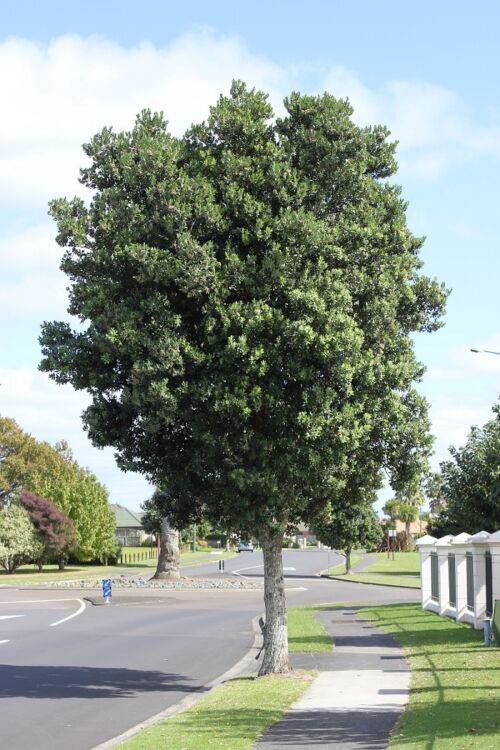
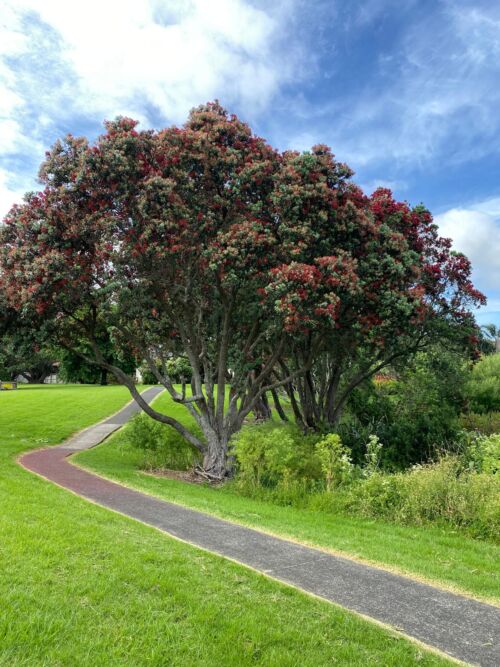
- Metrosideros excelsa 'Maori Princess' is a refined cultivar of the iconic Pohutukawa, selected for its upright, pyramidal growth habit. Its foliage is a distinctive deep green, offering a lush contrast to its vivid red flowers. Because of its compact form and neat structure, this tree is ideal for smaller gardens or urban landscapes. In addition, its tidy shape makes it easy to maintain and visually appealing year-round. In late spring, 'Maori Princess' produces brilliant red flowers that cover the tree in a spectacular display. These blooms are not only eye-catching but also serve as a valuable food source for native birds. Consequently, this tree adds both beauty and biodiversity to your garden. Growing to around 7 x 5 metres, it can be clipped to shape, making it suitable as a screen, hedge, or standout specimen. Metrosideros varieties, including 'Maori Princess', thrive in coastal environments and are impressively resilient. They tolerate poor soil, excess moisture, and even drought. Moreover, they withstand salt-laden winds and arid conditions, making them perfect for exposed sites. While they can grow in clay and wet soils, they perform best in moist, well-drained earth. Therefore, this cultivar is not only tough but also an excellent shade tree for compact outdoor spaces.
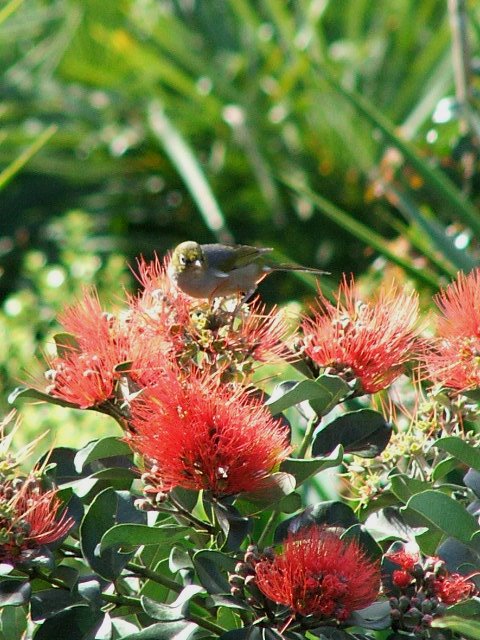
- Metrosideros excelsa, commonly known as Pohutukawa, is one of New Zealand’s most iconic native trees. Excelsa stands out as the giant of the species, with a wide-spreading canopy and olive-green foliage. From December, it bursts into bright crimson, fluffy flowers. For this reason it’s often called the New Zealand Christmas tree. Flowers also attract bees, birds, and beneficial insects. Thriving in coastal environments, Pohutukawa trees are incredibly resilient. They endure poor soil, excess moisture, and even drought. Moreover, they withstand salt-laden winds and dry, exposed landscapes. Their thick roots often anchor into cliff faces, showcasing their strength and adaptability. Pohutukawa prefers moist, well-drained earth, but will grow in a wide range of soils. With proper space, this majestic tree can grow up to 15 metres tall and 10 metres wide, making it a stunning feature in larger gardens or coastal settings.
- Metrosideros excelsa x robusta 'Mistral', commonly known as Pohutukawa, is a stunning native tree discovered on the Coromandel Peninsula, located on the north-western coast of New Zealand’s North Island. As a natural hybrid of Metrosideros excelsa and robusta, Mistral offers a more compact and upright form. Its fresh green foliage matures into a darker shade, creating year-round interest. Moreover, its tidy growth habit makes it ideal for smaller spaces. In late spring, Mistral bursts into deep scarlet red flowers that blanket the entire tree, creating a breathtaking display. Not only are these blooms visually striking, but they also attract native birds, adding ecological value to your garden. Growing to approximately 5 x 3 metres, this tree is easily clipped into shape. Therefore, it works beautifully as a screen, hedge, or standout specimen in compact landscapes. Metrosideros varieties thrive in coastal environments and are impressively resilient. They tolerate poor soils, excess moisture, and even drought conditions. Furthermore, they withstand salt-laden winds and arid climates, making them perfect for exposed sites. While they can grow in clay and wet soils, they perform best in moist, well-drained earth. As a result, Mistral is not only hardy but also an excellent shade tree for smaller gardens.
- Metrosideros excelsa 'Lighthouse' is a compact, upright evergreen tree discovered on Rangitoto Island in the Auckland region. Its green leaves feature striking silver-grey undersides, adding texture and contrast to the foliage. In December, vibrant red flowers burst into bloom, covering the entire tree. These blossoms not only dazzle but also produce seeds that attract and nourish small birds. Thriving in coastal environments, this Pohutukawa is impressively resilient. It tolerates poor soils, excess moisture, and even drought conditions with ease. Moreover, it withstands salt-laden winds and arid landscapes. While it adapts to clay and wet soils, it performs best in moist, well-drained earth. Ideal as an avenue or specimen tree, 'Lighthouse' grows to approximately 7 meters tall and 4 meters wide, making it a standout feature in any garden.
- Metrosideros collina ‘Springfire’ (Pacific Island Pohutukawa) is a vigorous fast growing tree from the Pacific Islands, admired for its striking grey‑green foliage. As one of the earliest Pohutukawa to bloom, it bursts into vibrant orange‑red flowers that signal the arrival of Spring. This hardy tree tolerates clay soils and, once established, withstands dry conditions. Furthermore, it thrives in coastal and windy sites, making it a versatile choice for challenging environments. Its compact size suits smaller gardens, while regular trimming allows easy shaping into a colourful hedge. However, protect young plants from frost to ensure healthy growth and long‑term success. Growing to approximately 4m tall by 3m wide, ‘Springfire’ offers manageable proportions and year‑round appeal, combining resilience with striking seasonal beauty.
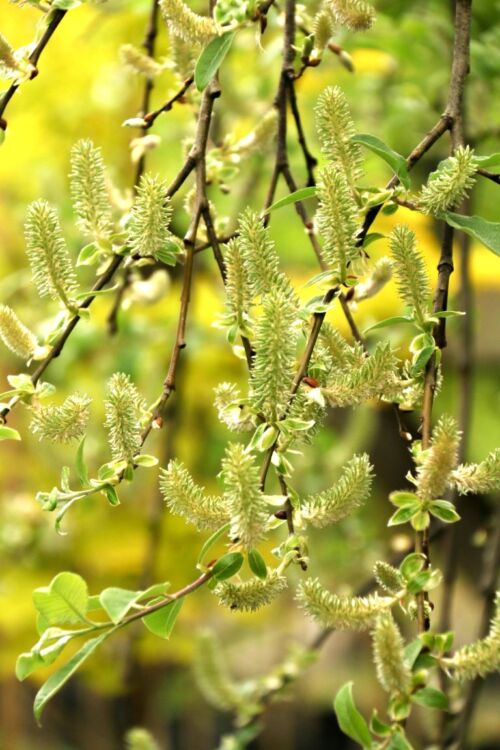
- Salix caprea ‘Kilmarnock’ is a small, deciduous, umbrella shaped weeping tree. Its stiff yellow brown branches hang gracefully and hold small, green serrated leaves that shift to yellow green in autumn. In early spring, large silver grey catkins with bright yellow anthers appear before the foliage. This charming cultivar entered commercial production in 1853, introduced by Thomas Lang of Kilmarnock, Ayrshire, Scotland. Since then, it has remained a popular choice for gardeners. Kilmarnock willow thrives in moist to wet, sunny locations. Because it is hardy and adaptable, it suits small gardens, containers, and areas with poor drainage. The final height depends entirely on the graft point, as all growth weeps downward from that position.
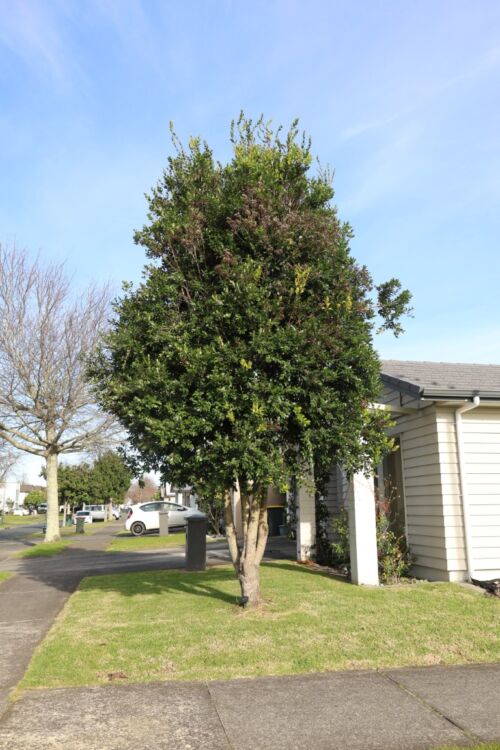
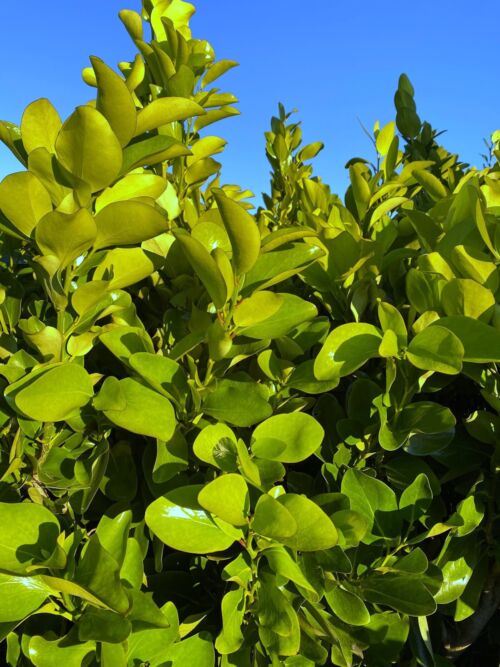
- Griselinia lucida, also known as Akapuka, is a robust New Zealand native. Whether grown as a shrub or shaped into a small, rounded tree, it features thick, glossy lime-green foliage with a bold, tropical feel. Thanks to its compact form, it’s easily trimmed into a neat hedge or left to fill out as a natural screen. Whether facing wind or salt spray, this plant stands strong. It thrives in both full sun and shaded areas, making it a reliable option for coastal gardens or sheltered urban spaces. However, for best results, ensure good drainage. Reaching around 3 metres tall by 2 metres wide, it’s perfect for compact areas needing bold structure and lush greenery.
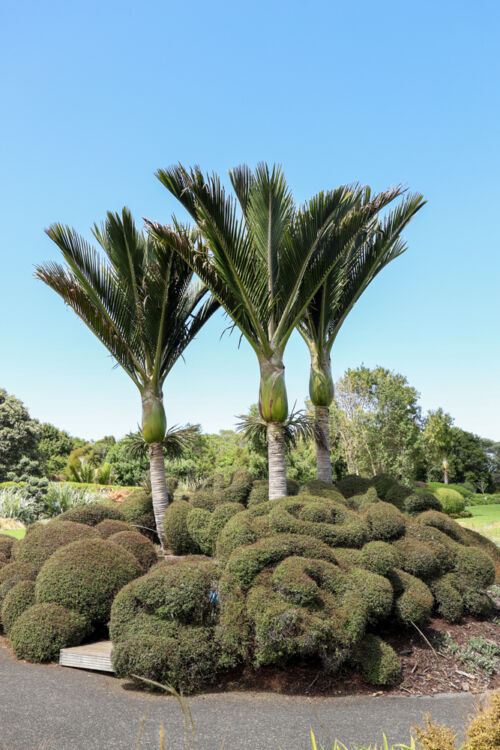
- Rhopalostylis sapida ‘Chathamica’ – Chatham or Pitt Island Nikau is a native New Zealand palm originating from the southern Chatham and Pitt Islands. It offers a unique twist on the mainland Nikau. This variety features longer fronds, wider leaflets, and a subtle silvery hue to its stems. Its red fruit are noticeably larger, adding seasonal interest and contrast. Adapted to cooler climates, it tolerates full sun, wind, cold, and coastal conditions better than other Nikau types. It’s also known for its tidier growth habit. Thriving in moist, well-drained soils, this palm is ideal for sheltered gardens or coastal landscapes. Its slow growth makes it easy to manage over time. Although very slow-growing, it can eventually form a trunk and reach up to 10 metres over many years, making it a long-term feature in any garden.
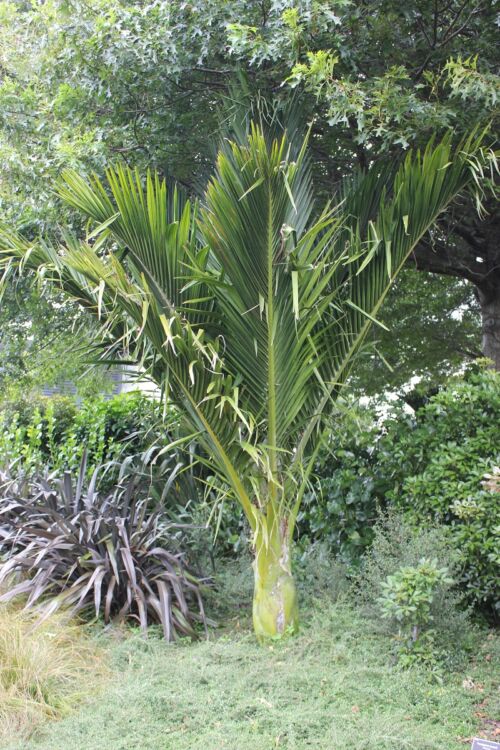
- Rhopalostylis sapida, commonly known as NZ Nikau, is a native New Zealand palm with elegant tropical appeal. In its juvenile stage, it produces long, graceful fronds reaching up to 3 metres. Over time, a slender trunk develops, marked with rings from fallen leaves. This trunk is crowned with rich green, fan-like fronds that add lush texture to shaded garden spaces. Nikau palms thrive in partial to full shade and prefer moist, well-drained soil rich in organic matter. They flourish in warm, sheltered environments with protection from strong winds and heavy frosts. For best results, plant in a shady spot with sunlight on the crown and cool, shaded roots. This mimics their natural forest habitat and enhances their appearance. Nikau is an excellent choice for garden specimens or large pots. Though very slow-growing, it can reach 10 metres and more over many years.
- Pittosporum pimeleoides is a rare, native evergreen shrub of New Zealand and is considered nationally endangered. With its much-branched, low-growing form, it features very tiny, narrow, often whorled leaves. This distinctive shrub produces fragrant, red-striped yellow flowers, followed by capsules containing black, sticky seeds in bright orange pith. Endemic to the northern North Island, it naturally thrives in coastal shrubland and is often associated with kauri forest habitats. Growing to around 80-1.0m metres tall, Pittosporum pimeleoides prefers well-drained soil as it struggles in heavy, wet clay. However, it adapts well to both high-light and shaded conditions. Its rarity and winter fragrance makes it a perfect talking point in any garden but is well suited for smaller gardens or pots.
- Persimmon ‘Fuyu’ is a deciduous, small, round, spreading tree with large glossy green leaves. In autumn, the foliage transforms into vibrant shades of red, orange, and yellow, creating a striking seasonal display. ‘Fuyu’ is the most popular commercial variety grown. Its medium to large, deep orange fruit is non-astringent, sweet, and of excellent quality. Harvest typically occurs from May to July. The fruit can be eaten fresh like an apple, sliced, dried, or made into jam and chutney. Persimmons prefer moist yet well-drained soil and perform best in full sun. Furthermore, ‘Fuyu’ is self-fertile, making it easy to grow. This variety reaches approximately 5m tall by 4m wide, forming a compact and productive tree. The ‘Fuyu’ persimmon is a Japanese cultivar that originated in China before being introduced to Japan, where it was widely cultivated and admired.



Why buy online?
Buying plants and trees online doesn’t have to feel risky or impersonal. At Black Bridge Nurseries, we’ve made it simple, safe, and satisfying — so you can shop with confidence, from the comfort of home.