Order Quality Trees Online – Delivered Straight to Your Door
Welcome to Our Online Plant Store
From our nursery to your backyard — it’s never been easier to create the garden you’ve been dreaming of. Whether you’re after statement trees, hedging, or lush planting to fill your outdoor spaces, you can now browse and order directly online.
We provide an extensive range of high-quality plants and trees that are perfect for residential landscapes — all backed by the same expert care and service we’re known for. No trade account needed, no back-and-forth calls. Just beautiful plants, delivered to your door.
Shop by category
New Zealand Native Trees

Hedging Plants
Flowering Trees

Evergreen Exotic Trees
Deciduous trees
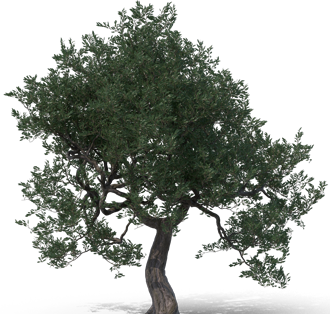
Character Olive Trees
Browse all Trees
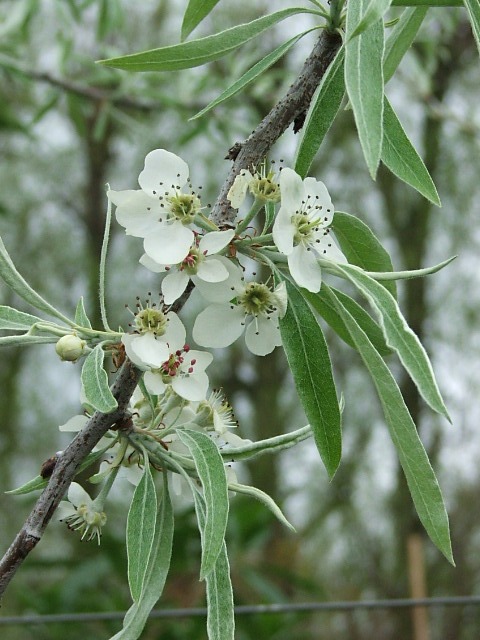
- Pyrus salicifolia ‘Pendula’ – Weeping Silver Pear is a compact, oval-rounded ornamental tree. Its graceful, weeping branches are adorned with willow-like, narrow, silver-gray leaves, creating a striking display in any garden. In spring, the Weeping Silver Paer bursts into life with small, white blossoms that cover the tree. Although part of the pear family, its fruit is tiny, sparsely produced, and inedible. This elegant tree traces its origins back to Germany in the 1850s. Over time, it has become a popular choice for gardeners seeking beauty and adaptability. Silver pears thrive in a wide range of soils, including clay. However, they prefer moderately fertile, moist, well-drained soil in full sun. Additionally, they tolerate light shade, making them versatile for different garden conditions. Interestingly, salicifolia translates to “leaves like a willow,” inspiring its other common name, the Willow-Leaf Pear. Growing to approximately 2 x 2 meters above the graft point, it is perfect for smaller gardens, as a standout specimen tree, planted into your favourite large pot or trimmed into a standard topiary.
- Acer palmatum dissectum ‘Orangeola’ is a graceful Japanese maple admired for its elegant, weeping branches that cascade to the ground, forming a soft, rounded mound. The name dissectum highlights the finely cut, feathery foliage, which brings a delicate texture to any garden. As seasons change, so does its colour palette. In spring, vibrant green-red leaves create a fiery display. By summer, the foliage shifts to a rich green, offering a refreshing contrast. With autumn’s arrival, ‘Orangeola’ returns to its brilliance, once again glowing with warm orange-red tones. This seasonal transformation ensures year-round interest and beauty in smaller landscapes. Compact in size, reaching about 2.5m high by 2.0m wide, it is ideal for courtyards, container planting, or intimate garden spaces. Moreover, it thrives in moist, well-drained soils and prefers a sheltered position away from harsh sun, strong winds, or prolonged drought.
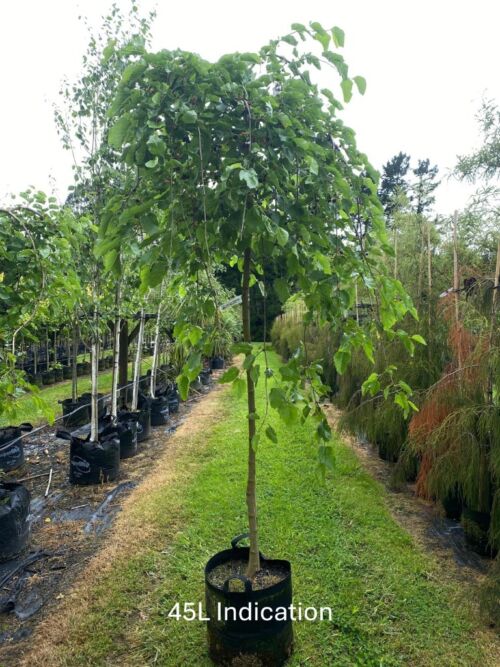
- Morus alba ‘Pendula’ - Weeping White Mulberry, is a deciduous ornamental tree with a cascading, weeping form. Typically grafted onto a standard stem, its arching branches create an elegant silhouette that makes it a standout feature in smaller garden spaces. Throughout the growing season, this tree has large, glossy-green, leaves that shift to golden yellow in autumn, adding seasonal interest. In late spring, very small pale green flowers appear, followed by sweet, edible fruits. These fruits transition from greenish-white to rich pink or deep purple as they ripen—though you’ll need to be quick to get them, as birds are fond of them too. Moreover, this tree is self-fertile and easy to maintain. Height can vary depending on grafting, with our 2025 stock grafted on a clear stem at approximately 1.8 metres. Native to China, Pendula takes its name from the Latin word pendulus, meaning “hanging” or “weeping,” which perfectly describes its graceful form. Whether used as a focal point or tucked into a courtyard, Morus alba ‘Pendula’ brings charm, fruit, and structure to any garden.
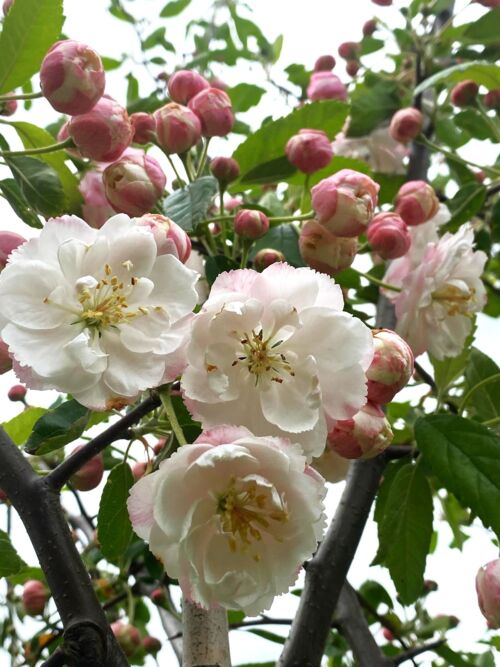
- Malus ioensis 'Plena', also known as Bechtel’s Crabapple, is a compact, deciduous tree with a rounded, spreading form. Its bright green foliage creates a lush summer canopy. As the seasons shift, the leaves transform into a vibrant orange-red, adding a splash of autumn colour to your garden. In spring, this tree truly shines. It bursts into bloom with large, soft pink double flowers that are both fragrant and eye-catching. Although it produces a few yellow-green fruits, they are not edible. However, the real showstopper is undoubtedly the floral display. For best results, plant in a sunny, sheltered spot with moist, well-drained soil. Thanks to its modest size—reaching approximately 4 x 3 metres—it’s ideal for smaller gardens or limited spaces. Interestingly, Malus ioensis 'Plena' was discovered in the mid-1800s by E.A. Bechtel in the Illinois Prairies of the American Midwest. This origin also gives rise to its other common name: Prairie Crabapple.
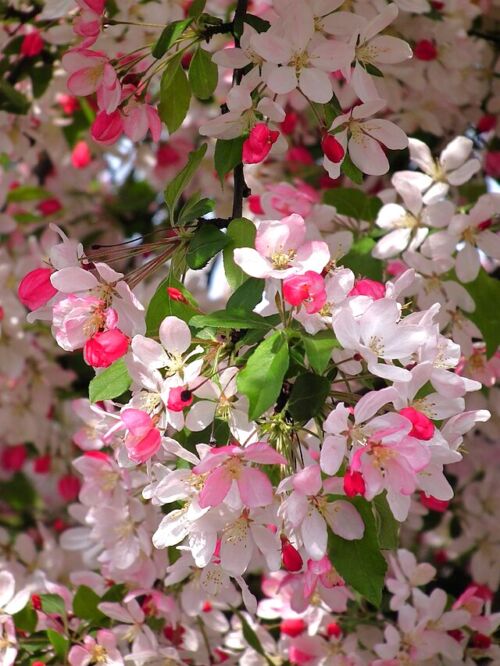
- Malus floribunda, commonly known as the Japanese Crabapple, is a moderately fast-growing ornamental tree with its origins in Japan. With long, gracefully arching branches and small, dark green leaves, it brings elegance and seasonal interest to any garden. As spring arrives, the entire tree bursts into colour with bright pink buds that open into a profusion of small white to pale pink flowers. Shortly after flowering, yellow fruits flushed with red begin to appear. These fruits are not only edible but also attract birds, adding life and movement to the garden. Interestingly, the Latin name floribunda means “flowering freely” or “many-flowering,” perfectly describing this tree’s abundant spring display. Because of its compact size, reaching approximately 3 x 2.5 metres, it’s an excellent choice for smaller gardens, courtyards, or decorative planting schemes. Furthermore, it responds well to pruning, making it easy to maintain a neat and tidy shape.
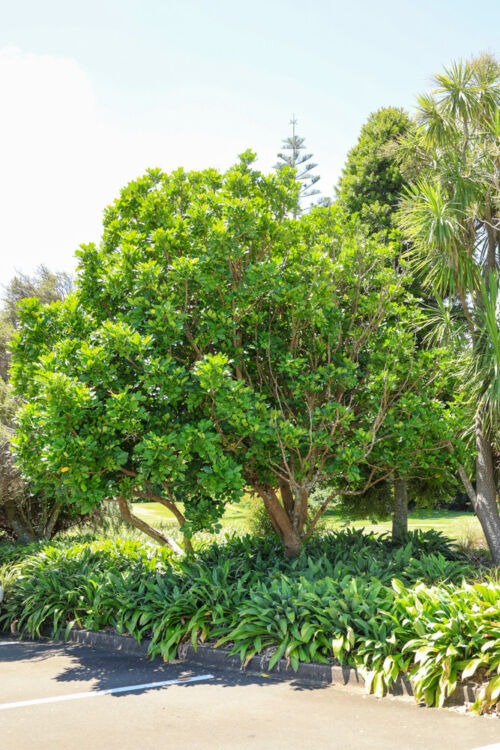
- Ficus hillii – Hills Weeping Fig is a medium-sized evergreen tree native to Australia. Its lush lime green leaves and drooping branches create a soft, tropical feel, perfect for adding greenery to compact garden spaces. Thriving in full sun, it prefers moist, well-drained soil and adapts well to a variety of planting styles. It’s ideal for small gardens, either as a hedge or trimmed into a larger screen. This versatile fig is also suitable for pleached hedges and can be trained as a standard in your favourite pot for a formal look. Typically, it grows to around 6 metres tall and 3 metres wide, making it a practical and attractive choice for structured planting.
- Didymocheton spectabilis – Kohekohe is a striking evergreen tree native to New Zealand. Found naturally in coastal forests across the North Island, it grows quickly and forms a handsome canopy, ideal for coastal gardens. Its large, tropical-looking leaves can reach up to 40cm long. From March to June, elegant, small waxy white flowers bloom directly from the trunk and branches, followed by fruit that enhances its exotic appeal. Kohekohe prefers moist, well-drained soil and full sun. It tolerates coastal conditions but dislikes waterlogged areas. In ten years, it typically reaches around 10 x 4 metres. At full maturity, it can grow up to 15 metres tall. Formerly known as Dysoxylum spectabilis, it remains a standout choice for native planting schemes.
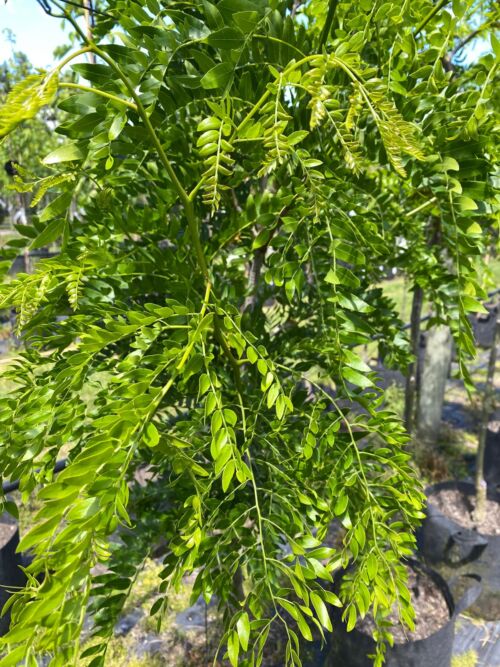
- Gleditsia tricanthos ‘Inermis’, commonly known as Thornless Honey Locust, is a smart, spreading deciduous tree that makes an excellent shade choice. Its graceful form adds structure and beauty to any landscape. During summer, the tree is adorned with bright-green, fine-textured leaves. As autumn arrives, these leaves transition to a warm yellow, creating seasonal interest and vibrant contrast. Originating from the United States, ‘Inermis’ thrives in diverse soil conditions. It tolerates compacted, clay, poor-quality, and even drought-prone soils, making it highly adaptable. Furthermore, this tree withstands heat, salt, and harsh urban environments. As an added benefit, it also fixes nitrogen, improving soil health and resilience. Use Thornless Honey Locust as a specimen in a lawn, a recreational shade tree, or a reliable street tree. It grows to approximately 10m tall and 8m wide, yet it can be pruned to suit shape and height. Closely resembling Gleditsia ‘Shademaster’, this thornless variety offers versatility, durability, and elegance for modern landscapes.
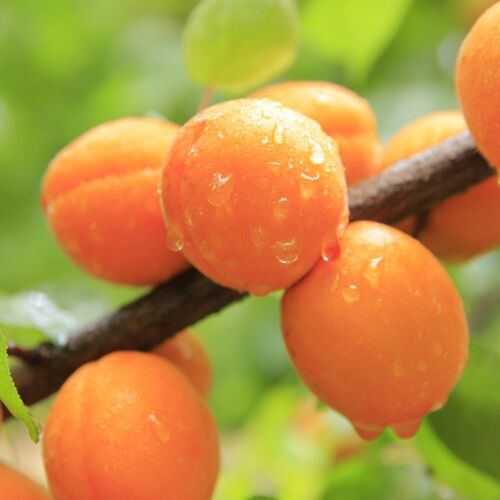
- Apricot ‘Katy Cot’ (Latin Name Prunus armeniaca) is a small deciduous tree with an upright habit and rounded green leaves. From December to January, it produces large, orange freestone fruit with full flavour, making it a rewarding choice for home gardeners. This variety is self‑fertile and performs better in warmer areas. Moreover, it thrives in well‑drained, fertile soil and prefers full sun in a sheltered position, ensuring healthy growth. Because of its compact size, ‘Katy Cot’ is also an ideal as a shade tree in smaller gardens. In addition, it can be pruned easily to maintain shape and height, growing to approximately 5m tall by 3m wide.
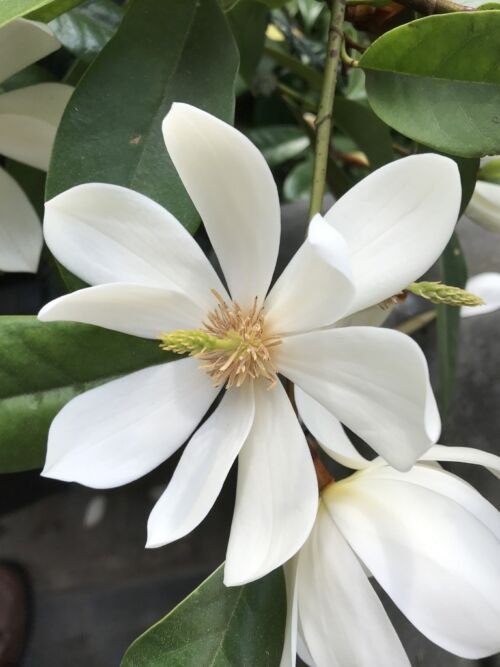
- Michelia ‘Fairy White’ is an evergreen large shrub or small tree with dark green foliage and a naturally bushy habit. From early spring, it forms long brown buds that open into star‑shaped, pure‑white, fragrant flowers from approximately September to November. Bred in 2013 by renowned New Zealand nurseryman Mark Jury in Tikorangi, Taranaki, this variety is valued for its beauty and reliability. Excellent drainage is essential, as the plant cannot tolerate heavy, waterlogged, or clay soils. It performs best in slightly acidic, free‑draining soil that keeps the root zone healthy. The plant responds well to pruning, making it ideal for hedging or screening. Alternatively, if allowed to grow into a small specimen tree, it reaches around 3.5 × 2.5 metres. Its compact form makes it perfect for smaller gardens, courtyards, or use as an attractive potted tree.
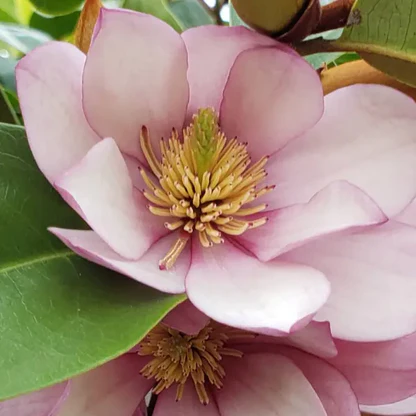
- Michelia ‘Fairy Blush’ is an evergreen, dense, and bushy shrub with soft pale‑green leaves. From late winter to spring, it produces fragrant lilac‑pink flowers that add colour and scent to the garden. Bred by renowned New Zealand nurseryman Mark Jury in Tikorangi, Taranaki, this variety is admired for its reliability and charm. As the plant does not tolerate heavy, waterlogged, or clay soils, excellent drainage is essential. It grows best in slightly acidic, free‑draining ground that keeps the roots healthy. The shrub responds well to pruning, which makes it ideal for hedging or screening. Alternatively, when left to grow as a small specimen tree, it reaches around 3.5 × 2.5 metres. Because of its compact size, it suits smaller gardens, courtyards, or even large containers as a potted feature.
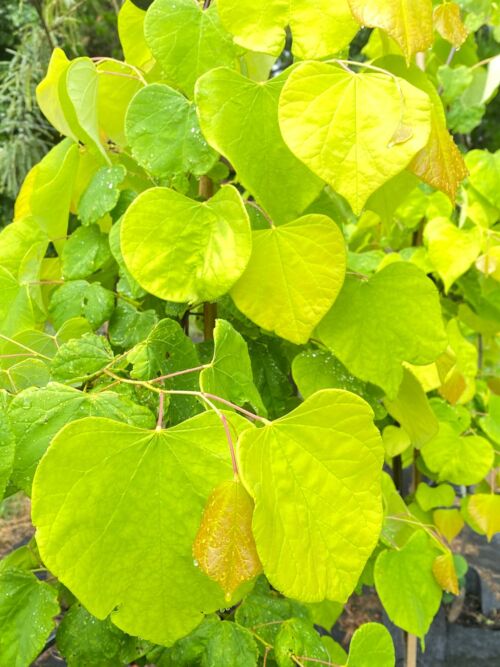
- Cercis canadensis 'Hearts of Gold' is a small, deciduous tree with an open, spreading habit that gradually matures into a broad, rounded crown. In early spring, masses of small magenta, pea-like flowers burst into bloom on bare branches, creating a striking display before the foliage emerges. Soon after flowering, golden yellow, heart-shaped leaves appear, adding light and colour to the garden. As autumn approaches, these leaves transition into warm tones of orange and bronze, offering a final flourish before winter. Because of its compact size reaching approximately 3.5 x 3.0 metres, ‘Hearts of Gold’ is an excellent feature tree for smaller gardens or courtyards. It responds well to pruning, making it easy to maintain a tidy shape. Additionally, it tolerates clay soils, although wet or poorly drained conditions should be avoided. For best results, plant in a more sheltered position to protect its delicate foliage. Interestingly, The 'Hearts of Gold' redbud was discovered in 2002 by Jon Roethling in a private garden in Greensboro, North Carolina, United States. It was then propagated and introduced to the market by Hidden Hollow Nursery in Tennessee.
- 3.5 x 3.0m
- Small 1-5m
- Moderate - Fast
- Tree
- Round-Spreading
- Deciduous
- North America
- Yellow
- Oranges and Bronze
- Magenta
- No
- Moist well drained, Tolerates Clay
- Prefers Sheltered
- Small gardens, Courtyards


Why buy online?
Buying plants and trees online doesn’t have to feel risky or impersonal. At Black Bridge Nurseries, we’ve made it simple, safe, and satisfying — so you can shop with confidence, from the comfort of home.