Order Quality Trees Online – Delivered Straight to Your Door
Welcome to Our Online Plant Store
From our nursery to your backyard — it’s never been easier to create the garden you’ve been dreaming of. Whether you’re after statement trees, hedging, or lush planting to fill your outdoor spaces, you can now browse and order directly online.
We provide an extensive range of high-quality plants and trees that are perfect for residential landscapes — all backed by the same expert care and service we’re known for. No trade account needed, no back-and-forth calls. Just beautiful plants, delivered to your door.
Shop by category
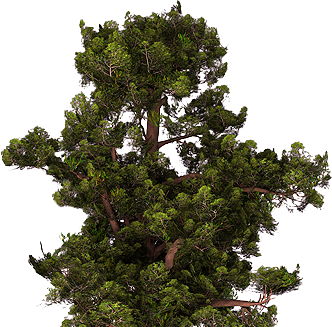
New Zealand Native Trees
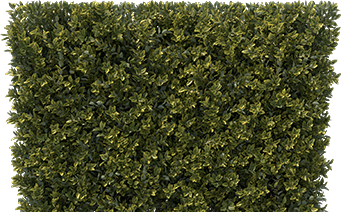
Hedging Plants
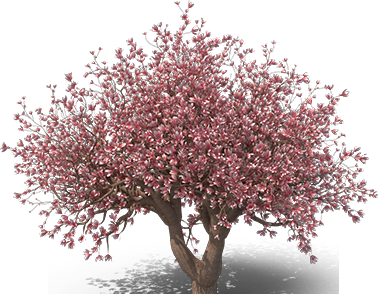
Flowering Trees

Evergreen Exotic Trees
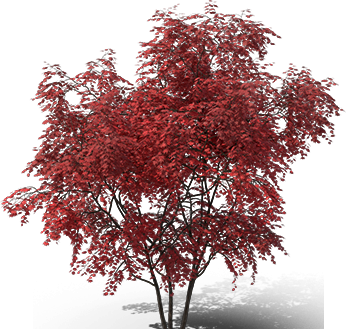
Deciduous trees
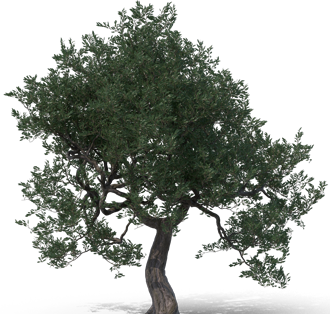
Character Olive Trees
Browse all Trees
- Acer palmatum ‘Scolopendrifolium’ is an elegant deciduous tree originating from Japan. With a strong upright, bushy habit, it creates a graceful presence in the garden. Its long, narrow leaves are bright green, often tipped with soft salmon tones, adding subtle seasonal interest. As autumn arrives, the foliage transforms into striking shades of apricot, orange, and yellow. These vibrant colours provide a stunning display, ensuring the tree becomes a focal point in smaller gardens and courtyards. This maple thrives in moist, well-drained soil and grows happily in sun or semi-shade. However, it benefits from shelter from wind, which helps prevent leaf scorch and keeps the foliage looking fresh throughout the seasons. Reaching approximately 5m high and 3m wide, it makes an ideal light shade tree. With its compact size, it suits modern landscapes and provides a delicate canopy for outdoor spaces. Interestingly, the epithet Scolopendrifolium was chosen by botanists to describe its deeply cut, finger-like leaves. Resembling small insect legs, these unique shapes give the tree its distinctive character and enduring charm.
- Populus 'Tasman' - Tasman poplar, is a bold and fast-growing deciduous tree with a broadly columnar shape. During summer, its lush green foliage creates a vibrant canopy. Then, as autumn arrives, the leaves turn a brilliant golden yellow—often earlier than other poplar varieties. Not only visually striking, this tree is also highly functional. It performs exceptionally well in erosion control, large shelter belts, and timber production, thanks to its sturdy form and rapid growth. Moreover, Poplar 'Tasman' thrives in windy and wet conditions, making it ideal for exposed or challenging sites. Its resilience adds long-term value to both rural and urban landscapes. Reaching approximately 20 x 15 metres or more, it offers impressive height and presence. Whether for practical use or aesthetic impact, this tree delivers reliable performance and natural beauty.
- Paulownia tomentosa ‘Princess Tree’, also known as the Empress Tree, is a fast-growing, broad-spreading deciduous tree that instantly adds a tropical feel to any garden. Thanks to its vigorous growth and lush form, it quickly becomes a focal point in both formal and informal landscapes. Its exceptionally large, soft green leaves form a dramatic canopy, making it an excellent choice for shade. Then, in spring, it bursts into bloom with fragrant violet-blue flowers featuring delicate white centres. These stunning blossoms add vibrant colour and a sweet scent, enhancing the overall garden experience. Although it prefers moist, well-drained soil in a sunny, sheltered position, it will also tolerate mild coastal conditions. This adaptability makes it suitable for a wide range of environments. Native to China and South Korea, this majestic tree typically reaches around 8 metres in height and 6 metres in width. As a result, it stands out beautifully in both small and large garden spaces.
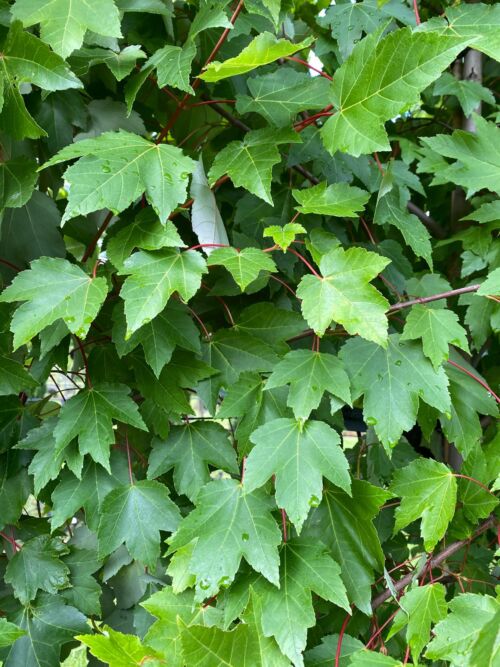
- Acer freemanii ‘Autumn Blaze’, also known as the Freeman Maple, is a deciduous, admired Red Maple cultivar. Green leaves with a grey back, adorn the branches. Over autumn vibrant red creates a wonderful seasonal display, making it a favourite for landscape designers and homeowners alike. In early spring, striking red tassel flowers appear in dense clusters before the leaves emerge. These are soon followed by decorative winged seeds, adding further seasonal interest. ‘Autumn Blaze’ adapts well to a range of soil conditions, including poor soils. It grows at a medium to fast rate and typically reaches around 12 metres tall and 8 metres wide. Thanks to its tidy, upright, and compact growth habit, this tree is ideal as a shade tree or as avenue plantings.
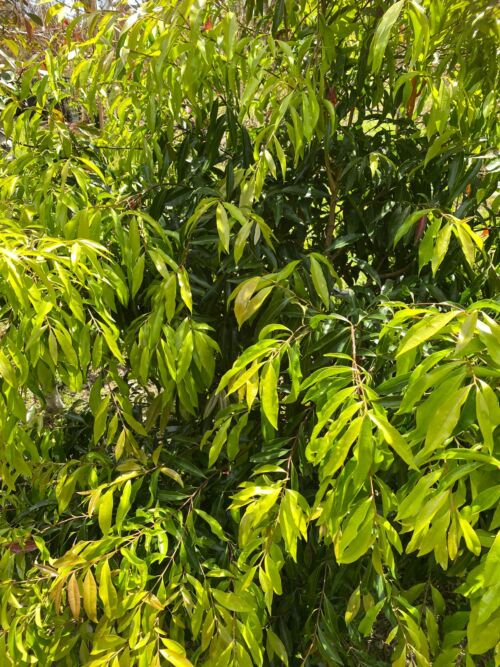
- Waterhousia floribunda - Weeping Lilly Pilly is a striking evergreen tree known for its dense, weeping form making it a standout feature in any garden. Its long, thin leaves have wavy edges and appear mostly green. However, new growth brings a burst of lighter greens, yellows, and salmon tones, adding seasonal interest. From November to January, the tree blooms with white fluffy flowers. Shortly after, rich pink berries emerge, enhancing its ornamental appeal and attracting feeding birds. Thanks to its versatility, you can trim it into a hedge or let it grow freely as a lush “umbrella” shade tree. Either way, it provides excellent screening. Moreover, Waterhousia floribunda thrives in a wide range of conditions. It is hardy, adaptable, and grows to approximately 8 metres tall by 5 metres wide. Interestingly, the name “floribunda” comes from botany and means “many-flowering” or “flowering profusely”—a fitting description for this beautiful tree.
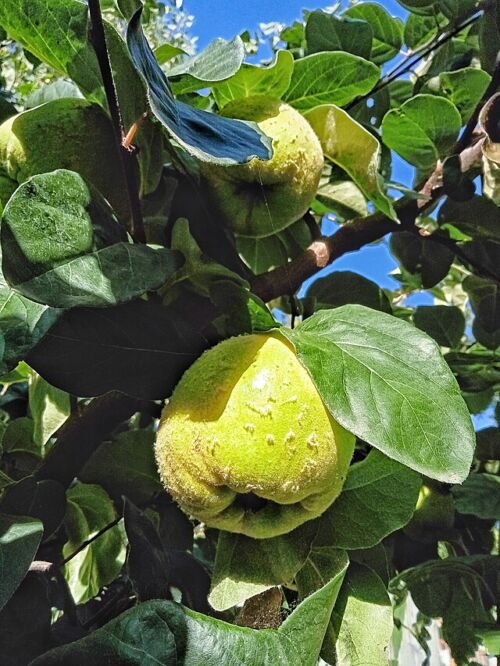
- Quince 'Van Deman' is an attractive tree, or multi-stemmed shrub, which features dark green foliage and very showy blossoms in late spring. With its fast growth and elegant form, it quickly becomes a highlight in the garden. The fruit is large, oblong-pear shaped, and bright yellow-orange. Its pale yellow flesh offers a good, spicy flavour. Early ripening and heavy bearing, it proves hardier than many other cultivars, making it a reliable choice for home orchards. Traditionally, quince has been used in marmalades, jellies, and candies. Today, it is also sought after for pastes and other culinary creations. When cooked, the fruit becomes tender and sweet, while its excellent keeping quality ensures long enjoyment. The Van Deman quince was developed in the United States in the 1890s by horticulturist Luther Burbank, who named it after Dr. H.E. Van Deman of the U.S. Department of Agriculture. This variety thrives in deep, fertile, well-draining soil. Self-fertile and harvested around March, it grows to approximately 4m high and wide, offering a manageable size for smaller gardens.
- Strong in form, Betula ermanii – Erman’s Birch is a deciduous tree with a naturally neat, conical to pyramidal shape—especially when its central leader is maintained. As the seasons progress, its bark peels away in elegant layers of creamy white or subtly pink-tinged sheets, offering year-round ornamental appeal. Throughout the growing season, its coarsely toothed, ovate leaves remain a deep green. Then, as autumn sets in, they shift to a bold, brilliant yellow, adding vibrant contrast to the landscape. Come spring, yellow-brown male catkins unfurl alongside fresh foliage, marking the tree’s seasonal renewal. Originating from northeast Asia, this species is well-suited to urban environments. Whether used as a stately avenue tree or for light shade, it performs reliably and with distinction. At full maturity, Erman’s Birch can reach heights of up to 15 metres and 6 metres wide, making it a commanding for structured plantings.
- 15 x 6m
- Tall 10+m
- Moderate - Fast
- Tree
- conical to pyramidal
- Northeast Asia
- Betula Jacquemontii, Poplar Crows nest
- Green
- Yellow
- Moist well drained
- Hardy
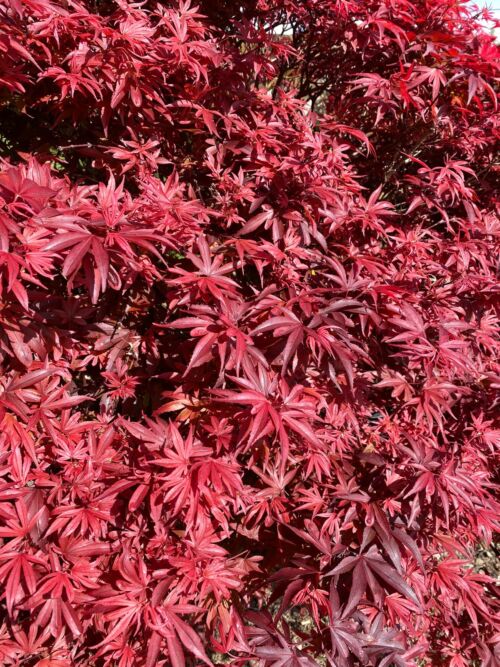
- Acer palmatum ‘Shaina’ is a deciduous dwarf maple with a rounded crown and dense, compact growth. Its neat form makes it a striking feature in any garden, while its foliage provides seasonal interest throughout the year. During summer, the leaves display a rich maroon shade. As autumn arrives, they transform into fiery red tones, creating a dramatic display of colour that enhances smaller landscapes and adds warmth to courtyards and patios. ‘Shaina’ thrives in moist, well-drained soil and prefers a sheltered position, away from harsh sun and wind. This ensures healthy growth and protects its delicate foliage from scorch, keeping the tree vibrant and attractive. Originating in the United States, ‘Shaina’ is a mutation of the popular ‘Bloodgood’ cultivar. Its compact size and ease of care make it an excellent choice for smaller gardens, courtyards, or large decorative pots. Growing to approximately 2m high and wide, it is easily trained to shape. With minimal effort, you can maintain its form, making it a versatile and rewarding ornamental tree for modern outdoor spaces.
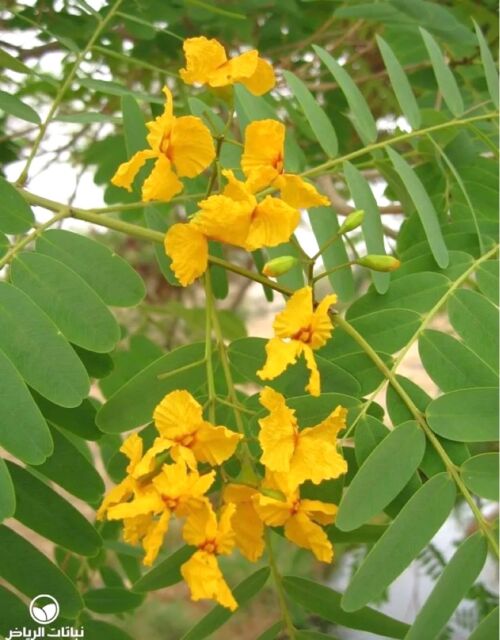
- Tipuana tipu, commonly known as Rosewood or Pride of Bolivia, is a fast‑growing evergreen tree with slender form and small, dark green, acacia‑like leaflets. It develops a broad, slightly flattened crown that offers excellent shade.In spring, the tree produces masses of bright yellow flowers with orange throats, followed by distinctive woody, winged seed pods. Native to Bolivia and South America, it thrives in full sun and remains evergreen in warmer climates. Rosewood prefers well‑draining, moderately fertile soil and adapts well to large landscape settings. Its timber is highly valued for fine furniture, musical instruments, and decorative pieces due to its durability and attractive grain. Reaching approximately 15 × 10 metres, it serves as an impressive shade tree for spacious gardens or parks.
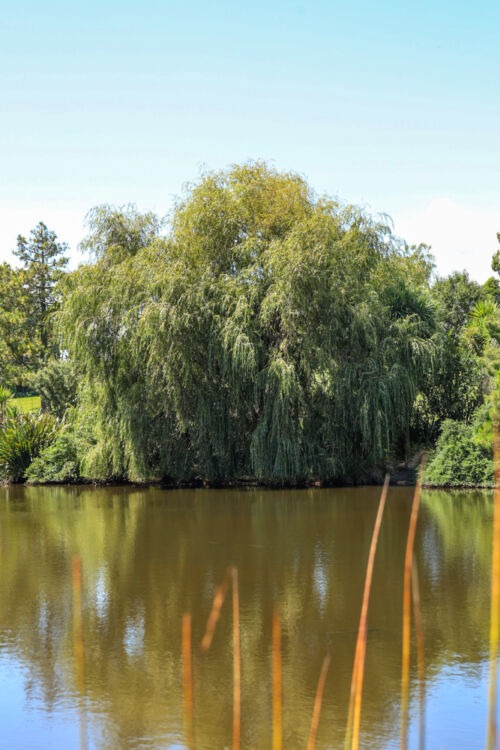
- Salix babylonica, commonly known as Weeping Willow, is a medium to large deciduous tree with a wide-spreading canopy. Its graceful, pendulous branches carry narrow, light green leaves that cascade to the ground. As autumn arrives, the foliage transforms into a soft yellow, adding seasonal charm. In spring, slender catkins emerge alongside fresh leaves, attracting bees and enhancing biodiversity. Because of its fast growth and tolerance for wet soil, this tree thrives near streams, ponds, or in damp areas. It also makes an excellent shade tree for large gardens or on farmland for livestock. Weeping Willow prefers full sun and typically grows to around 12 metres tall and 12 metres wide, offering both beauty and function
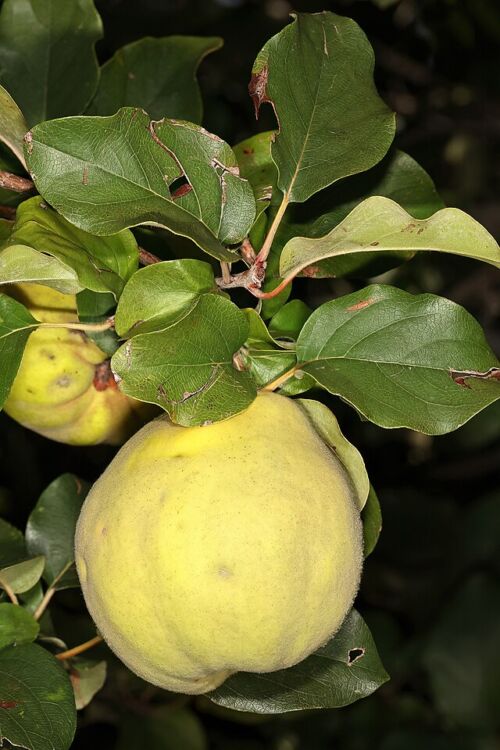
- Quince ‘Smyrna’ (Cydonia oblonga ‘Smyrna’) is a deciduous tree, or multi-stemmed shrub, with lush dark green foliage. In late spring, it produces very showy blossoms that bring seasonal charm and elegance to the garden. The fruit is exceptionally large, oblong-pear shaped, and golden yellow. Highly aromatic, it becomes tender and sweet when cooked. Traditionally used in marmalades, jellies, and candies, it is now also prized for pastes and other culinary creations. Fruit from this variety stores well, ensuring long enjoyment. Self-fertile and harvested around March, it provides reliable yields without requiring a pollinator, making it a practical choice for home orchards. Quince has been cultivated since ancient times. Interestingly, the ‘Smyrna’ variety is believed to have originated near the historic city of Smyrna, now modern-day Izmir in Turkey, giving it a rich cultural heritage. Growing to approximately 4m high and wide, it is perfectly suited to smaller gardens. With its manageable size and ornamental appeal, it makes an excellent fruit tree for courtyards and compact landscapes.
- Pyrus calleryana ‘Kea’, or the Callery Pear, is a deciduous, multi‑branched tree with a dense, bushy growth habit. It begins with a pyramidal form but gradually develops a broad, vase‑shaped crown. Its glossy green leaves turn vivid red and burgundy in autumn, while early spring brings a profusion of white flowers that cover the tree.‘Kea’ is a New Zealand‑bred variety developed in Christchurch, which gives it improved tolerance to heavy frost and cold. This adaptable tree trains easily into standards and suits small gardens, street plantings, and mass landscaping projects. Although it prefers well‑drained soil, it also adapts well to heavy, compacted, or intermittently wet conditions and performs best in full sun. Growing to around 6 metres tall and 4 metres wide, ‘Kea’ is an excellent choice for small shade areas or formal avenue planting. It provides year‑round structure and visual interest, making it a reliable feature tree for many landscape styles. Makes an excellent street or avenue tree. Vigorous and hardy.

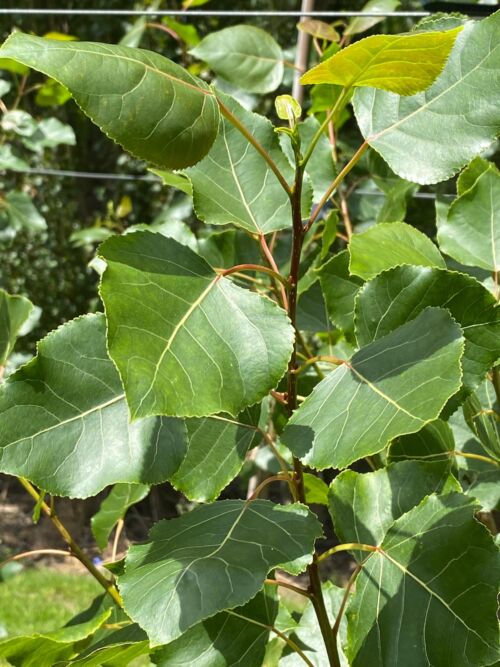
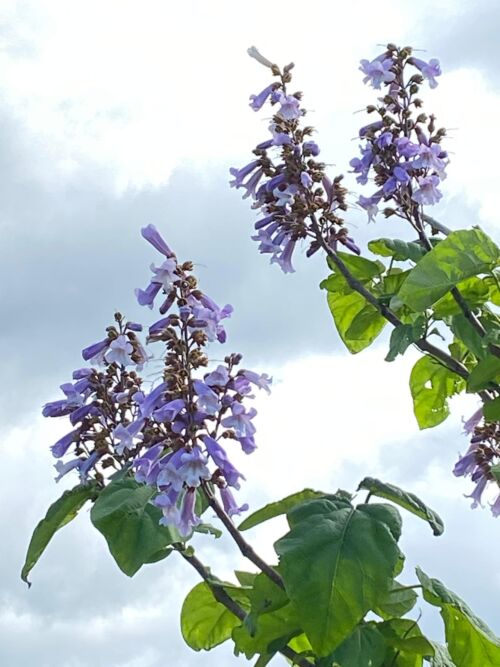


Why buy online?
Buying plants and trees online doesn’t have to feel risky or impersonal. At Black Bridge Nurseries, we’ve made it simple, safe, and satisfying — so you can shop with confidence, from the comfort of home.