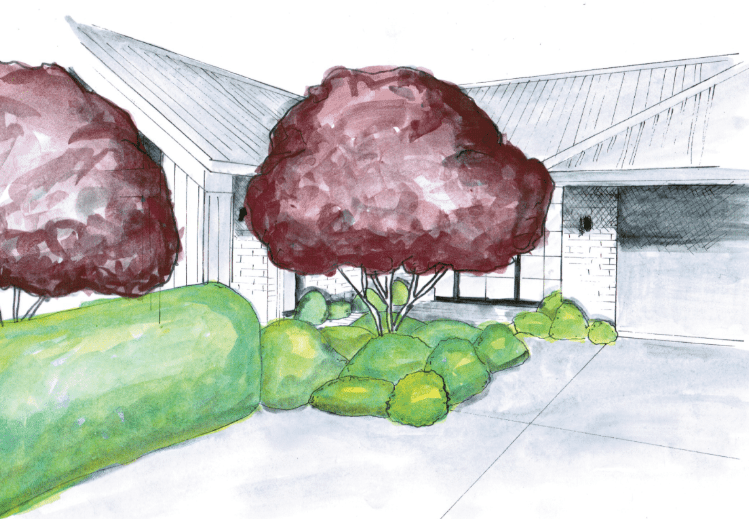
Order Quality Trees Online – Delivered Straight to Your Door
Welcome to Our Online Plant Store
From our nursery to your backyard — it’s never been easier to create the garden you’ve been dreaming of. Whether you’re after statement trees, hedging, or lush planting to fill your outdoor spaces, you can now browse and order directly online.
We provide an extensive range of high-quality plants and trees that are perfect for residential landscapes — all backed by the same expert care and service we’re known for. No trade account needed, no back-and-forth calls. Just beautiful plants, delivered to your door.
Shop by category
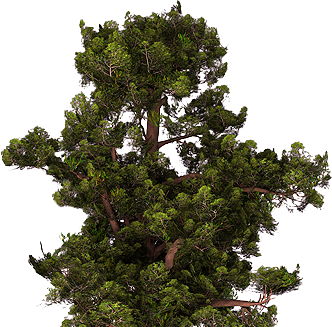
New Zealand Native Trees
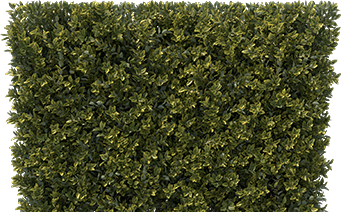
Hedging Plants
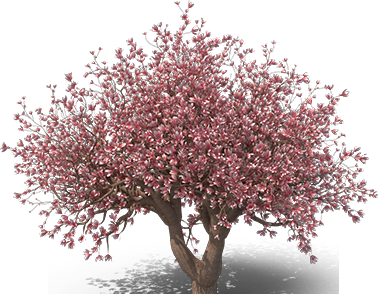
Flowering Trees

Evergreen Exotic Trees
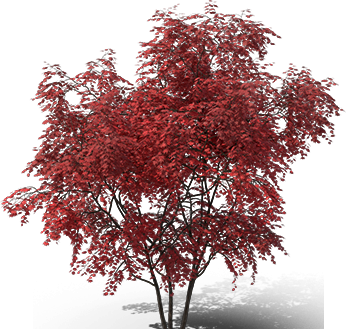
Deciduous trees
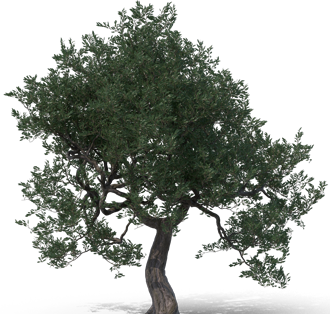
Character Olive Trees
Browse all Trees
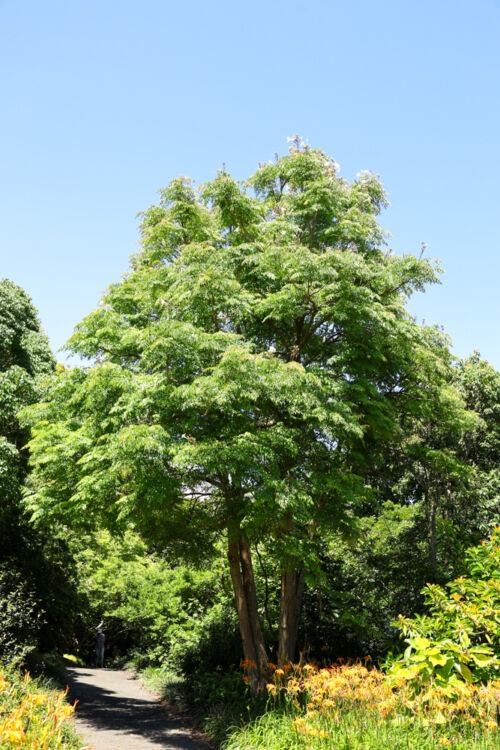
- Radermachera sinica, also known as Canton Lace or China Doll, is a sub tropical, fast growing evergreen tree native to Southern China. It has an open, spreading form and features emerald green bipinnate leaves that reach up to 50 cm. In summer, the tree produces long, white, trumpet shaped flowers that create a striking display. It prefers moist, well drained soil in full sun, and should be kept evenly moist during dry periods for best growth. Because young plants are sensitive to cold, they should be protected from frost. Easily pruned to maintain height or shape, making it ideal for hedging or privacy screens. Additionally, it grows well indoors as a houseplant. A mature Radermachera sinica typically reaches around 8 × 5 metres.
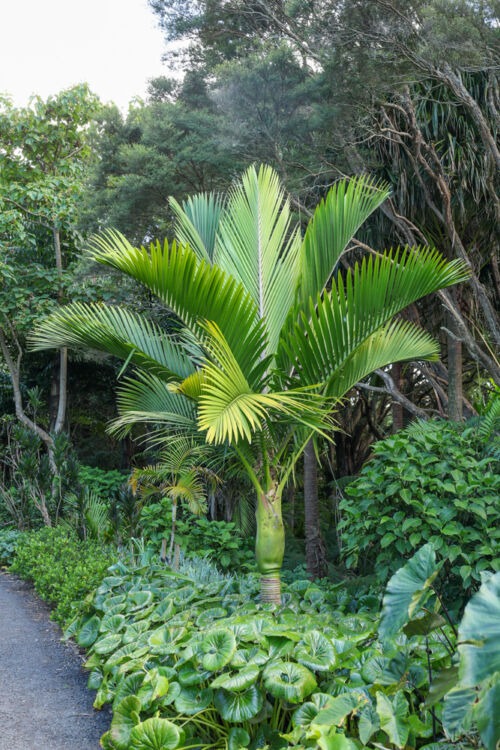
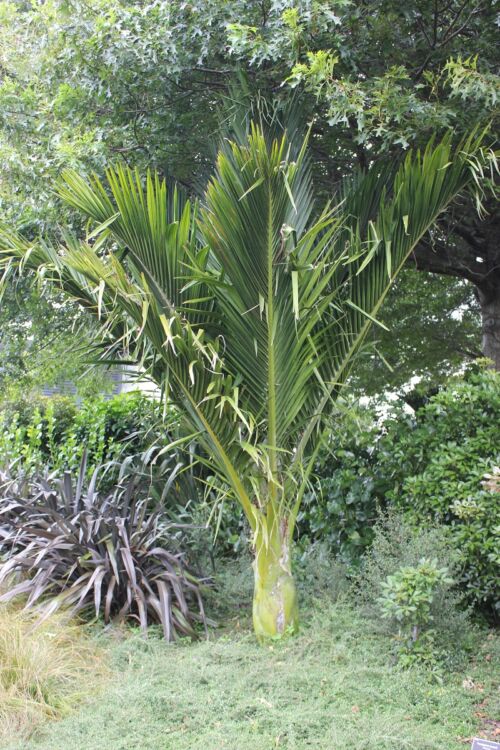
- Rhopalostylis baueri var. cheesemanii – Kermadec Island Nikau Kermadec Island Nikau is a native New Zealand palm from the northern Kermadec Island group. Originating from a warmer climate, it grows noticeably faster than other Nikau varieties. This palm features a more open, umbrella-like form with broader fronds. Each leaflet is slightly spaced, giving the foliage a light, airy appearance that adds a tropical feel to any setting. Over time, it develops a trunk marked with rings from fallen leaves. While young, it prefers a shady position but will tolerate full sun as it matures. It thrives in moist, well-drained soil with a cool root run and benefits from a sheltered location. This makes it ideal for subtropical gardens or protected outdoor spaces. Whether planted as a garden specimen or grown in a large container, it offers year-round appeal. With moderate, slow growth, it can eventually reach up to 10 metres over many years. Cheesemanii is in reference to plants named after the New Zealand botanist Thomas Cheeseman
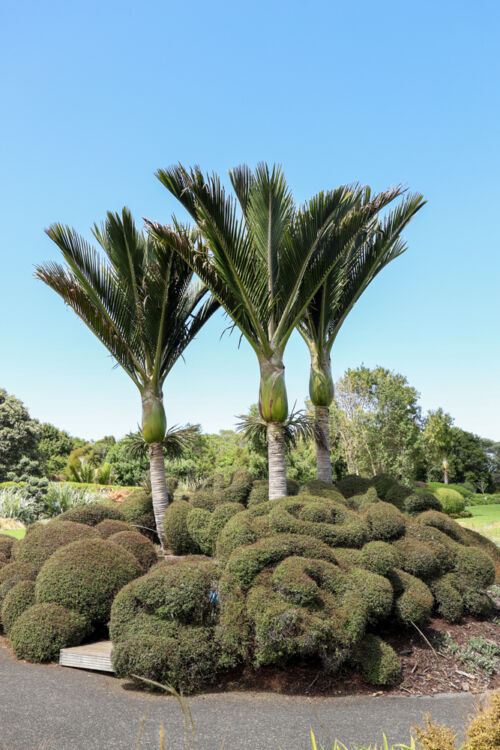
- Rhopalostylis sapida, commonly known as NZ Nikau, is a native New Zealand palm with elegant tropical appeal. In its juvenile stage, it produces long, graceful fronds reaching up to 3 metres. Over time, a slender trunk develops, marked with rings from fallen leaves. This trunk is crowned with rich green, fan-like fronds that add lush texture to shaded garden spaces. Nikau palms thrive in partial to full shade and prefer moist, well-drained soil rich in organic matter. They flourish in warm, sheltered environments with protection from strong winds and heavy frosts. For best results, plant in a shady spot with sunlight on the crown and cool, shaded roots. This mimics their natural forest habitat and enhances their appearance. Nikau is an excellent choice for garden specimens or large pots. Though very slow-growing, it can reach 10 metres and more over many years.
- Rhopalostylis sapida ‘Chathamica’ – Chatham or Pitt Island Nikau is a native New Zealand palm originating from the southern Chatham and Pitt Islands. It offers a unique twist on the mainland Nikau. This variety features longer fronds, wider leaflets, and a subtle silvery hue to its stems. Its red fruit are noticeably larger, adding seasonal interest and contrast. Adapted to cooler climates, it tolerates full sun, wind, cold, and coastal conditions better than other Nikau types. It’s also known for its tidier growth habit. Thriving in moist, well-drained soils, this palm is ideal for sheltered gardens or coastal landscapes. Its slow growth makes it easy to manage over time. Although very slow-growing, it can eventually form a trunk and reach up to 10 metres over many years, making it a long-term feature in any garden.
-
- Description
A stunning deciduous tree renowned for its vibrant yellow foliage, it has an elegant oval shape with strong, upright branches. The new growth emerges in shades of orange, gradually maturing into a rich golden yellow that lasts from spring through to autumn. Long white racemes of flowers produced in early summer. Spectacular tree suitable for small gardens. Grows to apx 8 x 4m Height x Width 7 x 4 Height Range Medium 5-10m Growth Rate Fast Plant Type Tree Shape Conical Deciduous / Evergreen Deciduous Country of Origin North America Similar to Consider Ginkgo, Gleditsia Sunburst, Acer Kellys Gold, Robinia Freesia, - Leaf
Leaf Colour Yellow Deciduous Leaf Colour Yellow - Flower
Flower Colour Cream Fragrant? No - Uses
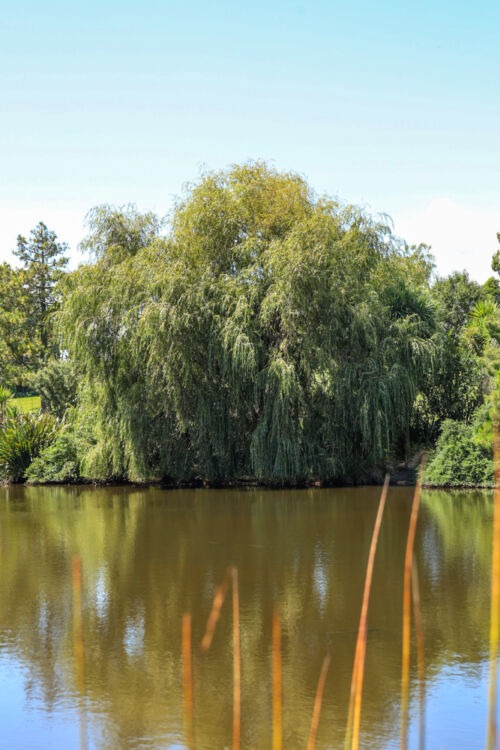
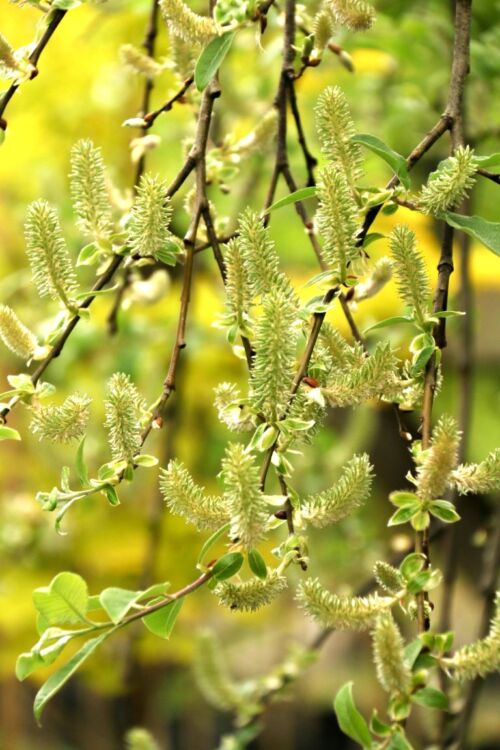
Specimen Yes Good Shade Tree? Yes Accent Yes Note: Growth, height and grade information are given in good faith but are subject to natural variables beyond our control. - Salix babylonica, commonly known as Weeping Willow, is a medium to large deciduous tree with a wide-spreading canopy. Its graceful, pendulous branches carry narrow, light green leaves that cascade to the ground. As autumn arrives, the foliage transforms into a soft yellow, adding seasonal charm. In spring, slender catkins emerge alongside fresh leaves, attracting bees and enhancing biodiversity. Because of its fast growth and tolerance for wet soil, this tree thrives near streams, ponds, or in damp areas. It also makes an excellent shade tree for large gardens or on farmland for livestock. Weeping Willow prefers full sun and typically grows to around 12 metres tall and 12 metres wide, offering both beauty and function
- Salix caprea ‘Kilmarnock’ is a small, deciduous, umbrella shaped weeping tree. Its stiff yellow brown branches hang gracefully and hold small, green serrated leaves that shift to yellow green in autumn. In early spring, large silver grey catkins with bright yellow anthers appear before the foliage. This charming cultivar entered commercial production in 1853, introduced by Thomas Lang of Kilmarnock, Ayrshire, Scotland. Since then, it has remained a popular choice for gardeners. Kilmarnock willow thrives in moist to wet, sunny locations. Because it is hardy and adaptable, it suits small gardens, containers, and areas with poor drainage. The final height depends entirely on the graft point, as all growth weeps downward from that position.
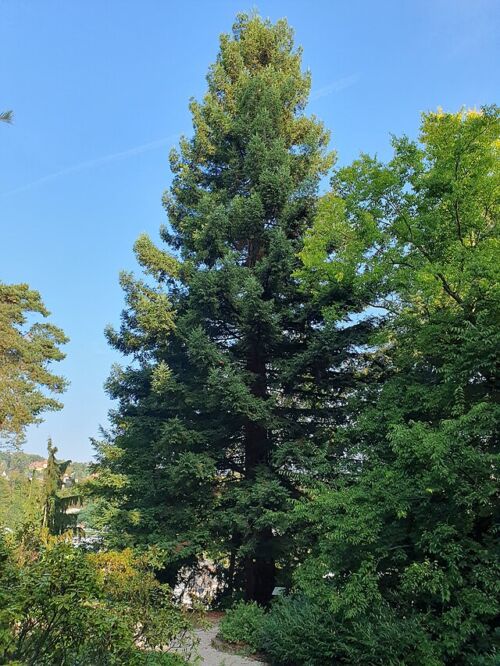
- Sequoia sempervirens, commonly known as the Californian Redwood, is a majestic, fast growing conifer native to the Pacific Coast of North America. Its stately pyramidal form features horizontal branches that slightly droop, while the trunk remains exceptionally straight with thick, rugged bark. These trees thrive in deep, moist, well drained, nutrient rich soils. Because they dislike drying out, its advisable to water them during dry periods, especially when young. Plant in full sun for best results. Californian Redwoods tolerate coastal conditions; however, they do not cope well with harsh winds. They typically grow to around 40 x 12metres yet can exceed 60 metres in ideal environments. Once established, they often grow more than a metre per year, making them an impressive choice for large properties, estates, parks, and reserves
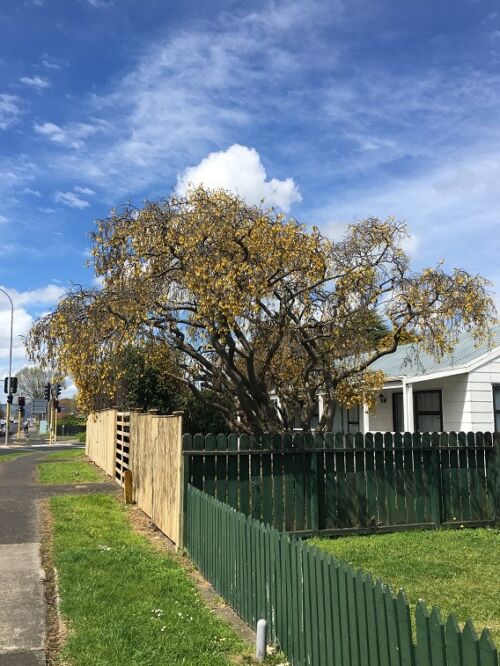
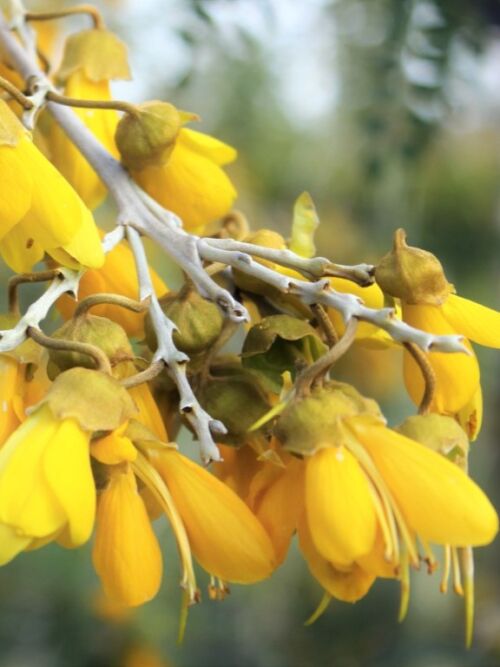
- Native to New Zealand, Sophora chathamica (Coastal Kowhai) is a semi-deciduous tree known for its spreading form and vibrant spring display. It features small, pinnate green leaflets that create a soft, open canopy. Unlike other Kowhai species, Coastal Kowhai does not have a divaricating (Zig-Zag) juvenile stage. Instead, it grows with a naturally elegant structure from an early age, making it easy to identify. In spring, the tree bursts into golden-yellow, tubular flowers arranged in pendulous racemes. These 45mm blooms appear en masse and attract Tui and other nectar-loving birds, adding life and movement to any garden. Coastal Kowhai thrives in moist, well-drained soil and thrives in coastal forest environments. It’s often found on banks overlooking estuarine rivers or sheltered inlets, where it enjoys mild conditions and good drainage. Previously classified as Sophora microphylla, this species is now recognized for its distinct traits. It makes a stunning feature tree in small gardens and typically grows to around 6 metres tall and 4 metres wide.
- Sophora chathamica ‘Milligold’, commonly known as Weeping Kowhai, is an evergreen native tree from New Zealand. It features deep green foliage and a compact, graceful weeping form. Branches do not have the divaricating (Zig Zag) form and foliage is larger than the smaller microphylla. In spring, it produces masses of bright yellow flowers which makes a spectacular display and also attracts nectar‑seeking birds such as the Tui. ‘Milligold’ prefers well‑drained, moist soil and should not sit in waterlogged areas to avoid root rot. It grows best in full sun or partial shade. Typically reaching 2–4 meters in height and width, it suits courtyards, smaller gardens, and works beautifully as a container specimen.
- Sophora microphylla, commonly known as small-leaved kōwhai, is a graceful, semi-open, semi-deciduous native tree of New Zealand. Its delicate form makes it ideal for smaller gardens, while its vibrant seasonal displays add striking visual interest throughout the year. During its juvenile stage, this species features distinctive zig-zag (divaricating) branches. Over time, these develop into arching, spreading limbs adorned with small, pinnate green leaflets 🌿 that soften its overall form. In spring, golden-yellow tubular flowers bloom in pendulous racemes. These 45mm blossoms appear en masse, attracting Tui and other nectar-loving birds with their rich nectar. This Kowhai thrives in well-drained soil and sheltered spots. It grows happily in full sun or partial shade, making it versatile for various garden settings. Prefers free draining moist soils and is not suitable for waterlogged or extremely dry sites. With proper care, it becomes a stunning feature tree that reaches approximately 5 metres tall and 2.5 metres wide.
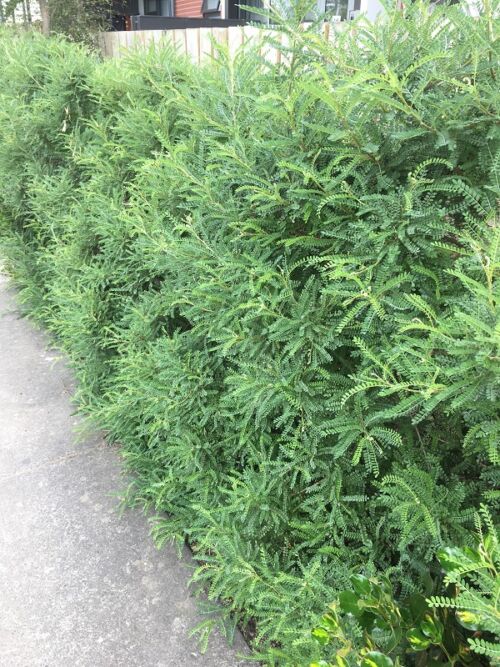
- Sophora microphylla 'Dragons Gold', also known as Dwarf Kowhai, is a compact native shrub from New Zealand. It forms a rounded shape with small, pinnate green leaflets, offering year-round visual interest. From late winter to spring, bright yellow flowers bloom earlier than other Kowhai varieties. These tubular blossoms attract Tui and other nectar-loving birds, adding vibrant life to your garden. Dragons Gold prefers a sheltered spot with well-drained soil. It tolerates both full sun and partial shade, making it adaptable to various garden conditions. Ideal for smaller gardens, it can be grown in pots or mass planted to cover larger areas. Its tidy form and easy maintenance also make it perfect for low hedging or borders. Typically, 'Dragons Gold' grows to around 2.5 metres tall and wide, making it a versatile and eye-catching addition to any landscape..


Why buy online?
Buying plants and trees online doesn’t have to feel risky or impersonal. At Black Bridge Nurseries, we’ve made it simple, safe, and satisfying — so you can shop with confidence, from the comfort of home.