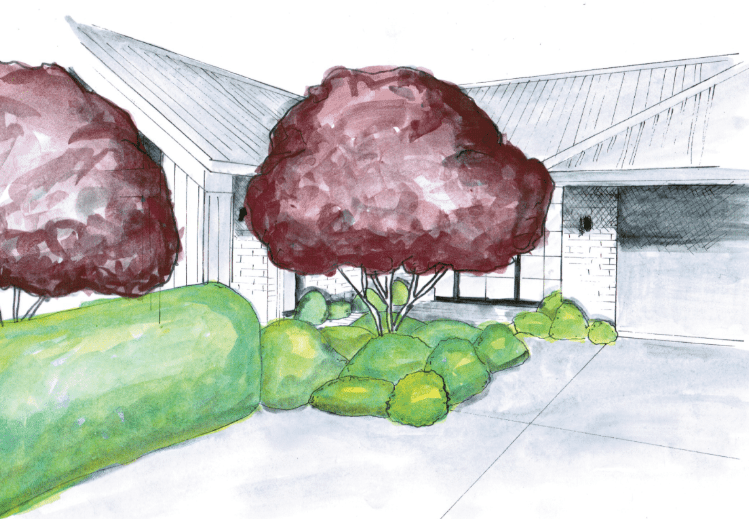
Order Quality Trees Online – Delivered Straight to Your Door
Welcome to Our Online Plant Store
From our nursery to your backyard — it’s never been easier to create the garden you’ve been dreaming of. Whether you’re after statement trees, hedging, or lush planting to fill your outdoor spaces, you can now browse and order directly online.
We provide an extensive range of high-quality plants and trees that are perfect for residential landscapes — all backed by the same expert care and service we’re known for. No trade account needed, no back-and-forth calls. Just beautiful plants, delivered to your door.
Shop by category
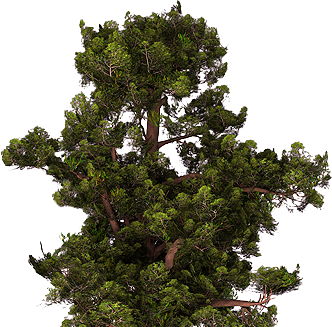
New Zealand Native Trees
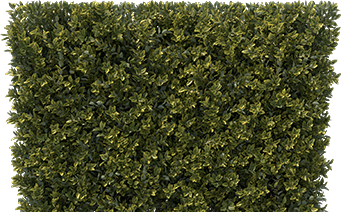
Hedging Plants
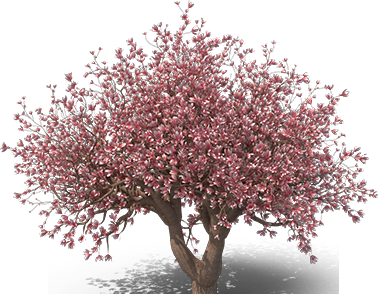
Flowering Trees

Evergreen Exotic Trees
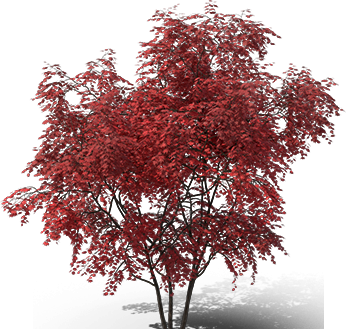
Deciduous trees
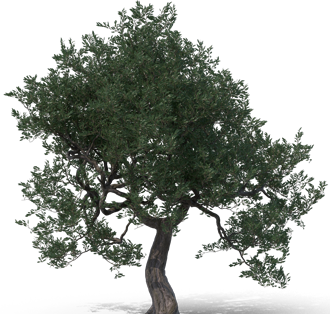
Character Olive Trees
Browse all Trees
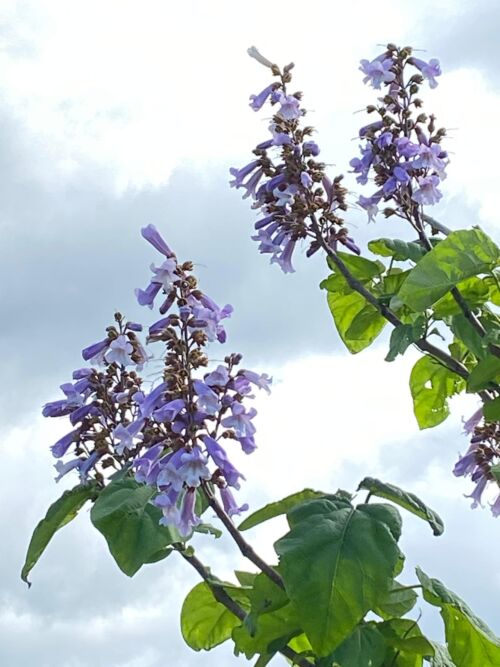
- Paulownia tomentosa ‘Princess Tree’, also known as the Empress Tree, is a fast-growing, broad-spreading deciduous tree that instantly adds a tropical feel to any garden. Thanks to its vigorous growth and lush form, it quickly becomes a focal point in both formal and informal landscapes. Its exceptionally large, soft green leaves form a dramatic canopy, making it an excellent choice for shade. Then, in spring, it bursts into bloom with fragrant violet-blue flowers featuring delicate white centres. These stunning blossoms add vibrant colour and a sweet scent, enhancing the overall garden experience. Although it prefers moist, well-drained soil in a sunny, sheltered position, it will also tolerate mild coastal conditions. This adaptability makes it suitable for a wide range of environments. Native to China and South Korea, this majestic tree typically reaches around 8 metres in height and 6 metres in width. As a result, it stands out beautifully in both small and large garden spaces.
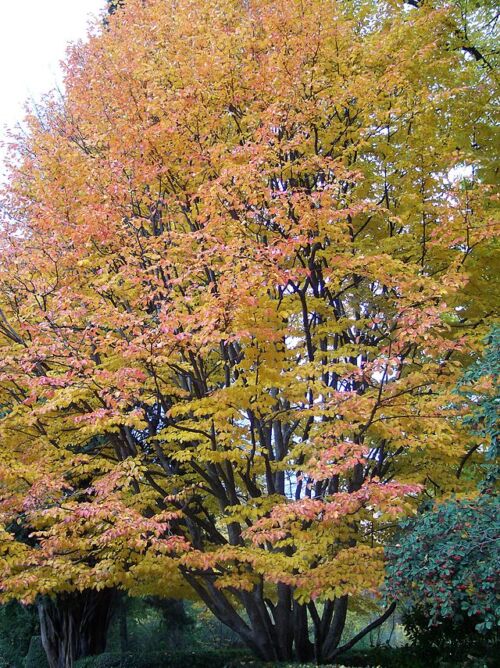
- Parrotia persica – Persian Ironwood is a compact, deciduous tree known for its exceptional autumn colour. Originating from Iran, it’s considered one of the finest small trees for seasonal interest. The botanical term persica refers to its Persian roots, highlighting its natural heritage. This slow-growing, broad-spreading tree often develops multiple stems and features attractive, flaking bark. Its dark green leaves shift dramatically in autumn, turning vivid shades of yellow, orange, rosy pink, and scarlet. In late winter to early spring, clusters of unusual red flowers appear on bare twigs, adding early-season charm. Persian Ironwood tolerates clay soils, though it’s best to avoid overly wet conditions. With a mature size of approximately 8 meters tall and 6 meters wide, it makes an excellent specimen tree.
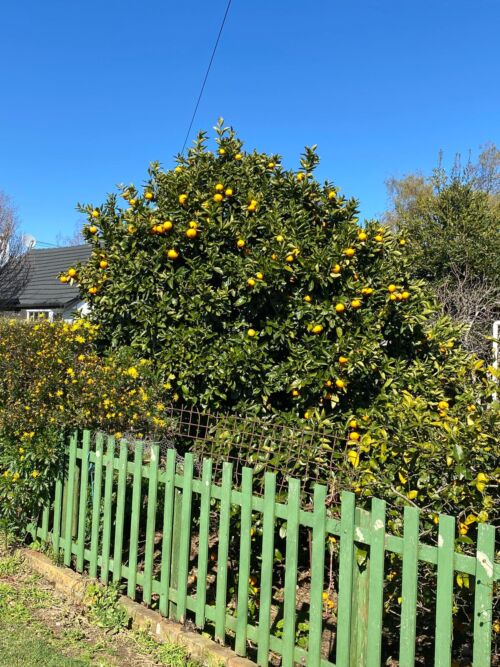
- Orange ‘Parent Navel’ (Citrus sinensis) is the original navel orange variety that was developed in California. A moderately vigorous tree with a rounded growth habit. It produces large, sweet, seedless and easy to peel oranges. A heavy producer, so requires regular fertiliser over the fruit growing months. Harvest is later in winter from apx August onwards.
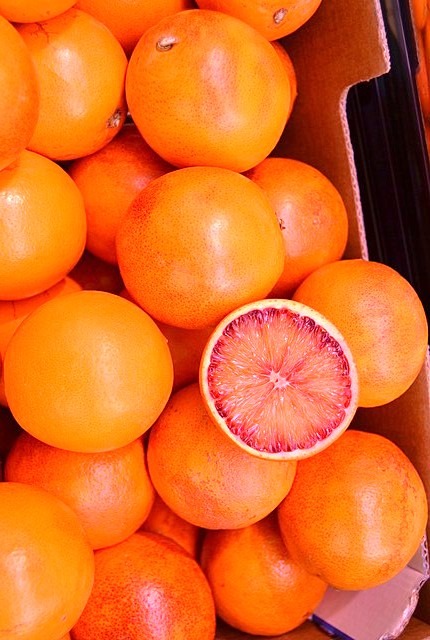
- Orange ‘Blood Orange’ (Citrus sinensis) is an attractive evergreen citrus with very few thorns and minimal seeds. It grows with an upright habit, glossy green leaves, and fragrant white spring blossoms. These features make it an appealing choice for home gardens.The tree produces high‑quality orange fruit with flesh streaked red, offering a tangy‑sweet flavour that develops best with hot days and cool nights. You can harvest the fruit through winter, typically from July to August. Blood oranges originated as a natural mutation of sweet oranges in the Mediterranean, especially in Sicily, during the 17th or 18th century. This long history contributes to their unique colour and flavour profile. The tree thrives in full sun and prefers well‑drained, slightly acidic soil. It suits urban gardens and smaller spaces, growing to around 3.5 × 2.5 metres. With the right conditions, it produces reliable crops and adds ornamental value throughout the year.
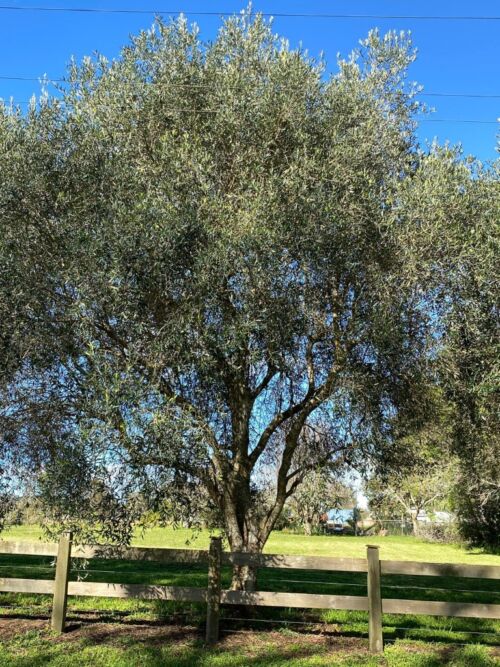
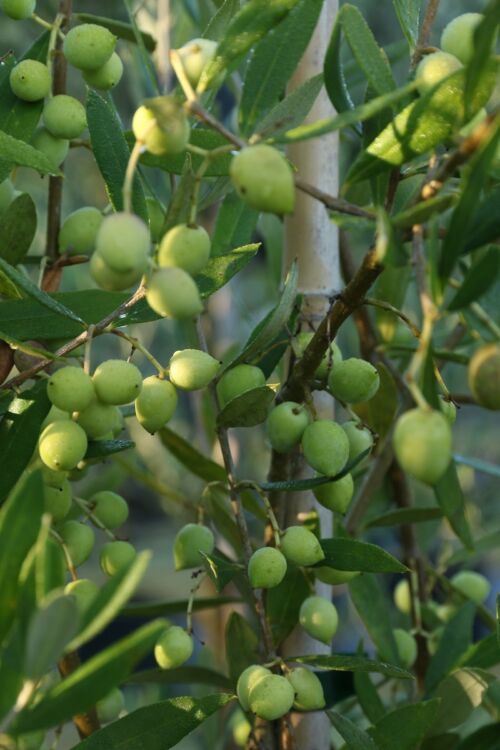
- Olea europaea ‘Verdale’ – Olive is an evergreen tree with a spreading, weeping form. Its long leaves show distinct green‑silver or grey‑green tones on top, while the undersides appear silvery grey. This gives the tree one of the most strikingly silvery canopies among olive varieties.Verdale originates from southern France. It is a traditional French cultivar valued for its large green olives, which are ideal for pickling. In addition, it produces a mild, fruity oil and is known for cropping reliably each season. This olive thrives in full sun and prefers moist, well‑drained soil. It also tolerates wind and coastal conditions. Once established, it can withstand extended dry periods, making it a hardy and versatile choice for many landscapes. Reaching around 5 metres, Verdale is used in commercial orchards. In residential gardens, it works beautifully as a shade tree that offers a dappled light.
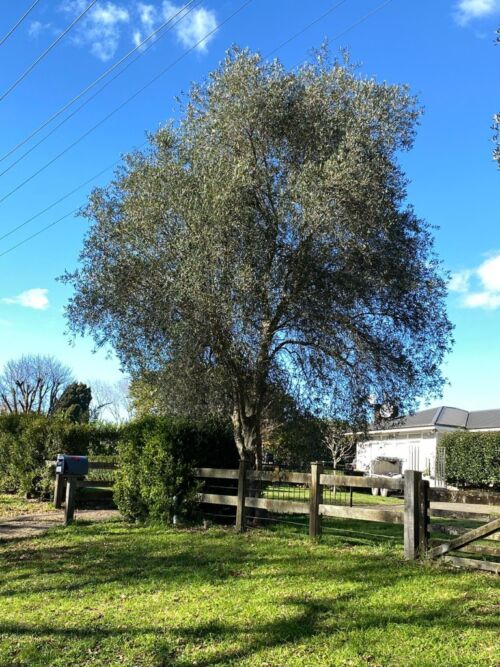
- Olea europaea, commonly known as the European olive, is a versatile and iconic tree traditionally found throughout the Mediterranean Basin. Although native to this region, it is now widely cultivated across the globe, including Australia, New Zealand, North and South America, and South Africa. Just a few of the many varieties include, Kalamata, Koroneiki, Ascolano, El Greco J5 Typically grown as a small tree, the olive is prized for its fruit, which is harvested for oil, eating, or both. Its adaptability and resilience make it a popular choice for a variety of climates and landscapes. Because it originates from the Mediterranean, Olea europaea thrives in full sun, tolerates coastal winds and extended dry periods once established. It performs well in warmer, sunny environments and is remarkably drought tolerant. In addition, it makes a beautiful lightly dappled shade tree. With a mature size of approximately 7 x 3 metres, it’s ideal for gardens, courtyards, or orchard-style plantings, bringing both ornamental charm and practical value.
- Commercial oil Olive. Smaller leaves with dense habit. Small fruit produced in abundance with high oil content. Fruits from an early age. Will tolerate warmer climates. Being from the Mediterranean olive trees require full sun and will tolerate wind coastal and can also survive extended dry periods once established.
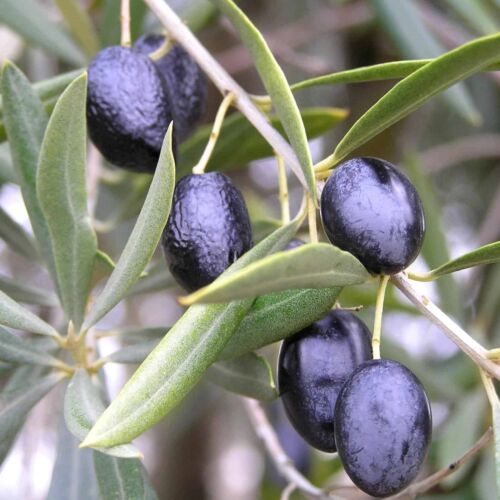
- Olea europaea ‘Kalamata’ is the famous Greek table olive tree, known for its strong vigour and upright growth habit. This striking olive tree features larger olive-green leaves compared to other varieties, adding lush texture to the landscape. During summer, clusters of small creamy white flowers appear, followed by very large, almond-shaped fruit. These dark purple olives have a smooth texture and are typically harvested in April. Notably, the name Kalamata originates from the region in southern Greece where this variety was first cultivated. As with most olive trees, the species name europaea simply means “European,” highlighting its Mediterranean heritage. In addition to its culinary fame, this tree also produces olive oil. Once established, it tolerates dry conditions well and thrives in warmer, sunny climates. With a mature size of approximately 7 x 3 metres, it makes a wonderful lightly dappled shade tree, perfect for gardens, courtyards, or orchard-style plantings. Whether you're seeking ornamental beauty or a productive fruiting tree, ‘Kalamata’ offers both elegance and utility.
- Olea europaea ‘J5’ is a medium-sized, evergreen olive tree with a graceful, weeping form. Ideal for warmer climates, it adds Mediterranean charm to any garden. In spring, it bursts into masses of tiny cream-white flowers, which later develop into a generous crop of medium-sized oval fruit by autumn. This New Zealand selection thrives in full sun and tolerates wind and coastal conditions. Once established, it can endure extended dry periods, making it a resilient choice for low-maintenance landscapes. Growing to approximately 6 x 3 metres, the J5 olive tree is not only a prolific fruiter but also provides light, dappled shade—perfect for relaxing outdoor spaces.
- Olea europaea ‘Ascolano’ is a rounded, moderately fast-growing evergreen with a bushy habit. It features silvery-green, leathery leaves and strong, rigid branches. This variety is well known for producing large, mild table olives, making it both ornamental and productive. Ascolano is suitable for hedging or screening and can also be left to grow as a specimen tree. When mature, it reaches approximately 6 x 3 metres, offering structure and beauty in the landscape. Originating from the Marche and Tuscany regions of Italy, Ascolano thrives in full sun and well-drained soil. Once established, it tolerates wind, coastal conditions, and dry spells, making it a hardy and versatile choice for gardens.
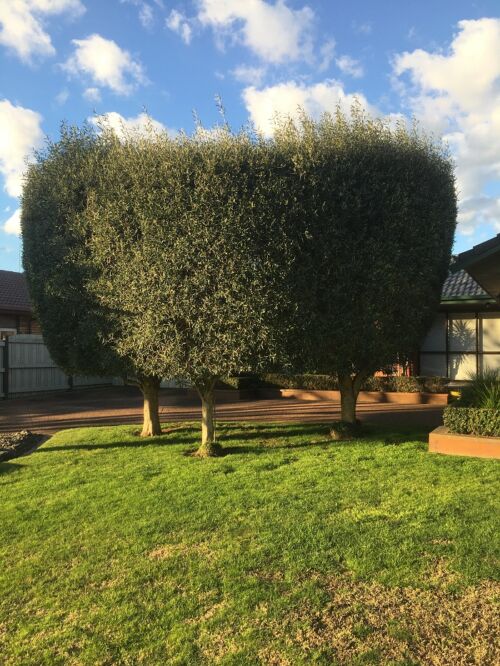
- Olea europaea ‘El Greco’ – Greek Olive is a compact evergreen olive known for its small green leaves and dense, tidy habit. Often used as a hedging olive, it may produce some fruit if left untrimmed, although this is not typical. This variety prefers moist, well‑drained soil but tolerates dry periods once established. Since it originates from the Mediterranean, it thrives in full sun and copes well with wind and coastal conditions. Because of its naturally dense, bushy form, ‘El Greco’ easily trims into neat low or tall hedges, making it ideal for smaller gardens. It grows to approximately 3 × 2 metres.
- Nyssa sylvatica – Black Tupelo is a medium-sized, deciduous tree with a graceful pyramidal shape. Native to North America, it brings seasonal interest and structure to gardens and landscapes. During summer, its dark green, glossy leaves—oval and pointed—reach up to 15 cm long. As autumn arrives, they transform into a stunning display of reds, oranges, and yellows, making it a true standout. This tree thrives near ponds or in damp, moist areas and tolerates clay soils well. Tiny flowers bloom discreetly, followed by small blue berries that attract birds and enhance biodiversity. Typically growing to around 7 meters tall and 4 meters wide, Black Tupelo is ideal for woodland-style plantings. The name sylvatica reflects its natural habitat—thriving in forested environments..


Why buy online?
Buying plants and trees online doesn’t have to feel risky or impersonal. At Black Bridge Nurseries, we’ve made it simple, safe, and satisfying — so you can shop with confidence, from the comfort of home.