Order Quality Trees Online – Delivered Straight to Your Door
Welcome to Our Online Plant Store
From our nursery to your backyard — it’s never been easier to create the garden you’ve been dreaming of. Whether you’re after statement trees, hedging, or lush planting to fill your outdoor spaces, you can now browse and order directly online.
We provide an extensive range of high-quality plants and trees that are perfect for residential landscapes — all backed by the same expert care and service we’re known for. No trade account needed, no back-and-forth calls. Just beautiful plants, delivered to your door.
Shop by category
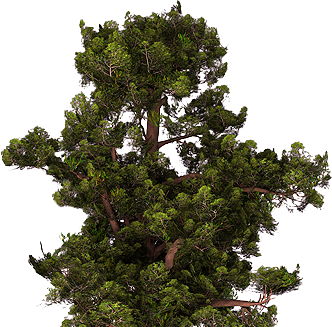
New Zealand Native Trees
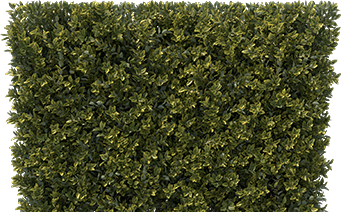
Hedging Plants
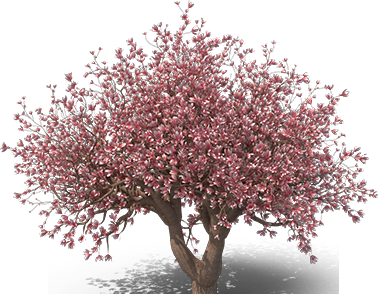
Flowering Trees

Evergreen Exotic Trees
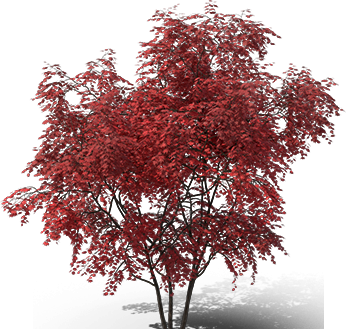
Deciduous trees
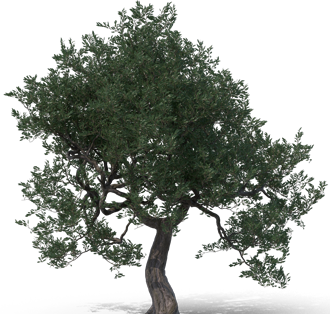
Character Olive Trees
Browse all Trees
- Fig ‘Mrs Williams’ (Ficus carica) This deciduous, compact shrub or small tree features gnarled, twisted branches and bold, tropical-style leaves. Ideally, it should be planted in a sunny, sheltered, location. In addition, it thrives when provided with abundant moisture. Notably, ‘Mrs Williams’ is a well-known hardy selection that produces generous crops of high-quality, large figs. Unlike many other varieties, it ripens earlier in the season, making it a popular choice among gardeners. The fruit is dark in colour—sometimes even purple—with flesh ranging from light amber to rich red. As a result, the figs are sweet, juicy, and perfect for fresh eating or preserving. Typically, the harvest period runs from February to April, but be quick to harvest the fruit before the birds do. Because of its compact size, this fig is ideal for small gardens. Moreover, it tolerates coastal conditions with ease, adding to its versatility. Although it can grow up to 5 x 5 metres, it’s easy to trim to your preferred size and shape. Therefore, it’s a versatile choice for many garden styles
- Fraxinus excelsior ‘Purple Spire’, commonly known as Purple Ash, is a deciduous, upright-growing tree with a remarkably even branching structure. Over time, it develops into an oval shape, with a moderate to fast growth rate. Throughout spring and summer, it bears glossy green foliage that transforms into striking shades of purple and orange in autumn, adding seasonal interest. Interestingly, this cultivar was developed in New Zealand, although its Fraxinus parentage traces back to Europe. Ideally, it prefers moist, well-drained soil and will tolerate some wind, making it a resilient choice for various landscapes. As such, it’s excellent for planting along streets, avenues, or long driveways. Typically, it reaches approximately 8 x 4 metres, offering structure and colour without overwhelming smaller spaces. PVR Pending
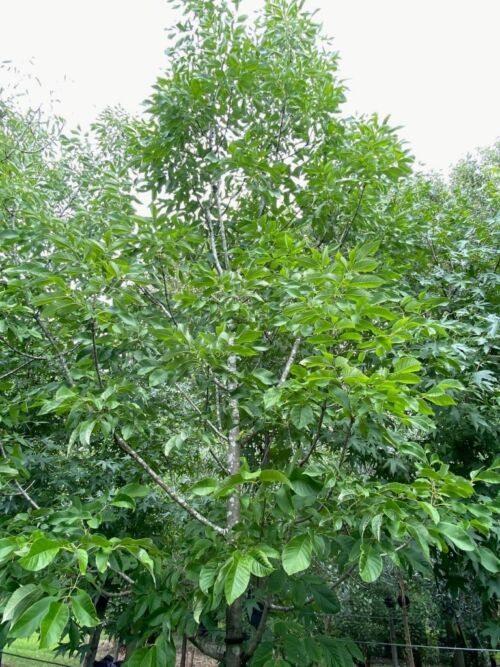
- Fraxinus griffithii, commonly known as Evergreen Ash, is a fast-growing tree with a rounded form. Its dark green pinnate leaflets create lush foliage, while masses of small white fragrant flowers appear in large, loose panicles during spring, almost covering the entire tree. This hardy tree performs best in well-drained soil and becomes drought tolerant once established. However, avoid waterlogged areas to prevent root rot. Although evergreen, Evergreen Ash can become semi-deciduous in colder climates. It grows to around 6 x 4 metres, forming a beautiful shade tree for gardens and landscapes. The tree is easily clipped to maintain shape and height, making it versatile for design. Very hardy, it also thrives in industrial sites, carparks, and coastal areas, offering resilience and reliability in challenging conditions.
-
- Description
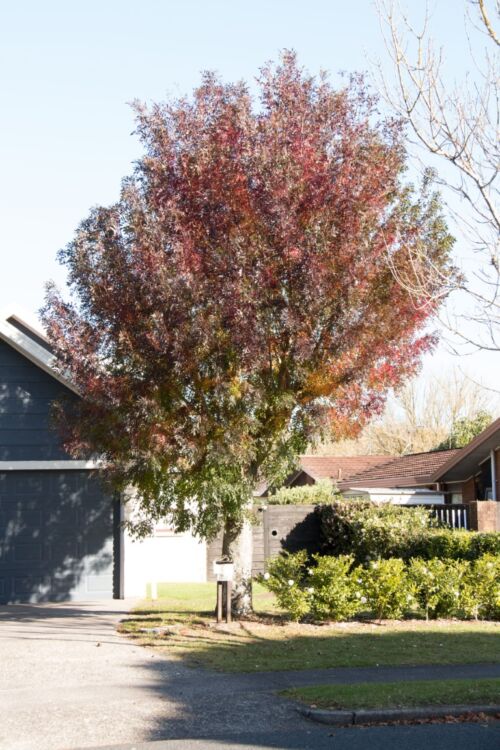
A distinct pyramidal form in its early years, matures to a large rounded, broad spreading tree. Green leaves in summer are narrow and serrated, and transform to a vibrant, deep red colour in autumn, earning it the name "Claret Ash" Hardy to a wide range of conditions. Excellent landscaping, street, specimen or shade tree. Height x Width 15 x 8 Height Range Tall 10+ Growth Rate Fast Plant Type Tree Shape / Habit Round Country of Origin Australia Similar to Consider Prunus Thundercloud, Fagus Riversii, Fagus Sylv Purp, Acer Tamuke Yama, Acer Bloodgood. - Leaf
Leaf Colour Green Deciduous Leaf Colour Red - Flower
Flower Nil - Uses
Specimen Yes Good Shade Tree? Yes Accent Yes Note: Growth, height and grade information are given in good faith but are subject to natural variables beyond our control. - A fast growing, large tree from central America. With its broad, rounded canopy of lush green foliage, this tree is an exceptional choice for providing ample shade in spacious areas. Evergreen. Grows to apx 10 x 8m
- Ginkgo biloba ‘Autumn Gold’ – Maidenhair Tree is a spectacular male clone from the renowned Ginkgo family. Because it is a selected male variety, it will not produce unpleasant fruit. Developed in San Jose, California, this tree grows with a pyramidal shape, featuring symmetrical branches and distinctive grey, corky bark. Its broad, fan-shaped leaves resemble sections of a maidenhair fern. Throughout summer, the foliage is light green and leathery. As autumn arrives, the tree transforms with brilliant golden-yellow colour that lasts for an extended period, creating a striking seasonal display. ‘Autumn Gold’ thrives in moist, well-drained soil. Moreover, it will tolerate clay conditions, provided the site is not waterlogged. For best growth, plant in a sunny position. Mature specimens typically reach around 6 metres high and 4 metres wide, making this an excellent specimen tree for gardens and landscapes.
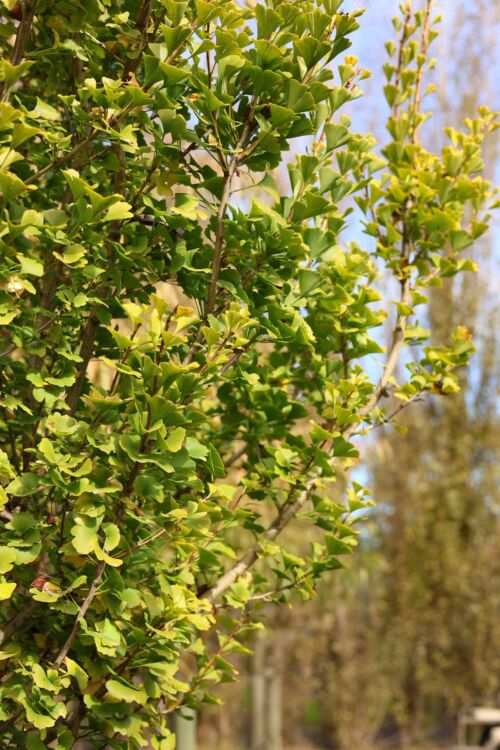
- Ginkgo biloba ‘Fastigiata’ – Upright Ginkgo is a deciduous tree with a very neat, upright form. As a selected male variety, it will not produce unpleasant fruit. Its deep green, distinctive maidenhair leaves turn golden yellow in autumn, creating a striking seasonal display. The ‘Fastigiata’ cultivar was discovered and selected in France. By the 1980s, it had emerged as a popular narrow form, valued for its elegant shape and suitability in restricted spaces. This tree is highly effective in narrow streets, tight spaces, and small home gardens. Moreover, it can be trimmed to maintain an even neater appearance, making it versatile for both urban and residential landscapes. It thrives in moist, well-drained soil and will tolerate clay conditions, provided the site is not waterlogged. For best growth, plant in a sunny position. Mature specimens typically reach around 7 metres high and 3 metres wide.
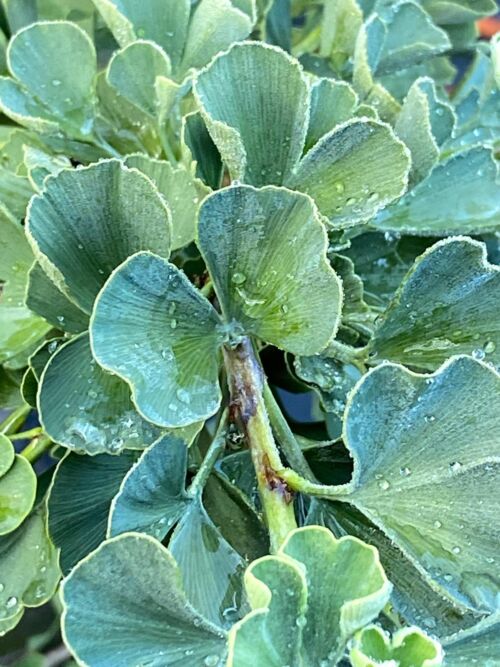
- Ginkgo biloba ‘Jade Butterflies’ is a compact, deciduous dwarf male cultivar from the Ginkgo family. It forms an upright, vase-shaped structure and grows slowly. Its deeply bi‑lobed, jade‑green leaves resemble butterflies, which inspired its name. In autumn, the foliage transforms into a soft cream‑yellow display. This variety prefers fertile, moist soil; however, it also tolerates compacted, poor, or urban soils though will not tolerate wet soils. It thrives in full sun, which enhances its vibrant yellow autumn colour. Additionally, it withstands coastal salt spray and pollution, making it ideal for urban, seaside, and exposed locations. Mature plants reach approximately 3 x 2 metres. Its compact size suits small gardens, courtyards, or container planting. It requires minimal pruning, though shaping in late winter or early spring works well. The term biloba refers to the two-lobed leaves. Although Ginkgo trees are native to China, ‘Jade Butterflies’ was developed in New Plymouth, New Zealand.
- Ginkgo biloba – Maidenhair Tree is a hardy, deciduous tree with an ancient heritage originating in China. It develops into a graceful pyramidal form, featuring symmetrical branches and distinctive grey, corky bark. During summer, broad fan-shaped leaves emerge, resembling sections of a maidenhair fern. These leathery, light-green leaves create a lush canopy. As the seasons change, the tree transforms with spectacular autumn colour, displaying bright golden-yellow foliage that lasts for an extended period. This tree thrives best in moist, well-drained soil. Moreover, it will tolerate clay conditions, provided the site is not waterlogged. For optimal growth, plant in full sun. Mature specimens typically reach around 6 metres high and 4 metres wide, making them ideal for both gardens and landscapes.
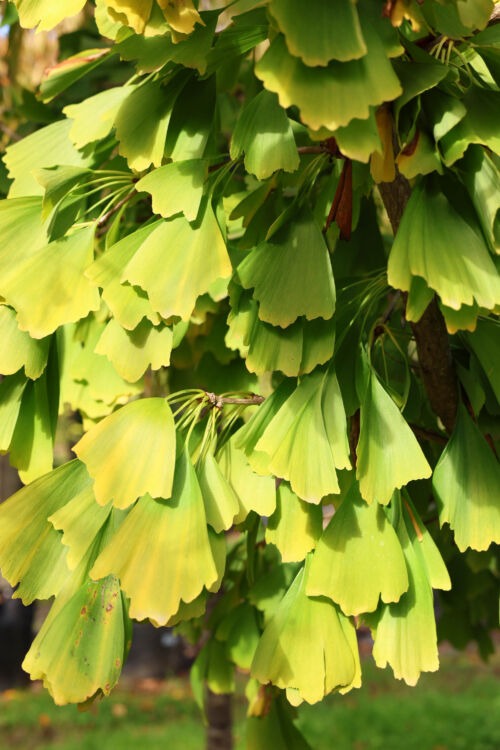
- Ginkgo biloba ‘Saratoga’ is a striking deciduous tree renowned for its spectacular autumn colour. Unlike female varieties, ‘Saratoga’ is a selected male clone, meaning it will not produce unpleasant fruit. Its upright growth habit makes it a graceful choice for gardens and landscapes. The tree’s distinctive long green leaves hang downward, creating a pendulous, weeping effect. During autumn, these leaves transform into a brilliant golden yellow, offering a breath taking seasonal display that lasts for weeks. Although Ginkgo trees are native to China, the ‘Saratoga’ variety was developed in the United States. It originated in the 1970s when the Saratoga Horticultural Research Foundation in California selected it from a seedling, ensuring its unique qualities. This tree thrives in moist, well-drained soil. Furthermore, it will tolerate clay conditions as long as the site is not waterlogged. For best results, plant in full sun. Mature specimens typically reach 7 metres high and 5 metres wide, making them ideal for both private gardens and larger landscapes.
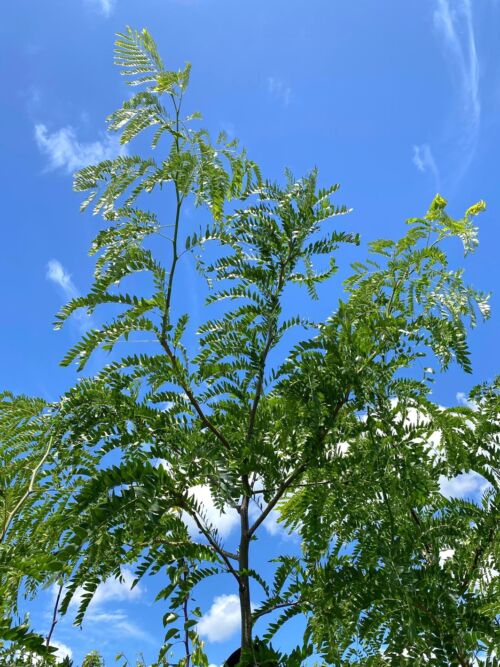
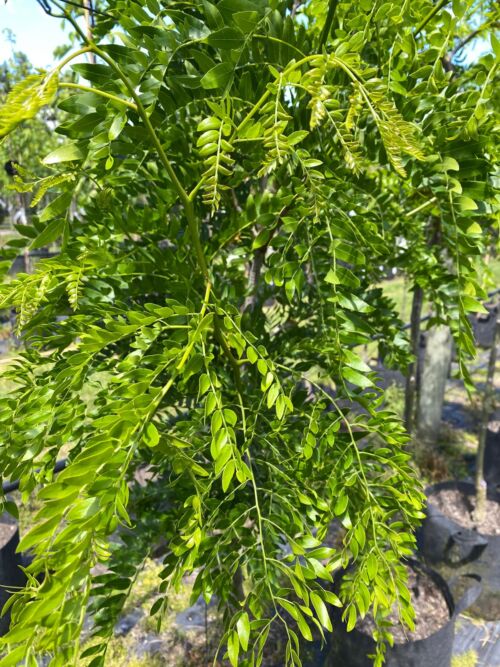
- Gleditsia triacanthos ‘Skyline’, or Honey Locust, is an upright spreading tree with a compact branching structure. Its dense, finely divided foliage is deep green through summer, turning a striking golden yellow in autumn. This hardy tree tolerates a wide range of soils, including sandy, loamy, and heavy clay. It grows best in well-drained soil but adapts to very dry periods. With full sun, it thrives in wind, coastal, and heat-exposed sites. Reaching approximately 6 x 4 metres, Honey Locust makes an excellent specimen, shade, or livestock shade tree. (ASPCA Ok - recommend own peace of mind research) Its resilience and adaptability ensure reliable performance across diverse conditions.
- Gleditsia tricanthos ‘Inermis’, commonly known as Thornless Honey Locust, is a smart, spreading deciduous tree that makes an excellent shade choice. Its graceful form adds structure and beauty to any landscape. During summer, the tree is adorned with bright-green, fine-textured leaves. As autumn arrives, these leaves transition to a warm yellow, creating seasonal interest and vibrant contrast. Originating from the United States, ‘Inermis’ thrives in diverse soil conditions. It tolerates compacted, clay, poor-quality, and even drought-prone soils, making it highly adaptable. Furthermore, this tree withstands heat, salt, and harsh urban environments. As an added benefit, it also fixes nitrogen, improving soil health and resilience. Use Thornless Honey Locust as a specimen in a lawn, a recreational shade tree, or a reliable street tree. It grows to approximately 10m tall and 8m wide, yet it can be pruned to suit shape and height. Closely resembling Gleditsia ‘Shademaster’, this thornless variety offers versatility, durability, and elegance for modern landscapes.





Why buy online?
Buying plants and trees online doesn’t have to feel risky or impersonal. At Black Bridge Nurseries, we’ve made it simple, safe, and satisfying — so you can shop with confidence, from the comfort of home.