Bird Feeding Trees
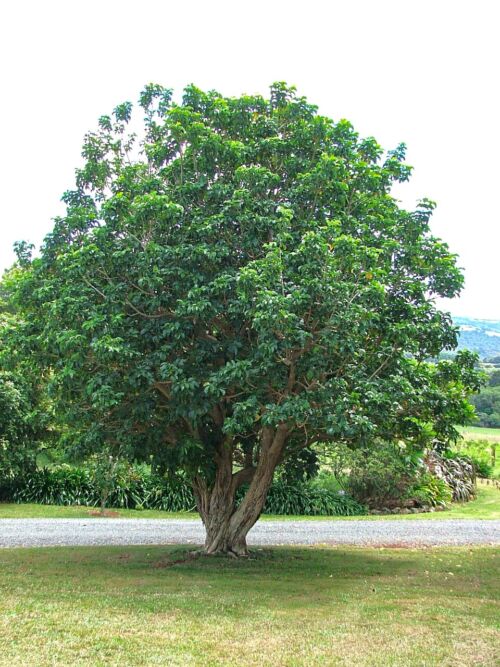
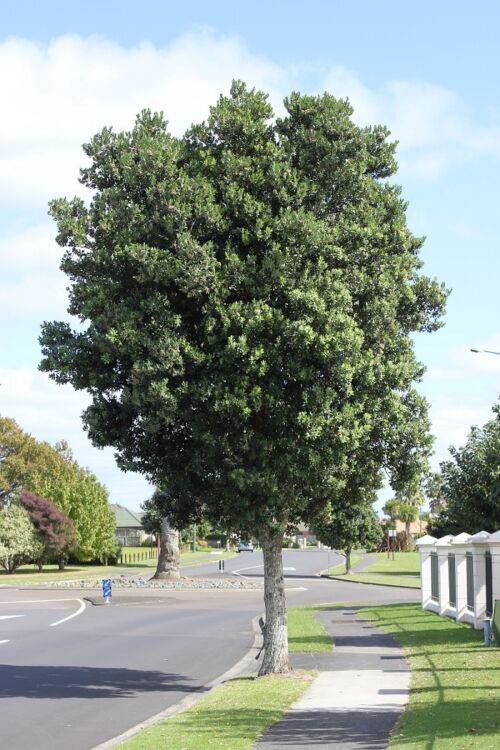
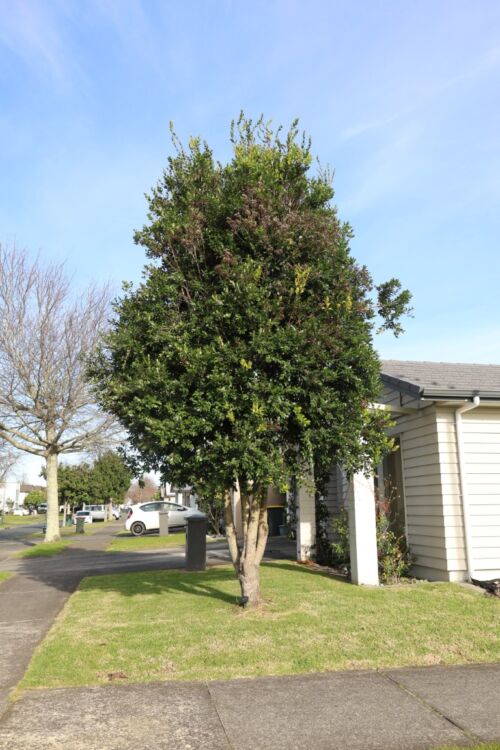
- Vitex lucens, commonly known as Puriri, is a large, spreading native tree of New Zealand, historically prized for its strong and durable timber. Its dark green leaves consist of multiple leaflets joined together, creating a lush and textured canopy. In addition, Puriri produces cup-shaped, dull red flowers around 25mm in size, which are followed by vibrant orange-red fruits. These fruits are highly attractive to native birds, adding life to your garden throughout the seasons. Moreover, this hardy tree thrives near coastal areas and tolerates wind well, making it suitable for exposed sites. While it prefers free-draining soil, it performs best in warmer temperate climates. Whether planted as a striking specimen or integrated into a larger landscape, Puriri offers both beauty and resilience. Ultimately, it can grow to over 15 x 8 meters, although it responds well to pruning and can be shaped to suit smaller spaces.
- Beilschmiedia taraire, commonly known as Taraire, is a striking New Zealand native tree that brings a bold, tropical presence to any landscape. With its stately, straight trunk and smooth brown bark, Taraire stands tall and proud offering both structure and elegance. Its broad, dark-green leaves feature distinctive depressed veins, giving the tree a lush, exotic appearance. In spring, very small orange flowers emerge in delicate clusters, followed by eye-catching plum purple fruit in autumn. These fruits are especially loved by the native Kererū pigeon, adding ecological value to its ornamental charm. Moreover, Taraire thrives in rich, deeply worked, well-drained soil and prefers a sheltered, temperate environment. Over time, it develops into a large canopy tree, reaching approximately 7 x 4 metres within 10 years. Under ideal conditions, it can eventually attain a mature height of 15–20 metres—making it a true forest giant. Whether planted as a legacy specimen or to enhance native biodiversity, Taraire offers both beauty and significance in New Zealand gardens
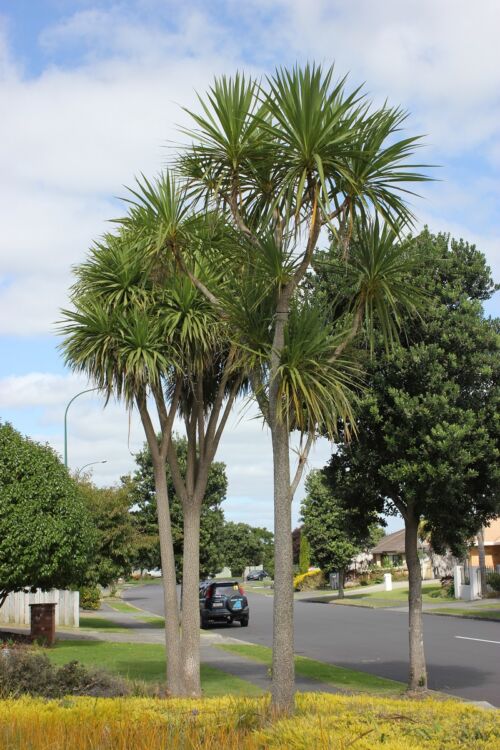
- Cordyline australis, commonly known as the Cabbage Tree or Ti Kouka, is a striking native tree found throughout New Zealand. With its upright trunk and clusters of long, drooping leaves—often reaching up to 1 metre—it resembles a palm and adds architectural flair to any landscape. In late spring, this hardy tree bursts into large heads of creamy white, scented flowers. These blooms are rich in nectar, attracting bees and other pollinators. As summer progresses, the tree produces fruit that draws native birds from January to April, enhancing biodiversity in your garden or property. Cordyline australis thrives in a wide range of environments—from swampy wetlands to dry, windy hill slopes. It’s commonly seen across farmland, open spaces, and scrubland in both the North and South Islands. While it tolerates clay soils, it performs best in free-draining ground and is resistant to coastal winds and harsh conditions. The name “Cabbage Tree” arose from early European settlers who, like Maori, used the tender heart-shoots as a vegetable. Its Latin name, australis, fittingly means “southern” or “of the south,” reflecting its deep roots in New Zealand’s southern landscapes. This iconic tree typically grows to around 6 metres tall and 2 metres wide, making it a bold and resilient choice for coastal gardens, rural properties, and native restoration projects.
- 6 x 2m
- Medium 5-10m
- Slow - Moderate
- Palm
- Upright
- New Zealand/div>
- Nikau Palms
- Green
- White
- Fragrant
- Dry once established, Damp-Wet, Clay
- Coastal, Windy, Hardy
- Bird Feeding, Small Gardens
- Corynocarpus laevigatus – Karaka is a dense, evergreen tree native to New Zealand. Its lush, glossy green foliage creates a bold, tropical impression—perfect for adding instant visual appeal to gardens and landscapes. Flowering in late winter to spring, it produces delicate green-cream clusters. By summer, vibrant orange berry-like fruits emerge, attracting native kererū, who help disperse the seeds. Exceptionally hardy, Karaka withstands strong winds, coastal exposure, and drought. However, it dislikes waterlogged soils. Ideal as a privacy screen or shade canopy, this tree grows to approximately 15–20 metres tall and 8 metres wide.
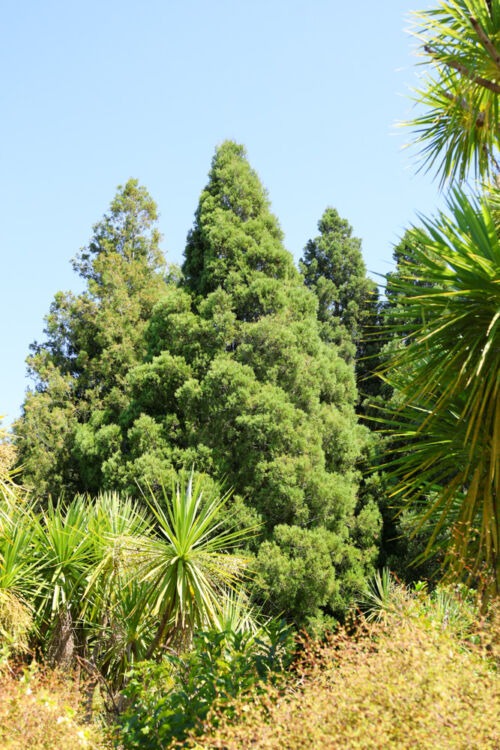
- Kahikatea, also known as White Pine, stands as New Zealand’s tallest native tree and commands attention with its strong, upright form. As a coniferous species, it grows relatively fast and develops a bold presence in wetland and lowland environments. In its juvenile stage, Kahikatea features drooping, needle-like foliage with a distinctive brown-bronze hue. Over time, this matures into a mid-green canopy as the tree gains height and structure. For many years, it maintains a columnar to oval shape before eventually opening into a broad, stately crown. Typically found growing in groups across swampy areas throughout New Zealand, Kahikatea thrives in damp soils and performs well in restoration projects and native plantings. Within 10 years, it can reach approximately 10 metres in height and 5 metres in width. Given time, it matures into a towering specimen—often exceeding 40 metres. This iconic tree is not only a symbol of strength and endurance but also plays a vital role in New Zealand’s ecological heritage.
- 10 x 5 in 10 Years, 40+ at maturity
- Tall 10+m
- Fast
- Tree
- Columnar-Oval
- Deciduous
- New Zealand/div>
- Dacrydium Cupressinum, Liriodendron tulipifera fastigiata, Olea El Greco, Knightia Excelsa, Acer Bowall, Poplar crow’s nest, Quercus robur fastigiata, Carpinus Betulus fastigiata
- Green
- Damp-Wet Tolerant
- Inhabits mostly lowland forests between 0–600 m in North and South Islands
- Statement tree, Bird feeding
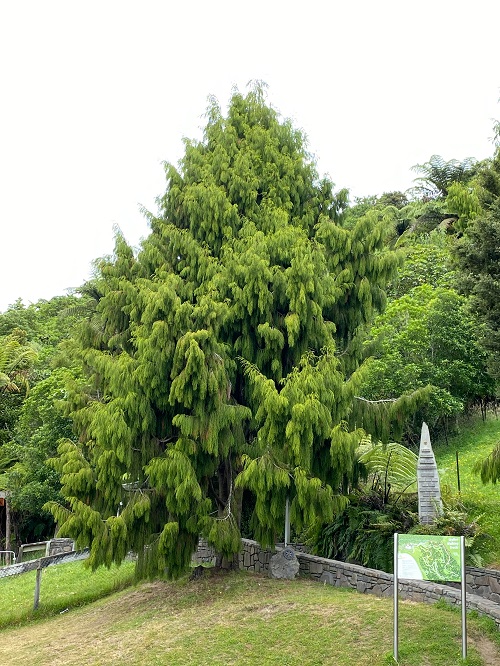
- Dacrydium cupressinum – Rimu, is and evergreen conifer native to New Zealand and is one of the most widespread and easily recognised forest trees in both the North and South Islands. With a slow to moderate growth rate, it develops into a commanding presence over time—ideal for both natural landscapes and structured garden settings. In its juvenile form, Rimu presents as a striking, pyramidal specimen with gracefully weeping branches and small, awl-shaped dark green leaves. As the tree matures, it broadens into a more upright form, shedding bark in thick, scaly plates that add rugged texture to its trunk. Thriving in cool, moist conditions, Rimu is well-suited to temperate gardens and native restoration projects. Within 10 years, it typically reaches around 10 metres in height and 4 metres in width. Given time, it can attain a majestic size of up to 25 metres tall and 9 metres wide. Whether planted for its ornamental value or ecological significance, Rimu stands as a bold and enduring symbol of New Zealand’s forest heritage.
- Didymocheton spectabilis – Kohekohe is a striking evergreen tree native to New Zealand. Found naturally in coastal forests across the North Island, it grows quickly and forms a handsome canopy, ideal for coastal gardens. Its large, tropical-looking leaves can reach up to 40cm long. From March to June, elegant, small waxy white flowers bloom directly from the trunk and branches, followed by fruit that enhances its exotic appeal. Kohekohe prefers moist, well-drained soil and full sun. It tolerates coastal conditions but dislikes waterlogged areas. In ten years, it typically reaches around 10 x 4 metres. At full maturity, it can grow up to 15 metres tall. Formerly known as Dysoxylum spectabilis, it remains a standout choice for native planting schemes.
- A bold and fast-growing native of New Zealand, Griselinia littoralis 'Broadway Mint' or Kapuka, is a robust shrub or small tree—an impressive variety of littoralis. Its light mint-green leaves are glossy with a wavy edge that adds texture and strength to any landscape. Moreover, this versatile plant is easily clipped into a tidy smaller garden hedge or, if preferred, allowed to grow into a larger, structured screen. Not only does it thrive in coastal conditions, but it also stands up well to strong winds and frosts—making it a reliable choice for exposed sites. For best results, ensure good drainage. Ultimately, it reaches approximately 3.0 x 3.0 meters in size, offering both presence and practicality. Interestingly, the Latin word littoralis translates to “growing by the sea,” a fitting nod to its coastal resilience.
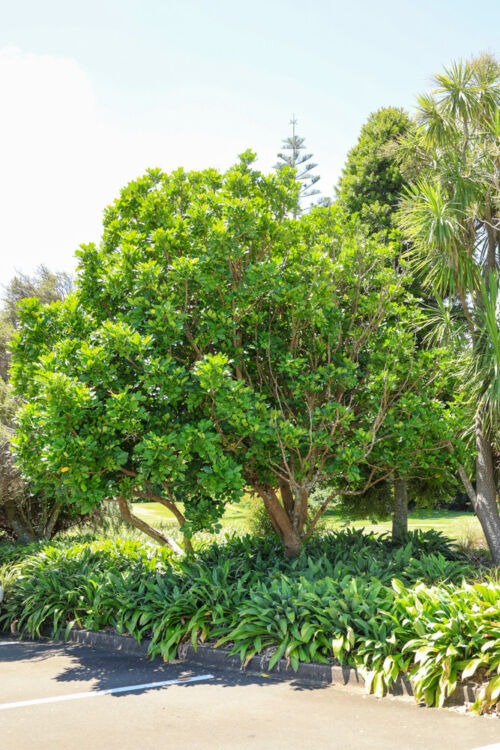
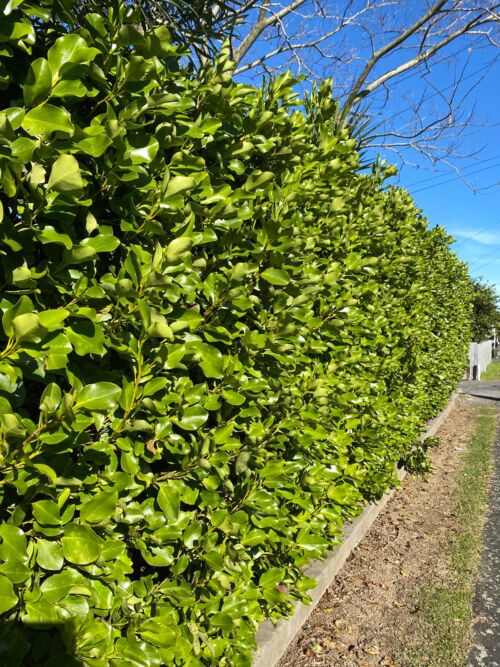
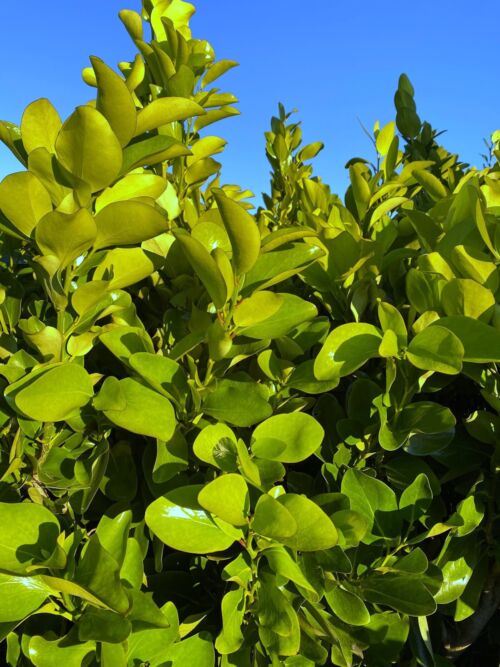
- Griselinia lucida, also known as Akapuka, is a robust New Zealand native. Whether grown as a shrub or shaped into a small, rounded tree, it features thick, glossy lime-green foliage with a bold, tropical feel. Thanks to its compact form, it’s easily trimmed into a neat hedge or left to fill out as a natural screen. Whether facing wind or salt spray, this plant stands strong. It thrives in both full sun and shaded areas, making it a reliable option for coastal gardens or sheltered urban spaces. However, for best results, ensure good drainage. Reaching around 3 metres tall by 2 metres wide, it’s perfect for compact areas needing bold structure and lush greenery.
- Knightia excelsa, commonly known as Rewarewa, is a striking evergreen native to New Zealand. It forms a slender, erect, and tapering tree with long, green serrated leaves that adds texture and structure to the landscape. In spring, it produces very unusual tubular reddish-brown flowers with yellow tips that are highly attractive to native birds, adding both ecological value and seasonal interest. Because of its upright habit, Rewarewa is ideal for smaller gardens and narrow spaces. Additionally, it is well-suited to coastal gardens. While it tolerates clay soils, overly wet conditions should be avoided. Likewise, phosphate-based fertilizers are not recommended. Typically, it grows to approximately 7 x 3 metres, making it a manageable yet elegant choice for urban and rural settings alike. Interestingly, the Latin name Excelsa refers to its tall, strong stature.
- 7 x 3m
- Medium 5-10m
- Moderate
- Tree
- Columnar
- Evergreen
- New Zealand
- Liriodendron tulipifera fastigiata, Olea El Greco, Dacrydium Cupressinum, Acer Bowall, Poplar crow’s nest, Quercus robur fastigiata, Carpinus Betulus fastigiata, Dacrycarpus Dacrydoidies, Cupressus totem
- Green
- Reddish Brown
- No
- Prefers Moist well drained, Will tolerate clay, Not Wet
- Coastal, Wind
- Avenue, Small Garden, Bird Feeding, Narrow Spaces
- Kunzea ericoides, commonly known as Kanuka, is a tall, fast-growing New Zealand native tree with a broad, spreading crown. Because of its vigorous growth, it’s widely recognised and valued in native landscapes. Although its tiny needle-like leaves resemble Manuka, they feel noticeably softer to the touch. During summer, small white flowers blanket the tree, creating an almost snow-like effect that’s highly attractive to bees. Compared to Manuka, Kanuka grows larger and produces smaller seeds. Once established, it withstands windy coastal conditions and thrives in dry soils. Furthermore, it tolerates clay, though overly wet areas should be avoided. Extremely hardy, Kanuka reaches approximately 6 x 4 metres. As a result, it’s used extensively as a cover tree to protect newly planted native revegetation, offering both shelter and ecological support.
- Leptospermum scoparium – Manuka or Tea Tree is a compact, native New Zealand tree known for its resilience and beauty. It’s ideal for gardens seeking year-round interest and biodiversity. Dark green foliage is narrow, lance-shaped and sharply pointed. From late autumn to early spring, the tree bursts into single or double flowers, offering a vibrant display and nectar for bees. These are followed by its berries, which resemble tiny hot cross buns. Manuka is also prized for its high-quality honey, making it a valuable addition to any landscape. Hardy and adaptable, Manuka tolerates clay soils and thrives in windy coastal areas or dry conditions once established. Avoid overly wet soils for best results. It typically grows to around 5 meters tall and 3 meters wide.
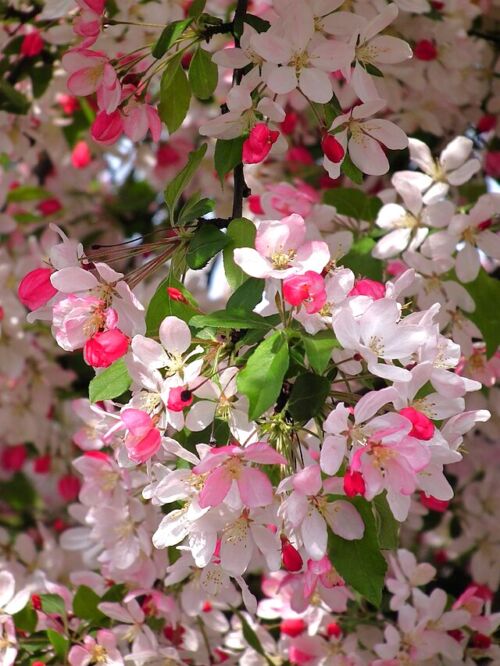
- Malus floribunda, commonly known as the Japanese Crabapple, is a moderately fast-growing ornamental tree with its origins in Japan. With long, gracefully arching branches and small, dark green leaves, it brings elegance and seasonal interest to any garden. As spring arrives, the entire tree bursts into colour with bright pink buds that open into a profusion of small white to pale pink flowers. Shortly after flowering, yellow fruits flushed with red begin to appear. These fruits are not only edible but also attract birds, adding life and movement to the garden. Interestingly, the Latin name floribunda means “flowering freely” or “many-flowering,” perfectly describing this tree’s abundant spring display. Because of its compact size, reaching approximately 3 x 2.5 metres, it’s an excellent choice for smaller gardens, courtyards, or decorative planting schemes. Furthermore, it responds well to pruning, making it easy to maintain a neat and tidy shape.
- Meryta sinclairii – Puka is a smaller evergreen tree native to New Zealand. Its upright, spreading branches hold huge, tropical-looking leaves that shine deep green. These handsome leaves can reach up to 50cm long and 20cm wide, creating a bold and lush display. From August to April, Puka produces inconspicuous white-green flowers. Shiny black fruits follow and remain year-round, attracting foraging birds anfd adding interest and contrast to the foliage. This tree thrives in warm, frost-free climates with moist, fertile, and well-drained soil. Moreover, it is highly tolerant of wind and salt, making it an excellent choice for coastal gardens. Growing to approximately 5 x 3 metres, Puka works beautifully as a stand-alone specimen. It also serves well as a filler at the back of a garden, providing structure and tropical appeal.
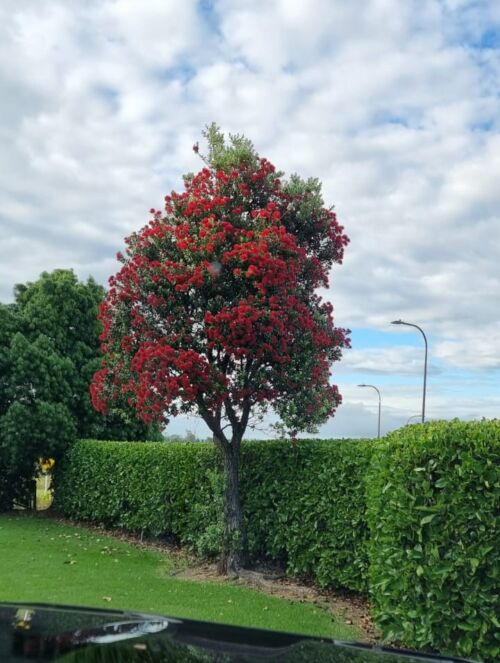
- Metrosideros excelsa 'Maori Princess' is a refined cultivar of the iconic Pohutukawa, selected for its upright, pyramidal growth habit. Its foliage is a distinctive deep green, offering a lush contrast to its vivid red flowers. Because of its compact form and neat structure, this tree is ideal for smaller gardens or urban landscapes. In addition, its tidy shape makes it easy to maintain and visually appealing year-round. In late spring, 'Maori Princess' produces brilliant red flowers that cover the tree in a spectacular display. These blooms are not only eye-catching but also serve as a valuable food source for native birds. Consequently, this tree adds both beauty and biodiversity to your garden. Growing to around 7 x 5 metres, it can be clipped to shape, making it suitable as a screen, hedge, or standout specimen. Metrosideros varieties, including 'Maori Princess', thrive in coastal environments and are impressively resilient. They tolerate poor soil, excess moisture, and even drought. Moreover, they withstand salt-laden winds and arid conditions, making them perfect for exposed sites. While they can grow in clay and wet soils, they perform best in moist, well-drained earth. Therefore, this cultivar is not only tough but also an excellent shade tree for compact outdoor spaces.
- Metrosideros excelsa 'Scarlet Pimpernel', commonly known as Pohutukawa, is a striking member of New Zealand’s iconic native tree family. This compact evergreen variety features a bushy growth habit and smaller leaves than traditional Pohutukawa, making it ideal for smaller gardens or urban landscapes. Also known as the New Zealand Christmas tree due to its prolific flowering in December when vibrant orange-red flowers bloom which attract bees, birds, and beneficial insects. Renowned for its resilience, 'Scarlet Pimpernel' thrives in coastal environments and tolerates poor soils, excess moisture, drought, and salt-laden winds. It also adapts well to clay and wet conditions, though it prefers moist, well-drained soil for optimal growth. Perfect as a shade tree or trimmed into a screen, this hardy native grows to approximately 4 metres tall and 2 metres wide. A beautiful, low-maintenance choice for coastal and urban planting.
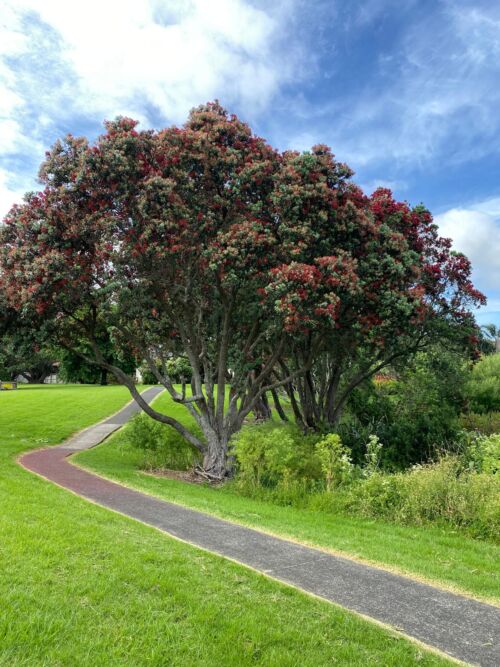
- Metrosideros excelsa, commonly known as Pohutukawa, is one of New Zealand’s most iconic native trees. Excelsa stands out as the giant of the species, with a wide-spreading canopy and olive-green foliage. From December, it bursts into bright crimson, fluffy flowers. For this reason it’s often called the New Zealand Christmas tree. Flowers also attract bees, birds, and beneficial insects. Thriving in coastal environments, Pohutukawa trees are incredibly resilient. They endure poor soil, excess moisture, and even drought. Moreover, they withstand salt-laden winds and dry, exposed landscapes. Their thick roots often anchor into cliff faces, showcasing their strength and adaptability. Pohutukawa prefers moist, well-drained earth, but will grow in a wide range of soils. With proper space, this majestic tree can grow up to 15 metres tall and 10 metres wide, making it a stunning feature in larger gardens or coastal settings.
- Metrosideros excelsa x robusta 'Mistral', commonly known as Pohutukawa, is a stunning native tree discovered on the Coromandel Peninsula, located on the north-western coast of New Zealand’s North Island. As a natural hybrid of Metrosideros excelsa and robusta, Mistral offers a more compact and upright form. Its fresh green foliage matures into a darker shade, creating year-round interest. Moreover, its tidy growth habit makes it ideal for smaller spaces. In late spring, Mistral bursts into deep scarlet red flowers that blanket the entire tree, creating a breathtaking display. Not only are these blooms visually striking, but they also attract native birds, adding ecological value to your garden. Growing to approximately 5 x 3 metres, this tree is easily clipped into shape. Therefore, it works beautifully as a screen, hedge, or standout specimen in compact landscapes. Metrosideros varieties thrive in coastal environments and are impressively resilient. They tolerate poor soils, excess moisture, and even drought conditions. Furthermore, they withstand salt-laden winds and arid climates, making them perfect for exposed sites. While they can grow in clay and wet soils, they perform best in moist, well-drained earth. As a result, Mistral is not only hardy but also an excellent shade tree for smaller gardens.
- Myrsine salicina – Toro is a fresh-looking, evergreen tree with a compact, upright form. Native to New Zealand, it adds year-round greenery to gardens and landscapes. Its thick, smooth, and elongated leaves give it a lush appearance. In spring, it produces clusters of small cream to pale pink flowers, followed by vibrant red to purple fruits that attract native birds. The term salicina refers to plants with narrow, pointed, willow-like leaves. Toro is ideal for coastal areas and responds well to trimming, making it easy to shape. Perfect as a small garden tree, it typically grows to around 6 meters tall and 3 meters wide. Its tidy form and resilience make it a versatile choice for various outdoor settings.
- Nyssa sylvatica – Black Tupelo is a medium-sized, deciduous tree with a graceful pyramidal shape. Native to North America, it brings seasonal interest and structure to gardens and landscapes. During summer, its dark green, glossy leaves—oval and pointed—reach up to 15 cm long. As autumn arrives, they transform into a stunning display of reds, oranges, and yellows, making it a true standout. This tree thrives near ponds or in damp, moist areas and tolerates clay soils well. Tiny flowers bloom discreetly, followed by small blue berries that attract birds and enhance biodiversity. Typically growing to around 7 meters tall and 4 meters wide, Black Tupelo is ideal for woodland-style plantings. The name sylvatica reflects its natural habitat—thriving in forested environments..