Hedging Plants
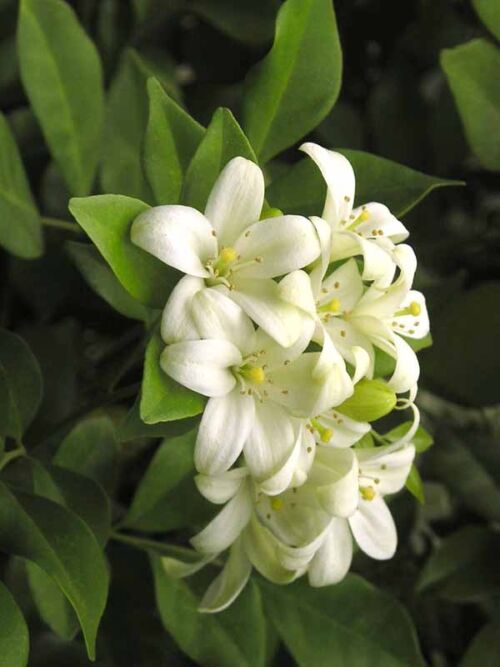
- Murraya paniculata, commonly known as Orange Jessamine, is a small tropical evergreen tree or shrub with glossy, dark green pinnate leaves. It grows densely and compactly, while also maintaining a moderate growth rate. In spring, it produces masses of highly fragrant white flowers with a citrus-like scent. These blooms smell similar to orange blossoms and become most fragrant at night. Orange Jessamine is native to a wide region across tropical and subtropical Asia and Australia and grows best in rich, moist, well-drained soil and thrives in full sun to part shade. Moreover, it performs well in sheltered locations protected from strong winds. This popular shrub is ideal for creating small hedges or borders and is well suited to compact gardens and containers. The common hedging height is 1.0–3.0 m, although it can reach 4 × 3 m when left untrimmed.
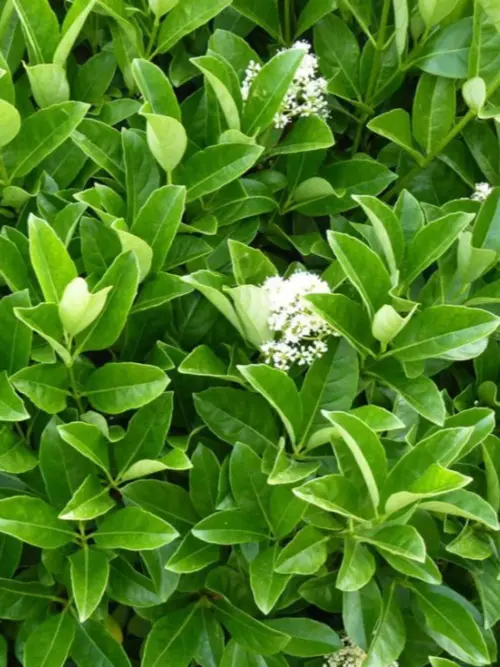
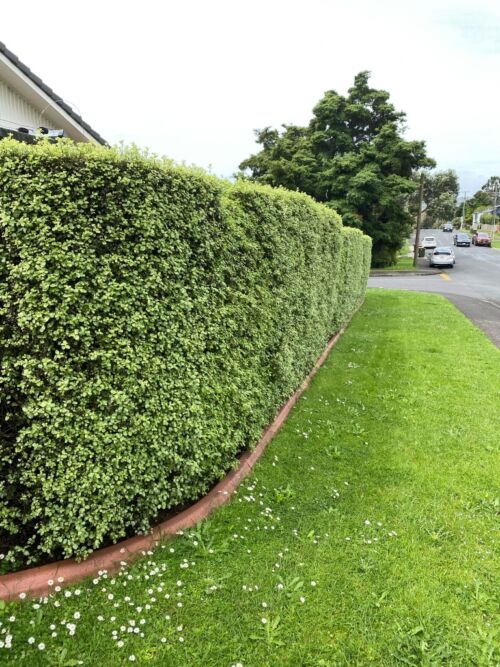
- Viburnum odoratissimum ‘Dense Fence’ is an evergreen shrub bred to create fast-growing, dense hedges. As a result, it provides excellent screening and privacy in gardens or landscapes. Its glossy, dark green leaves emerge with a striking red flush, while clusters of fragrant white flowers appear in spring. Consequently, the shrub offers year-round interest with minimal pruning required to maintain a tidy hedge. This hardy plant prefers moist, well-drained soil in full sun to partial shade. Moreover, once established, it tolerates light frost and grows to approximately 3 x 2 metres. Interestingly, the epithet odoratissimum comes from Latin, meaning “very fragrant” or “most fragrant,” perfectly reflecting its delightful spring bloom
- Flower Fragrant? Yes
- Thuja Green Giant is a resilient, fast-growing evergreen conifer admired for its dense, dark green foliage and upright pyramidal form. Propagated from cuttings, it maintains a uniform habit, remains disease-free, making it ideal for consistent planting. Because of its vigour, Thuja Green Giant is widely used for privacy screens and hedges. Moreover, it serves as a successful shelter belt worldwide. Originating in Denmark, this hybrid combines parent species from North America and Japan. In addition, it tolerates a wide range of soils, from sandy to clay, although it dislikes standing water. It also withstands windy sites and thrives best in full sun. For hedging or shelter, plant approximately 1.5–2.0 meters apart. At maturity, Thuja Green Giant reaches around 12 meters tall and 4 meters wide, creating an impressive and lasting landscape feature.
- Pittosporum pimeleoides is a rare, native evergreen shrub of New Zealand and is considered nationally endangered. With its much-branched, low-growing form, it features very tiny, narrow, often whorled leaves. This distinctive shrub produces fragrant, red-striped yellow flowers, followed by capsules containing black, sticky seeds in bright orange pith. Endemic to the northern North Island, it naturally thrives in coastal shrubland and is often associated with kauri forest habitats. Growing to around 80-1.0m metres tall, Pittosporum pimeleoides prefers well-drained soil as it struggles in heavy, wet clay. However, it adapts well to both high-light and shaded conditions. Its rarity and winter fragrance makes it a perfect talking point in any garden but is well suited for smaller gardens or pots.
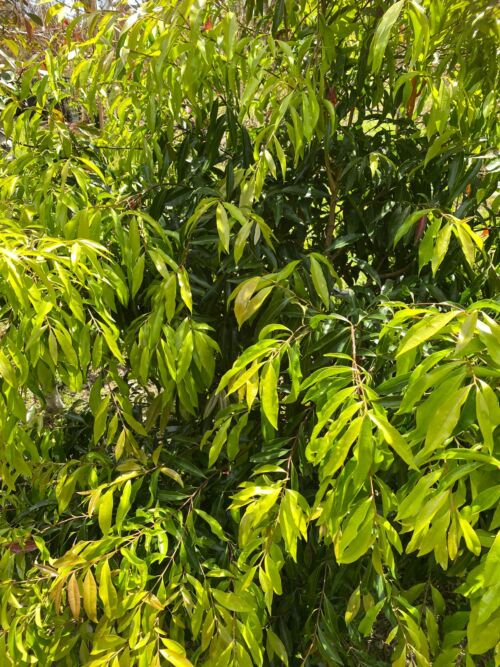
- Waterhousia floribunda - Weeping Lilly Pilly is a striking evergreen tree known for its dense, weeping form making it a standout feature in any garden. Its long, thin leaves have wavy edges and appear mostly green. However, new growth brings a burst of lighter greens, yellows, and salmon tones, adding seasonal interest. From November to January, the tree blooms with white fluffy flowers. Shortly after, rich pink berries emerge, enhancing its ornamental appeal and attracting feeding birds. Thanks to its versatility, you can trim it into a hedge or let it grow freely as a lush “umbrella” shade tree. Either way, it provides excellent screening. Moreover, Waterhousia floribunda thrives in a wide range of conditions. It is hardy, adaptable, and grows to approximately 8 metres tall by 5 metres wide. Interestingly, the name “floribunda” comes from botany and means “many-flowering” or “flowering profusely”—a fitting description for this beautiful tree.
- Camellia hybrid ‘Nicky Crisp’ is a slower-growing, compact shrub with dense foliage and deep green leaves. Its neat form makes it an attractive choice for structured plantings. In addition, small pale pink semi-double flowers with bright yellow stamens appear for 5–6 weeks during winter. These blooms add soft colour and seasonal interest to the garden. Moreover, this camellia thrives in full sun or dappled shade when planted in well-drained acidic soil. Prune after flowering to encourage bushiness. It makes an outstanding hedge or border, especially in smaller gardens, and can reach up to 2m if left untrimmed.
- Tupidanthus calyptratus - Mallet Flower, is a fast-growing tropical evergreen that adds lush vibrancy to any garden. Its glossy, bright green palmate leaves droop gracefully, creating a soft, weeping effect. In spring and summer, green buds emerge and bloom into tiny white flowers. These sit atop structures resembling small mallets—hence the name “Mallet Flower” and its botanical title, "calyptratus". Mallet Flower thrives in moist, well-drained soil and prefers full sun. It typically grows to around 6 metres tall and 4 metres wide, is easily trimmed to shape and height, making it ideal for tropical landscaping.
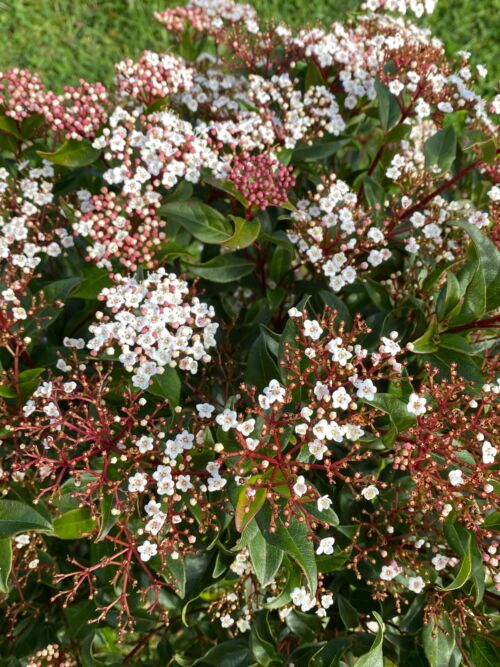
- Viburnum tinus ‘Eve Price’ is a compact evergreen shrub with dense, dark green foliage. Its tidy growth habit makes it ideal for structured garden designs and low-maintenance landscapes. During winter, masses of carmine buds burst into small, pink-tinged white flowers. These blooms add seasonal charm and brighten cooler months with subtle colour and fragrance. After flowering, the shrub produces small blue-black berries. Not only do they add ornamental value, but they also provide a valuable food source for birds. This hardy plant thrives in moist, well-drained soil and tolerates full sun to light shade. Perfect for mass planting or hedging, Viburnum ‘Eve Price’ also works beautifully as a standalone feature. You can easily trim it to maintain shape and size, reaching approximately 2.0 x 1.5 metres.
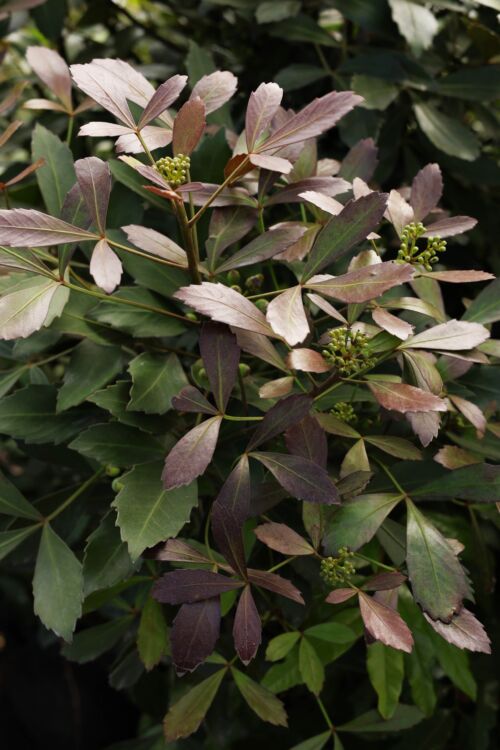
- Pseudopanax lessonii ‘Purpurea’ is a fast-growing evergreen shrub or small tree native to New Zealand. Multi-branched and compact, it features fleshy, palmate leaves in striking dark purple-red tones with three to five leaflets. From December to February, small green flowers appear, followed by dark purple fleshy fruit. These fruits attract birds, adding seasonal interest and wildlife appeal to the garden. This variety prefers moist, well-drained soil but will not tolerate waterlogging. For the best colour, plant in full sun where its foliage shines most vividly. ‘Purpurea’ can be left to grow as a small shade tree. Alternatively, it trims well into a compact hedge or can be clipped to form a larger bushy screen, offering flexibility in garden design. Ideal for coastal gardens, it withstands salt-laden winds and thrives in exposed conditions. Growing to approximately 4 x 2.5 metres, it provides structure, colour, and resilience year-round.
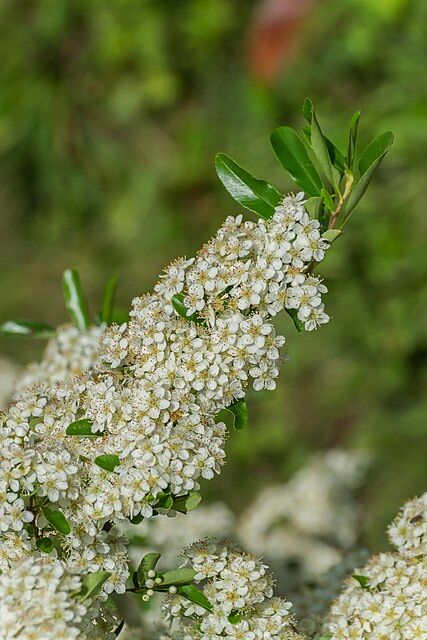
- Pyracantha ‘Brilliant’ – Scarlet Firethorn is a compact evergreen shrub known for its glossy green foliage and occasional thorns. In spring, it bursts into masses of small, delicate white flowers, adding seasonal charm to any garden. As autumn arrives, vibrant orange-red berries cover the plant, lasting through winter. These berries not only add colour but also attract birds, enhancing garden biodiversity. This hardy shrub thrives in full sun to semi-shade and prefers well-drained, moist soils. It tolerates frost, wind, and suits both sheltered and coastal locations. Often chosen for hedging and screening, Pyracantha ‘Brilliant’ also makes an excellent security hedge. It grows to approximately 2.5 x 2.5 metres and is easily clipped to shape.
- Radermachera Everlasting Beauty is a stunning shrub that has glossy, deep green emerald foliage and produces clusters of trumpet shaped, pale pink flowers with yellow throats that are sweetly scented. Flowering occurs during warmer months and flowering can occur multiple times in a season. It has a strong upright growth habit ideal for hedging and border plantings. A hardy shrub that is drought tolerant once established.
- Pittosporum crassifolium ‘Green Lustre’ is a hardy, evergreen tree native to New Zealand. Closely related to the standard Karo, it differs in that it features glossy green leaves on top with a soft, felted underside. This compact tree adds texture and depth to any garden. In spring, it blooms with sweetly scented purple flowers. These are especially fragrant during still mornings or calm evenings, adding charm to outdoor spaces. It thrives in full sun and well-drained soil. Once established, it tolerates dry conditions and handles windy sites and coastal exposure. Whether trimmed into a neat hedge or left to grow naturally, it forms a dense screen. Typically, it reaches around 6 metres tall and 4 metres wide.
- Pittosporum tenuifolium ‘Wrinkle Blue’ – Kohuhu, is an evergreen tree native to New Zealand. Compact and fast-growing, it naturally forms a pyramidal shape, making it ideal for structured landscapes. Its wavy, green-blue leaves add texture and colour year-round. In spring, purple flowers bloom, releasing a sweet fragrance during early mornings and evenings. This tree thrives in moist, well-drained soil and prefers a sunny position. When regularly trimmed, it makes an excellent hedge. Typically, it grows to approximately 4 metres tall and 3 metres wide. Interestingly, tenuifolium translates to “with slender leaves,” reflecting its elegant foliage
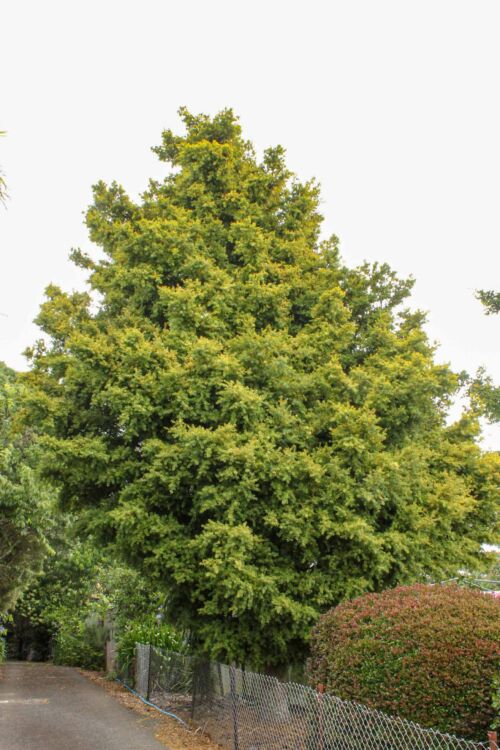
- Podocarpus totara ‘Aurea’ – Golden Totara, is a striking evergreen tree native to New Zealand. Closely resembling its parent species, it stands out with rich golden foliage when grown in full sun. From a young age, it forms a bushy, compact shape that adds texture and colour to any landscape. It prefers moist, well-drained soil and should not be planted in wet areas. This hardy tree tolerates wind and coastal conditions, making it suitable for exposed sites. Its slow growth allows for easy maintenance in gardens of all sizes. Golden Totara can be trimmed to shape and works beautifully as a hedge, screen, or larger shelter. In ideal conditions, it reaches approximately 10 x 6 metres at maturity.
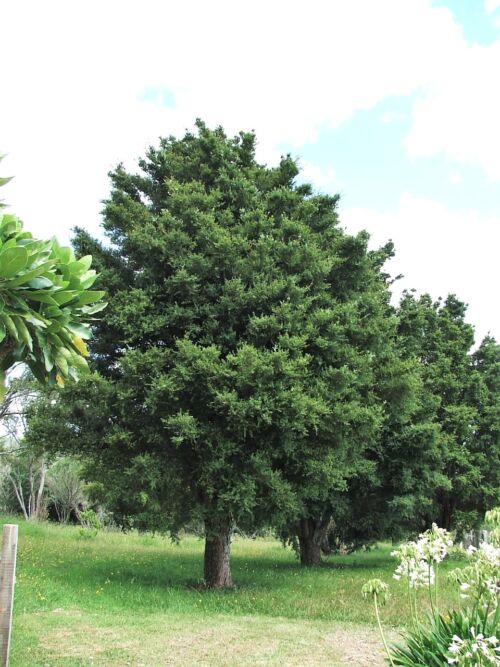
- Podocarpus totara ‘Ardmore Green’ is a strong, sturdy evergreen native to New Zealand. From an early age, it displays dense, dark green foliage, closely resembling the mature Totara tree. It thrives in full sun and prefers moist, well-drained soil. Thanks to its tolerance for wind and coastal conditions, it suits a wide range of garden environments. With slow, steady growth, ‘Ardmore Green’ is easy to manage in gardens of any size. Its compact nature makes it ideal for structured planting. Use it as a stand-alone specimen, for avenues, or as a large screen or shelter. When trimmed, it forms a robust hedge with a Yew-like appearance. In ideal conditions, it can reach approximately 7 x 5 metres at maturity.
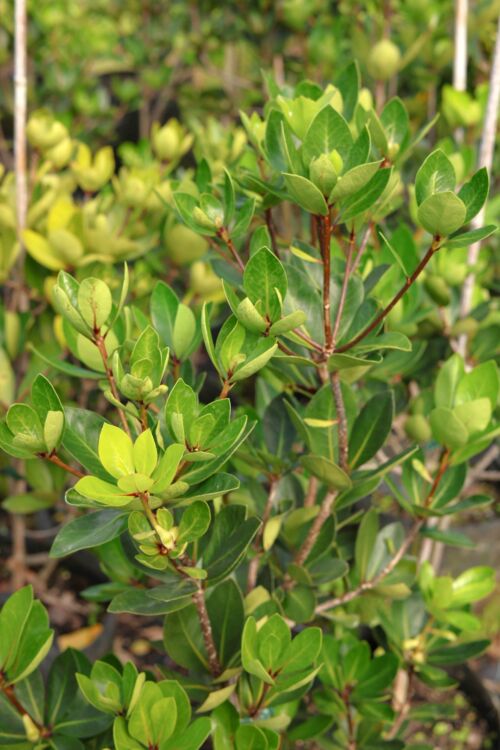
- Pittosporum cornifolium – Tawhiri Karo is a compact, evergreen shrub native to New Zealand. This rare Pittosporum variety features leathery, dark green leaves up to 6cm long, arranged in whorls that resemble a vireya rhododendron. In late winter, it produces sweetly scented yellow flowers that add charm and fragrance to sheltered garden spaces. Its unique foliage and blooms make it a standout feature. This shrub prefers moist, well-drained soil and thrives in a sheltered position. It’s ideal for smaller gardens or can be grown successfully in pots. Typically growing to around 2 metres tall and wide, Tawhiri Karo offers structure and interest without overwhelming limited spaces.
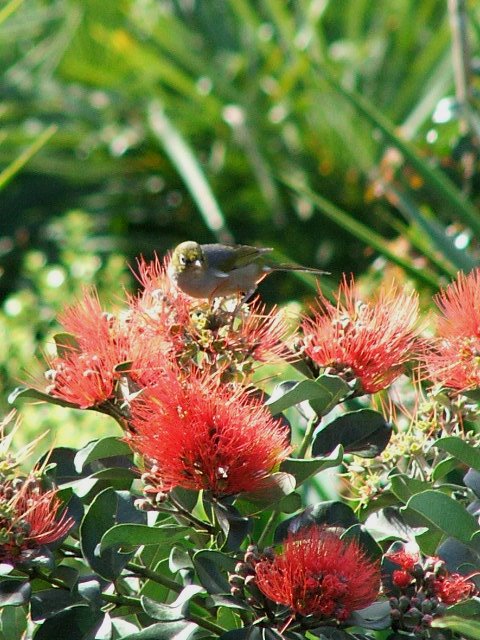
- Metrosideros collina ‘Springfire’ (Pacific Island Pohutukawa) is a vigorous fast growing tree from the Pacific Islands, admired for its striking grey‑green foliage. As one of the earliest Pohutukawa to bloom, it bursts into vibrant orange‑red flowers that signal the arrival of Spring. This hardy tree tolerates clay soils and, once established, withstands dry conditions. Furthermore, it thrives in coastal and windy sites, making it a versatile choice for challenging environments. Its compact size suits smaller gardens, while regular trimming allows easy shaping into a colourful hedge. However, protect young plants from frost to ensure healthy growth and long‑term success. Growing to approximately 4m tall by 3m wide, ‘Springfire’ offers manageable proportions and year‑round appeal, combining resilience with striking seasonal beauty.
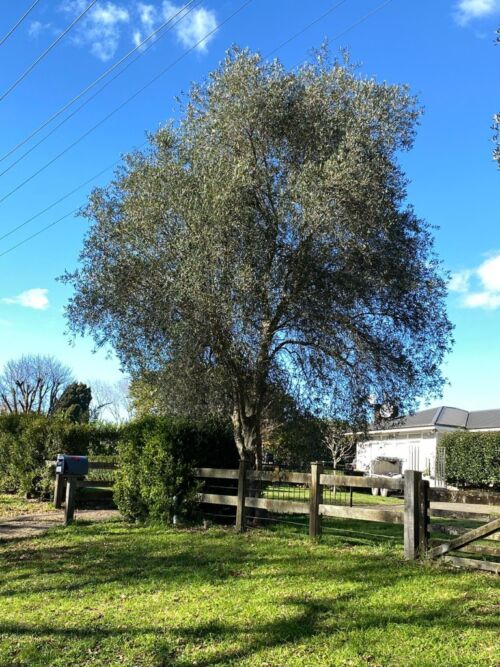
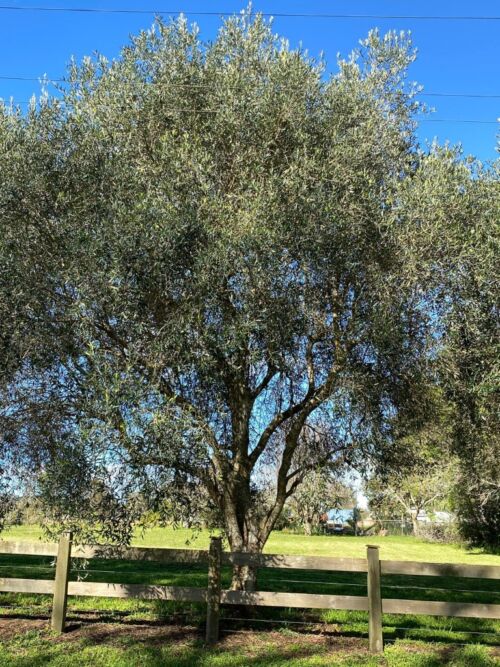
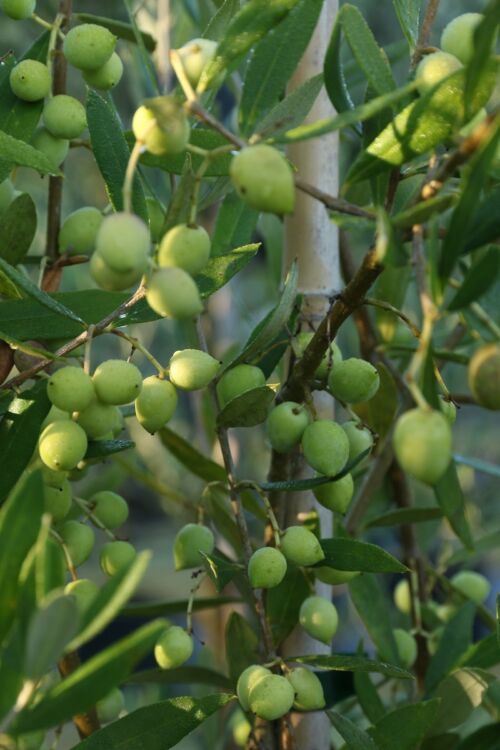
- Olea europaea ‘Ascolano’ is a rounded, moderately fast-growing evergreen with a bushy habit. It features silvery-green, leathery leaves and strong, rigid branches. This variety is well known for producing large, mild table olives, making it both ornamental and productive. Ascolano is suitable for hedging or screening and can also be left to grow as a specimen tree. When mature, it reaches approximately 6 x 3 metres, offering structure and beauty in the landscape. Originating from the Marche and Tuscany regions of Italy, Ascolano thrives in full sun and well-drained soil. Once established, it tolerates wind, coastal conditions, and dry spells, making it a hardy and versatile choice for gardens.
- Olea europaea ‘J5’ is a medium-sized, evergreen olive tree with a graceful, weeping form. Ideal for warmer climates, it adds Mediterranean charm to any garden. In spring, it bursts into masses of tiny cream-white flowers, which later develop into a generous crop of medium-sized oval fruit by autumn. This New Zealand selection thrives in full sun and tolerates wind and coastal conditions. Once established, it can endure extended dry periods, making it a resilient choice for low-maintenance landscapes. Growing to approximately 6 x 3 metres, the J5 olive tree is not only a prolific fruiter but also provides light, dappled shade—perfect for relaxing outdoor spaces.
- Commercial oil Olive. Smaller leaves with dense habit. Small fruit produced in abundance with high oil content. Fruits from an early age. Will tolerate warmer climates. Being from the Mediterranean olive trees require full sun and will tolerate wind coastal and can also survive extended dry periods once established.