Hedging Plants
-
- Description
Compact bushy small tree with an excellent rounded habit. Leaves lettuce green small and fresh-looking. Small purple flowers are fragrant in the stillness or morning or evening. Full sun dry tolerant once established. Trims well so ideal as a hedge planted in rows or individually as a specimen or left to grow on as a trimmed screen. Ideal in a smaller garden. Height x Width 3 x 3 Range Small 1-5m Growth Rate Moderate Plant Type Tree Shape Round Country of Origin New Zealand Similar to Consider Other Pittosporums - Leaf
Leaf Colour Green Lime - Flower
Flower Colour Red Purple Fragrant? No - Uses
Screening Yes Hedging Yes Bird Feeding Yes Small Garden Yes Note: Growth, height and grade information are given in good faith but are subject to natural variables beyond our control. - Pittosporum tenuifolium ‘Wrinkle Blue’ – Kohuhu, is an evergreen tree native to New Zealand. Compact and fast-growing, it naturally forms a pyramidal shape, making it ideal for structured landscapes. Its wavy, green-blue leaves add texture and colour year-round. In spring, purple flowers bloom, releasing a sweet fragrance during early mornings and evenings. This tree thrives in moist, well-drained soil and prefers a sunny position. When regularly trimmed, it makes an excellent hedge. Typically, it grows to approximately 4 metres tall and 3 metres wide. Interestingly, tenuifolium translates to “with slender leaves,” reflecting its elegant foliage
- Planchonella costata – Tawapou is a compact, round-spreading coastal tree native to New Zealand. Its glossy, leathery green leaves—pale underneath—add texture and contrast to any garden. In spring, delicate light green flowers appear, followed by 25mm fruit that ripens from green to purple-black by December. These fruits are a favourite of the New Zealand wood pigeon, enhancing local biodiversity. Tawapou can be trimmed into a shelter hedge, making it both functional and attractive. It also serves as an excellent small shade tree in coastal or urban settings. Typically growing to around 6 x 3 meters, it fits well in compact spaces. Interestingly, the name costata refers to the rib-like veins visible on its leaves.
- Podocarpus gracilior, also known as African Fern Pine, is a dense evergreen conifer with a graceful pyramidal shape. Native to East Africa, it adds elegance and structure to any landscape. Its slender branches feature lush, glossy, needle-like foliage in deep green tones. This refined texture makes it a standout choice for both formal and natural garden designs. Thriving in sunny spots with moist, well-drained soil, it adapts well to various conditions. It’s ideal for use as a street tree or a striking specimen in larger gardens. For added versatility, it can be trimmed into a hedge, shaped as a pleached hedge, or grown as a tall shelter or screen. Mature plants can reach approximately 10 x 5 metres.
- Podocarpus totara 'Black Bridge', also known as Upright Totara, is a bushier and more upright form of the native NZ Totara. Unlike the standard Totara, it skips the thin juvenile stage and instead develops a dense, strong structure from an early age. As a result, it offers a robust and tidy appearance right from the start. With a moderate growth rate, this versatile tree is ideal as a stand-alone specimen in areas where space is limited. Alternatively, it can be easily trimmed into a compact hedge or allowed to grow on and shaped into a screen or shelter belt. Furthermore, once established, it tolerates drier conditions well—although it still prefers moist, well-drained soil for optimal health. Thanks to its hardiness and adaptability, 'Totora Black Bridge' is an excellent choice for a wide range of garden styles. Ultimately, it reaches approximately 8 x 5 meters, making it a striking yet manageable feature in any landscape.
-
- Podocarpus totara ‘Matapouri Blue’ – Blue Totara is a distinctive New Zealand native Totara with a more upright, open pyramidal form. Its striking blue-grey, needle-like foliage adds unique colour and texture to any landscape. This slow-growing evergreen prefers full sun and moist, well-drained soil. It’s hardy and adaptable, making it suitable for a range of garden styles and conditions. Ideal as a specimen tree, it can also be trimmed into a hedge or left to grow as a natural screen. Its elegant structure offers year-round interest. In optimal conditions, Blue Totara can reach approximately 7 x 5 metres at maturity.
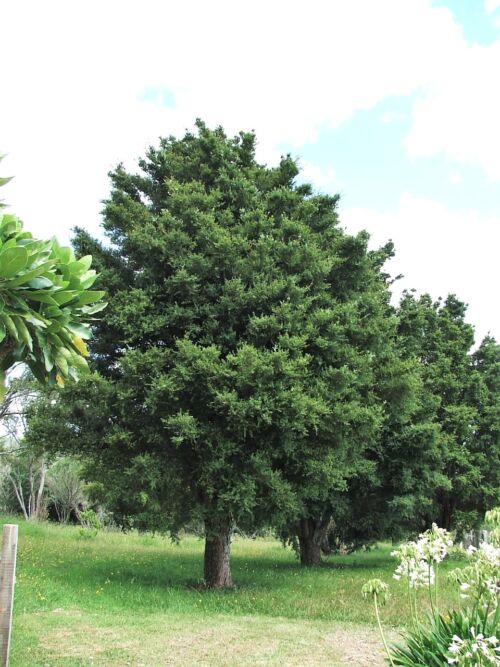
- Podocarpus totara ‘Ardmore Green’ is a strong, sturdy evergreen native to New Zealand. From an early age, it displays dense, dark green foliage, closely resembling the mature Totara tree. It thrives in full sun and prefers moist, well-drained soil. Thanks to its tolerance for wind and coastal conditions, it suits a wide range of garden environments. With slow, steady growth, ‘Ardmore Green’ is easy to manage in gardens of any size. Its compact nature makes it ideal for structured planting. Use it as a stand-alone specimen, for avenues, or as a large screen or shelter. When trimmed, it forms a robust hedge with a Yew-like appearance. In ideal conditions, it can reach approximately 7 x 5 metres at maturity.
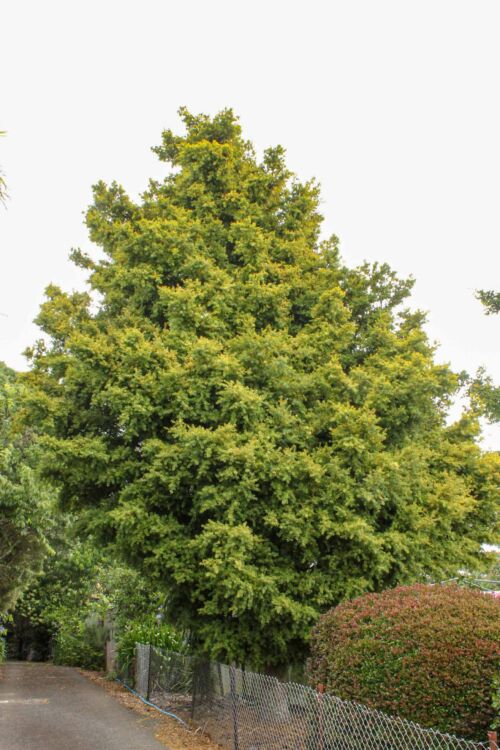
- Podocarpus totara ‘Aurea’ – Golden Totara, is a striking evergreen tree native to New Zealand. Closely resembling its parent species, it stands out with rich golden foliage when grown in full sun. From a young age, it forms a bushy, compact shape that adds texture and colour to any landscape. It prefers moist, well-drained soil and should not be planted in wet areas. This hardy tree tolerates wind and coastal conditions, making it suitable for exposed sites. Its slow growth allows for easy maintenance in gardens of all sizes. Golden Totara can be trimmed to shape and works beautifully as a hedge, screen, or larger shelter. In ideal conditions, it reaches approximately 10 x 6 metres at maturity.
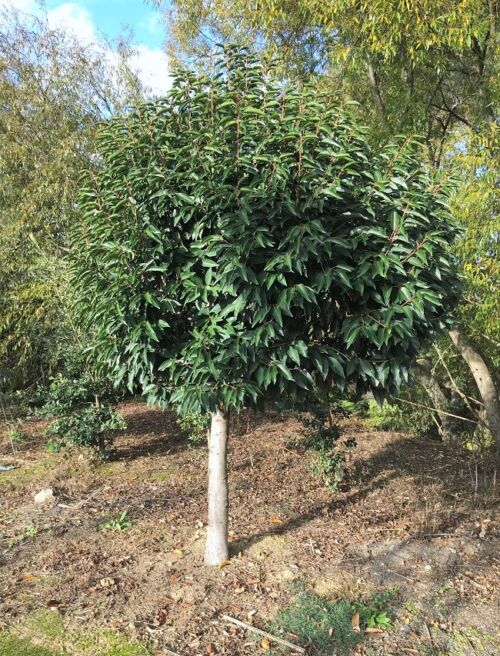
- Prunus lusitanica - Portuguese Laurel, is a versatile evergreen shrub or small tree with dark, glossy green oval leaves. Native to Western Europe, including regions of France, Spain, Portugal, and Morocco, it brings both structure and elegance to garden landscapes. In late spring to summer, it produces white flowers with a subtle hawthorn-like scent, arranged in long, slender racemes. These are soon followed by small fruits, adding further seasonal interest. Moreover, this plant thrives in moist, well-drained soils, though it will not tolerate waterlogged conditions. Therefore, it’s best planted in a sunny, sheltered position to ensure healthy growth. Thanks to its dense foliage and upright habit, Portuguese Laurel is excellent for trimming into formal hedges or shaping into a clipped screen. Additionally, it can be trained as a pleached hedge or sculpted into topiary forms, offering flexibility for both traditional and contemporary garden designs. Typically growing to approximately 5 x 4 metres, it makes a bold yet refined statement in any outdoor space. The name lusitanica refers to Lusitania, the ancient Roman name for Portugal, highlighting its rich heritage.
- Pseudopanax ‘Cyril Watson’ is an evergreen shrub native to New Zealand. This unusual cultivar stands out with glossy tropical leaves shaped like a duck’s foot, adding a distinct touch to any garden. Moreover, its compact, bushy habit makes it highly popular. Gardeners often use it as a neatly trimmed hedge or clip it into a larger screen, creating structure and style with ease. In addition, Pseudopanax ‘Cyril Watson’ prefers fertile, moist, and well-drained soil. It thrives in full sun to partial shade, while tolerating coastal conditions and moderate frost once established. It was first discovered by Cyril Watson in 1965 on the slopes of Mt. Taranaki in the North Island of New Zealand. The plant was named in honour of Watson, who was a renowned botanist and naturalist. Growing to approximately 3 x 2 metres, it offers both resilience and beauty
- Pseudopanax lessonii – Houpara is an evergreen New Zealand native that grows as a multi-branched shrub or small tree. Fast-growing, it features fleshy, palmate-shaped dark green leaves with three to five leaflets, creating a lush and tropical look. From December to February, small green flowers appear, followed by dark purple fleshy fruit. These fruits attract birds, adding life and movement to the garden throughout the year. Houpara can be left to grow as a small shade tree. Alternatively, it trims well into a hedge or can be clipped to form a larger screen, offering versatility in garden design. This hardy species is ideal for coastal gardens as it withstands salt-laden winds. It prefers moist, well-drained soil in full sun or partial shade and tolerates clay soils, though not waterlogged conditions. Growing to approximately 4 x 2.5 metres, Houpara makes an excellent choice for structured planting and year-round greenery.
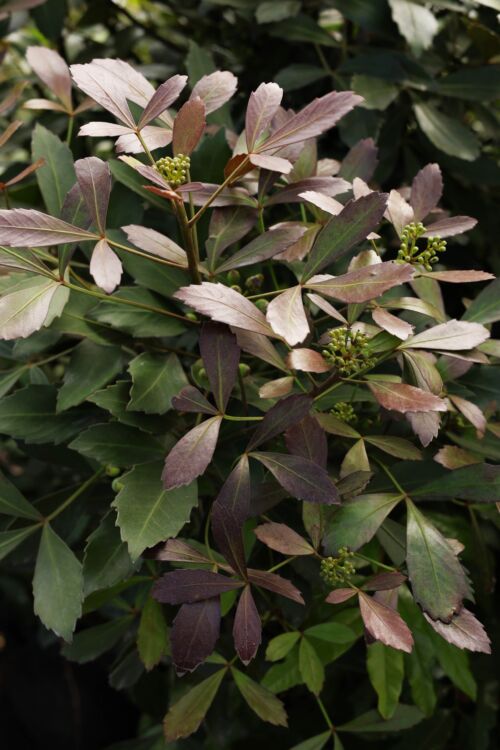
- Pseudopanax lessonii ‘Purpurea’ is a fast-growing evergreen shrub or small tree native to New Zealand. Multi-branched and compact, it features fleshy, palmate leaves in striking dark purple-red tones with three to five leaflets. From December to February, small green flowers appear, followed by dark purple fleshy fruit. These fruits attract birds, adding seasonal interest and wildlife appeal to the garden. This variety prefers moist, well-drained soil but will not tolerate waterlogging. For the best colour, plant in full sun where its foliage shines most vividly. ‘Purpurea’ can be left to grow as a small shade tree. Alternatively, it trims well into a compact hedge or can be clipped to form a larger bushy screen, offering flexibility in garden design. Ideal for coastal gardens, it withstands salt-laden winds and thrives in exposed conditions. Growing to approximately 4 x 2.5 metres, it provides structure, colour, and resilience year-round.
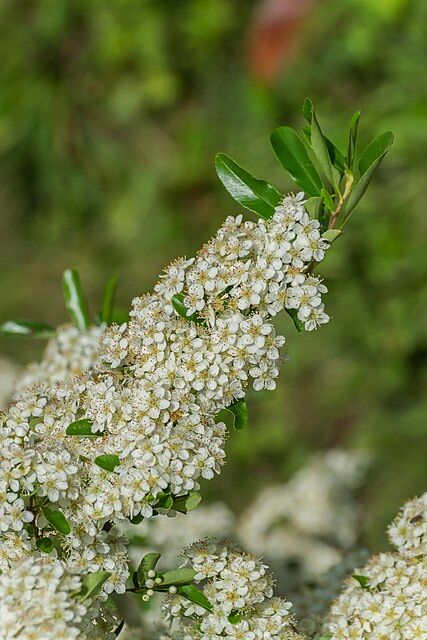
- Pyracantha ‘Brilliant’ – Scarlet Firethorn is a compact evergreen shrub known for its glossy green foliage and occasional thorns. In spring, it bursts into masses of small, delicate white flowers, adding seasonal charm to any garden. As autumn arrives, vibrant orange-red berries cover the plant, lasting through winter. These berries not only add colour but also attract birds, enhancing garden biodiversity. This hardy shrub thrives in full sun to semi-shade and prefers well-drained, moist soils. It tolerates frost, wind, and suits both sheltered and coastal locations. Often chosen for hedging and screening, Pyracantha ‘Brilliant’ also makes an excellent security hedge. It grows to approximately 2.5 x 2.5 metres and is easily clipped to shape.
- Radermachera Everlasting Beauty is a stunning shrub that has glossy, deep green emerald foliage and produces clusters of trumpet shaped, pale pink flowers with yellow throats that are sweetly scented. Flowering occurs during warmer months and flowering can occur multiple times in a season. It has a strong upright growth habit ideal for hedging and border plantings. A hardy shrub that is drought tolerant once established.
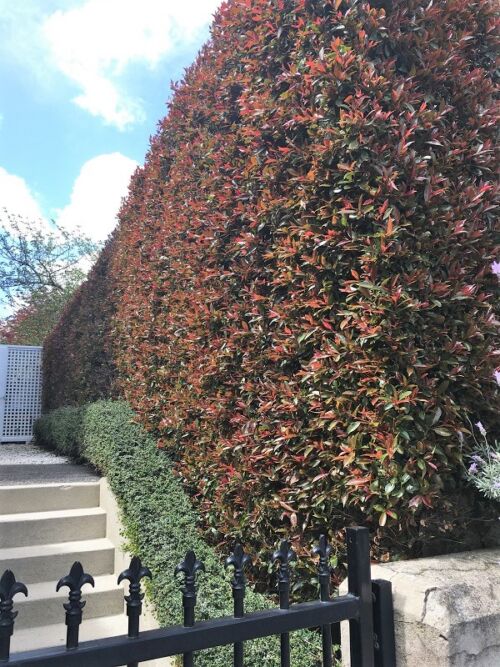
- Syzygium ‘Resilience’, a highly psyllid-resistant Lilly Pilly now available in New Zealand, thanks to Black Bridge Nurseries. This exceptional cultivar, originally from Australia, has been specially selected and propagated to combat the damage caused by the troublesome psyllid insect. Like other Lilly Pilly varieties, ‘Resilience’ forms a lush, compact shrub with vibrant mid-green foliage. In spring, its fresh growth flushes red tones, adding seasonal colour and visual interest to the garden. In summer, ‘Resilience’ bursts into bloom with masses of fluffy white flowers, followed by vibrant red berries that attract birds. It’s faster growing than traditional varieties, with a stronger, straighter central leader and a more robust root system. It also performs well in shaded areas, making it a versatile choice for many garden settings. Thriving in moist, well-drained soil, this hardy shrub can reach approximately 7m high by 3m wide but responds well to trimming making it ideal for hedging, screening, and topiary. Syzygium ‘Resilience’ is a standout performer in any landscape. Standards have a clear trunk and are bushy on top. As a group planted together they create a hedge or screen "on stilts" and are called a "pleached hedge".
- Thuja Green Giant is a resilient, fast-growing evergreen conifer admired for its dense, dark green foliage and upright pyramidal form. Propagated from cuttings, it maintains a uniform habit, remains disease-free, making it ideal for consistent planting. Because of its vigour, Thuja Green Giant is widely used for privacy screens and hedges. Moreover, it serves as a successful shelter belt worldwide. Originating in Denmark, this hybrid combines parent species from North America and Japan. In addition, it tolerates a wide range of soils, from sandy to clay, although it dislikes standing water. It also withstands windy sites and thrives best in full sun. For hedging or shelter, plant approximately 1.5–2.0 meters apart. At maturity, Thuja Green Giant reaches around 12 meters tall and 4 meters wide, creating an impressive and lasting landscape feature.
- Tupidanthus calyptratus - Mallet Flower, is a fast-growing tropical evergreen that adds lush vibrancy to any garden. Its glossy, bright green palmate leaves droop gracefully, creating a soft, weeping effect. In spring and summer, green buds emerge and bloom into tiny white flowers. These sit atop structures resembling small mallets—hence the name “Mallet Flower” and its botanical title, "calyptratus". Mallet Flower thrives in moist, well-drained soil and prefers full sun. It typically grows to around 6 metres tall and 4 metres wide, is easily trimmed to shape and height, making it ideal for tropical landscaping.
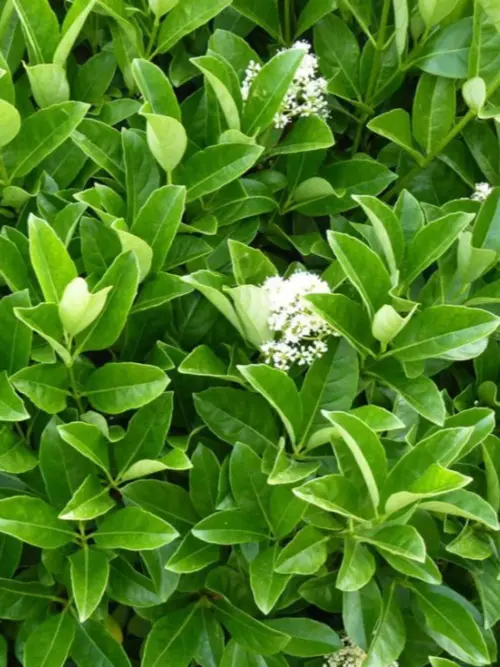
- Viburnum odoratissimum ‘Dense Fence’ is an evergreen shrub bred to create fast-growing, dense hedges. As a result, it provides excellent screening and privacy in gardens or landscapes. Its glossy, dark green leaves emerge with a striking red flush, while clusters of fragrant white flowers appear in spring. Consequently, the shrub offers year-round interest with minimal pruning required to maintain a tidy hedge. This hardy plant prefers moist, well-drained soil in full sun to partial shade. Moreover, once established, it tolerates light frost and grows to approximately 3 x 2 metres. Interestingly, the epithet odoratissimum comes from Latin, meaning “very fragrant” or “most fragrant,” perfectly reflecting its delightful spring bloom
- Flower Fragrant? Yes
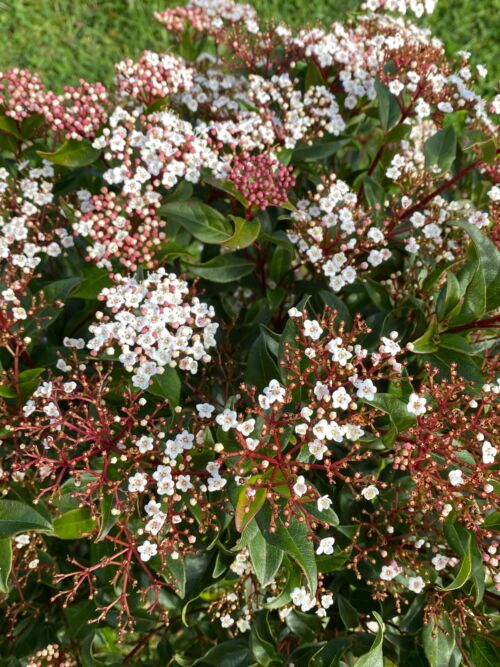
- Viburnum tinus ‘Eve Price’ is a compact evergreen shrub with dense, dark green foliage. Its tidy growth habit makes it ideal for structured garden designs and low-maintenance landscapes. During winter, masses of carmine buds burst into small, pink-tinged white flowers. These blooms add seasonal charm and brighten cooler months with subtle colour and fragrance. After flowering, the shrub produces small blue-black berries. Not only do they add ornamental value, but they also provide a valuable food source for birds. This hardy plant thrives in moist, well-drained soil and tolerates full sun to light shade. Perfect for mass planting or hedging, Viburnum ‘Eve Price’ also works beautifully as a standalone feature. You can easily trim it to maintain shape and size, reaching approximately 2.0 x 1.5 metres.
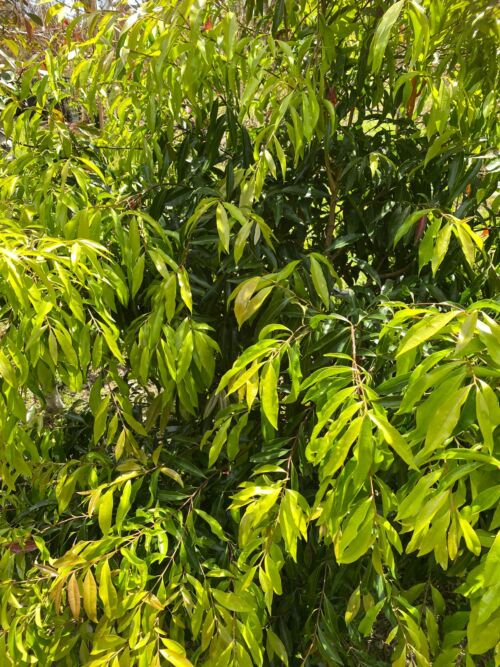
- Waterhousia floribunda - Weeping Lilly Pilly is a striking evergreen tree known for its dense, weeping form making it a standout feature in any garden. Its long, thin leaves have wavy edges and appear mostly green. However, new growth brings a burst of lighter greens, yellows, and salmon tones, adding seasonal interest. From November to January, the tree blooms with white fluffy flowers. Shortly after, rich pink berries emerge, enhancing its ornamental appeal and attracting feeding birds. Thanks to its versatility, you can trim it into a hedge or let it grow freely as a lush “umbrella” shade tree. Either way, it provides excellent screening. Moreover, Waterhousia floribunda thrives in a wide range of conditions. It is hardy, adaptable, and grows to approximately 8 metres tall by 5 metres wide. Interestingly, the name “floribunda” comes from botany and means “many-flowering” or “flowering profusely”—a fitting description for this beautiful tree.