Shade Tolerant Trees
- Camellia hybrid ‘Nicky Crisp’ is a slower-growing, compact shrub with dense foliage and deep green leaves. Its neat form makes it an attractive choice for structured plantings. In addition, small pale pink semi-double flowers with bright yellow stamens appear for 5–6 weeks during winter. These blooms add soft colour and seasonal interest to the garden. Moreover, this camellia thrives in full sun or dappled shade when planted in well-drained acidic soil. Prune after flowering to encourage bushiness. It makes an outstanding hedge or border, especially in smaller gardens, and can reach up to 2m if left untrimmed.
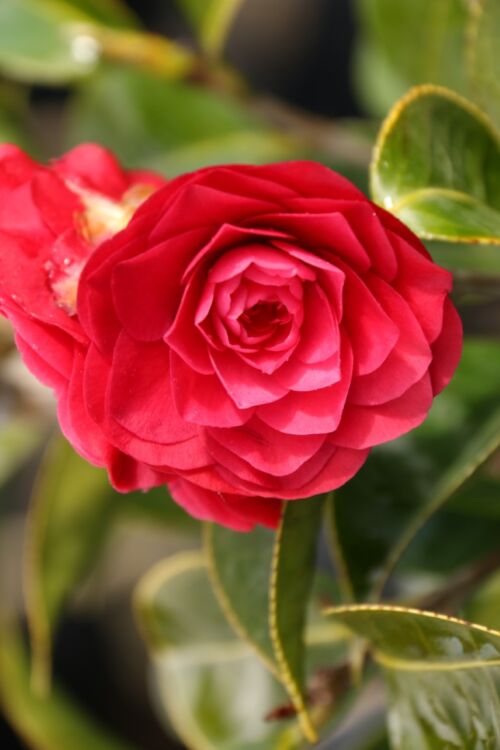
- Camellia japonica ‘Kramers Supreme’ features glowing red flowers are peony form with mixed petals and petaloides in full rounded forms. Mid-late season Fragrant. Vigorous compact growth. Japonica camellias make an excellent hedge but are also useful as a stand alone small tree in the garden. Plant in full sun or dappled shade in well drained acidic soil. Prune after flowering to encourage bushy growth. Can also be allowed to grow on to form a larger screen.
- Camellia japonica ‘Red Red Rose’ is an evergreen shrub with glossy green foliage. New growth shows attractive salmon tips, adding seasonal interest. In early summer, rich red, formal double blooms create a striking display that brightens the garden. Moreover, Japonica camellias are versatile. They make excellent hedges, yet they also shine as stand-alone small trees. Plant them in full sun or shaded areas, ensuring well-drained acidic soil for best results. After flowering, prune to encourage bushy growth. Alternatively, allow the plant to develop into a larger screen. In addition, this camellia can be planted in larger pots and also suits topiary work, offering flexibility for different garden designs
- Camellia japonica ‘Roger Hall’ is an evergreen shrub with glossy green foliage. In early summer, bright red, small to medium, formal double flowers create a striking display that brightens the garden. Moreover, Japonica camellias are versatile. They make excellent hedges, yet they also shine as stand-alone small trees. Plant them in full sun or shaded areas, ensuring well-drained acidic soil for best results. After flowering, prune to encourage bushy growth. Alternatively, allow the plant to develop into a larger screen. In addition, this camellia can be planted in larger pots and also suits topiary work, offering flexibility for different garden designs.
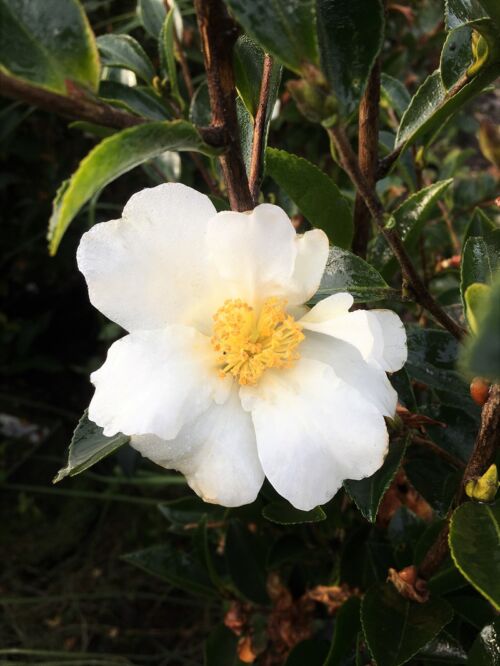
- Camellia sasanqua ‘Setsugekka’ is among the most popular flowering camellias. This moderately fast-growing upright shrub showcases white blooms from autumn through winter. Each flower features a ruffled edge, a bright cluster of golden stamens at the centre, and a delightful fragrance that enhances the garden. In addition to its flowers, the shrub offers dense, glossy green foliage. Therefore, it is an excellent choice for hedging at various heights. It responds well to trimming and, alternatively, can be grown as a striking standalone specimen or shaped as a topiary. Although camellias originate from China, cultivars like ‘Setsugeka’ are now bred worldwide. As a result, they are admired for their ornamental appeal and adaptability, making them suitable for diverse garden styles and climates. For best results, position this plant in full sun or dappled shade. To ensure healthy growth, place it in well-draining, acidic soil enriched with organic matter. Moreover, pruning after flowering promotes bushier and more compact growth. Typically, this variety grows to around 2.5m tall and 2.0m wide; however, it can be allowed to expand further, creating an effective screen in the garden
- Camellia sasanqua ‘Early Pearly’ is a moderately fast-growing upright shrub that adds seasonal colour to the garden. Beginning in autumn and continuing through winter, it showcases small, formal double blooms with a soft blush of pink and a subtle fragrance. In addition to its flowers, the plant features dense, glossy green foliage—making it an excellent choice for hedging at various heights. It responds well to trimming and, alternatively, can be grown as a striking standalone specimen. Although camellias originate from China, cultivars like ‘Early Pearly’ are now bred globally for their ornamental appeal and adaptability. For best results, plant in full sun or dappled shade in moist, well-drained acidic soil. After flowering, pruning will encourage bushier, more compact growth. Typically, this variety reaches approximately 2.0m tall by 1.5m wide; however, it can be allowed to grow larger to form an effective screen
- Camellia sasanqua ‘Paradise Helen’ is a moderately fast-growing upright shrub. In autumn and continuing into winter, it showcases masses of pink buds that open into dazzling double white flowers with bright yellow stamens, creating a striking seasonal display. In addition to its blooms, the shrub features dense, glossy green foliage. Therefore, it is an excellent choice for hedging at various heights. It responds well to trimming and, alternatively, can be grown as a bold standalone specimen. ‘Paradise Helen’ is an Australian-bred cultivar of the Camellia sasanqua species, which is native to China and Japan. It was developed by Paradise Plants, highlighting its strong ornamental appeal and adaptability. For best results, plant in full sun or dappled shade in moist, well-drained acidic soil. Furthermore, pruning after flowering encourages bushier, more compact growth. Typically, this variety reaches about 2.5m tall by 2.0m wide, yet it can grow larger to form an effective screen
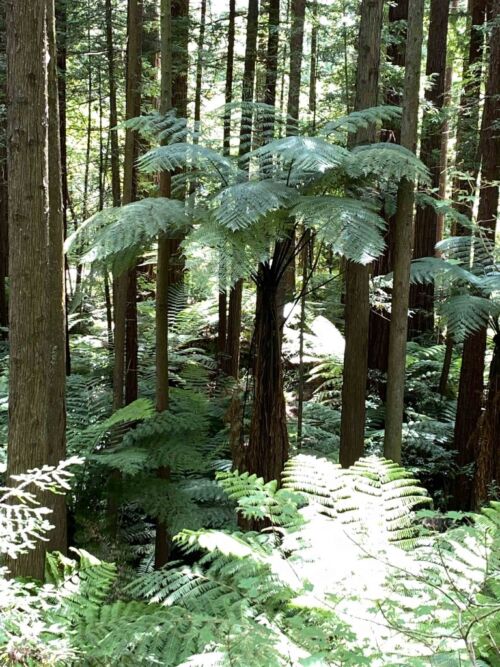
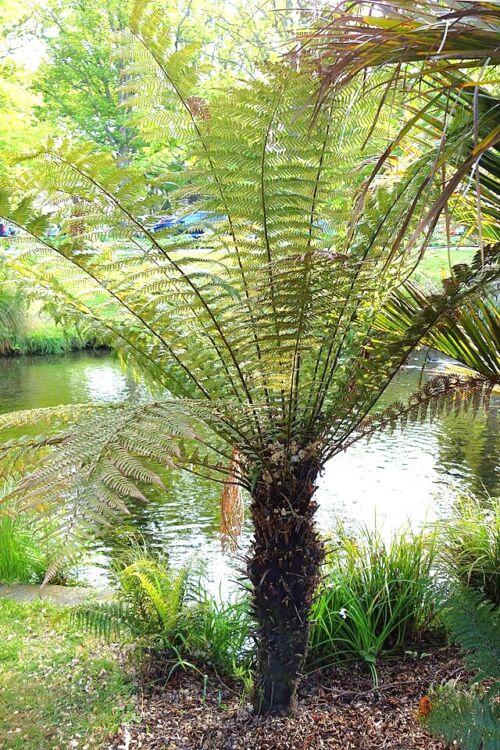
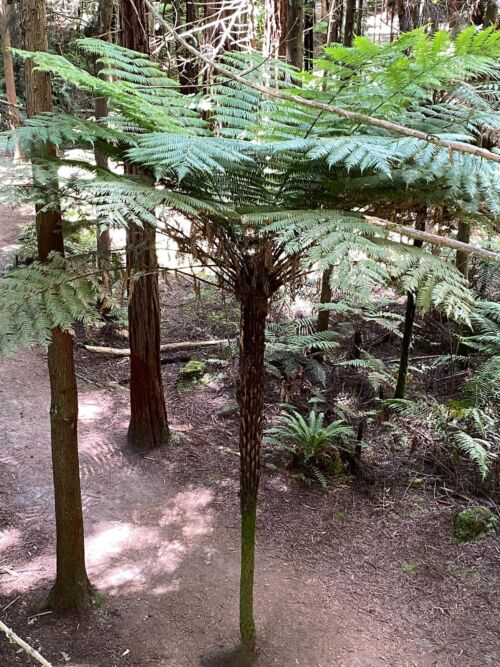
- Silver Fern Iconic New Zealand native tree fern and the inspiration of the national Emblem. Slow-growing, can reach heights of up to 12 meters. Its slender form is adorned with vibrant green fronds that can extend up to 4 meters, distinguished by their striking silver undersides. Can attain up to apx 12 x 4m in ideal conditions. Apx 6 x 4 10yr
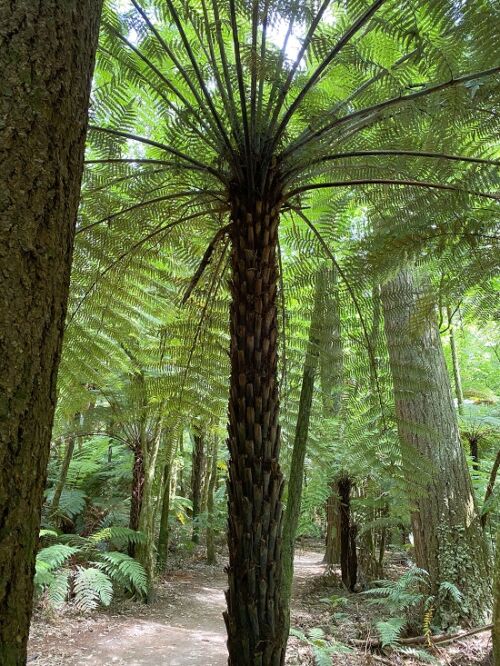
- The tallest & most common of NZ’s tree ferns. A fast-growing tree fern with a slender, black trunk that features hexagonal patterns where old fronds have grown. Forms a large crown of gracefully arching fronds up to 5m. Keep well-watered and the soil evenly damp, use a good mulch around the base. Will tolerate sun. Protect from frosts when young. Can attain apx 20 x 5m in ideal conditions. apx 7 x 5m 10yr
- A stout tree fern, distinguished by its thick fibrous, soft trunk which can reach up to 6 m tall, over a very long time. Fronds grow 1-2m in length forming dense crown in the shape of a shuttlecock.. Dead fronds leave a tidy skirt beneath crown. While slower growing It does well in average garden conditions. This variety is suited to a sunny position or light shade. Found in lowland and lower mountain forest. Grows to apx 6 x 2m
-
- Description
Wheki or Brown Ponga is a hardy NZ native tree fern. It grows a tall, slender, brown trunk to approx 6m. Fronds can reach 1.5 to 3m in length which give it the appearance of a small “umbrella” on top of the trunk. It is the most popular New Zealand tree fern which is easy to grow and maintain. Hardiness and smaller dimensions make it an excellent garden variety. Height x Width 6 x 3 Height Range Medium 5-10m Growth Rate Moderate Plant Type Palm Shape / Habit Palm Country of Origin New Zealand Similar to Consider Cyathea medularis, Cyathea dealbata, Dicksonia fibrosa. - Leaf
Leaf Colour Green - Flower
Flower Colour Nil - Uses
Specimen Yes Accent Yes Note: Growth, height and grade information are given in good faith but are subject to natural variables beyond our control. - Port Wine Magnolia - Michelia figo is a slow-growing, compact shrub that features a rounded shape and vibrant lime-green foliage. In early spring, it bursts into bloom with masses of small, cream-colored flowers streaked with purple, which release a rich fragrance. As a result, it becomes a standout feature in any garden. Depending on light conditions, the shrub’s form can vary. When grown in shade, it tends to develop a looser, more open structure. Conversely, plants grown in full sun are typically more compact and display denser foliage. Moreover, it thrives in humus-rich, well-drained, slightly acidic soil, making it adaptable to a range of garden environments. Whether planted in sun or shade, Port Wine Magnolia performs beautifully. It can be trimmed into a neat, low hedge, allowed to grow as a striking standalone specimen, or placed in a large decorative pot for added versatility. Originating from Western China, this elegant shrub typically reaches up to 3 metres tall and 2.5 metres wide.
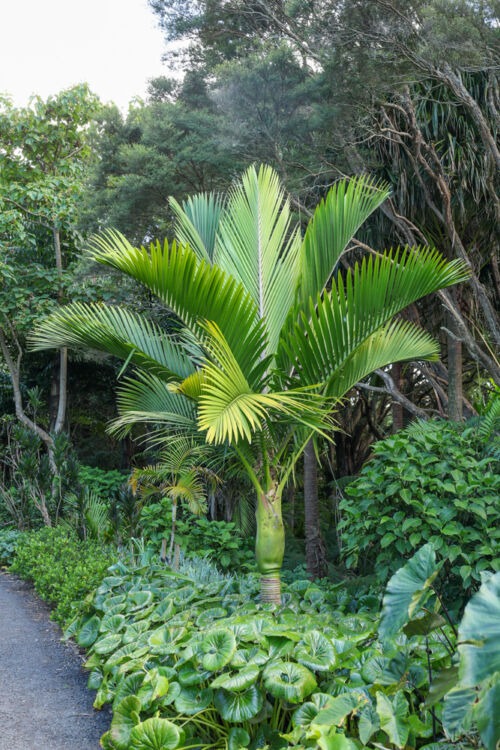
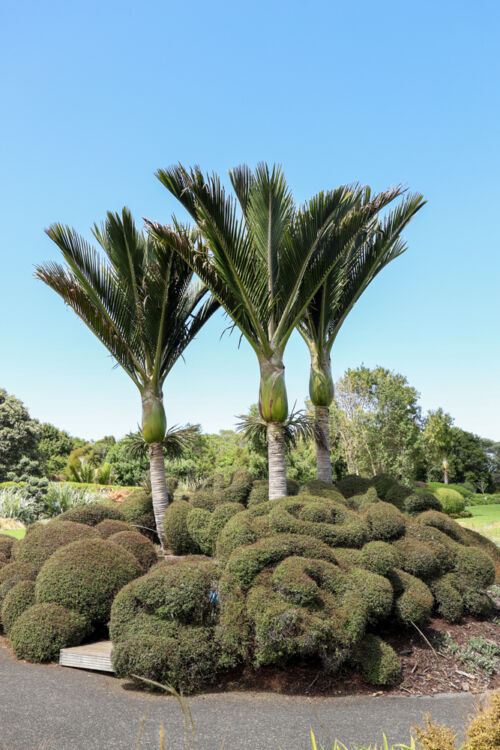
- Rhopalostylis baueri var. cheesemanii – Kermadec Island Nikau Kermadec Island Nikau is a native New Zealand palm from the northern Kermadec Island group. Originating from a warmer climate, it grows noticeably faster than other Nikau varieties. This palm features a more open, umbrella-like form with broader fronds. Each leaflet is slightly spaced, giving the foliage a light, airy appearance that adds a tropical feel to any setting. Over time, it develops a trunk marked with rings from fallen leaves. While young, it prefers a shady position but will tolerate full sun as it matures. It thrives in moist, well-drained soil with a cool root run and benefits from a sheltered location. This makes it ideal for subtropical gardens or protected outdoor spaces. Whether planted as a garden specimen or grown in a large container, it offers year-round appeal. With moderate, slow growth, it can eventually reach up to 10 metres over many years. Cheesemanii is in reference to plants named after the New Zealand botanist Thomas Cheeseman
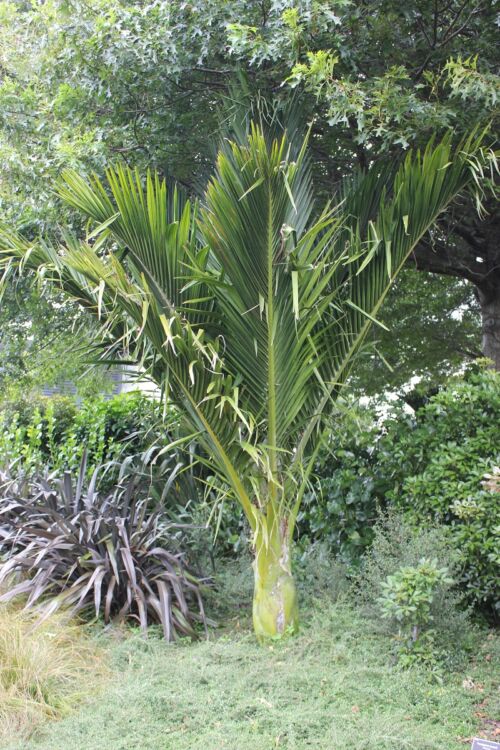
- Rhopalostylis sapida, commonly known as NZ Nikau, is a native New Zealand palm with elegant tropical appeal. In its juvenile stage, it produces long, graceful fronds reaching up to 3 metres. Over time, a slender trunk develops, marked with rings from fallen leaves. This trunk is crowned with rich green, fan-like fronds that add lush texture to shaded garden spaces. Nikau palms thrive in partial to full shade and prefer moist, well-drained soil rich in organic matter. They flourish in warm, sheltered environments with protection from strong winds and heavy frosts. For best results, plant in a shady spot with sunlight on the crown and cool, shaded roots. This mimics their natural forest habitat and enhances their appearance. Nikau is an excellent choice for garden specimens or large pots. Though very slow-growing, it can reach 10 metres and more over many years.
- Rhopalostylis sapida ‘Chathamica’ – Chatham or Pitt Island Nikau is a native New Zealand palm originating from the southern Chatham and Pitt Islands. It offers a unique twist on the mainland Nikau. This variety features longer fronds, wider leaflets, and a subtle silvery hue to its stems. Its red fruit are noticeably larger, adding seasonal interest and contrast. Adapted to cooler climates, it tolerates full sun, wind, cold, and coastal conditions better than other Nikau types. It’s also known for its tidier growth habit. Thriving in moist, well-drained soils, this palm is ideal for sheltered gardens or coastal landscapes. Its slow growth makes it easy to manage over time. Although very slow-growing, it can eventually form a trunk and reach up to 10 metres over many years, making it a long-term feature in any garden.