Order Quality Trees Online – Delivered Straight to Your Door
Welcome to Our Online Plant Store
From our nursery to your backyard — it’s never been easier to create the garden you’ve been dreaming of. Whether you’re after statement trees, hedging, or lush planting to fill your outdoor spaces, you can now browse and order directly online.
We provide an extensive range of high-quality plants and trees that are perfect for residential landscapes — all backed by the same expert care and service we’re known for. No trade account needed, no back-and-forth calls. Just beautiful plants, delivered to your door.
Shop by category
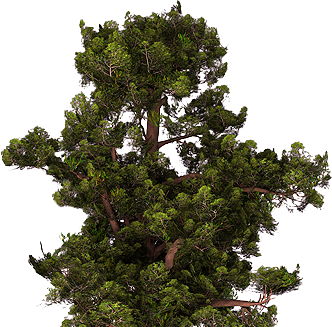
New Zealand Native Trees
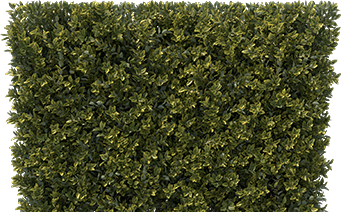
Hedging Plants
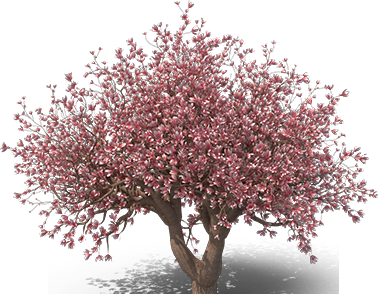
Flowering Trees

Evergreen Exotic Trees
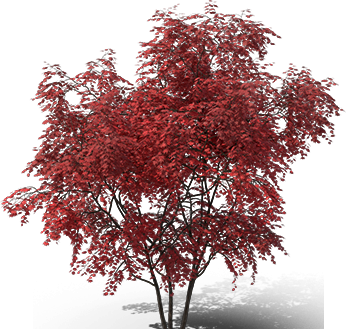
Deciduous trees
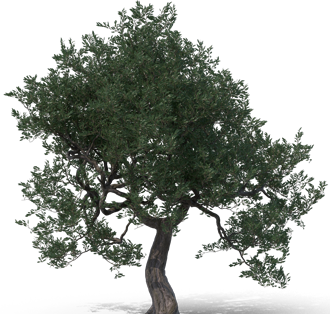
Character Olive Trees
Browse all Trees
- Albizia julibrissin, commonly known as the Silk Tree, is a fast-growing, deciduous, compact tree with a wide, spreading canopy. Its delicate, fern-like leaves add a lush texture to any garden. During summer, it bursts into bloom with soft, pink, fluffy flowers that sit gracefully above the foliage. These rounded blossoms resemble silky brushes, creating a striking visual contrast. Although it thrives in hot, dry conditions once established, it prefers moist, well-drained soil. Therefore, regular watering during its early growth phase is beneficial. Interestingly, the name “julibrissin” originates from the Persian phrase gul-i abrisham, meaning “silk flower” or “soft silken threads.” This poetic name reflects the tree’s elegant appearance. Thanks to its umbrella-shaped canopy, the Silk Tree makes an excellent shade tree. It’s ideal for smaller gardens, growing to approximately 5 meters tall and 4 meters wide..
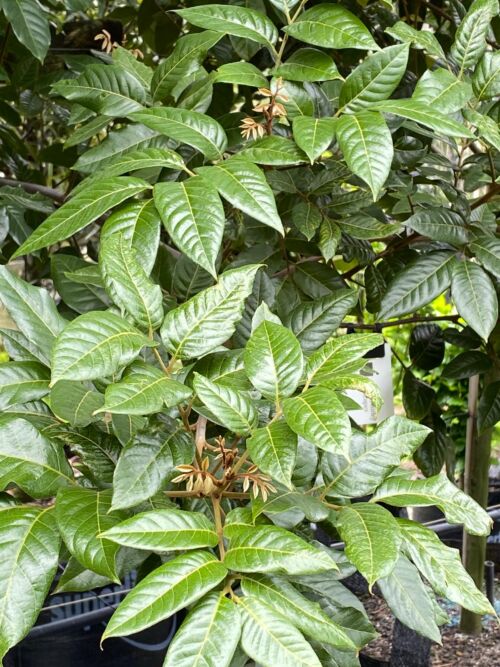
- Alectryon excelsum - Titoki or the New Zealand Oak is one of Aotearoa’s most beloved native trees, prized for its easy care and striking appearance. Its lush, glossy green pinnate leaves with finely serrated edges create a vibrant, tropical feel in any garden. In early summer, Titoki produces unusual sprays of rusty, woolly, petal-less flowers that have a distinctive reddish-brown colour. These are followed by clusters of small, bright red fruit that are attractive to native birds, adding life to your outdoor space. Best suited to sheltered spots with full sun, Titoki thrives in rich, free-draining soil. With its elegant form and attractive foliage, it makes an excellent specimen tree. Mature size: approximately 7 metres tall by 3 metres wide
- Alectryon excelsus 'Grandis', also known as the Three Kings Island Titoki, is a compact, spreading native tree from New Zealand. It’s ideal for smaller gardens thanks to its modest size. Compared to the standard Titoki, 'Grandis' features larger, glossier leaves and a more compact growth habit. This makes it a standout choice for coastal or urban landscapes. In autumn, it produces fruit with seeds that attract and nourish native birdlife. This seasonal interest adds ecological value to your garden. It prefers full sun and thrives in moist, free-draining soil. However, its tolerance for coastal conditions makes it a versatile option for exposed sites. Growing to approximately 5 meters tall and 3 meters wide, it’s an excellent specimen for compact spaces or mixed native plantings.
- Alnus jorullensis, commonly known as the Evergreen or Mexican Alder, is a vigorous, fast-growing tree and as the name suggests, native to Mexico and South America. This species thrives in warmer climates, where it often remains evergreen throughout the year. With pale, papery grey bark and green, birch-like serrated foliage, it offers a soft, elegant appearance. Its drooping branches add a graceful touch to any landscape. Moreover, this tree is highly adaptable—it can fix nitrogen and tolerates poor, clay, damp, or even wet soils, making it a resilient choice for challenging sites. Thanks to its rapid growth and tolerance for trimming, Alnus jorullensis is ideal for creating shelter belts or privacy screens. Alternatively, it can be planted as a striking standalone shade tree, especially in areas where quick canopy cover is desired. Growing to approximately 7 metres tall and 3 metres wide, this versatile tree brings both beauty and function to gardens, rural properties, coastal and urban landscapes alike.
- Amelanchier canadensis, commonly known as Shad Bush, is a compact, round-headed shrub or small tree with a dense habit. During summer, its green foliage provides a lush backdrop. Then, as autumn arrives, it bursts into vibrant shades of orange, red, and yellow, creating a striking seasonal display. In early spring, delicate starry white flowers appear, adding charm and contrast. Shortly after, sweet blue-black berries develop, which attract birds and enhance biodiversity in your garden. Moreover, this tree tolerates damp conditions and thrives in sun or semi-shade. Although it handles clay soil well, it’s best to avoid overly wet spots. For added versatility, you can train it into a single-stem tree form. With a mature size of approximately 4 x 4 metres, it’s an excellent choice for smaller gardens or damp areas needing a lift. Interestingly, its Latin name “canadensis” reflects its North American origin, meaning “of Canada.”
-
Apple 'Braeburn' Espalier with 3 horizontal levels.
Espaliers are a great way to save space, making them ideal for small gardens while still producing abundant fruit. The basic principles of apple espalier involve training branches horizontally along a support and pruning regularly to maintain shape, encourage fruiting spurs, and improve airflow. Pruning is best done in late summer to control growth and in winter to establish structure.- Winter annual Pruning guidelines (Structural Training):
- Focus on shaping the tree.
- Select strong shoots to form horizontal tiers.
- Remove unwanted vertical growth and shorten side shoots to encourage spur formation.
- Summer annual Pruning (Growth Control):
- Best done around December
- Cut back vigorous upright shoots that drain energy but don’t produce fruit.
- Leave short, stubby shoots (spurs), as these are the ones that will bear apples.
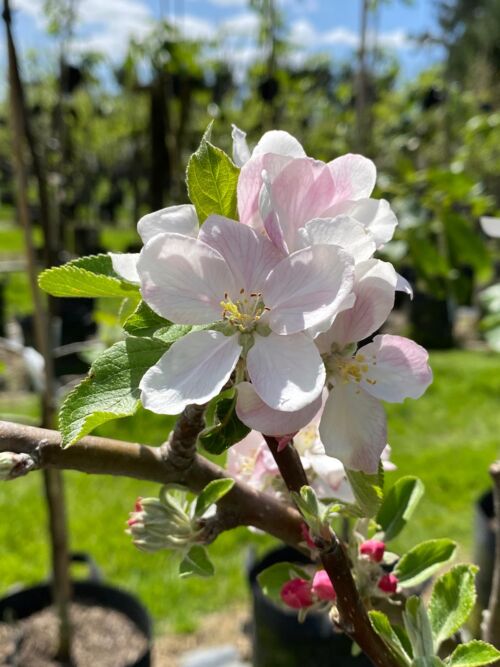
- Apple ‘Braeburn’ is a deciduous fruit tree that produces striking apples with red and yellow-striped skin. Originating in New Zealand in 1952 as a chance seedling, it quickly gained recognition for its quality and flavour. In spring, the tree bursts into bloom with clusters of white flowers. As summer advances, the fruit develops until it reaches full ripeness, ready for harvest around May each year. This heritage variety is celebrated for its crisp, juicy white flesh and superb sweet-tart flavour. Its distinctive taste has made it a favourite among apple lovers and continues to delight generations of growers and consumers. Apple trees thrive best in well-drained, fertile soils and prefer a sunny, sheltered position to maximize fruit production. Under ideal conditions, they grow to a height of 4–5 meters, making them suitable for both home gardens and orchards. For healthy growth, provide seasonal feeding and deep watering during dry spells. Moreover, apply mulch to conserve moisture and prune annually to shape the tree, ensuring strong structure and abundant fruiting year after year..
-
Apple 'Cox’s Orange' Espalier with 3 horizontal levels.
Espaliers are a great way to save space, making them ideal for small gardens while still producing abundant fruit. The basic principles of apple espalier involve training branches horizontally along a support and pruning regularly to maintain shape, encourage fruiting spurs, and improve airflow. Pruning is best done in late summer to control growth and in winter to establish structure.- Winter annual Pruning guidelines (Structural Training):
- Focus on shaping the tree.
- Select strong shoots to form horizontal tiers.
- Remove unwanted vertical growth and shorten side shoots to encourage spur formation.
- Summer annual Pruning (Growth Control):
- Best done around December
- Cut back vigorous upright shoots that drain energy but don’t produce fruit.
- Leave short, stubby shoots (spurs), as these are the ones that will bear apples.
- Apple ‘Cox’s Orange’ is a deciduous fruit tree that produces greenish-yellow apples with striking orange-red striping. Widely regarded as one of the finest apples ever grown, it combines beauty with exceptional flavour. In spring, the tree bursts into life with white flowers blushed pink. As summer progresses, the fruit matures until it is ready for harvest between January and February. This heritage variety is prized for its rich, aromatic flesh with a subtle nutty flavour. Its unique taste has made it a favourite among apple enthusiasts for generations. Apple trees thrive in well-drained, fertile soils and prefer a sunny, sheltered position to maximize fruit production. With the right conditions, they grow to a height of 4–5 meters. To ensure healthy growth, provide seasonal feeding and deep watering during dry spells. Additionally, apply mulch to retain moisture and prune annually to shape the tree and encourage abundant fruiting.
-
Apple ‘Fuji’ Espalier with 3 horizontal levels
Espaliers are a great way to save space, making them ideal for small gardens while still producing abundant fruit. The basic principles of apple espalier involve training branches horizontally along a support and pruning regularly to maintain shape, encourage fruiting spurs, and improve airflow. Pruning is best done in late summer to control growth and in winter to establish structure.- Winter annual Pruning guidelines (Structural Training):
- Focus on shaping the tree.
- Select strong shoots to form horizontal tiers.
- Remove unwanted vertical growth and shorten side shoots to encourage spur formation.
- Summer annual Pruning (Growth Control):
- Best done around December
- Cut back vigorous upright shoots that drain energy but don’t produce fruit.
- Leave short, stubby shoots (spurs), as these are the ones that will bear apples.
-
Apple ‘Granny Smith’ Espalier with 3 horizontal levels.
Espaliers are a great way to save space, making them ideal for small gardens while still producing abundant fruit. The basic principles of apple espalier involve training branches horizontally along a support and pruning regularly to maintain shape, encourage fruiting spurs, and improve airflow. Pruning is best done in late summer to control growth and in winter to establish structure.- Winter annual Pruning guidelines (Structural Training):
- Focus on shaping the tree.
- Select strong shoots to form horizontal tiers.
- Remove unwanted vertical growth and shorten side shoots to encourage spur formation.
- Summer annual Pruning (Growth Control):
- Best done around December
- Cut back vigorous upright shoots that drain energy but don’t produce fruit.
- Leave short, stubby shoots (spurs), as these are the ones that will bear apples.
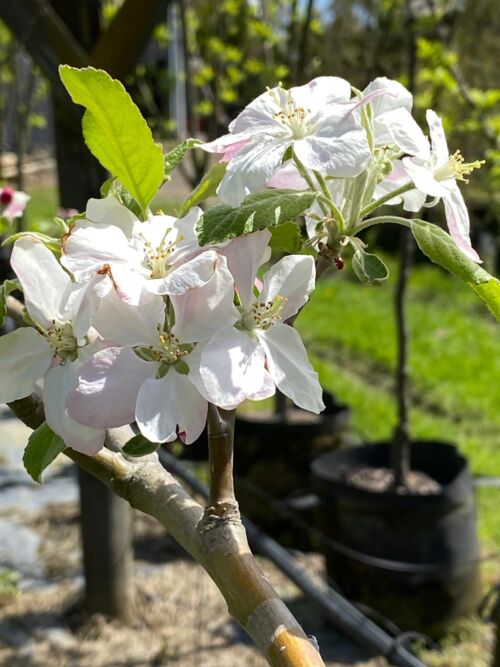
- Apple ‘Granny Smith’ is one of the most iconic apples in New Zealand. Originating in Australia in 1868, this deciduous fruit tree produces apples with a distinctive green skin. Known worldwide, it remains a heritage variety that continues to delight growers and consumers alike. In spring, the tree bursts into life with white flowers tinged with pink. As summer advances, the fruit steadily matures until it reaches harvest time around May each year. This variety is highly prized for its crisp, juicy flesh and refreshing tart flavour. Consequently, it has become a favourite among apple lovers for generations, enjoyed both raw and in cooking. Its unique taste ensures it stands out from other apple varieties. Apple trees thrive best in well-drained, fertile soils. Moreover, they prefer sunny, sheltered positions to maximize fruit production. With the right growing conditions, Granny Smith trees reach a height of 4–5 meters, making them suitable for home orchards and larger gardens. To promote healthy growth, provide seasonal feeding and deep watering during dry spells. Additionally, apply mulch to retain soil moisture and prune annually. These steps encourage abundant fruiting and help maintain the tree’s attractive shape.






Why buy online?
Buying plants and trees online doesn’t have to feel risky or impersonal. At Black Bridge Nurseries, we’ve made it simple, safe, and satisfying — so you can shop with confidence, from the comfort of home.