Order Quality Trees Online – Delivered Straight to Your Door
Welcome to Our Online Plant Store
From our nursery to your backyard — it’s never been easier to create the garden you’ve been dreaming of. Whether you’re after statement trees, hedging, or lush planting to fill your outdoor spaces, you can now browse and order directly online.
We provide an extensive range of high-quality plants and trees that are perfect for residential landscapes — all backed by the same expert care and service we’re known for. No trade account needed, no back-and-forth calls. Just beautiful plants, delivered to your door.
Shop by category
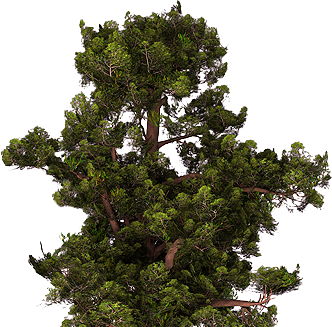
New Zealand Native Trees
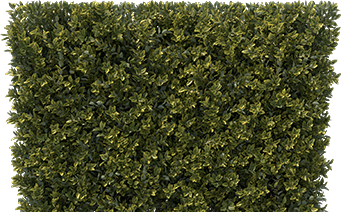
Hedging Plants
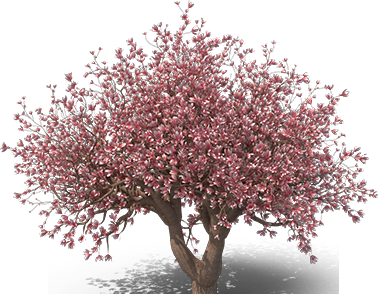
Flowering Trees

Evergreen Exotic Trees
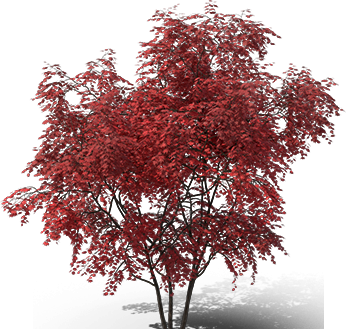
Deciduous trees
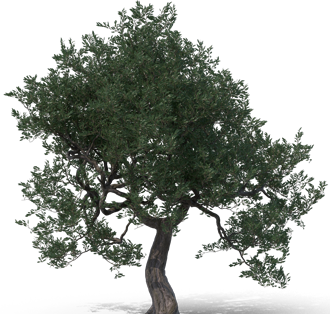
Character Olive Trees
Browse all Trees
-
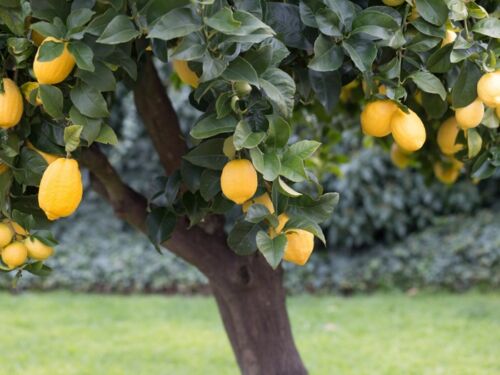
We also stock Larger growing lemon varieties with a more citric taste. These can include Eureka, Lisbon, Yen Ben, and Genoa. Make enquiries as to which varieties we have available now or see our online catalogue.- DESCRIPTION
One of the most popular. Low spreading growth habit with few thorns. Large yellow-orange fruit when ripe with smooth skin and lower acid level than other lemon varieties. Very high juice content. Plant in warm sheltered position and rich well- drained moist soil in full sun Feed regularly during growing season and water well in summer. Mulch with well-rotted compost. Good in containers. HARVEST – JUN-AUG Height x Width 2.5 x 2.5 Height Range Small 1-5m Growth Rate Moderate Plant Type Tree Shape / Habit Round Country of Origin China Similar to Consider Other Lemons, Oranges, Mandarins, - LEAF
Leaf Colour Dark Green - FLOWER
Flower Colour White with pink buds Fragrant? Yes - USES
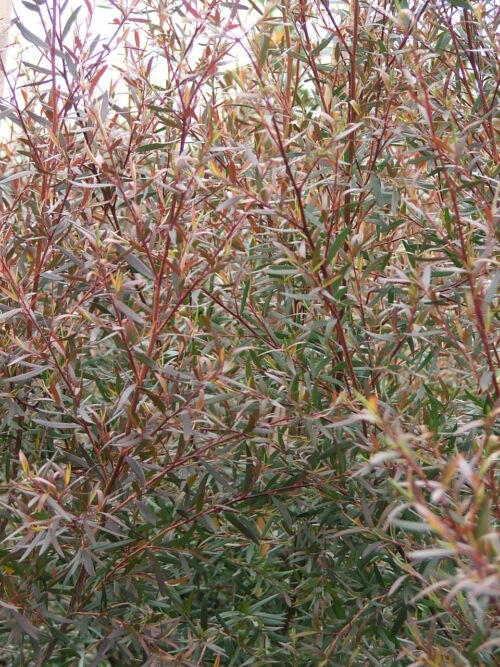
Fruit Producing Yes Small Garden Yes Note: Growth, height and grade information are given in good faith but are subject to natural variables beyond our control. - Leptospermum nitidum ‘Coppersheen’ is a popular, fast-growing evergreen native to Tasmania. It is admired for its striking bronze-red foliage, red stems, and masses of white flowers that bloom profusely in summer, adding vibrant contrast to the garden. Easily trimmed, Coppersheen makes an excellent hedge or larger screen. When left to grow naturally, it reaches approximately 6 x 4 metres, forming a spreading tree with strong visual appeal. This hardy plant tolerates drought and coastal conditions. It grows best in full sun with moist, well-drained soil, making it a versatile choice for many landscapes.
- Leptospermum scoparium – Manuka or Tea Tree is a compact, native New Zealand tree known for its resilience and beauty. It’s ideal for gardens seeking year-round interest and biodiversity. Dark green foliage is narrow, lance-shaped and sharply pointed. From late autumn to early spring, the tree bursts into single or double flowers, offering a vibrant display and nectar for bees. These are followed by its berries, which resemble tiny hot cross buns. Manuka is also prized for its high-quality honey, making it a valuable addition to any landscape. Hardy and adaptable, Manuka tolerates clay soils and thrives in windy coastal areas or dry conditions once established. Avoid overly wet soils for best results. It typically grows to around 5 meters tall and 3 meters wide.
- A hardier selection of Tahitian lime. Fruit is small to medium in size with dark green skin, turning lime yellow at maturity. Flesh tangy, juicy and seedless. Can be eaten green or yellow. Heavy scented flowers, aromatic foliage. Trim to shape. Harvest over the winter months. (named after John T. Bearss who developed this seedless variety)
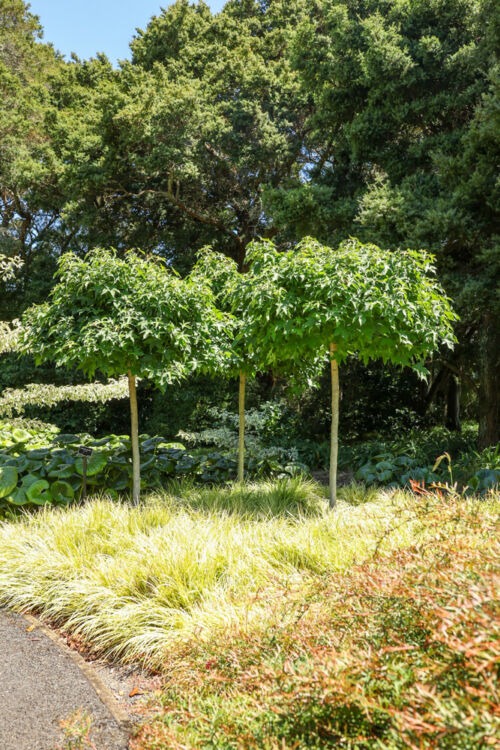
- Liquidambar styraciflua ‘Gumball’ is a compact deciduous feature tree prized for its naturally globe‑shaped crown. Its lush green summer foliage transforms into an impressive display of purples, oranges, reds, and yellows in autumn, creating a striking seasonal highlight.This dwarf cultivar originates from the American Sweetgum, which is native to the southeastern United States, Mexico, and Central America. It grows best in well‑drained soil and full sun, making it a versatile option for many landscapes. Because of its tidy form, Gumball suits smaller gardens, courtyards, and works beautifully when lining paths or driveways. It is typically grafted on a clear stem to form a classic lollipop shape, although lower grafts can create colourful autumn shrubs reaching about 2.5 × 2 metres. Easily trimmed to maintain preferred shape and height, ensuring it stays neat and attractive year‑round.
-
- Description
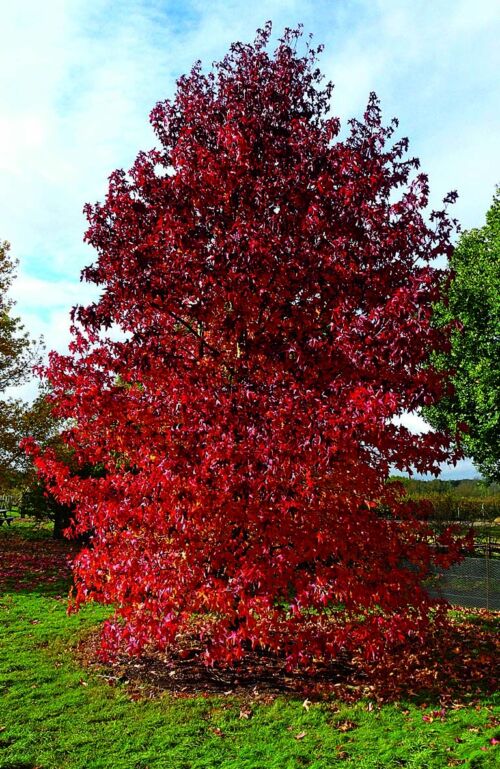
A pyramidal specimen tree with an upright broad growth habit. Green, star-shaped leaves over summer turn dark crimson during autumn. Makes a superb shade or specimen tree. Grows to apx 9 x 5m Height x Width 9 x 5m Range Medium 5-10m Growth Rate Fast Plant Type Tree Shape Pyramidical Country of Origin England Similar to Consider Other Liquidambars, Acer rubrum types, Quercus coccinea or rubra, Pyrus spp. Amelanchier Canadensis, Nyssa Sylvatica - Leaf
Leaf Colour Lush Green Deciduous Leaf Colour Crimson Red - Flower
Flower Nil - Uses
Specimen Yes Good Shade Tree? Yes Accent Yes Note: Growth, height and grade information are given in good faith but are subject to natural variables beyond our control. - Liquidambar styraciflua 'Worplesdon' is a striking deciduous tree with an upright, pyramidal habit and distinctive corky bark. Its deeply lobed, green ‘maple-like’ leaves provide lush foliage throughout spring and summer. As autumn arrives, the leaves transform into a brilliant display of fiery red, orange, and yellow making it a true seasonal highlight. Thanks to its form and colour, this variety is excellent for avenue planting, as a shade tree specimen, or as a feature in small gardens. Ideally, it prefers a sheltered position with moist, well-drained soil conditions. At maturity, it typically reaches around 6 metres tall by 4 metres wide, offering structure without overwhelming the space. Interestingly, the Latin name styraciflua refers to its gum-producing nature.
- 6 x 4m
- Medium 5-10m
- Fast
- Tree
- Round
- North America/div>
- Other Liquidambars, Acer rubrum types, Quercus coccinea or rubra, Pyrus Aristocrat or Bradford. Amelanchier Canadensis, Nyssa Sylvatica, Liriodendron Tulipefera, Platanus Autumn Glory.
- Green
- Reds, Oranges and Yellows
- Moist well drained
- Prefers sheltered
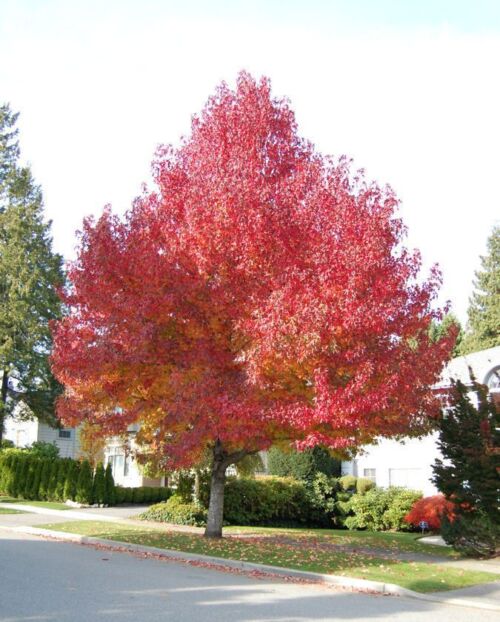
- Liquidambar styraciflua – American Sweetgum is a striking deciduous tree known for its straight trunk and corky bark. It starts narrow and upright, gradually forming a broad, conical crown as it matures. Its green summer foliage transforms into vivid yellows, reds, purples, and oranges in autumn, creating an exceptional seasonal display. Native to North America, American Sweetgum thrives in moist areas and even tolerates poor drainage or clay soils. However, it performs best in moist, well‑drained soil with full sun. Reaching approximately 7 x 5 m, it makes an excellent avenue, specimen, or shade tree.
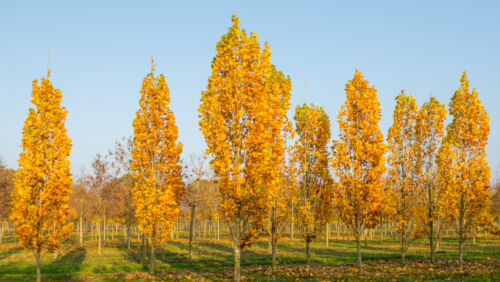
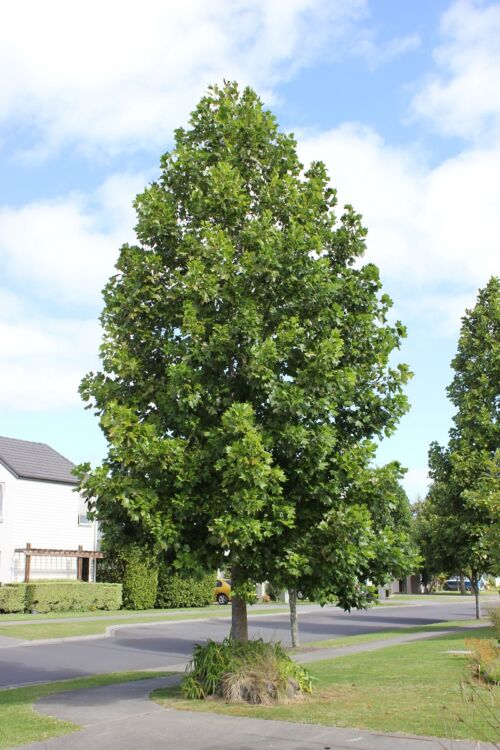
- Liriodendron tulipifera ‘Fastigiata’ – Upright Tulip Tree is a deciduous tree with a strong, columnar growth habit. Its upright branches hold distinctive green, lyre shaped leaves that turn a rich butter yellow in autumn, adding seasonal interest to any landscape. In late spring, slightly fragrant tulip shaped flowers appear. They are greenish yellow with an attractive orange band at the base, creating a subtle yet elegant display. The upright tulip tree prefers full sun and well drained soil. However, it adapts to clay provided you avoid excessive moisture. Because it grows to around 8 × 3 metres and maintains a tidy, slender form, it suits formal landscapes, avenues, and compact urban spaces.
- Liriodendron tulipifera, commonly known as the Tulip Tree, is a fast-growing, pyramidal deciduous tree with a clean trunk and graceful spreading branches. Its large, lyre-shaped green leaves create a lush summer canopy and turn a vibrant butter-yellow in autumn, adding seasonal interest. In late spring, fragrant tulip-like flowers appear, showcasing greenish-yellow petals with a striking orange band at the base. These blooms make the tree a standout feature in any landscape. The Tulip Tree thrives in moist, well-drained soil and tolerates clay, provided it is not overly wet. It grows approximately 10 x 6 meters in 10 years and can reach 30 x 15 meters at maturity. Ideal as a shade or specimen tree, it also works beautifully in avenues to create a bold statement. The name “Tulipifera” refers to its distinctive tulip-shaped flowers, which are its most charming feature.
- Liriodendron tulipifera ‘Arnold’ is a fast-growing, upright deciduous tree with a strong architectural presence making it perfect for narrow spaces. Its large, lobed green leaves stand out through summer, then transition to vibrant yellow in autumn, adding bold seasonal colour. From late spring into early summer, it produces striking tulip-shaped flowers in greenish-yellow tones with orange markings. These blooms enhance its ornamental value and contribute to its distinctive charm. Because of its tidy columnar habit and resilience, ‘Arnold’ suits formal landscapes and urban environments. It thrives in full sun and well-drained soil, offering a stately silhouette that elevates avenues, courtyards, and confined spaces. Typically reaching 15–20 metres in height, this cultivar originated from ‘Fastigiatum’ (Upright) specimens at the Arnold Arboretum in Massachusetts. Notably, it features a stronger central axis than other upright forms, making it a reliable choice for structured planting schemes.
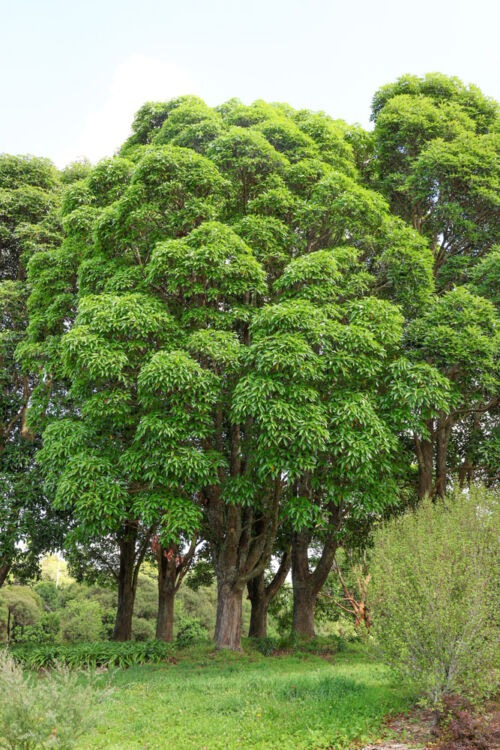
- Lophostemon confertus – Queensland Brush Box is a large, fast-growing evergreen tree with an attractive oval shape. Its long, leathery green leaves create a lush cloud like canopy, while the rusty-brown bark peels away to reveal smooth, lighter tones beneath. During summer, creamy white flowers appear, resembling eucalyptus blooms. These are followed by woody capsules, similar to gum nuts, adding seasonal interest and texture to the tree’s display. This hardy Australian species tolerates a wide range of soils, including clay and compacted ground. However, it thrives best in moist, well-drained conditions and full sun exposure. Queensland Brush Box grows to approximately 10 x 6 metres in ten years, eventually reaching 15 x 6 metres at maturity. With its dense shade and striking form, it makes an excellent specimen or shade tree for gardens and landscapes.




Why buy online?
Buying plants and trees online doesn’t have to feel risky or impersonal. At Black Bridge Nurseries, we’ve made it simple, safe, and satisfying — so you can shop with confidence, from the comfort of home.