Order Quality Trees Online – Delivered Straight to Your Door
Welcome to Our Online Plant Store
From our nursery to your backyard — it’s never been easier to create the garden you’ve been dreaming of. Whether you’re after statement trees, hedging, or lush planting to fill your outdoor spaces, you can now browse and order directly online.
We provide an extensive range of high-quality plants and trees that are perfect for residential landscapes — all backed by the same expert care and service we’re known for. No trade account needed, no back-and-forth calls. Just beautiful plants, delivered to your door.
Shop by category
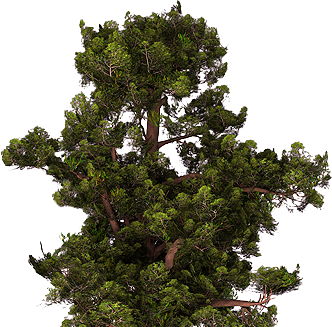
New Zealand Native Trees
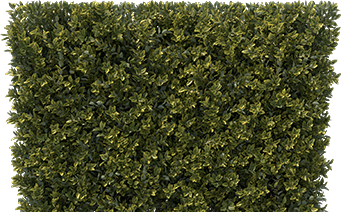
Hedging Plants
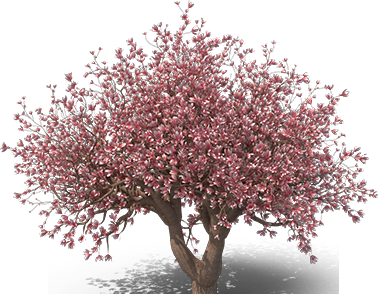
Flowering Trees

Evergreen Exotic Trees
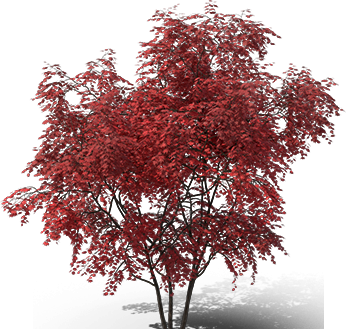
Deciduous trees
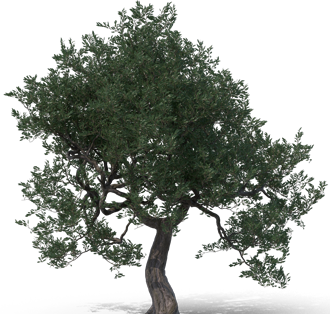
Character Olive Trees
Browse all Trees
- Platanus orientalis – Oriental Plane is a fast-growing, deciduous tree known for its broad, rounded crown. Its large, maple-like green leaves are deeply lobed and turn a rich golden hue in autumn, adding seasonal interest to any landscape. One of its standout features is the bark, which flakes off in patches on the trunk and older branches, revealing a beautifully dappled surface. This adds texture and character throughout the year. Adaptable to most soil types, it tolerates clay and thrives even in polluted urban environments. However, it’s best to avoid overly wet soils for long-term health and growth. Ideal for parks, farms, and large open spaces, it makes an excellent shade, avenue or specimen tree. In 10 years, it can reach around 8 metres tall and 5 metres wide, eventually maturing to 15 x 7 metres or more. The name orientalis means “relating to the Orient,” reflecting its origins in Southeastern Europe and the Eastern Mediterranean.
- Platanus orientalis ‘Autumn Glory’ is a selected form of the Oriental Plane, known for its fast growth and impressive structure. This deciduous tree quickly develops a large, rounded crown of branches, making it a standout in spacious landscapes. Its large, palmate green leaves resemble maple foliage and are deeply lobed into three or more sections. In autumn, they add seasonal interest with golden tones. The bark flakes in patches on older branches, revealing a dappled surface that adds year-round texture. While it tolerates most soils, it prefers moist, well-drained conditions for optimal growth. Ideal for parks, farms, avenues, and large properties, it provides excellent shade and visual appeal. Originating from Duncan and Davies in New Zealand, it typically grows to around 9 metres tall and 5 metres wide.
- Platanus x acerifolia – London Plane is a fast-growing, deciduous tree with a broad, rounded crown. Its large, maple-like palmate leaves measure 20–25cm across. Deep green and glossy with a white felt underside, they turn a rich golden yellow in autumn, creating a striking seasonal display. One of its standout features is the bark, which flakes off in patches on the trunk and older branches, revealing a beautifully dappled surface. This adds texture and character throughout the year. The London Plane tolerates a wide range of soils, including clay, and thrives even in polluted urban environments. However, it’s best to avoid overly wet conditions for optimal growth and longevity. Perfect for parks, farms, and large open spaces, it provides excellent shade and structure. It can reach approximately 8 x 7 metres in 10 years and may grow to 20 x 7 metres at full maturity. The botanical name acerifolia means “with leaves like a maple,” reflecting its foliage. Its origins trace back to England, where it was first cultivated.
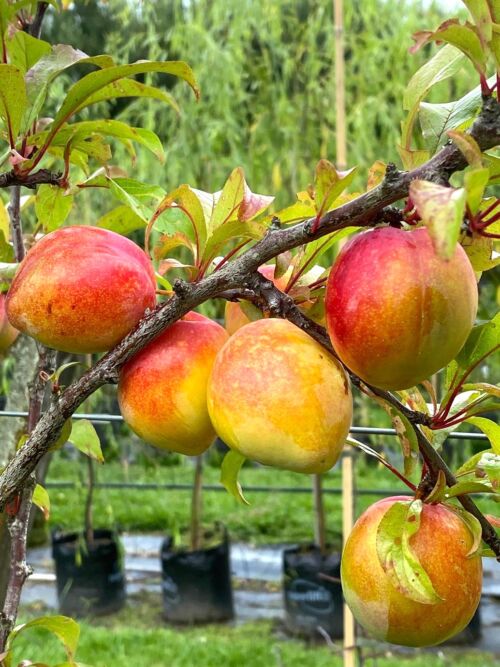
- The Plum ‘Luisa’ (Prunus domestica – European Plum) is a fast-growing, compact deciduous tree with an open habit and dark green foliage. In spring, it bursts into masses of white blossoms that create a striking display.After flowering, the tree produces large, uniquely heart‑shaped plums. They have yellow‑orange skin with very sweet, juicy, yellow flesh, and they are semi‑freestone. You can expect harvests around January to February. This self‑fertile New Zealand variety grows to approximately 5 x 3 metres making it an excellent choice for smaller gardens. It thrives in moist, well-drained soil and full sun, which helps maximise cropping and ripening. ‘Luisa’ was originally discovered in Hamilton, making it a uniquely local favourite.
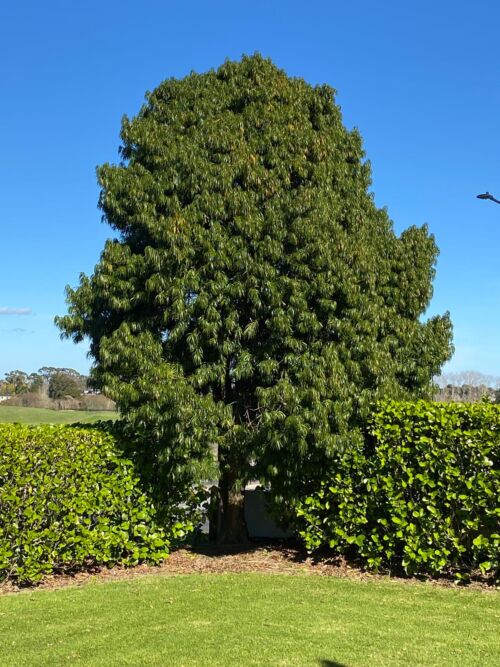
- Podocarpus gracilior, also known as African Fern Pine, is a dense evergreen conifer with a graceful pyramidal shape. Native to East Africa, it adds elegance and structure to any landscape. Its slender branches feature lush, glossy, needle-like foliage in deep green tones. This refined texture makes it a standout choice for both formal and natural garden designs. Thriving in sunny spots with moist, well-drained soil, it adapts well to various conditions. It’s ideal for use as a street tree or a striking specimen in larger gardens. For added versatility, it can be trimmed into a hedge, shaped as a pleached hedge, or grown as a tall shelter or screen. Mature plants can reach approximately 10 x 5 metres.
- Podocarpus henkelii – Henkel’s Yellow Wood is a South African species of Podocarp that forms a compact, upright tree. Its distinctive pyramidal shape is enhanced by weeping branches covered in long, slender, glossy dark-green leaves. In spring, new shoots emerge in a striking salmon-pink shade, adding seasonal colour and contrast. Although slower growing, this tree develops into a graceful feature with year-round appeal. Henkel’s Yellow Wood prefers moist, well-drained soil and full sun. However, it resents waterlogging and should be protected from heavy frosts. The Podocarp family also includes New Zealand’s native Podocarpus totara, making this species a fascinating relative. Growing to approximately 5 x 4 metres in ten years, it is an excellent choice for smaller gardens.
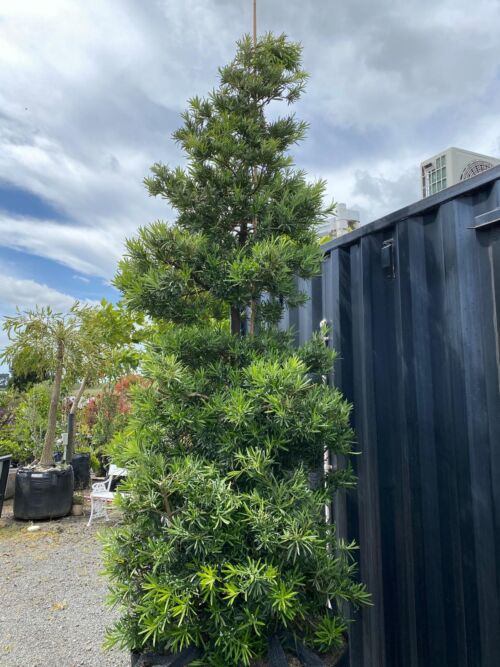
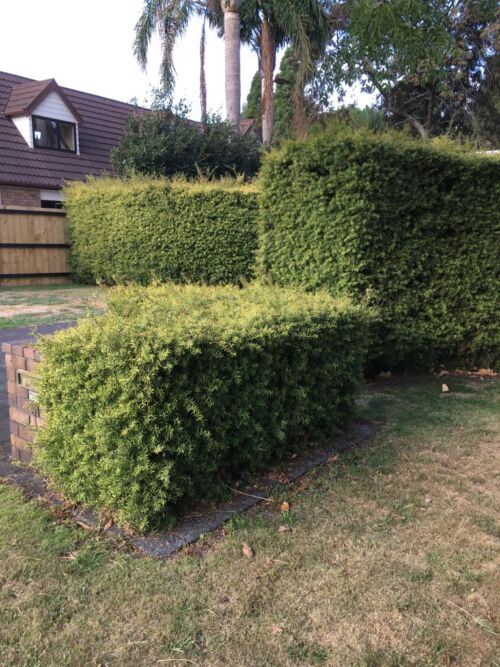
- Podocarpus macrophyllus – Japanese Yew Pine generally grows upright with a narrow or pyramidal habit when young. Over time, it matures into a broader form if left untrimmed, creating a graceful and structured presence in the garden. Its long, narrow foliage is rich green which makes it a striking focal point and provides year-round appeal. Moreover, this species tolerates a wide range of soils, provided they are moist yet free-draining, though it resents waterlogging. Japanese Yew Pine grows best in full sun and is easily trimmed. Because it is slow growing, it requires little maintenance, making it an excellent hedge or screen. Growing slowly to approximately 6 x 4 metres in ten years, this tree offers both resilience and elegance. The Podocarp family also includes New Zealand’s native Podocarpus totara.
- Height x Width: 6 x 4m 10yr
- Height Range: Medium 5-10m
- Growth Rate: Slow
- Plant Type: Tree
- Shape / Habit: Pyramidal
- Deciduous / Evergreen: Evergreen
- Country of Origin: South East Asia
- Similar to Consider: Podocarpus totara, Podocarpus gracilor, Podocarpus totara Aurea, Podocarpus totara Black Bridge, Podocarpus Totara Ardmore Green
- Leaf Colour: Green
- Soil Conditions: Moist well drained
- Climate Conditions: Prefers growing in Full Sun
- Uses: Feature, Screening, Hedging, Small Garden
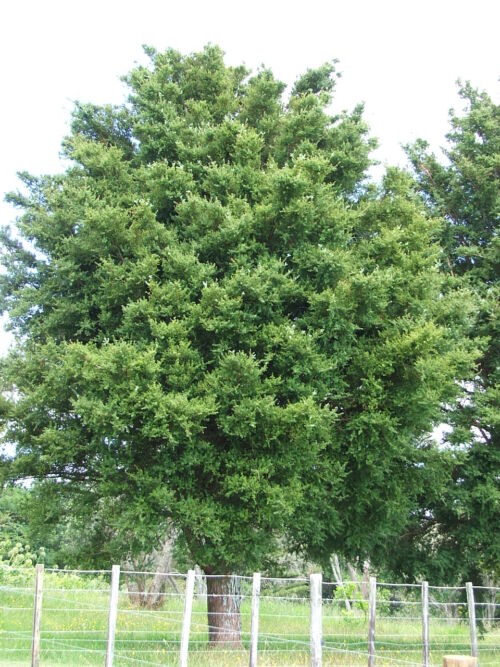
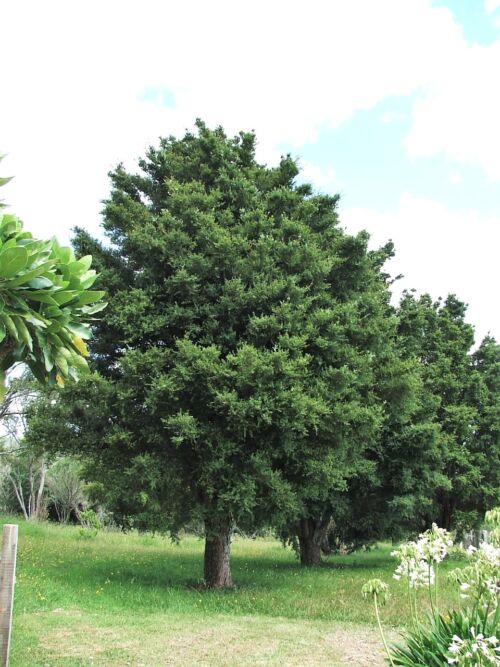
- Podocarpus totara, commonly known as Totara, is a large evergreen tree native to New Zealand. It’s well-suited to spacious landscapes and admired for its strong form and resilience. In its juvenile stage, Totara grows quickly with slender branches and bronze, needle-like foliage. As it matures, growth slows and the tree develops a denser, more branching habit. Eventually, it forms a broad, rounded crown with short, dark green foliage. The stout trunk features rough, reddish-brown bark, adding texture and character. Totara thrives in well-drained soil and, once established, tolerates dry conditions. It’s ideal as a stand-alone specimen, for screening, or clipped into a formal hedge. Under ideal conditions, Totara can reach 20–25 metres at full maturity. In about 10 years, expect growth of approximately 10 x 4 metres.
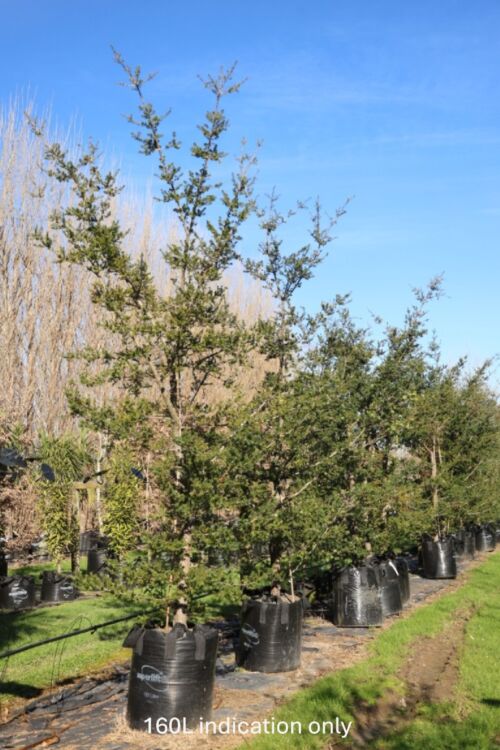
- Podocarpus totara 'Black Bridge', also known as Upright Totara, is a bushier and more upright form of the native NZ Totara. Unlike the standard Totara, it skips the thin juvenile stage and instead develops a dense, strong structure from an early age. As a result, it offers a robust and tidy appearance right from the start. With a moderate growth rate, this versatile tree is ideal as a stand-alone specimen in areas where space is limited. Alternatively, it can be easily trimmed into a compact hedge or allowed to grow on and shaped into a screen or shelter belt. Furthermore, once established, it tolerates drier conditions well—although it still prefers moist, well-drained soil for optimal health. Thanks to its hardiness and adaptability, 'Totora Black Bridge' is an excellent choice for a wide range of garden styles. Ultimately, it reaches approximately 8 x 5 meters, making it a striking yet manageable feature in any landscape.
-
- Podocarpus totara ‘Matapouri Blue’ – Blue Totara is a distinctive New Zealand native Totara with a more upright, open pyramidal form. Its striking blue-grey, needle-like foliage adds unique colour and texture to any landscape. This slow-growing evergreen prefers full sun and moist, well-drained soil. It’s hardy and adaptable, making it suitable for a range of garden styles and conditions. Ideal as a specimen tree, it can also be trimmed into a hedge or left to grow as a natural screen. Its elegant structure offers year-round interest. In optimal conditions, Blue Totara can reach approximately 7 x 5 metres at maturity.
- Podocarpus totara ‘Ardmore Green’ is a strong, sturdy evergreen native to New Zealand. From an early age, it displays dense, dark green foliage, closely resembling the mature Totara tree. It thrives in full sun and prefers moist, well-drained soil. Thanks to its tolerance for wind and coastal conditions, it suits a wide range of garden environments. With slow, steady growth, ‘Ardmore Green’ is easy to manage in gardens of any size. Its compact nature makes it ideal for structured planting. Use it as a stand-alone specimen, for avenues, or as a large screen or shelter. When trimmed, it forms a robust hedge with a Yew-like appearance. In ideal conditions, it can reach approximately 7 x 5 metres at maturity.
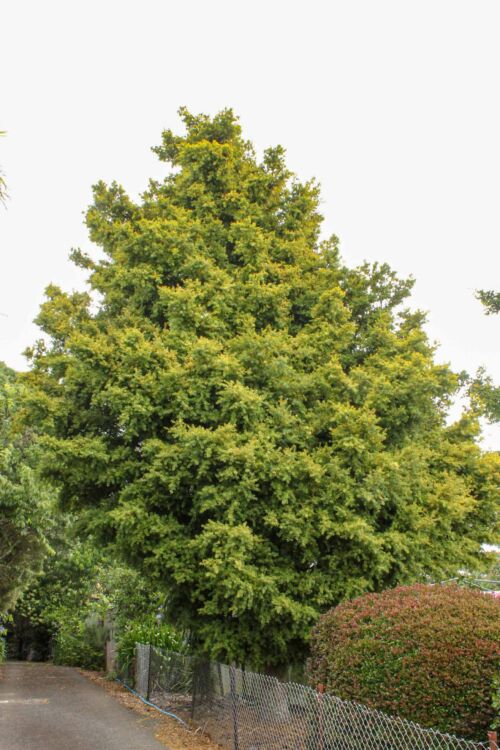
- Podocarpus totara ‘Aurea’ – Golden Totara, is a striking evergreen tree native to New Zealand. Closely resembling its parent species, it stands out with rich golden foliage when grown in full sun. From a young age, it forms a bushy, compact shape that adds texture and colour to any landscape. It prefers moist, well-drained soil and should not be planted in wet areas. This hardy tree tolerates wind and coastal conditions, making it suitable for exposed sites. Its slow growth allows for easy maintenance in gardens of all sizes. Golden Totara can be trimmed to shape and works beautifully as a hedge, screen, or larger shelter. In ideal conditions, it reaches approximately 10 x 6 metres at maturity.

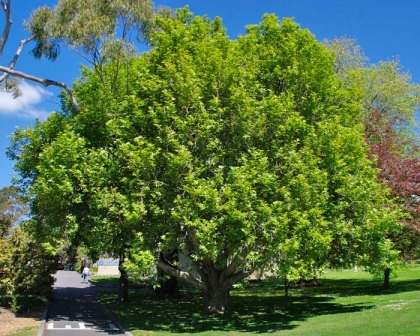

Why buy online?
Buying plants and trees online doesn’t have to feel risky or impersonal. At Black Bridge Nurseries, we’ve made it simple, safe, and satisfying — so you can shop with confidence, from the comfort of home.