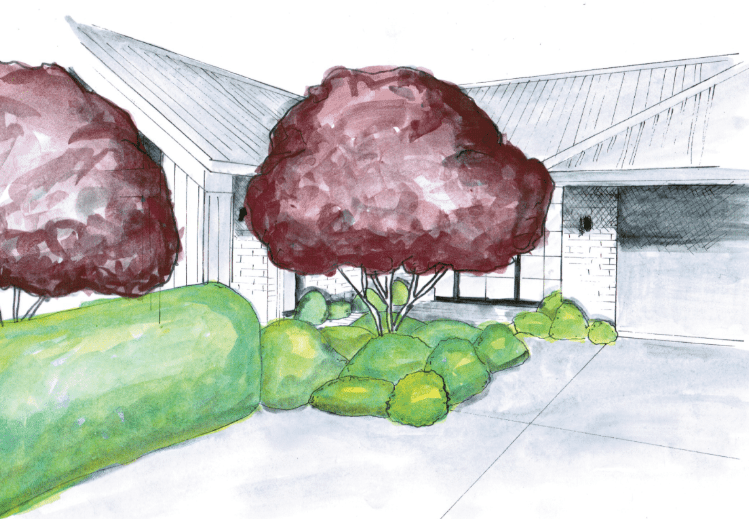
Order Quality Trees Online – Delivered Straight to Your Door
Welcome to Our Online Plant Store
From our nursery to your backyard — it’s never been easier to create the garden you’ve been dreaming of. Whether you’re after statement trees, hedging, or lush planting to fill your outdoor spaces, you can now browse and order directly online.
We provide an extensive range of high-quality plants and trees that are perfect for residential landscapes — all backed by the same expert care and service we’re known for. No trade account needed, no back-and-forth calls. Just beautiful plants, delivered to your door.
Shop by category
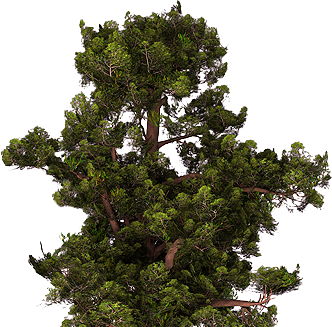
New Zealand Native Trees
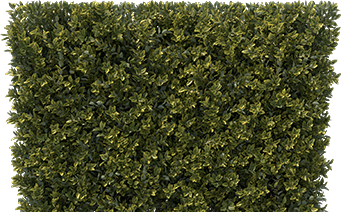
Hedging Plants
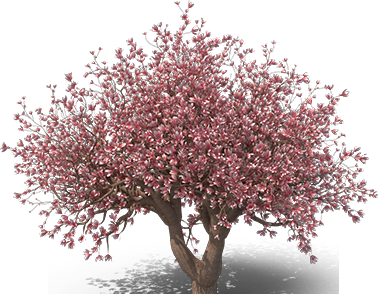
Flowering Trees

Evergreen Exotic Trees
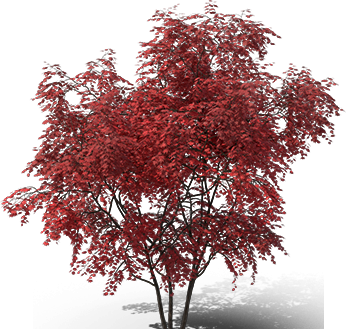
Deciduous trees
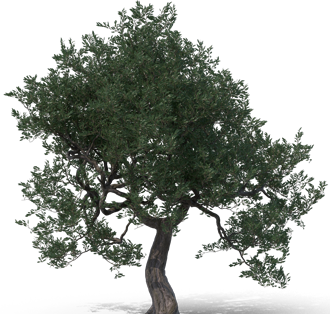
Character Olive Trees
Browse all Trees
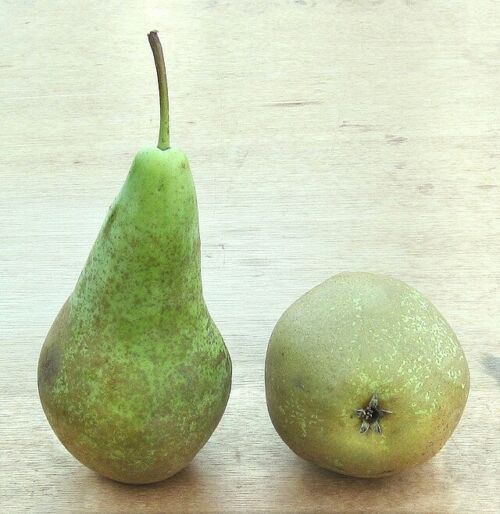
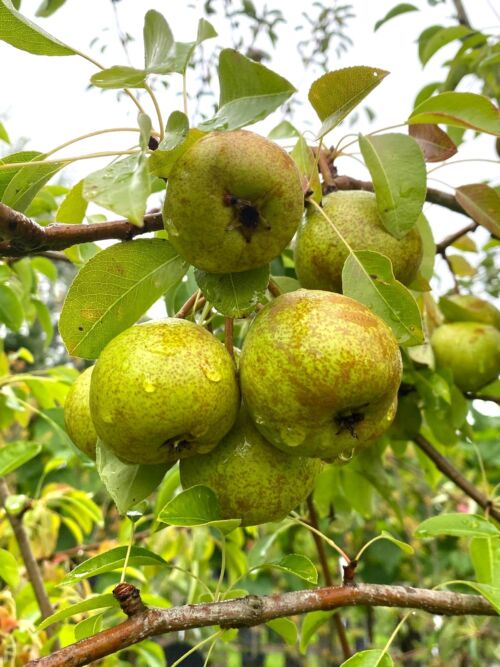
- a { text-decoration: none; color: #464feb; } tr th, tr td { border: 1px solid #e6e6e6; } tr th { background-color: #f5f5f5; }Pear ‘Conference’ (Pyrus communis) is a heritage deciduous fruit tree that originated in England. It shows a strong, upright growth habit, often appearing dense and naturally columnar. Because it grows taller than it does wide, it fits well into many garden spaces. The fruit has a classic long neck, green skin with light russeting, and a juicy, sweet flavour. Trees grow best in full sun and benefit from shelter from strong winds. They also prefer deep, fertile, well‑drained soil. The name ‘Conference’ comes from the National British Pear Conference held in London in 1885, where the variety won first prize. It is partially self‑fertile and typically harvests around March to April. Reaching approximately 4 × 3 metres, it makes an ideal addition to home orchards and gardens.
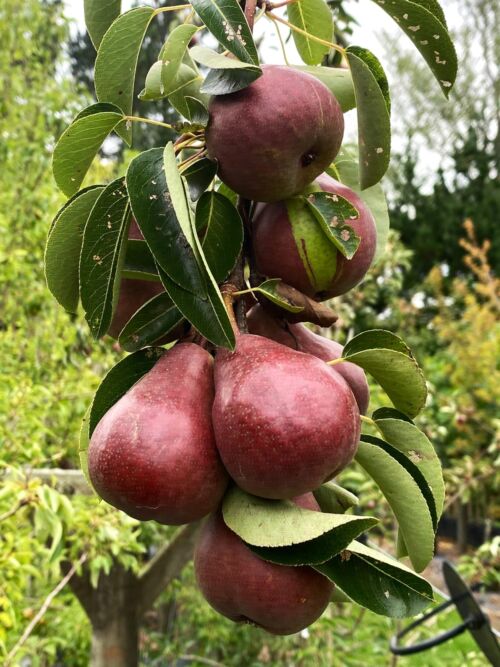
- Pear Red Bartlett’ is a compact, deciduous fruit tree from the USA. In spring, upright branches carry glossy green leaves and an abundance of white blossom. Then, medium‑to‑large purple‑red fruit form through summer, ripening for harvest in March–April. You can enjoy this versatile pear fresh, preserved, baked, or poached.Moreover, ‘Red Bartlett’ thrives in full sun and moist, well‑drained soil, which improves cropping and ripening. Recommended pollinators include Conference, Doyenne du Comice, Packhams, and Winter Nelis. Finally, it grows to around 4 × 3 metres, so it suits smaller gardens beautifully.
- Pear ‘Winter Cole’ (Pyrus communis) is a vigorous yet compact deciduous tree originating from Australia. Its upright, spreading branches carry fresh green leaves through summer, which then shift to warm yellows and oranges in autumn. In spring, the tree bursts into masses of white blossom, creating a striking display.By late autumn, you can harvest its green, lightly russeted fruit. The pears have juicy, sweet, richly flavored white flesh. They also store exceptionally well, making them ideal for winter eating. As a reliable and prolific cropper, ‘Winter Cole’ suits both beginners and experienced growers. Reaching approximately 4 × 3 metres, this heritage variety is perfect for smaller gardens. It thrives in full sun and moist, well‑drained soil, which helps improve cropping and ripening. Its long cultivation history reflects its enduring quality and charm.
- A very good late eating pear with excellent storage. Small green fruit with reddish russet patches and buttery, rich flavoured flesh. Very hardy, but best in a warm site. Harvest apx April May. Pollinators: Beurre Bosc, William Bon Chretien. HERITAGE
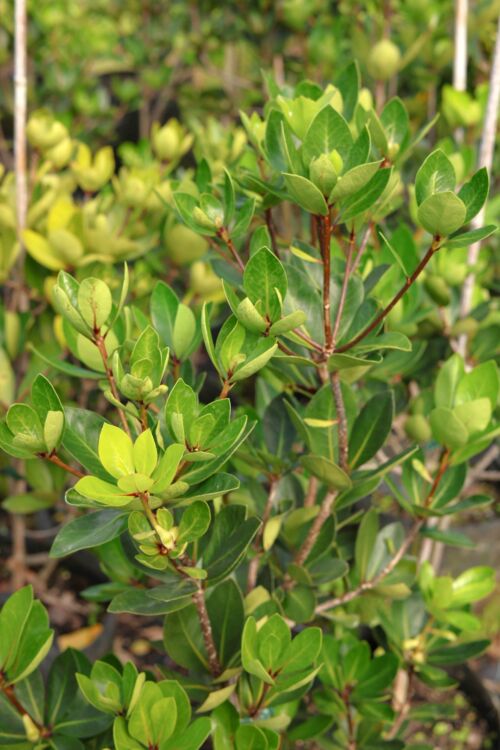
- Pittosporum cornifolium – Tawhiri Karo is a compact, evergreen shrub native to New Zealand. This rare Pittosporum variety features leathery, dark green leaves up to 6cm long, arranged in whorls that resemble a vireya rhododendron. In late winter, it produces sweetly scented yellow flowers that add charm and fragrance to sheltered garden spaces. Its unique foliage and blooms make it a standout feature. This shrub prefers moist, well-drained soil and thrives in a sheltered position. It’s ideal for smaller gardens or can be grown successfully in pots. Typically growing to around 2 metres tall and wide, Tawhiri Karo offers structure and interest without overwhelming limited spaces.
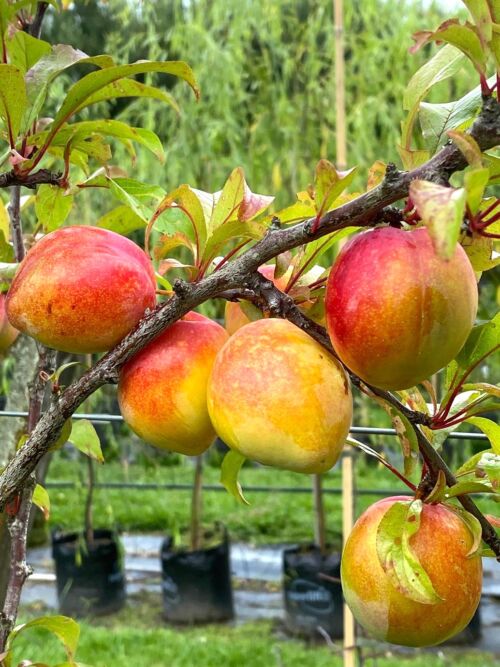
- The Plum ‘Luisa’ (Prunus domestica – European Plum) is a fast-growing, compact deciduous tree with an open habit and dark green foliage. In spring, it bursts into masses of white blossoms that create a striking display.After flowering, the tree produces large, uniquely heart‑shaped plums. They have yellow‑orange skin with very sweet, juicy, yellow flesh, and they are semi‑freestone. You can expect harvests around January to February. This self‑fertile New Zealand variety grows to approximately 5 x 3 metres making it an excellent choice for smaller gardens. It thrives in moist, well-drained soil and full sun, which helps maximise cropping and ripening. ‘Luisa’ was originally discovered in Hamilton, making it a uniquely local favourite.
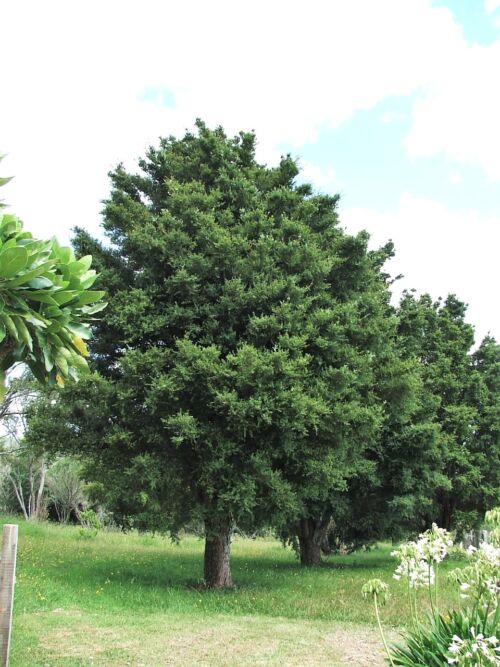
- Podocarpus totara ‘Ardmore Green’ is a strong, sturdy evergreen native to New Zealand. From an early age, it displays dense, dark green foliage, closely resembling the mature Totara tree. It thrives in full sun and prefers moist, well-drained soil. Thanks to its tolerance for wind and coastal conditions, it suits a wide range of garden environments. With slow, steady growth, ‘Ardmore Green’ is easy to manage in gardens of any size. Its compact nature makes it ideal for structured planting. Use it as a stand-alone specimen, for avenues, or as a large screen or shelter. When trimmed, it forms a robust hedge with a Yew-like appearance. In ideal conditions, it can reach approximately 7 x 5 metres at maturity.
- Prunus yedoensis ‘Mountain Haze’ is a compact, deciduous, round-shaped flowering cherry tree with gently arching branches. Although developed in New Zealand, this elegant cultivar traces its origins back to Japan—reflected in its botanical name yedoensis, meaning “of Yedo,” the former name for Tokyo. As the seasons shift, its green summer foliage transforms into a vibrant mix of orange, red, and yellow in autumn. In early spring, the tree bursts into bloom with delicate pink flowers featuring deeper centres, creating a soft haze of colour across its bare branches. Because of its modest size—reaching approximately 6 x 5 metres, ‘Mountain Haze’ is an ideal specimen tree for smaller gardens or courtyards. It thrives in moist, well-drained soil and prefers a sheltered position to protect its blossoms and foliage from harsh conditions.
- Prunus serrulata ‘Shimidsu Sakura’ – Moonlight Cherry, is a stunning Japanese flowering cherry tree. This small deciduous tree features a spreading habit with graceful, arching branches Over summer, the foliage is a vibrant green, gradually shifting to yellow and orange hues in autumn, adding seasonal colour and interest. In late spring, buds emerge in soft pink tones, opening into double flowers that begin as pale pink and fade to pure snow white—a breath taking display that enhances any garden. Shimidsu sakura thrives in moist, well-drained soil and prefers a sheltered, sunny position. Because of its elegant form and manageable size, it serves beautifully as a feature specimen in smaller landscapes. Typically growing to approximately 4 x 4 metres, Moonlight Cherry is both ornamental and easy to maintain. The name Shimidsu-sakura refers to the specific cultivar, where sakura means cherry blossom in Japanese, and Shimidsu is the cultivar name itself.
- Prunus cerasifera ‘Thundercloud’ – Purple-Leaf Flowering Plum adds bold colour and seasonal charm to your garden with the Prunus cerasifera ‘Thundercloud’, a compact ornamental deciduous tree known for its purple-black foliage and delicate pink spring blossoms. Originally from California, this purple-leaf plum tree features an upright, rounded form, making it an ideal statement tree for smaller gardens. In early spring, its bare stems burst into bloom with single pink flowers, just before the rich foliage emerges—creating a stunning contrast. Throughout summer and into autumn, the vibrant leaves maintain their deep hue, offering year-round interest. Because it prefers moist, well-drained soil in a sunny, sheltered position, it’s a low-maintenance choice for both novice and experienced gardeners. Typically growing to approximately 6 x 4 metres, ‘Thundercloud’ is perfect for those seeking a compact ornamental tree that delivers seasonal colour, structure, and visual impact.
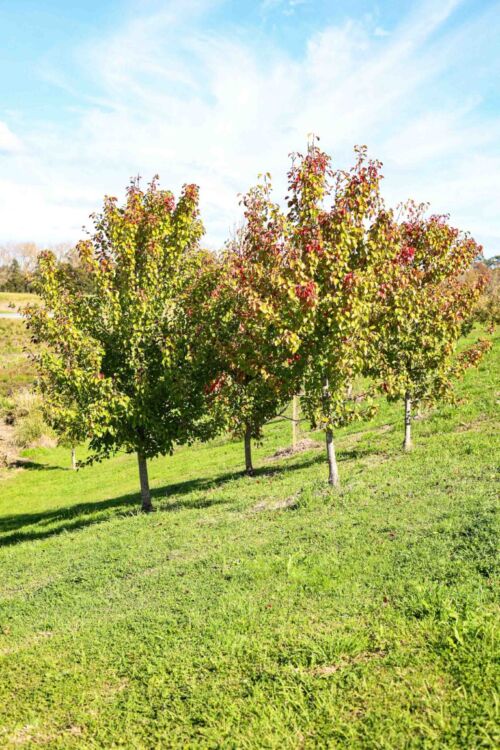
- Pyrus calleryana ‘Bradford’, commonly known as the Callery Pear, is a deciduous pyramidal shape tree with origins in China. Its dense branching structure supports glossy dark green leaves through summer, which transform into brilliant shades of red, orange, and maroon in autumn. In early spring, the tree bursts into a profusion of white blossoms, creating a spectacular floral display. This versatile ornamental tree can be trained into standards and is ideal for small gardens, street plantings, or mass landscaping. It tolerates poor drainage but thrives best in moist, well-drained soils. Reaching approximately 7 metres tall and 4 metres wide, Bradford is a beautiful choice for shade, structure, and seasonal interest.
- Pyrus calleryana ‘Kea’, or the Callery Pear, is a deciduous, multi‑branched tree with a dense, bushy growth habit. It begins with a pyramidal form but gradually develops a broad, vase‑shaped crown. Its glossy green leaves turn vivid red and burgundy in autumn, while early spring brings a profusion of white flowers that cover the tree.‘Kea’ is a New Zealand‑bred variety developed in Christchurch, which gives it improved tolerance to heavy frost and cold. This adaptable tree trains easily into standards and suits small gardens, street plantings, and mass landscaping projects. Although it prefers well‑drained soil, it also adapts well to heavy, compacted, or intermittently wet conditions and performs best in full sun. Growing to around 6 metres tall and 4 metres wide, ‘Kea’ is an excellent choice for small shade areas or formal avenue planting. It provides year‑round structure and visual interest, making it a reliable feature tree for many landscape styles. Makes an excellent street or avenue tree. Vigorous and hardy.



Why buy online?
Buying plants and trees online doesn’t have to feel risky or impersonal. At Black Bridge Nurseries, we’ve made it simple, safe, and satisfying — so you can shop with confidence, from the comfort of home.