Order Quality Trees Online – Delivered Straight to Your Door
Welcome to Our Online Plant Store
From our nursery to your backyard — it’s never been easier to create the garden you’ve been dreaming of. Whether you’re after statement trees, hedging, or lush planting to fill your outdoor spaces, you can now browse and order directly online.
We provide an extensive range of high-quality plants and trees that are perfect for residential landscapes — all backed by the same expert care and service we’re known for. No trade account needed, no back-and-forth calls. Just beautiful plants, delivered to your door.
Shop by category
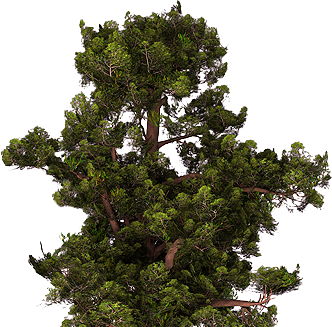
New Zealand Native Trees
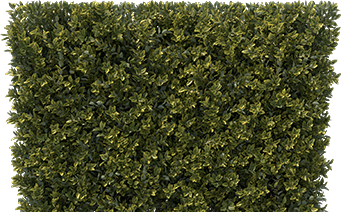
Hedging Plants
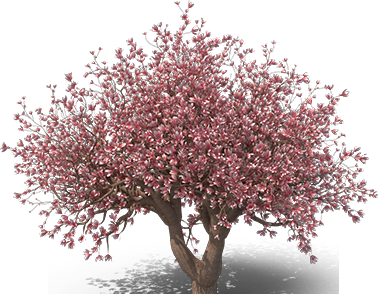
Flowering Trees

Evergreen Exotic Trees
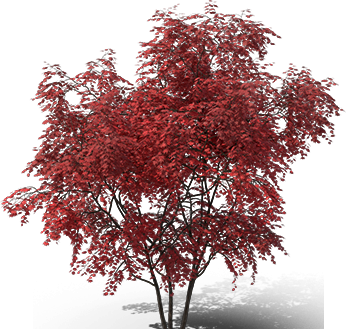
Deciduous trees
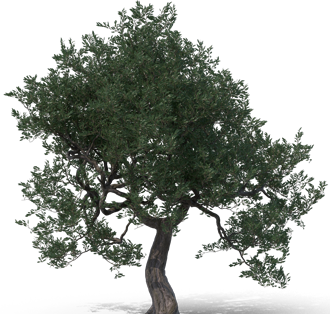
Character Olive Trees
Browse all Trees
- Pseudopanax ‘Cyril Watson’ is an evergreen shrub native to New Zealand. This unusual cultivar stands out with glossy tropical leaves shaped like a duck’s foot, adding a distinct touch to any garden. Moreover, its compact, bushy habit makes it highly popular. Gardeners often use it as a neatly trimmed hedge or clip it into a larger screen, creating structure and style with ease. In addition, Pseudopanax ‘Cyril Watson’ prefers fertile, moist, and well-drained soil. It thrives in full sun to partial shade, while tolerating coastal conditions and moderate frost once established. It was first discovered by Cyril Watson in 1965 on the slopes of Mt. Taranaki in the North Island of New Zealand. The plant was named in honour of Watson, who was a renowned botanist and naturalist. Growing to approximately 3 x 2 metres, it offers both resilience and beauty
- Pittosporum tenuifolium – Kohuhu is an evergreen tree native to New Zealand. It is the parent plant of many popular cultivars, which have developed from the natural variation found in seed‑grown plants. Within the tenuifolium family, foliage varies widely. Leaves range from deep green to softly variegated or glaucous tones, with both long and short forms. Because of this diversity, many cutting‑grown cultivars have emerged over time. As a tree, Kohuhu grows quickly and develops a dense, rounded habit. It prefers full sun and moist, well‑drained soil. Furthermore, it trims easily, making it ideal for larger screens or compact hedges. In spring, it produces small purple flowers with a sweet fragrance, especially noticeable on still mornings or evenings. Ultimately, Pittosporum tenuifolium reaches approximately 5 × 3 metres.
-
- Description
Compact bushy small tree with an excellent rounded habit. Leaves lettuce green small and fresh-looking. Small purple flowers are fragrant in the stillness or morning or evening. Full sun dry tolerant once established. Trims well so ideal as a hedge planted in rows or individually as a specimen or left to grow on as a trimmed screen. Ideal in a smaller garden. Height x Width 3 x 3 Range Small 1-5m Growth Rate Moderate Plant Type Tree Shape Round Country of Origin New Zealand Similar to Consider Other Pittosporums - Leaf
Leaf Colour Green Lime - Flower
Flower Colour Red Purple Fragrant? No - Uses
Screening Yes Hedging Yes Bird Feeding Yes Small Garden Yes Note: Growth, height and grade information are given in good faith but are subject to natural variables beyond our control. - Port Wine Magnolia - Michelia figo is a slow-growing, compact shrub that features a rounded shape and vibrant lime-green foliage. In early spring, it bursts into bloom with masses of small, cream-colored flowers streaked with purple, which release a rich fragrance. As a result, it becomes a standout feature in any garden. Depending on light conditions, the shrub’s form can vary. When grown in shade, it tends to develop a looser, more open structure. Conversely, plants grown in full sun are typically more compact and display denser foliage. Moreover, it thrives in humus-rich, well-drained, slightly acidic soil, making it adaptable to a range of garden environments. Whether planted in sun or shade, Port Wine Magnolia performs beautifully. It can be trimmed into a neat, low hedge, allowed to grow as a striking standalone specimen, or placed in a large decorative pot for added versatility. Originating from Western China, this elegant shrub typically reaches up to 3 metres tall and 2.5 metres wide.
- Leptospermum scoparium – Manuka or Tea Tree is a compact, native New Zealand tree known for its resilience and beauty. It’s ideal for gardens seeking year-round interest and biodiversity. Dark green foliage is narrow, lance-shaped and sharply pointed. From late autumn to early spring, the tree bursts into single or double flowers, offering a vibrant display and nectar for bees. These are followed by its berries, which resemble tiny hot cross buns. Manuka is also prized for its high-quality honey, making it a valuable addition to any landscape. Hardy and adaptable, Manuka tolerates clay soils and thrives in windy coastal areas or dry conditions once established. Avoid overly wet soils for best results. It typically grows to around 5 meters tall and 3 meters wide.
- Hymenosporum flavum known as the Australian Frangipani, is a vigorous, evergreen tree with an upright habit and open form. Its long glossy green foliage provides year-round interest, while the tree’s elegant structure makes it a standout feature in any garden. During spring and early summer, it bursts into clusters of creamy yellow flowers. These blooms release a delightful fragrance, attracting bees, butterflies, and nectar-loving birds, which in turn bring vibrant life and movement to your outdoor space. Native to Australia, this tree thrives in moist, well-drained soil and full sun. However, it benefits from being planted in a sheltered position, away from strong winds, ensuring healthy growth and long-lasting beauty. Reaching approximately 10m high and 4m wide, it suits both spacious and smaller gardens. With regular trimming, you can easily maintain a compact shape and control its height, making it a versatile choice for modern landscapes.
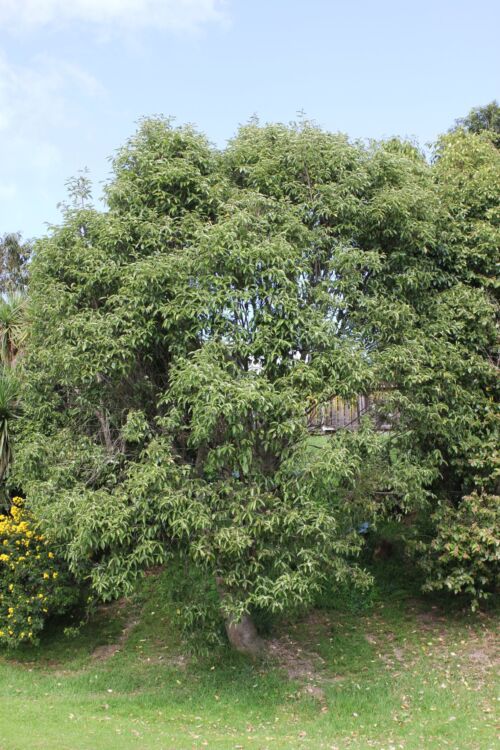
- Hoheria populnea, known as Lacebark, is a compact evergreen tree native to New Zealand. Its slender branches carry fresh, light green leaves that are semi-glossy, veined, and sharply toothed, giving it a delicate yet vibrant appearance. From late summer into autumn, the tree bursts into bloom with masses of starry, snow-white flowers. These striking blossoms often conceal the foliage, creating a dazzling seasonal display. The name “lacebark” refers to its fibrous inner bark, which resembles fine lace. This net-like material can be torn into ribbons and was traditionally used by Māori and Pākehā for weaving hats, capes, and baskets. Thriving in full sun, it prefers moist, well-drained soil that doesn’t dry out too much. With its graceful form and cultural significance, it makes an ideal shade tree for smaller gardens. Expect it to grow to approximately 5 metres tall and 3 metres wide.
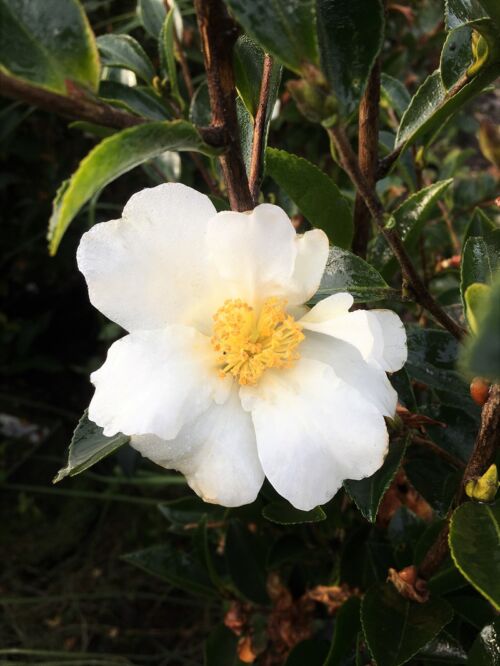
- Camellia sasanqua ‘Setsugekka’ is among the most popular flowering camellias. This moderately fast-growing upright shrub showcases white blooms from autumn through winter. Each flower features a ruffled edge, a bright cluster of golden stamens at the centre, and a delightful fragrance that enhances the garden. In addition to its flowers, the shrub offers dense, glossy green foliage. Therefore, it is an excellent choice for hedging at various heights. It responds well to trimming and, alternatively, can be grown as a striking standalone specimen or shaped as a topiary. Although camellias originate from China, cultivars like ‘Setsugeka’ are now bred worldwide. As a result, they are admired for their ornamental appeal and adaptability, making them suitable for diverse garden styles and climates. For best results, position this plant in full sun or dappled shade. To ensure healthy growth, place it in well-draining, acidic soil enriched with organic matter. Moreover, pruning after flowering promotes bushier and more compact growth. Typically, this variety grows to around 2.5m tall and 2.0m wide; however, it can be allowed to expand further, creating an effective screen in the garden
- Camellia hybrid ‘Nicky Crisp’ is a slower-growing, compact shrub with dense foliage and deep green leaves. Its neat form makes it an attractive choice for structured plantings. In addition, small pale pink semi-double flowers with bright yellow stamens appear for 5–6 weeks during winter. These blooms add soft colour and seasonal interest to the garden. Moreover, this camellia thrives in full sun or dappled shade when planted in well-drained acidic soil. Prune after flowering to encourage bushiness. It makes an outstanding hedge or border, especially in smaller gardens, and can reach up to 2m if left untrimmed.
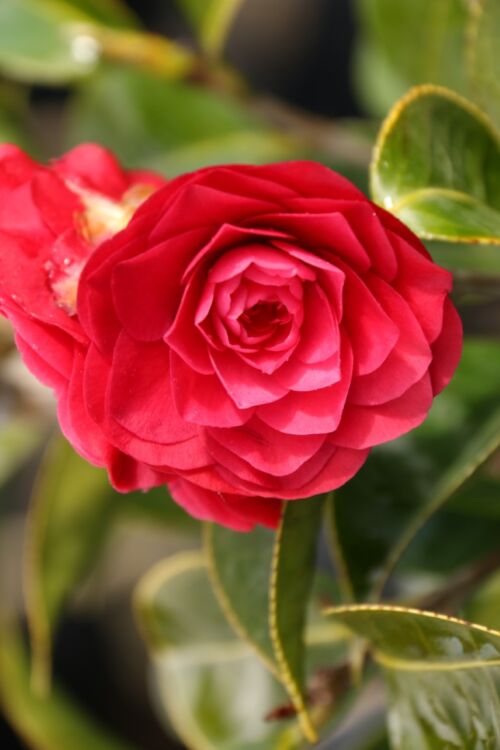
- Camellia japonica ‘Roger Hall’ is an evergreen shrub with glossy green foliage. In early summer, bright red, small to medium, formal double flowers create a striking display that brightens the garden. Moreover, Japonica camellias are versatile. They make excellent hedges, yet they also shine as stand-alone small trees. Plant them in full sun or shaded areas, ensuring well-drained acidic soil for best results. After flowering, prune to encourage bushy growth. Alternatively, allow the plant to develop into a larger screen. In addition, this camellia can be planted in larger pots and also suits topiary work, offering flexibility for different garden designs.
- Camellia japonica ‘Kramers Supreme’ features glowing red flowers are peony form with mixed petals and petaloides in full rounded forms. Mid-late season Fragrant. Vigorous compact growth. Japonica camellias make an excellent hedge but are also useful as a stand alone small tree in the garden. Plant in full sun or dappled shade in well drained acidic soil. Prune after flowering to encourage bushy growth. Can also be allowed to grow on to form a larger screen.
- Corokia virgata ‘Geenty’s Green’ is a compact, bushy shrub native to New Zealand, celebrated for its vibrant green foliage and star-shaped yellow flowers that bloom in early summer. These are followed by small dark red berries that attract native birds, adding seasonal interest and biodiversity to your garden. Ideal for hedging, this versatile plant trims neatly into a tidy shape, ideal for low hedges or borders in larger or smaller gardens. It can be left to grow naturally into a larger screen as well. Once established, it thrives in exposed coastal, windy or dry conditions, making it a resilient choice for challenging sites. Mature plants reach approximately 2 metres high by 1.2 metres wide. Named in honour of New Zealand plantsman and Corokia enthusiast Mike Geenty, this cultivar has the Latin virgata, meaning “twiggy”—a reference to its fine branching structure.


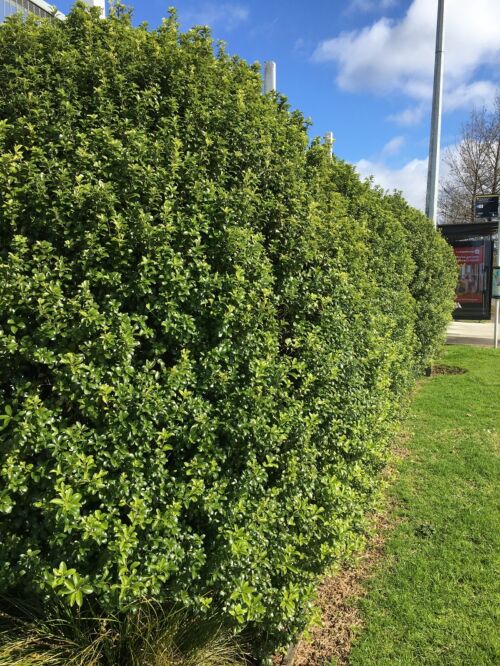


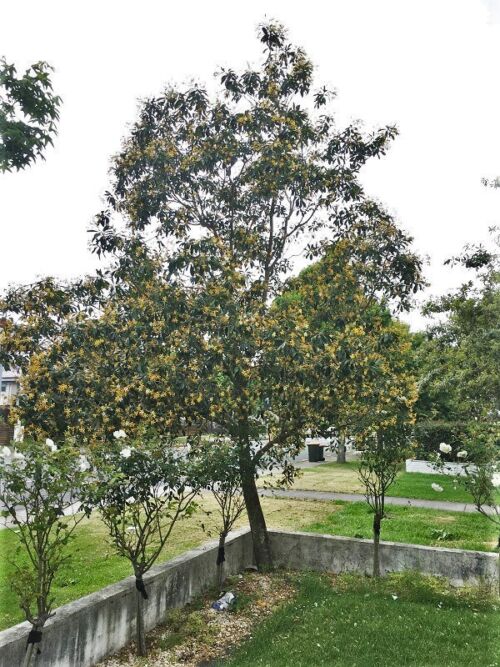



Why buy online?
Buying plants and trees online doesn’t have to feel risky or impersonal. At Black Bridge Nurseries, we’ve made it simple, safe, and satisfying — so you can shop with confidence, from the comfort of home.