Order Quality Trees Online – Delivered Straight to Your Door
Welcome to Our Online Plant Store
From our nursery to your backyard — it’s never been easier to create the garden you’ve been dreaming of. Whether you’re after statement trees, hedging, or lush planting to fill your outdoor spaces, you can now browse and order directly online.
We provide an extensive range of high-quality plants and trees that are perfect for residential landscapes — all backed by the same expert care and service we’re known for. No trade account needed, no back-and-forth calls. Just beautiful plants, delivered to your door.
Shop by category
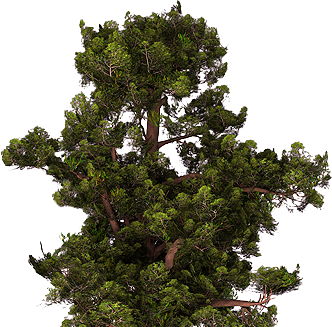
New Zealand Native Trees
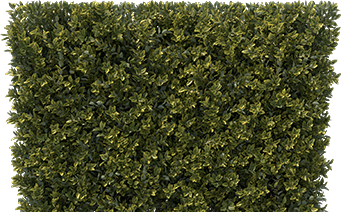
Hedging Plants
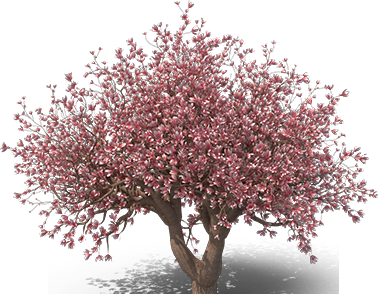
Flowering Trees

Evergreen Exotic Trees
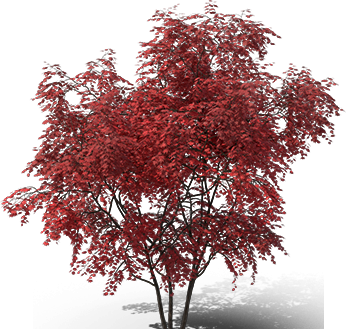
Deciduous trees
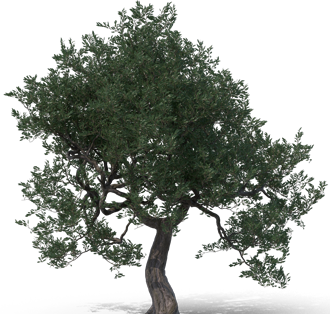
Character Olive Trees
Browse all Trees
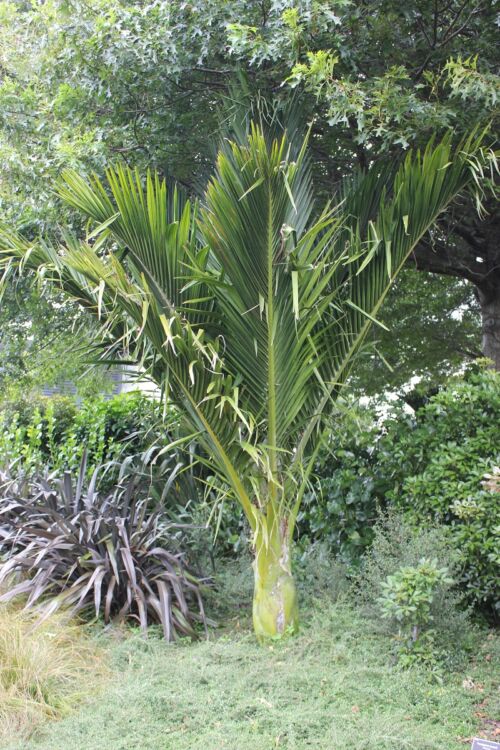
- Rhopalostylis sapida, commonly known as NZ Nikau, is a native New Zealand palm with elegant tropical appeal. In its juvenile stage, it produces long, graceful fronds reaching up to 3 metres. Over time, a slender trunk develops, marked with rings from fallen leaves. This trunk is crowned with rich green, fan-like fronds that add lush texture to shaded garden spaces. Nikau palms thrive in partial to full shade and prefer moist, well-drained soil rich in organic matter. They flourish in warm, sheltered environments with protection from strong winds and heavy frosts. For best results, plant in a shady spot with sunlight on the crown and cool, shaded roots. This mimics their natural forest habitat and enhances their appearance. Nikau is an excellent choice for garden specimens or large pots. Though very slow-growing, it can reach 10 metres and more over many years.
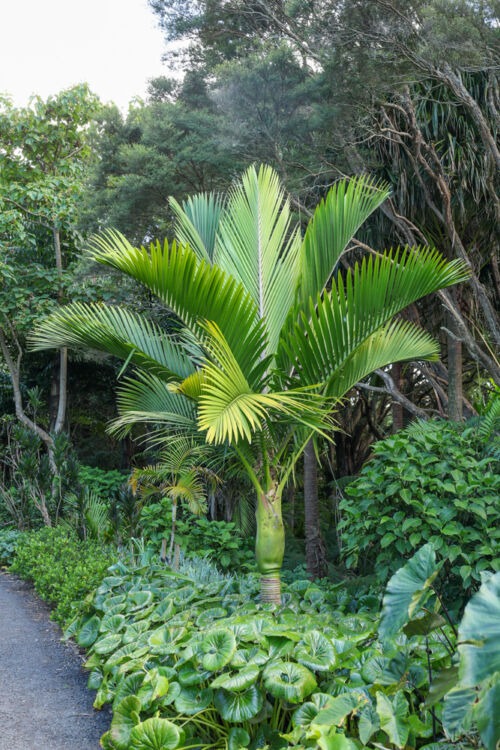
- Rhopalostylis baueri var. cheesemanii – Kermadec Island Nikau Kermadec Island Nikau is a native New Zealand palm from the northern Kermadec Island group. Originating from a warmer climate, it grows noticeably faster than other Nikau varieties. This palm features a more open, umbrella-like form with broader fronds. Each leaflet is slightly spaced, giving the foliage a light, airy appearance that adds a tropical feel to any setting. Over time, it develops a trunk marked with rings from fallen leaves. While young, it prefers a shady position but will tolerate full sun as it matures. It thrives in moist, well-drained soil with a cool root run and benefits from a sheltered location. This makes it ideal for subtropical gardens or protected outdoor spaces. Whether planted as a garden specimen or grown in a large container, it offers year-round appeal. With moderate, slow growth, it can eventually reach up to 10 metres over many years. Cheesemanii is in reference to plants named after the New Zealand botanist Thomas Cheeseman
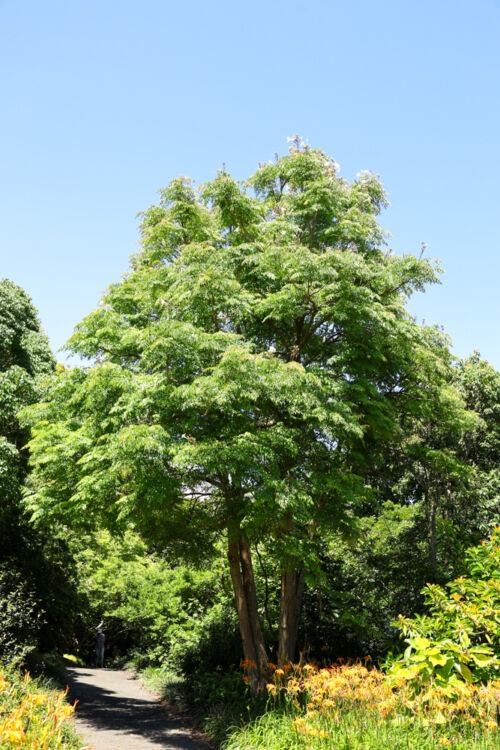
- Radermachera sinica, also known as Canton Lace or China Doll, is a sub tropical, fast growing evergreen tree native to Southern China. It has an open, spreading form and features emerald green bipinnate leaves that reach up to 50 cm. In summer, the tree produces long, white, trumpet shaped flowers that create a striking display. It prefers moist, well drained soil in full sun, and should be kept evenly moist during dry periods for best growth. Because young plants are sensitive to cold, they should be protected from frost. Easily pruned to maintain height or shape, making it ideal for hedging or privacy screens. Additionally, it grows well indoors as a houseplant. A mature Radermachera sinica typically reaches around 8 × 5 metres.
- Radermachera Everlasting Beauty is a stunning shrub that has glossy, deep green emerald foliage and produces clusters of trumpet shaped, pale pink flowers with yellow throats that are sweetly scented. Flowering occurs during warmer months and flowering can occur multiple times in a season. It has a strong upright growth habit ideal for hedging and border plantings. A hardy shrub that is drought tolerant once established.
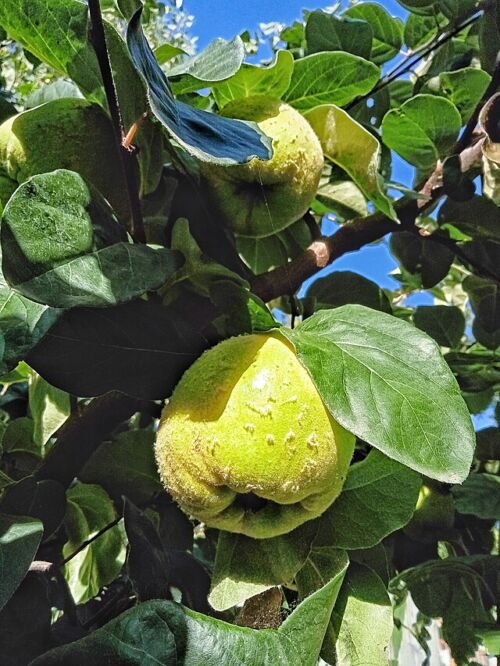
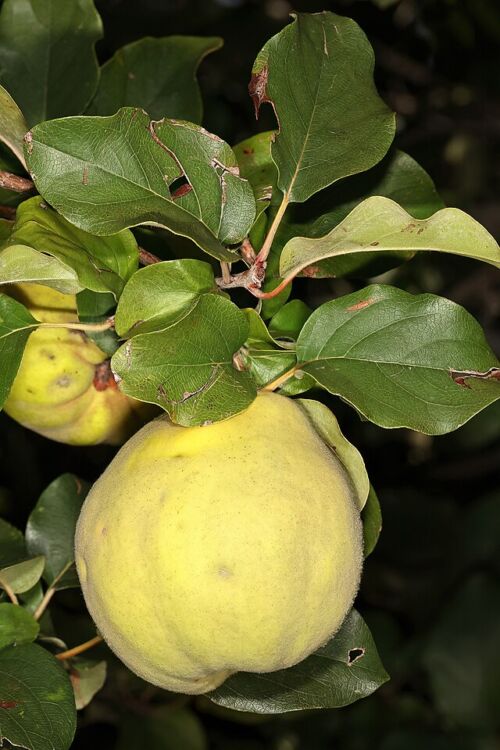
- Quince 'Van Deman' is an attractive tree, or multi-stemmed shrub, which features dark green foliage and very showy blossoms in late spring. With its fast growth and elegant form, it quickly becomes a highlight in the garden. The fruit is large, oblong-pear shaped, and bright yellow-orange. Its pale yellow flesh offers a good, spicy flavour. Early ripening and heavy bearing, it proves hardier than many other cultivars, making it a reliable choice for home orchards. Traditionally, quince has been used in marmalades, jellies, and candies. Today, it is also sought after for pastes and other culinary creations. When cooked, the fruit becomes tender and sweet, while its excellent keeping quality ensures long enjoyment. The Van Deman quince was developed in the United States in the 1890s by horticulturist Luther Burbank, who named it after Dr. H.E. Van Deman of the U.S. Department of Agriculture. This variety thrives in deep, fertile, well-draining soil. Self-fertile and harvested around March, it grows to approximately 4m high and wide, offering a manageable size for smaller gardens.
- Quince ‘Smyrna’ (Cydonia oblonga ‘Smyrna’) is a deciduous tree, or multi-stemmed shrub, with lush dark green foliage. In late spring, it produces very showy blossoms that bring seasonal charm and elegance to the garden. The fruit is exceptionally large, oblong-pear shaped, and golden yellow. Highly aromatic, it becomes tender and sweet when cooked. Traditionally used in marmalades, jellies, and candies, it is now also prized for pastes and other culinary creations. Fruit from this variety stores well, ensuring long enjoyment. Self-fertile and harvested around March, it provides reliable yields without requiring a pollinator, making it a practical choice for home orchards. Quince has been cultivated since ancient times. Interestingly, the ‘Smyrna’ variety is believed to have originated near the historic city of Smyrna, now modern-day Izmir in Turkey, giving it a rich cultural heritage. Growing to approximately 4m high and wide, it is perfectly suited to smaller gardens. With its manageable size and ornamental appeal, it makes an excellent fruit tree for courtyards and compact landscapes.
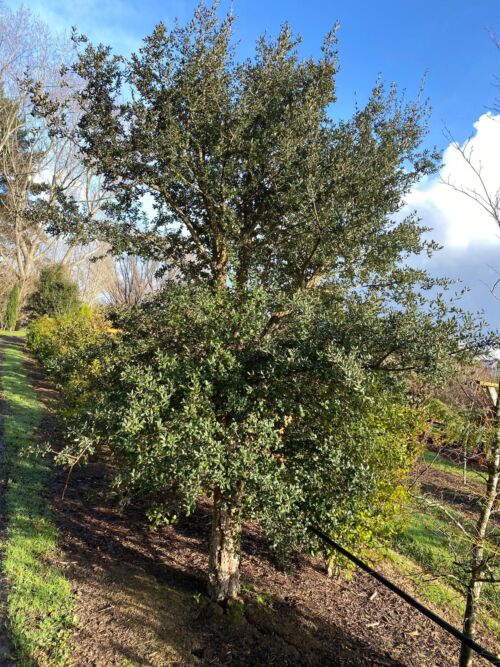
- Quercus suber, commonly known as Cork Oak, is a striking evergreen tree native to the Mediterranean region. It grows large with a short stem and wide-spreading canopy, making it a bold feature in any landscape. Notably, its thick, rugged bark is deeply fissured and harvested for cork production. This unique trait makes it both functional and visually captivating. The tree displays a gnarled, spreading habit with dark green, leathery leaves that reveal a grayish underside. As a result, it adds texture and contrast throughout the year. Thriving in warm, dry climates, Cork Oak prefers well-drained soils and shows excellent drought tolerance once established. It can reach over 15 metres at full maturity. Moreover, its dramatic form and historical use make it an excellent conversation piece. Interestingly, the Latin word suber translates to “cork bark.”
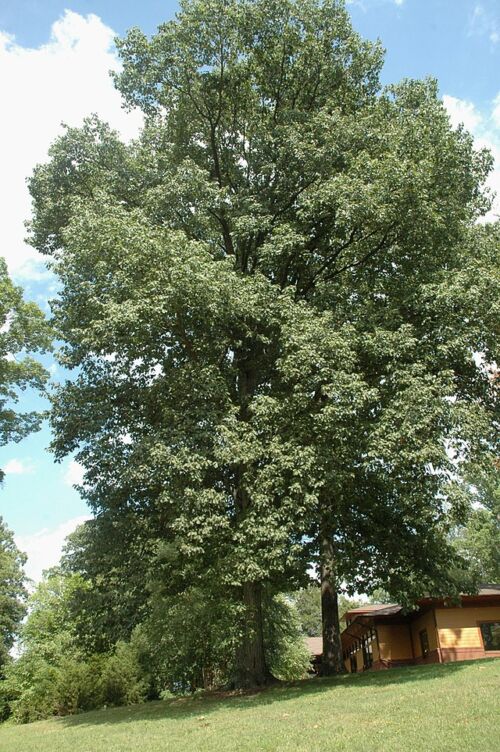
- Quercus rubra, commonly known as Northern Red Oak, is a deciduous tree native to North America. It forms a large, impressive specimen with broad, spreading branches. In spring, new leaves emerge a deep, rich red before turning vibrant green through summer.As autumn arrives, the foliage shifts to striking shades of dark red and orange. This tree thrives in full sun and grows best in deep, well‑drained, slightly acidic loam. However, it also adapts well to clay, sandy, and urban soils. Although tolerant of varied conditions, it prefers consistent moisture and dislikes prolonged flooding. Northern Red Oak makes an excellent specimen or shade tree for larger gardens, estates, parks, or reserves. It grows to approximately 10 × 7 metres in ten years and can eventually mature to around 20 metres.
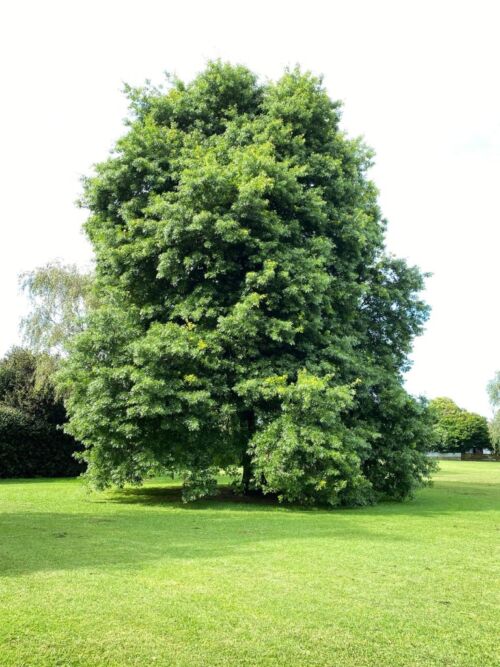
- Quercus robur ‘Fastigiata’ – Upright English Oak is a deciduous, narrow-upright form of the classic English Oak. Its strongly vertical branches hold dark green leaves that turn a warm yellow in autumn. Acorns develop through the season and fall in late autumn. As the tree matures, it gradually shifts from a strict columnar shape to a more pyramidal form. It tolerates clay soils; however, you should avoid planting it in areas that remain overly wet. Because of its tidy structure, it works extremely well for avenue plantings and for compact residential or commercial spaces. It typically reaches around 8 × 3 m in ten years and may grow to 20 × 4 m at full maturity. The name robur in Latin refers to hardwood—especially oak—and also conveys strength, firmness, power, and resilience.
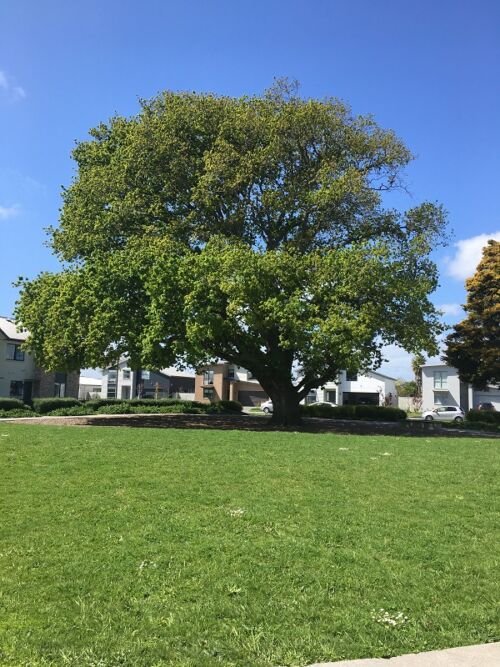
- Quercus robur – English Oak is one of the worlds most recognised trees. It is a deciduous, long‑lived tree native to Europe. It grows into a very large specimen with a broad crown of rugged, open branches. Its dark green leaves turn a clear yellow in autumn, while acorns ripen and fall throughout the season. As it matures, the tree develops short, attractive fissured bark that adds strong visual character. Although it tolerates clay soils, it is best to avoid sites that remain consistently wet. In the Landscape its expansive canopy, it makes an excellent shade tree for parks, reserves, farms, and larger open spaces. The English Oak is also valued for its durable timber. Its heartwood is highly sought after for interior use and quality furniture work. This impressive tree typically reaches around 10 × 6 m in ten years and can surpass 30 m at full maturity. The Latin word robur refers to hardwood, especially oak, and conveys strength, firmness, power, and resilience.
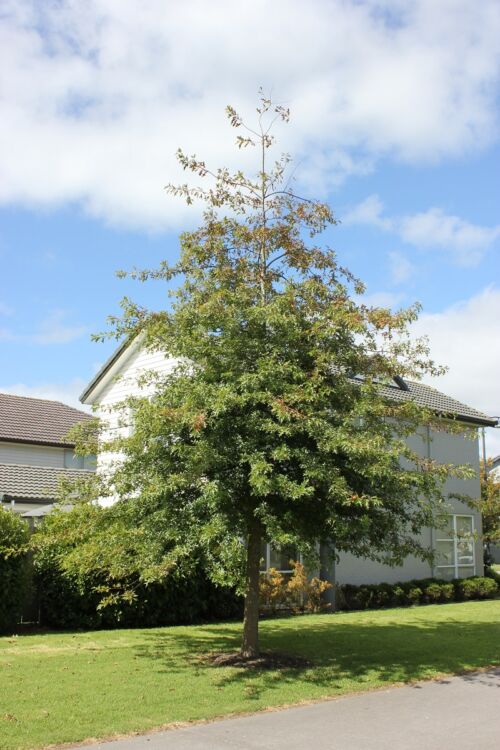
- Quercus palustris – Pin Oak (Swamp Oak) is a deciduous tree native to North America, known for its pyramidal growth habit and distinctive brownish-grey bark. Its deeply cut, glossy green leaves provide lush summer foliage, which eventually transforms into a brilliant scarlet red display in autumn. Notably, the lower branches tend to droop toward the ground, adding architectural interest to its form. The Latin name palustris translates to “of marshland” or “of swamps,” reflecting its natural preference for moist to wet, acidic soil conditions. Pin Oaks tolerate damp to wet environments and thrives best in full sun. In ideal conditions, it can reach approximately 8 x 6 metres within 10 years and may grow to over 20 metres at full maturity—making it an excellent choice for large landscapes or as a commanding shade tree. Whether you're planting in parklands, spacious gardens, or wetland edges, Quercus palustris offers seasonal beauty and structural elegance.
- Quercus coccinea – Scarlet Oak is a majestic deciduous tree that forms a large, stately specimen characterized by an oval crown and upward-reaching branches. Its glossy green, deeply lobed leaves create a lush summer canopy, while in autumn they transform into a brilliant display of scarlet red, which offers exceptional seasonal colour. In addition to its foliage, the bark develops a reddish-brown tinge during winter, adding subtle interest even in the colder months. Native to North America, this oak variety is well-suited to a range of climates. Once established, Scarlet Oak tolerates dry conditions, although it prefers moist, free-draining soil for optimal growth. With its impressive size, reaching approximately 15 x 10 metres in ideal conditions, it makes an outstanding specimen tree or a grand shade tree for larger landscapes. Whether you're designing a parkland setting or enhancing a spacious garden, Quercus coccinea brings structure, beauty, and seasonal interest to any outdoor space.


Why buy online?
Buying plants and trees online doesn’t have to feel risky or impersonal. At Black Bridge Nurseries, we’ve made it simple, safe, and satisfying — so you can shop with confidence, from the comfort of home.