Order Quality Trees Online – Delivered Straight to Your Door
Welcome to Our Online Plant Store
From our nursery to your backyard — it’s never been easier to create the garden you’ve been dreaming of. Whether you’re after statement trees, hedging, or lush planting to fill your outdoor spaces, you can now browse and order directly online.
We provide an extensive range of high-quality plants and trees that are perfect for residential landscapes — all backed by the same expert care and service we’re known for. No trade account needed, no back-and-forth calls. Just beautiful plants, delivered to your door.
Shop by category
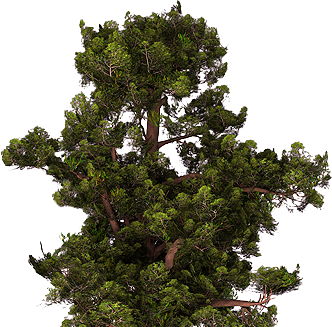
New Zealand Native Trees
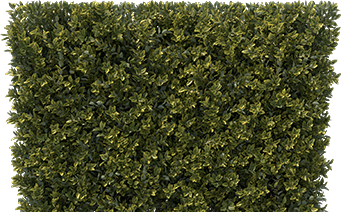
Hedging Plants
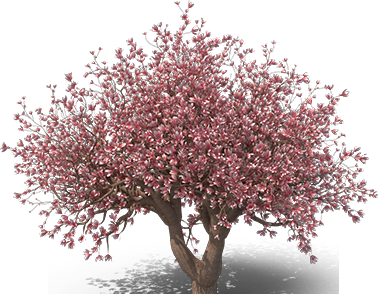
Flowering Trees

Evergreen Exotic Trees
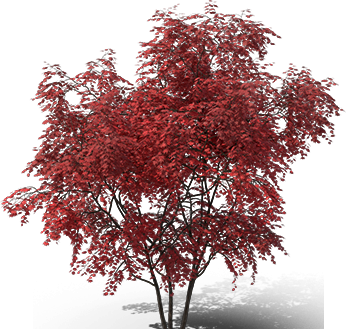
Deciduous trees
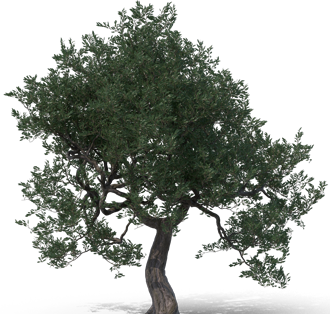
Character Olive Trees
Browse all Trees
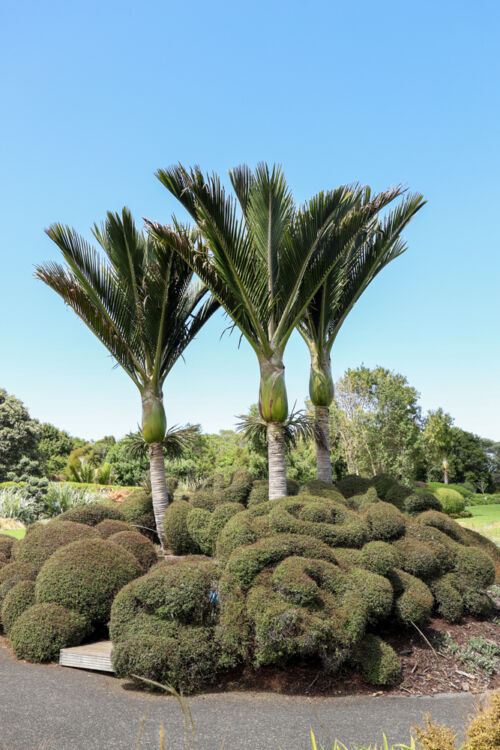
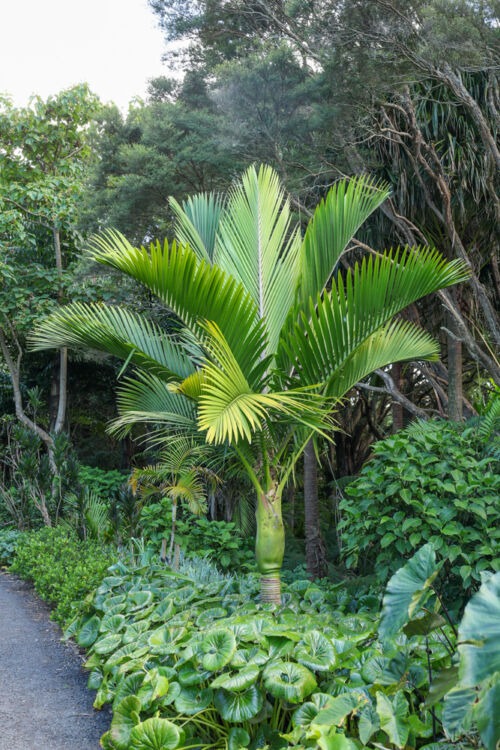
- Rhopalostylis sapida ‘Chathamica’ – Chatham or Pitt Island Nikau is a native New Zealand palm originating from the southern Chatham and Pitt Islands. It offers a unique twist on the mainland Nikau. This variety features longer fronds, wider leaflets, and a subtle silvery hue to its stems. Its red fruit are noticeably larger, adding seasonal interest and contrast. Adapted to cooler climates, it tolerates full sun, wind, cold, and coastal conditions better than other Nikau types. It’s also known for its tidier growth habit. Thriving in moist, well-drained soils, this palm is ideal for sheltered gardens or coastal landscapes. Its slow growth makes it easy to manage over time. Although very slow-growing, it can eventually form a trunk and reach up to 10 metres over many years, making it a long-term feature in any garden.
- Rhopalostylis baueri var. cheesemanii – Kermadec Island Nikau Kermadec Island Nikau is a native New Zealand palm from the northern Kermadec Island group. Originating from a warmer climate, it grows noticeably faster than other Nikau varieties. This palm features a more open, umbrella-like form with broader fronds. Each leaflet is slightly spaced, giving the foliage a light, airy appearance that adds a tropical feel to any setting. Over time, it develops a trunk marked with rings from fallen leaves. While young, it prefers a shady position but will tolerate full sun as it matures. It thrives in moist, well-drained soil with a cool root run and benefits from a sheltered location. This makes it ideal for subtropical gardens or protected outdoor spaces. Whether planted as a garden specimen or grown in a large container, it offers year-round appeal. With moderate, slow growth, it can eventually reach up to 10 metres over many years. Cheesemanii is in reference to plants named after the New Zealand botanist Thomas Cheeseman
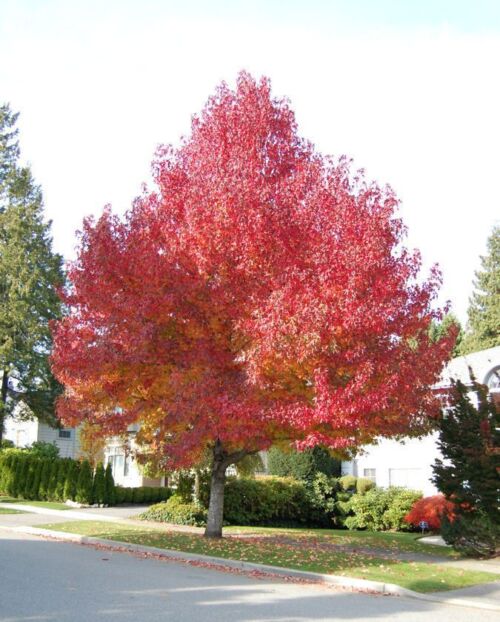
- Liquidambar styraciflua 'Worplesdon' is a striking deciduous tree with an upright, pyramidal habit and distinctive corky bark. Its deeply lobed, green ‘maple-like’ leaves provide lush foliage throughout spring and summer. As autumn arrives, the leaves transform into a brilliant display of fiery red, orange, and yellow making it a true seasonal highlight. Thanks to its form and colour, this variety is excellent for avenue planting, as a shade tree specimen, or as a feature in small gardens. Ideally, it prefers a sheltered position with moist, well-drained soil conditions. At maturity, it typically reaches around 6 metres tall by 4 metres wide, offering structure without overwhelming the space. Interestingly, the Latin name styraciflua refers to its gum-producing nature.
- 6 x 4m
- Medium 5-10m
- Fast
- Tree
- Round
- North America/div>
- Other Liquidambars, Acer rubrum types, Quercus coccinea or rubra, Pyrus Aristocrat or Bradford. Amelanchier Canadensis, Nyssa Sylvatica, Liriodendron Tulipefera, Platanus Autumn Glory.
- Green
- Reds, Oranges and Yellows
- Moist well drained
- Prefers sheltered
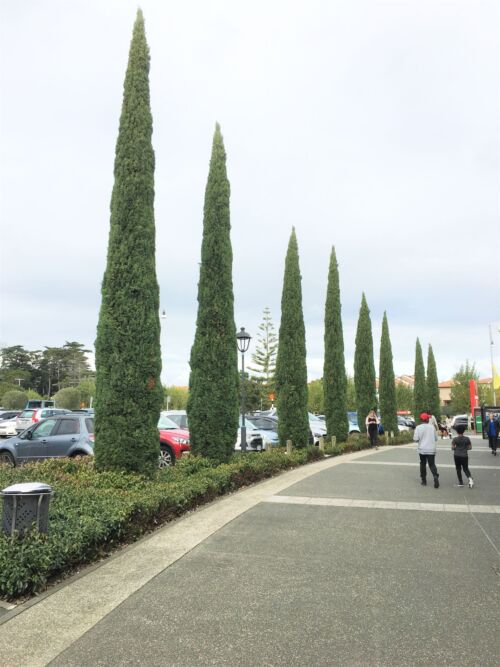
- Cupressus sempervirens 'Totem', commonly known as Totem Cypress, is a tightly upright-growing conifer with striking bluish-green foliage. Notably, these trees are iconic in Italy—especially throughout Tuscany—where they define the landscape and grace Renaissance gardens with timeless elegance. Thanks to their slender, vertical form, Totem Cypresses create bold architectural accents that elevate formal landscapes. Moreover, this cutting-grown cultivar ensures a consistently narrow columnar shape and even growth rate, making it a reliable choice for symmetry and structure. Unlike other varieties, its foliage remains dense and intact, resisting the tendency to “fall out.” Additionally, it offers improved resistance to fungal canker, making it a hardy option for challenging conditions. Often planted in rows as living pillars, it’s ideal for lining entranceways and avenues with a commanding presence. For optimal performance, Totem Cypress prefers drier soil and well-drained sites. Ultimately, it grows to approximately 10 meters tall and 2 meters wide delivering a bold, sculptural impact wherever it’s planted.
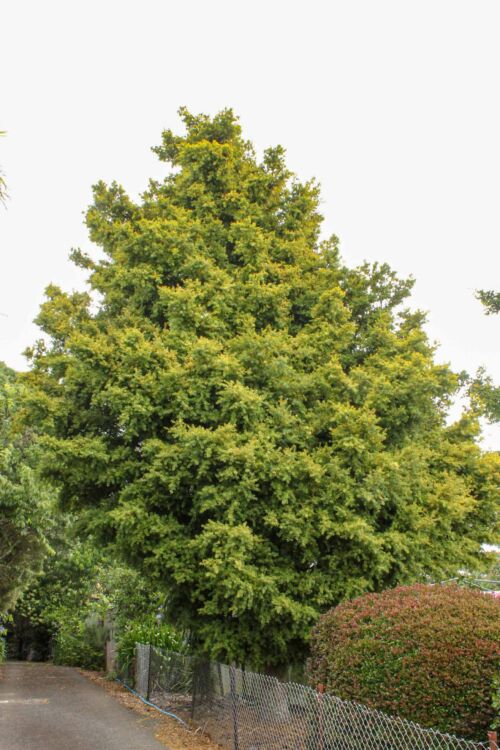
- Podocarpus totara ‘Aurea’ – Golden Totara, is a striking evergreen tree native to New Zealand. Closely resembling its parent species, it stands out with rich golden foliage when grown in full sun. From a young age, it forms a bushy, compact shape that adds texture and colour to any landscape. It prefers moist, well-drained soil and should not be planted in wet areas. This hardy tree tolerates wind and coastal conditions, making it suitable for exposed sites. Its slow growth allows for easy maintenance in gardens of all sizes. Golden Totara can be trimmed to shape and works beautifully as a hedge, screen, or larger shelter. In ideal conditions, it reaches approximately 10 x 6 metres at maturity.
- Feijoa sellowiana – Feijoa (Acca sellowiana) is a smaller, fast-growing, evergreen tree with a compact, rounded shape. Its stout, leathery green leaves give it a lush, tropical appearance, ideal for adding texture to garden spaces. Native to South America, Feijoa is among the hardiest subtropical fruit trees. It tolerates light frost and produces abundant fruit from April to June, which drops easily when ripe. Sellowiana is the parent species of many popular grafted and cutting-grown cultivars. It thrives in full sun and prefers a moist, well-drained soil. Typically reaching around 4 x 3 metres tall they are easily trimmed to shape and make an excellent hedge, screen or stand-alone fruit tree. Ideal for a smaller garden.
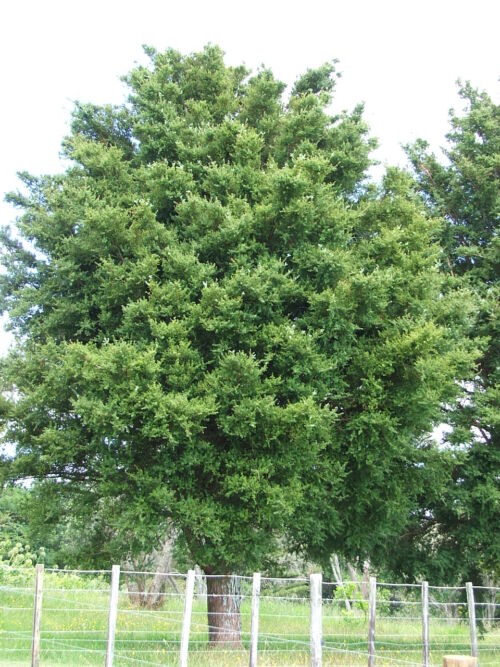
- Podocarpus totara, commonly known as Totara, is a large evergreen tree native to New Zealand. It’s well-suited to spacious landscapes and admired for its strong form and resilience. In its juvenile stage, Totara grows quickly with slender branches and bronze, needle-like foliage. As it matures, growth slows and the tree develops a denser, more branching habit. Eventually, it forms a broad, rounded crown with short, dark green foliage. The stout trunk features rough, reddish-brown bark, adding texture and character. Totara thrives in well-drained soil and, once established, tolerates dry conditions. It’s ideal as a stand-alone specimen, for screening, or clipped into a formal hedge. Under ideal conditions, Totara can reach 20–25 metres at full maturity. In about 10 years, expect growth of approximately 10 x 4 metres.
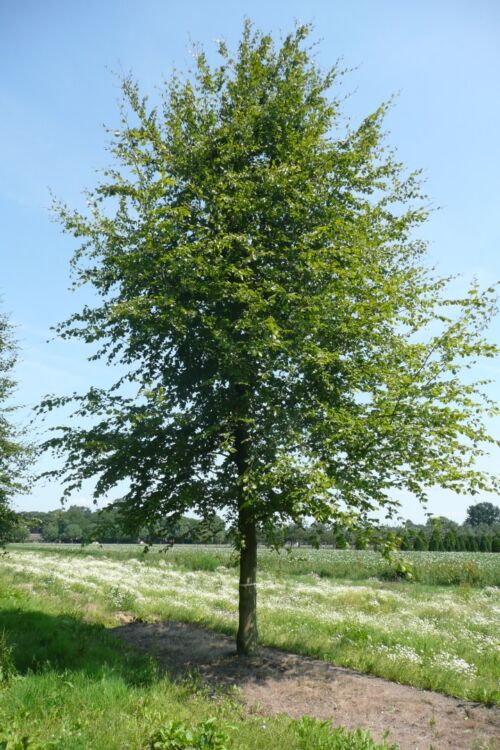
- Fagus sylvatica – English Beech is a handsome, deciduous tree with a naturally pyramidal shape. Originating from Southern Europe, it produces glossy green foliage in spring. When young, the leaves are covered with fine silken hairs, and they mature to golden yellows in autumn, creating a striking seasonal display. This tree thrives in well-draining loamy soil, especially when lime is present. It prefers a sunny position, where it grows vigorously and develops into an excellent lawn specimen or shade tree. English Beech reaches approximately 10 x 5 metres. However, it can also be trained into a large screen or woven together to form a formal hedge, offering versatility in landscape design. Interestingly, sylvatica is a Latin adjective meaning “of the woods” or “forest-dwelling.”.
- Carpinus betulus 'Fastigiata', commonly known as Upright Hornbeam, is a deciduous tree with a narrow, columnar form that gradually broadens as it matures. This refined cultivar of the European Hornbeam remains in its tight form making it ideal for structured landscapes, offering both formality and seasonal interest. During summer, its oval, ribbed green leaves create a lush canopy. As autumn arrives, the foliage transitions into warm shades of yellow and orange, eventually turning brown and remaining on the tree well into winter adding texture and colour even in the colder months. Moreover, this tree thrives in moist, well-drained soil and prefers a sunny position. Thanks to its upright habit and tolerance for close planting, it makes an excellent choice for street planting, avenues, or as a screen. Reaching approximately 8 metres tall and 3 metres wide, The Upright Hornbeam is a versatile and low-maintenance option for both urban and rural settings.
- Platanus x acerifolia – London Plane is a fast-growing, deciduous tree with a broad, rounded crown. Its large, maple-like palmate leaves measure 20–25cm across. Deep green and glossy with a white felt underside, they turn a rich golden yellow in autumn, creating a striking seasonal display. One of its standout features is the bark, which flakes off in patches on the trunk and older branches, revealing a beautifully dappled surface. This adds texture and character throughout the year. The London Plane tolerates a wide range of soils, including clay, and thrives even in polluted urban environments. However, it’s best to avoid overly wet conditions for optimal growth and longevity. Perfect for parks, farms, and large open spaces, it provides excellent shade and structure. It can reach approximately 8 x 7 metres in 10 years and may grow to 20 x 7 metres at full maturity. The botanical name acerifolia means “with leaves like a maple,” reflecting its foliage. Its origins trace back to England, where it was first cultivated.
- Juniperus chinensis ‘Kaizuka’, also known as Hollywood Juniper, is a striking evergreen renowned for its sculptural form. Its branches spiral upward in a distinctly twisting motion, adorned with vivid bright green foliage that adds year-round interest. Thanks to its versatility, this variety can be left to grow naturally or trimmed into soft, rounded pillows—creating the illusion of floating clouds in the landscape. Moreover, it tolerates drought, wind, and coastal conditions, making it a resilient and adaptable choice. As a result, it serves as a unique focal point in any garden setting. With moderately fast growth and parentage rooted in China and Japan, it brings both elegance and heritage to outdoor spaces. Importantly, it requires good drainage to thrive.
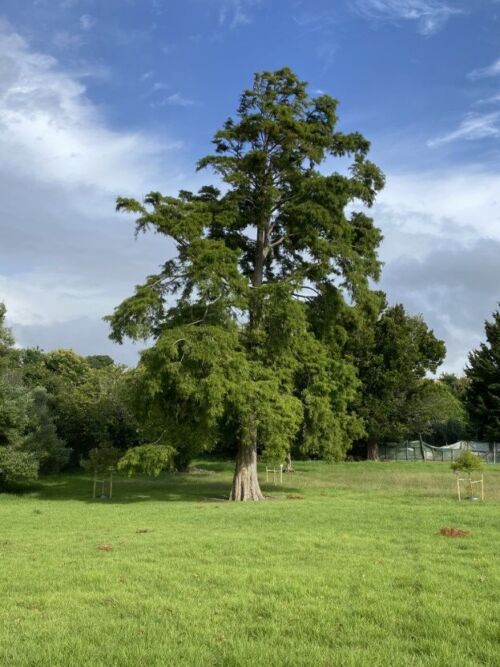
- Taxodium distichum – Swamp Cypress, is a vigorous, deciduous conifer known for its striking pyramidal shape with origins in the United States. This bold tree adds structure to any larger landscape. In spring and summer, its soft, green needle-like foliage creates a lush canopy. As autumn arrives, the leaves shift to brilliant shades of golden yellow, warm orange, and rich brown—an eye-catching seasonal transformation. Remarkably tolerant of wet soils, Swamp Cypress thrives near ponds, streams, and other damp areas. Its adaptability makes it an ideal choice for wetland gardens or low-lying spaces. Typically, it reaches around 9 x 4 metres within ten years. At full maturity, it can grow to an impressive 25+ x 10 metres, offering long-term impact and shade. Interestingly, the species name distichum means “two-ranked,” referring to the elegant, two-rowed arrangement of its leaves along the branches.



Why buy online?
Buying plants and trees online doesn’t have to feel risky or impersonal. At Black Bridge Nurseries, we’ve made it simple, safe, and satisfying — so you can shop with confidence, from the comfort of home.