Order Quality Trees Online – Delivered Straight to Your Door
Welcome to Our Online Plant Store
From our nursery to your backyard — it’s never been easier to create the garden you’ve been dreaming of. Whether you’re after statement trees, hedging, or lush planting to fill your outdoor spaces, you can now browse and order directly online.
We provide an extensive range of high-quality plants and trees that are perfect for residential landscapes — all backed by the same expert care and service we’re known for. No trade account needed, no back-and-forth calls. Just beautiful plants, delivered to your door.
Shop by category
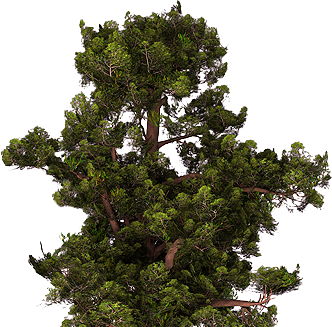
New Zealand Native Trees
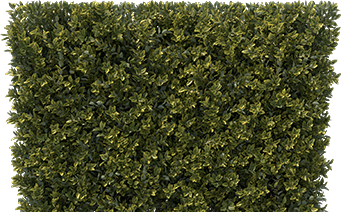
Hedging Plants
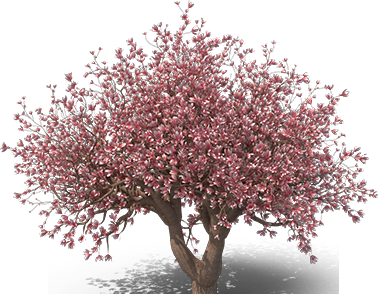
Flowering Trees

Evergreen Exotic Trees
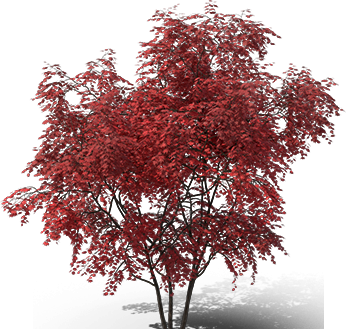
Deciduous trees
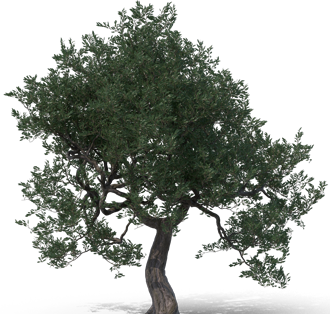
Character Olive Trees
Browse all Trees
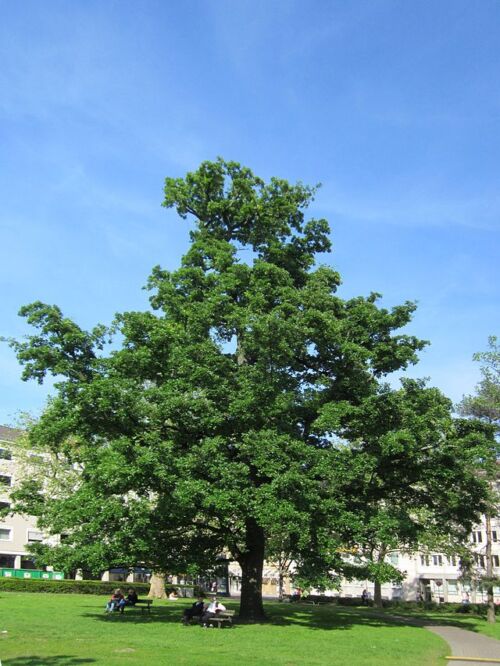
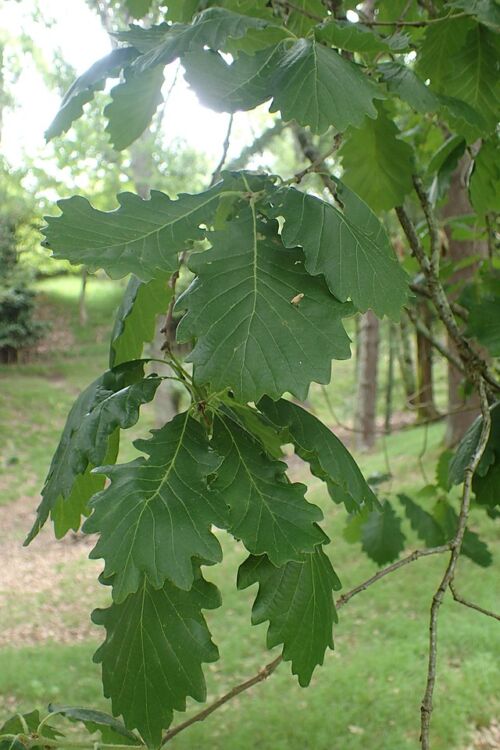
- Quercus cerris – Turkey Oak is a handsome, wide-spreading deciduous tree native to south-eastern Europe and Western Asia. Its rich green, oblong lobed leaves create a striking display before turning golden yellow in autumn, adding seasonal interest to any landscape. This oak thrives in diverse soil types, including sandy, loamy, and heavy clay, though it resents waterlogged conditions. Thanks to its robust root system, it becomes dry tolerant once established. Moreover, it prefers full sun and withstands exposed sites. Growing to approximately 10 x 6m in ten years, Turkey Oak matures to around 25 x 14m. With its impressive size and broad crown, it provides excellent shade, making it a valuable choice for large gardens, parks, or open spaces.
- Quercus canariensis – Algerian or Mirbeck Oak is a large, deciduous tree native to the Western Mediterranean. With a stout trunk and broad crown, it produces striking dark green leaves that create a lush canopy. In warmer climates, it may remain semi-evergreen, offering year-round appeal. This oak thrives in exposed sites, tolerating heat and drier conditions with ease. Moreover, it adapts well to most soils and shows greater tolerance of clay than many other oak species, though it dislikes waterlogged ground. Additionally, Quercus canariensis withstands coastal environments, making it versatile for varied landscapes. It grows approximately 10 x 6m in ten years, and at maturity, it can reach 25 x 25m. With its impressive size and spreading habit, it serves as an excellent shade tree for large gardens or open spaces.
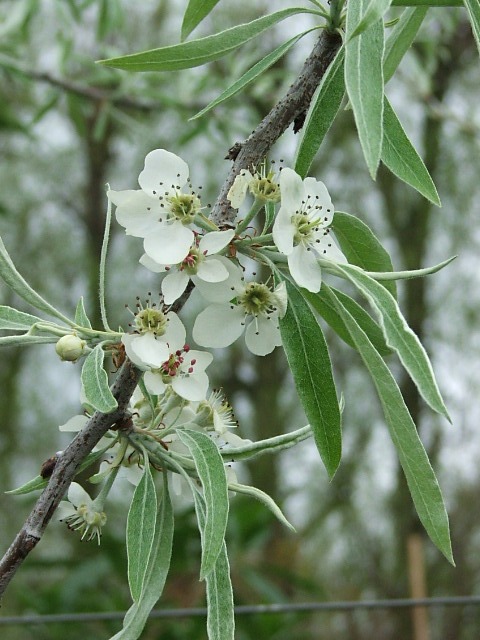
- Pyrus salicifolia ‘Pendula’ – Weeping Silver Pear is a compact, oval-rounded ornamental tree. Its graceful, weeping branches are adorned with willow-like, narrow, silver-gray leaves, creating a striking display in any garden. In spring, the Weeping Silver Paer bursts into life with small, white blossoms that cover the tree. Although part of the pear family, its fruit is tiny, sparsely produced, and inedible. This elegant tree traces its origins back to Germany in the 1850s. Over time, it has become a popular choice for gardeners seeking beauty and adaptability. Silver pears thrive in a wide range of soils, including clay. However, they prefer moderately fertile, moist, well-drained soil in full sun. Additionally, they tolerate light shade, making them versatile for different garden conditions. Interestingly, salicifolia translates to “leaves like a willow,” inspiring its other common name, the Willow-Leaf Pear. Growing to approximately 2 x 2 meters above the graft point, it is perfect for smaller gardens, as a standout specimen tree, planted into your favourite large pot or trimmed into a standard topiary.
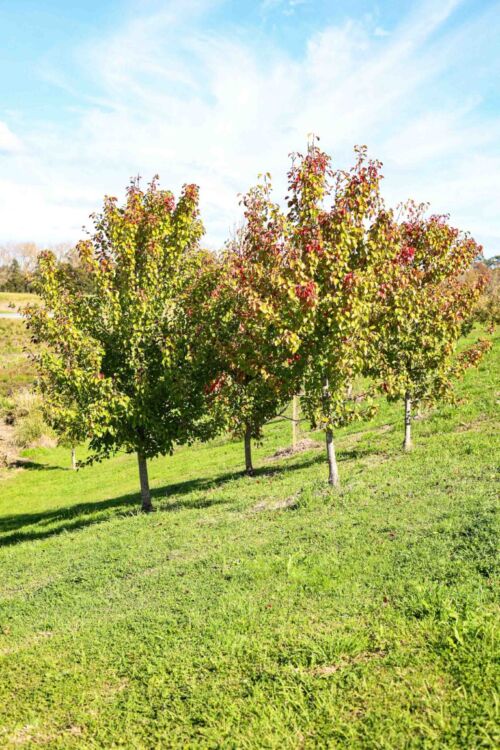
- Pyrus calleryana ‘Bradford’, commonly known as the Callery Pear, is a deciduous pyramidal shape tree with origins in China. Its dense branching structure supports glossy dark green leaves through summer, which transform into brilliant shades of red, orange, and maroon in autumn. In early spring, the tree bursts into a profusion of white blossoms, creating a spectacular floral display. This versatile ornamental tree can be trained into standards and is ideal for small gardens, street plantings, or mass landscaping. It tolerates poor drainage but thrives best in moist, well-drained soils. Reaching approximately 7 metres tall and 4 metres wide, Bradford is a beautiful choice for shade, structure, and seasonal interest.
- Pyrus calleryana ‘Kea’, or the Callery Pear, is a deciduous, multi‑branched tree with a dense, bushy growth habit. It begins with a pyramidal form but gradually develops a broad, vase‑shaped crown. Its glossy green leaves turn vivid red and burgundy in autumn, while early spring brings a profusion of white flowers that cover the tree.‘Kea’ is a New Zealand‑bred variety developed in Christchurch, which gives it improved tolerance to heavy frost and cold. This adaptable tree trains easily into standards and suits small gardens, street plantings, and mass landscaping projects. Although it prefers well‑drained soil, it also adapts well to heavy, compacted, or intermittently wet conditions and performs best in full sun. Growing to around 6 metres tall and 4 metres wide, ‘Kea’ is an excellent choice for small shade areas or formal avenue planting. It provides year‑round structure and visual interest, making it a reliable feature tree for many landscape styles. Makes an excellent street or avenue tree. Vigorous and hardy.
- Pyrus calleryana ‘Aristocrat’, also known as the Callery Pear, is a deciduous tree with a pyramidal shape and origins in China. Its dense, upright branching supports glossy dark green foliage throughout summer, which transforms into vibrant shades of red, orange, and maroon in autumn. In early spring, the tree produces a stunning display of white blossoms, adding ornamental value to any landscape. This adaptable tree can be trained into standards and is well-suited for small gardens, street plantings, or mass landscaping projects. It tolerates poor drainage but performs best in moist, well-drained soils. Growing to approximately 7 metres tall and 4 metres wide, Aristocrat is an excellent choice as a shade tree or for formal avenue planting, offering year-round interest and structure.
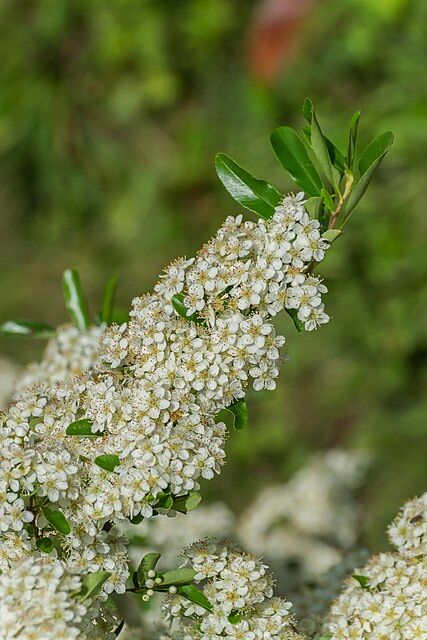
- Pyracantha ‘Brilliant’ – Scarlet Firethorn is a compact evergreen shrub known for its glossy green foliage and occasional thorns. In spring, it bursts into masses of small, delicate white flowers, adding seasonal charm to any garden. As autumn arrives, vibrant orange-red berries cover the plant, lasting through winter. These berries not only add colour but also attract birds, enhancing garden biodiversity. This hardy shrub thrives in full sun to semi-shade and prefers well-drained, moist soils. It tolerates frost, wind, and suits both sheltered and coastal locations. Often chosen for hedging and screening, Pyracantha ‘Brilliant’ also makes an excellent security hedge. It grows to approximately 2.5 x 2.5 metres and is easily clipped to shape.
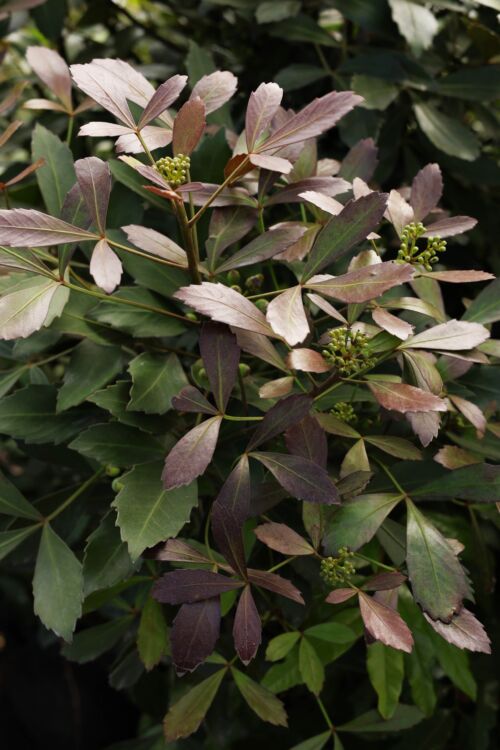
- Pseudopanax lessonii ‘Purpurea’ is a fast-growing evergreen shrub or small tree native to New Zealand. Multi-branched and compact, it features fleshy, palmate leaves in striking dark purple-red tones with three to five leaflets. From December to February, small green flowers appear, followed by dark purple fleshy fruit. These fruits attract birds, adding seasonal interest and wildlife appeal to the garden. This variety prefers moist, well-drained soil but will not tolerate waterlogging. For the best colour, plant in full sun where its foliage shines most vividly. ‘Purpurea’ can be left to grow as a small shade tree. Alternatively, it trims well into a compact hedge or can be clipped to form a larger bushy screen, offering flexibility in garden design. Ideal for coastal gardens, it withstands salt-laden winds and thrives in exposed conditions. Growing to approximately 4 x 2.5 metres, it provides structure, colour, and resilience year-round.
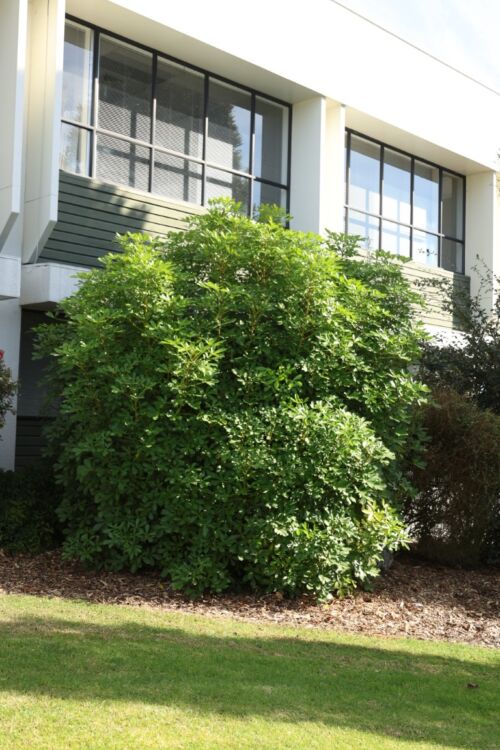
- Pseudopanax lessonii – Houpara is an evergreen New Zealand native that grows as a multi-branched shrub or small tree. Fast-growing, it features fleshy, palmate-shaped dark green leaves with three to five leaflets, creating a lush and tropical look. From December to February, small green flowers appear, followed by dark purple fleshy fruit. These fruits attract birds, adding life and movement to the garden throughout the year. Houpara can be left to grow as a small shade tree. Alternatively, it trims well into a hedge or can be clipped to form a larger screen, offering versatility in garden design. This hardy species is ideal for coastal gardens as it withstands salt-laden winds. It prefers moist, well-drained soil in full sun or partial shade and tolerates clay soils, though not waterlogged conditions. Growing to approximately 4 x 2.5 metres, Houpara makes an excellent choice for structured planting and year-round greenery.
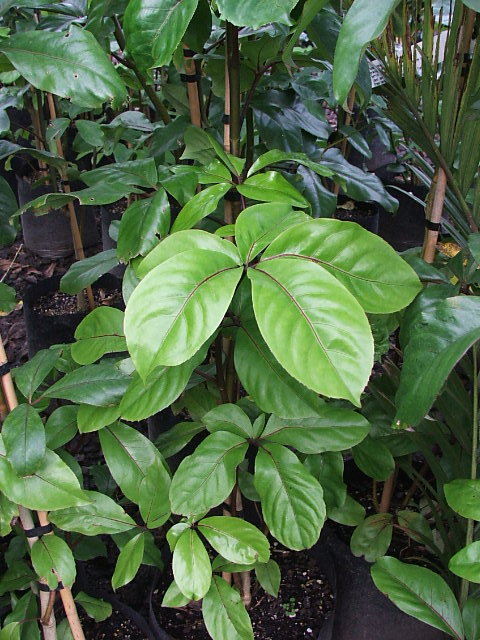
- Pseudopanax laetus – Large Leaf Five Finger. Native to New Zealand, Pseudopanax laetus is a striking evergreen shrub. It features a rounded, spreading form with deep green, glossy leaves made up of 5–7 broad oval leaflets. Notably, its foliage is the largest among the pseudopanax family. As it matures, this plant quickly becomes a bushy, multi-branched specimen. In spring, clusters of tiny white flowers appear, later developing into purple seeds that attract native birds. Although tolerant of most soil types, it thrives best with consistent moisture. Thanks to its fast growth, it’s ideal as a background or screening plant and can also be trimmed to a desired height. Alternatively, let it grow into a small shade tree. Expect it to reach approximately 5 metres high and 3 metres wide, making it a bold addition to any garden.
- Pseudopanax ferox – Savage Lancewood (Horoeka) is an unusual New Zealand native, closely resembling Pseudopanax crassifolium. In its juvenile stage, it grows with a single thin stem and long, slender pale grey-brown leaves. These leaves feature distinctive saw-like teeth along the edges, giving the plant a striking appearance. After 10–15 years, the tree reaches maturity. At this stage, the leaves become shorter, wider, and dark green. Its form changes into a more typical tree shape, with spreading branches that build a rounded crown. In ideal conditions, Savage Lancewood can reach around 6 metres in height with a trunk up to 25 cm in diameter. The mature trunk develops distinctive vertical grooves, sometimes twisting slightly, adding further character. This species prefers well-drained soil and tolerates drier conditions once established. It grows best in full sun, slowly reaching approximately 6 x 1 metres over many years. Perfect as a statement specimen, it adds drama and uniqueness to any garden.
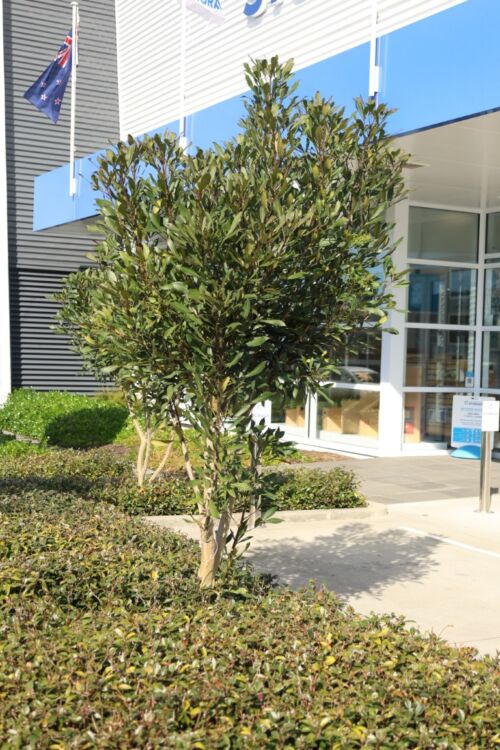
- Pseudopanax ‘Sabre’ is a striking evergreen tree native to New Zealand. It grows at a reasonably fast pace and showcases long, leathery, lance-shaped leaves in deep green, with a yellow orange mid rib —hence the name ‘Sabre’. Although similar to P. crassifolium, this variety grows faster and features wider, thicker foliage. As a result, it offers a bolder presence in the garden while remaining easy to manage. It thrives in most soil types and adapts well to both full sun and semi-shade. Moreover, its resilience makes it an excellent choice for coastal gardens and exposed sites. Over time, ‘Sabre’ matures into a more open habit. However, you can easily trim it to maintain shape and height, making it ideal for smaller gardens. It typically reaches around 4 x 3 metres at maturity.



Why buy online?
Buying plants and trees online doesn’t have to feel risky or impersonal. At Black Bridge Nurseries, we’ve made it simple, safe, and satisfying — so you can shop with confidence, from the comfort of home.