Avenue Trees
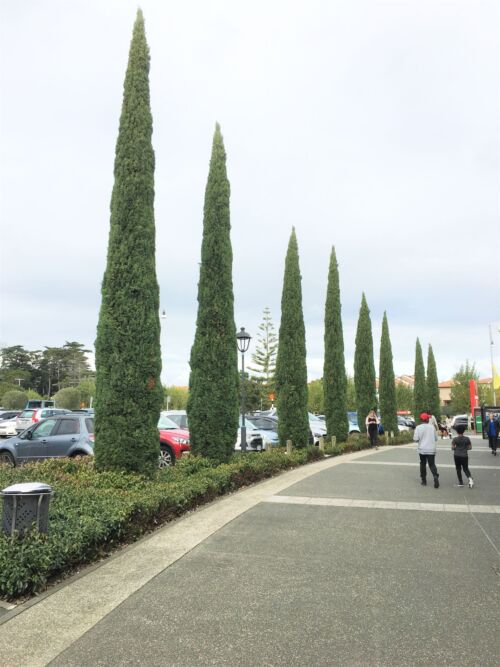
- Cupressus sempervirens 'Totem', commonly known as Totem Cypress, is a tightly upright-growing conifer with striking bluish-green foliage. Notably, these trees are iconic in Italy—especially throughout Tuscany—where they define the landscape and grace Renaissance gardens with timeless elegance. Thanks to their slender, vertical form, Totem Cypresses create bold architectural accents that elevate formal landscapes. Moreover, this cutting-grown cultivar ensures a consistently narrow columnar shape and even growth rate, making it a reliable choice for symmetry and structure. Unlike other varieties, its foliage remains dense and intact, resisting the tendency to “fall out.” Additionally, it offers improved resistance to fungal canker, making it a hardy option for challenging conditions. Often planted in rows as living pillars, it’s ideal for lining entranceways and avenues with a commanding presence. For optimal performance, Totem Cypress prefers drier soil and well-drained sites. Ultimately, it grows to approximately 10 meters tall and 2 meters wide delivering a bold, sculptural impact wherever it’s planted.
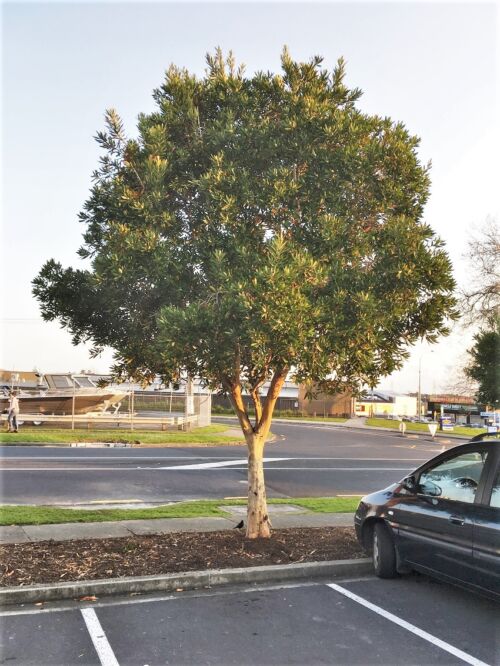
- Tristaniopsis laurina – Kanooka or Water Gum is a medium-sized evergreen tree with a rounded, compact form. Its dark, glossy green leaves provide year-round appeal, making it a striking feature in any landscape. Native to Australia, this tree produces clusters of small, fragrant yellow flowers during summer. These blooms not only enhance its beauty but also attract pollinators, bringing extra life and movement to your garden. Kanooka Water Gum tolerates clay soils, yet it performs best in moist, well-drained conditions. For optimal growth and colour, plant it in full sun while avoiding sites that are overly wet or dry. Versatile and adaptable, it suits street planting, lawn specimens, and smaller gardens where shade is desired. Typically reaching 7 metres tall and 4 metres wide, it can also be pruned to maintain a neat, compact shape.
- Prunus serrulata ‘Shimidsu Sakura’ – Moonlight Cherry, is a stunning Japanese flowering cherry tree. This small deciduous tree features a spreading habit with graceful, arching branches Over summer, the foliage is a vibrant green, gradually shifting to yellow and orange hues in autumn, adding seasonal colour and interest. In late spring, buds emerge in soft pink tones, opening into double flowers that begin as pale pink and fade to pure snow white—a breath taking display that enhances any garden. Shimidsu sakura thrives in moist, well-drained soil and prefers a sheltered, sunny position. Because of its elegant form and manageable size, it serves beautifully as a feature specimen in smaller landscapes. Typically growing to approximately 4 x 4 metres, Moonlight Cherry is both ornamental and easy to maintain. The name Shimidsu-sakura refers to the specific cultivar, where sakura means cherry blossom in Japanese, and Shimidsu is the cultivar name itself.
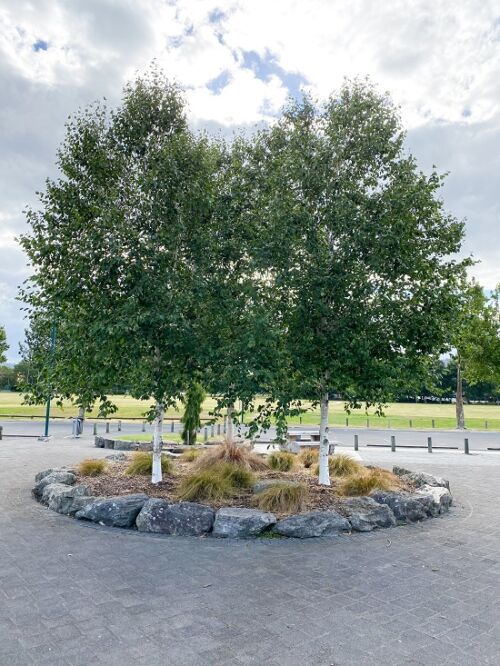
- Bold and architectural, Betula utilis 'Jacquemontii' or the Himalayan Birch is a medium-sized deciduous tree known for its upright form that gradually matures into a broad oval silhouette. Originating from the rugged terrains of China and the Himalayas, this fast-growing variety commands attention with its striking, powdery-white bark—a signature feature that sets it apart in any landscape. Throughout summer, its dark green foliage offers a rich contrast to the luminous trunk, before shifting to warm yellow hues in autumn, adding seasonal interest. Whether planted in structured avenues or grouped for visual impact, this birch delivers a refined yet natural presence. Additionally, it responds well to topping, allowing for the creation of standard-type trees where desired. Typically reaching approximately 7 metres in height and 3 metres in spread, Betula 'Jacquemontii' is a standout choice for those seeking elegance with a touch of rugged charm. Utilis = Useful
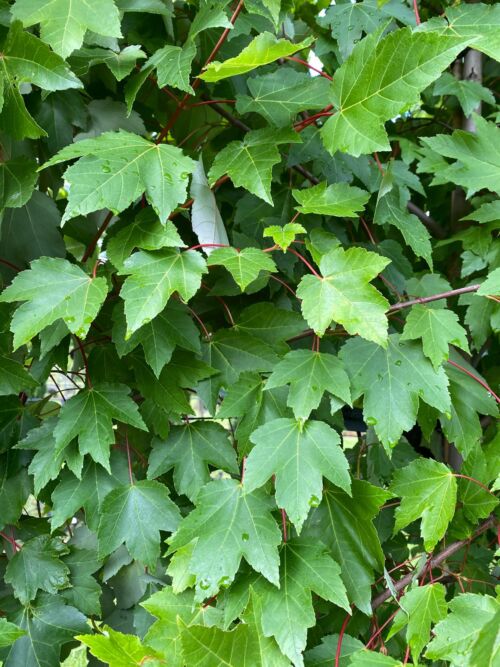
- Acer rubrum ‘Bowhall’, commonly known as the Upright Red Maple, is a fast-growing, deciduous tree with a narrow, columnar form, ideal for tight spaces. Its strongly upright branches support glossy dark green leaves with silvery undersides, creating a striking contrast. In autumn, the foliage transforms into brilliant shades of yellow, orange, and reddish-orange, adding vibrant seasonal colour. This hardy tree adapts well to a wide range of soil conditions, from damp to dry, including clay and sandy soils. Native to North America, Bowhall is perfect for avenues, street plantings, or as a lawn specimen where space is limited. Mature height reaches approximately 12 metres with a spread of 3 metres.
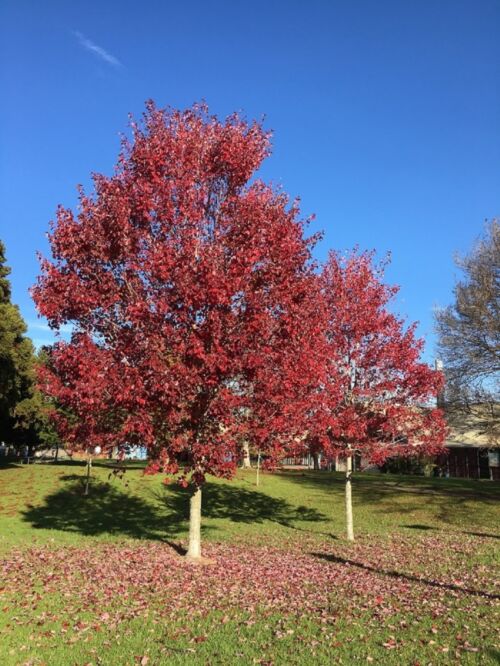
- Acer rubrum ‘Autumn Glory’, also known as Red Canadian Maple, stands out as one of the most admired Red Maple cultivars. Its vibrant red foliage in autumn creates a breathtaking seasonal display, making it a favourite for landscape designers and homeowners alike. Thanks to its tidy, upright, and compact growth habit, this deciduous tree is ideal for residential gardens and street plantings. Compared to other rubrum varieties, it offers a more manageable size and shape. In early spring, striking red tassel flowers appear in dense clusters before the leaves emerge. These are soon followed by decorative winged seeds, adding further seasonal interest. Moreover, ‘Autumn Glory’ adapts well to a range of soil conditions, including poor soils. It grows at a medium to fast rate and typically reaches around 12 metres tall and 8 metres wide. In the Northern Hemisphere, this cultivar is often referred to as ‘October Glory’, in line with their autumn season.
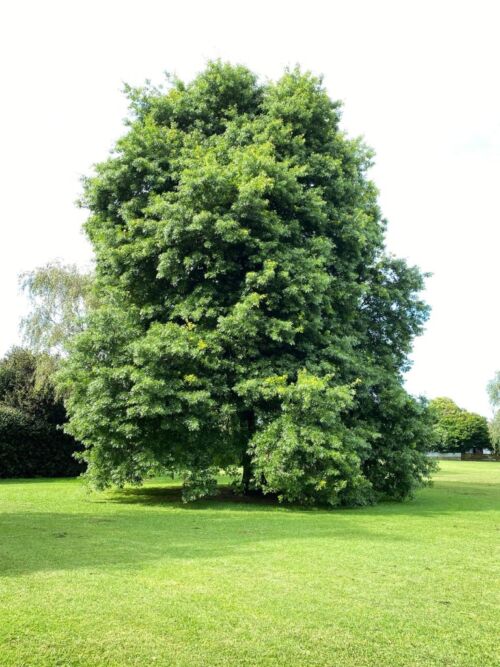
- Quercus coccinea – Scarlet Oak is a majestic deciduous tree that forms a large, stately specimen characterized by an oval crown and upward-reaching branches. Its glossy green, deeply lobed leaves create a lush summer canopy, while in autumn they transform into a brilliant display of scarlet red, which offers exceptional seasonal colour. In addition to its foliage, the bark develops a reddish-brown tinge during winter, adding subtle interest even in the colder months. Native to North America, this oak variety is well-suited to a range of climates. Once established, Scarlet Oak tolerates dry conditions, although it prefers moist, free-draining soil for optimal growth. With its impressive size, reaching approximately 15 x 10 metres in ideal conditions, it makes an outstanding specimen tree or a grand shade tree for larger landscapes. Whether you're designing a parkland setting or enhancing a spacious garden, Quercus coccinea brings structure, beauty, and seasonal interest to any outdoor space.
- Knightia excelsa, commonly known as Rewarewa, is a striking evergreen native to New Zealand. It forms a slender, erect, and tapering tree with long, green serrated leaves that adds texture and structure to the landscape. In spring, it produces very unusual tubular reddish-brown flowers with yellow tips that are highly attractive to native birds, adding both ecological value and seasonal interest. Because of its upright habit, Rewarewa is ideal for smaller gardens and narrow spaces. Additionally, it is well-suited to coastal gardens. While it tolerates clay soils, overly wet conditions should be avoided. Likewise, phosphate-based fertilizers are not recommended. Typically, it grows to approximately 7 x 3 metres, making it a manageable yet elegant choice for urban and rural settings alike. Interestingly, the Latin name Excelsa refers to its tall, strong stature.
- 7 x 3m
- Medium 5-10m
- Moderate
- Tree
- Columnar
- Evergreen
- New Zealand
- Liriodendron tulipifera fastigiata, Olea El Greco, Dacrydium Cupressinum, Acer Bowall, Poplar crow’s nest, Quercus robur fastigiata, Carpinus Betulus fastigiata, Dacrycarpus Dacrydoidies, Cupressus totem
- Green
- Reddish Brown
- No
- Prefers Moist well drained, Will tolerate clay, Not Wet
- Coastal, Wind
- Avenue, Small Garden, Bird Feeding, Narrow Spaces
- Acer freemanii ‘Autumn Blaze’, also known as the Freeman Maple, is a deciduous, admired Red Maple cultivar. Green leaves with a grey back, adorn the branches. Over autumn vibrant red creates a wonderful seasonal display, making it a favourite for landscape designers and homeowners alike. In early spring, striking red tassel flowers appear in dense clusters before the leaves emerge. These are soon followed by decorative winged seeds, adding further seasonal interest. ‘Autumn Blaze’ adapts well to a range of soil conditions, including poor soils. It grows at a medium to fast rate and typically reaches around 12 metres tall and 8 metres wide. Thanks to its tidy, upright, and compact growth habit, this tree is ideal as a shade tree or as avenue plantings.
- Prunus serrulata ‘Pink Perfection’ is a graceful, deciduous Japanese flowering cherry tree with an elegant upright, vase-like form. Originally selected in the United Kingdom, this ornamental tree offers year-round appeal. Throughout the seasons, its lush green foliage transforms into a breathtaking autumn display of golden yellow, fiery orange, and rich crimson red. Then, as spring arrives, deep pink buds burst into double blossoms of rosy pink which gradually fade to a delicate soft pink, creating a stunning floral show. Ideally, it thrives in moist, well-drained soil and prefers a sunny position. Because of its compact size, growing to approximately 5 x 4 metres, it’s a superb choice for lining avenues, framing pathways, or adding charm to more intimate garden spaces. Whether you're designing a formal landscape or a tranquil retreat, ‘Pink Perfection’ brings elegance, seasonal interest, and timeless beauty to any outdoor setting.
- Strong in form, Betula ermanii – Erman’s Birch is a deciduous tree with a naturally neat, conical to pyramidal shape—especially when its central leader is maintained. As the seasons progress, its bark peels away in elegant layers of creamy white or subtly pink-tinged sheets, offering year-round ornamental appeal. Throughout the growing season, its coarsely toothed, ovate leaves remain a deep green. Then, as autumn sets in, they shift to a bold, brilliant yellow, adding vibrant contrast to the landscape. Come spring, yellow-brown male catkins unfurl alongside fresh foliage, marking the tree’s seasonal renewal. Originating from northeast Asia, this species is well-suited to urban environments. Whether used as a stately avenue tree or for light shade, it performs reliably and with distinction. At full maturity, Erman’s Birch can reach heights of up to 15 metres and 6 metres wide, making it a commanding for structured plantings.
- 15 x 6m
- Tall 10+m
- Moderate - Fast
- Tree
- conical to pyramidal
- Northeast Asia
- Betula Jacquemontii, Poplar Crows nest
- Green
- Yellow
- Moist well drained
- Hardy
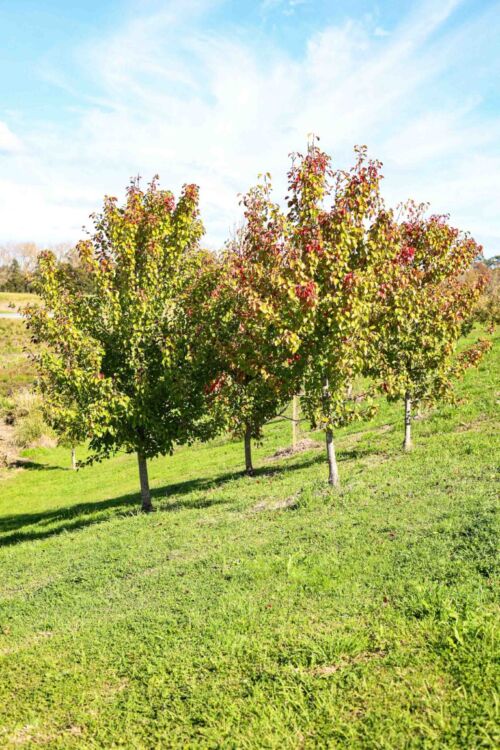
- Pyrus calleryana ‘Kea’, or the Callery Pear, is a deciduous, multi‑branched tree with a dense, bushy growth habit. It begins with a pyramidal form but gradually develops a broad, vase‑shaped crown. Its glossy green leaves turn vivid red and burgundy in autumn, while early spring brings a profusion of white flowers that cover the tree.‘Kea’ is a New Zealand‑bred variety developed in Christchurch, which gives it improved tolerance to heavy frost and cold. This adaptable tree trains easily into standards and suits small gardens, street plantings, and mass landscaping projects. Although it prefers well‑drained soil, it also adapts well to heavy, compacted, or intermittently wet conditions and performs best in full sun. Growing to around 6 metres tall and 4 metres wide, ‘Kea’ is an excellent choice for small shade areas or formal avenue planting. It provides year‑round structure and visual interest, making it a reliable feature tree for many landscape styles. Makes an excellent street or avenue tree. Vigorous and hardy.
- Pyrus calleryana ‘Bradford’, commonly known as the Callery Pear, is a deciduous pyramidal shape tree with origins in China. Its dense branching structure supports glossy dark green leaves through summer, which transform into brilliant shades of red, orange, and maroon in autumn. In early spring, the tree bursts into a profusion of white blossoms, creating a spectacular floral display. This versatile ornamental tree can be trained into standards and is ideal for small gardens, street plantings, or mass landscaping. It tolerates poor drainage but thrives best in moist, well-drained soils. Reaching approximately 7 metres tall and 4 metres wide, Bradford is a beautiful choice for shade, structure, and seasonal interest.
- Prunus cerasifera ‘Thundercloud’ – Purple-Leaf Flowering Plum adds bold colour and seasonal charm to your garden with the Prunus cerasifera ‘Thundercloud’, a compact ornamental deciduous tree known for its purple-black foliage and delicate pink spring blossoms. Originally from California, this purple-leaf plum tree features an upright, rounded form, making it an ideal statement tree for smaller gardens. In early spring, its bare stems burst into bloom with single pink flowers, just before the rich foliage emerges—creating a stunning contrast. Throughout summer and into autumn, the vibrant leaves maintain their deep hue, offering year-round interest. Because it prefers moist, well-drained soil in a sunny, sheltered position, it’s a low-maintenance choice for both novice and experienced gardeners. Typically growing to approximately 6 x 4 metres, ‘Thundercloud’ is perfect for those seeking a compact ornamental tree that delivers seasonal colour, structure, and visual impact.
- Prunus campanulata ‘Pink Cloud’ is a fast-growing, deciduous Taiwan Cherry variety that brings vibrant colour and graceful form to the garden. As a hybrid campanulata cultivar, it develops into a small, neat, round-headed specimen with spreading branches—perfect for compact spaces. During summer, its green foliage provides a lush canopy, which gradually shifts to tones of yellow and orange in autumn. Notably, ‘Pink Cloud’ is among the earliest flowering cherry trees, producing masses of soft-pink single blooms from late winter into early spring. These bell-shaped flowers (reflected in the Latin name campanulata, meaning “bell-like”) are a favourite of native Tui, adding life to the garden. Thriving in moist, well-drained soil, this cherry prefers a sunny, sheltered position for optimal growth and flowering. Because of its manageable size, reaching approximately 5 x 4 metres, it’s an ideal shade tree for smaller urban gardens, courtyards, or lining avenues. Additionally, it can be trimmed to maintain a desired height and shape. Whether you're looking to attract wildlife or add early-season colour, ‘Pink Cloud’ offers charm, structure, and seasonal delight.
- Prunus yedoensis ‘Mountain Haze’ is a compact, deciduous, round-shaped flowering cherry tree with gently arching branches. Although developed in New Zealand, this elegant cultivar traces its origins back to Japan—reflected in its botanical name yedoensis, meaning “of Yedo,” the former name for Tokyo. As the seasons shift, its green summer foliage transforms into a vibrant mix of orange, red, and yellow in autumn. In early spring, the tree bursts into bloom with delicate pink flowers featuring deeper centres, creating a soft haze of colour across its bare branches. Because of its modest size—reaching approximately 6 x 5 metres, ‘Mountain Haze’ is an ideal specimen tree for smaller gardens or courtyards. It thrives in moist, well-drained soil and prefers a sheltered position to protect its blossoms and foliage from harsh conditions.
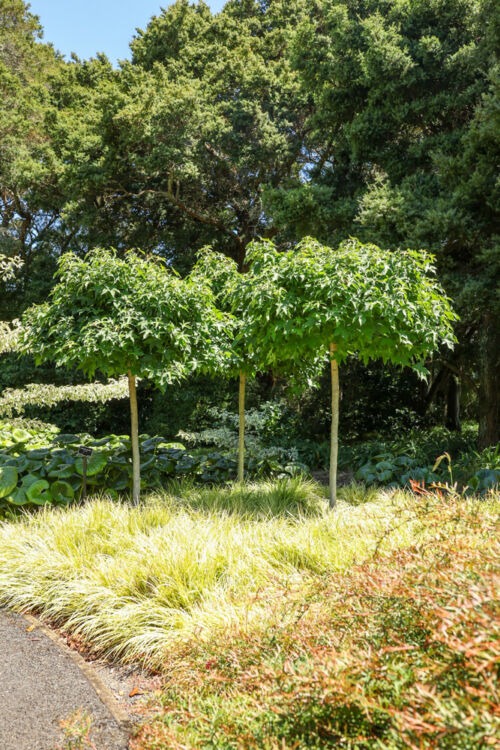
- Liquidambar styraciflua ‘Gumball’ is a compact deciduous feature tree prized for its naturally globe‑shaped crown. Its lush green summer foliage transforms into an impressive display of purples, oranges, reds, and yellows in autumn, creating a striking seasonal highlight.This dwarf cultivar originates from the American Sweetgum, which is native to the southeastern United States, Mexico, and Central America. It grows best in well‑drained soil and full sun, making it a versatile option for many landscapes. Because of its tidy form, Gumball suits smaller gardens, courtyards, and works beautifully when lining paths or driveways. It is typically grafted on a clear stem to form a classic lollipop shape, although lower grafts can create colourful autumn shrubs reaching about 2.5 × 2 metres. Easily trimmed to maintain preferred shape and height, ensuring it stays neat and attractive year‑round.
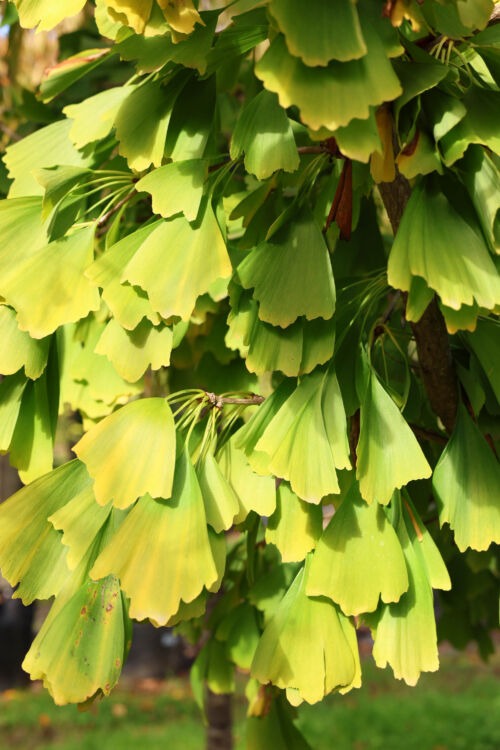
- Ginkgo biloba ‘Saratoga’ is a striking deciduous tree renowned for its spectacular autumn colour. Unlike female varieties, ‘Saratoga’ is a selected male clone, meaning it will not produce unpleasant fruit. Its upright growth habit makes it a graceful choice for gardens and landscapes. The tree’s distinctive long green leaves hang downward, creating a pendulous, weeping effect. During autumn, these leaves transform into a brilliant golden yellow, offering a breath taking seasonal display that lasts for weeks. Although Ginkgo trees are native to China, the ‘Saratoga’ variety was developed in the United States. It originated in the 1970s when the Saratoga Horticultural Research Foundation in California selected it from a seedling, ensuring its unique qualities. This tree thrives in moist, well-drained soil. Furthermore, it will tolerate clay conditions as long as the site is not waterlogged. For best results, plant in full sun. Mature specimens typically reach 7 metres high and 5 metres wide, making them ideal for both private gardens and larger landscapes.
- A fast growing, large tree from central America. With its broad, rounded canopy of lush green foliage, this tree is an exceptional choice for providing ample shade in spacious areas. Evergreen. Grows to apx 10 x 8m
- Fraxinus excelsior ‘Purple Spire’, commonly known as Purple Ash, is a deciduous, upright-growing tree with a remarkably even branching structure. Over time, it develops into an oval shape, with a moderate to fast growth rate. Throughout spring and summer, it bears glossy green foliage that transforms into striking shades of purple and orange in autumn, adding seasonal interest. Interestingly, this cultivar was developed in New Zealand, although its Fraxinus parentage traces back to Europe. Ideally, it prefers moist, well-drained soil and will tolerate some wind, making it a resilient choice for various landscapes. As such, it’s excellent for planting along streets, avenues, or long driveways. Typically, it reaches approximately 8 x 4 metres, offering structure and colour without overwhelming smaller spaces. PVR Pending