Coastal Trees
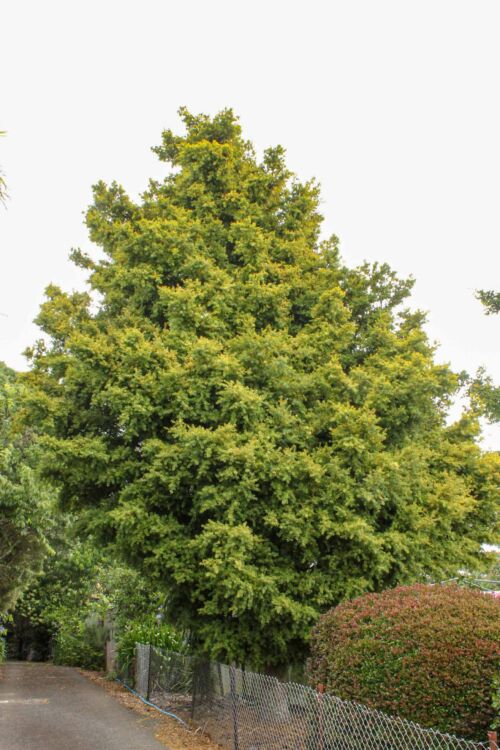
- Podocarpus totara ‘Aurea’ – Golden Totara, is a striking evergreen tree native to New Zealand. Closely resembling its parent species, it stands out with rich golden foliage when grown in full sun. From a young age, it forms a bushy, compact shape that adds texture and colour to any landscape. It prefers moist, well-drained soil and should not be planted in wet areas. This hardy tree tolerates wind and coastal conditions, making it suitable for exposed sites. Its slow growth allows for easy maintenance in gardens of all sizes. Golden Totara can be trimmed to shape and works beautifully as a hedge, screen, or larger shelter. In ideal conditions, it reaches approximately 10 x 6 metres at maturity.
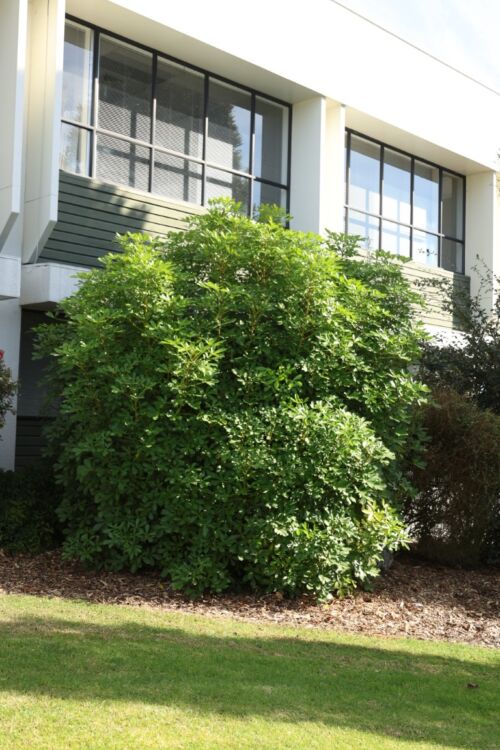
- Pseudopanax ‘Cyril Watson’ is an evergreen shrub native to New Zealand. This unusual cultivar stands out with glossy tropical leaves shaped like a duck’s foot, adding a distinct touch to any garden. Moreover, its compact, bushy habit makes it highly popular. Gardeners often use it as a neatly trimmed hedge or clip it into a larger screen, creating structure and style with ease. In addition, Pseudopanax ‘Cyril Watson’ prefers fertile, moist, and well-drained soil. It thrives in full sun to partial shade, while tolerating coastal conditions and moderate frost once established. It was first discovered by Cyril Watson in 1965 on the slopes of Mt. Taranaki in the North Island of New Zealand. The plant was named in honour of Watson, who was a renowned botanist and naturalist. Growing to approximately 3 x 2 metres, it offers both resilience and beauty
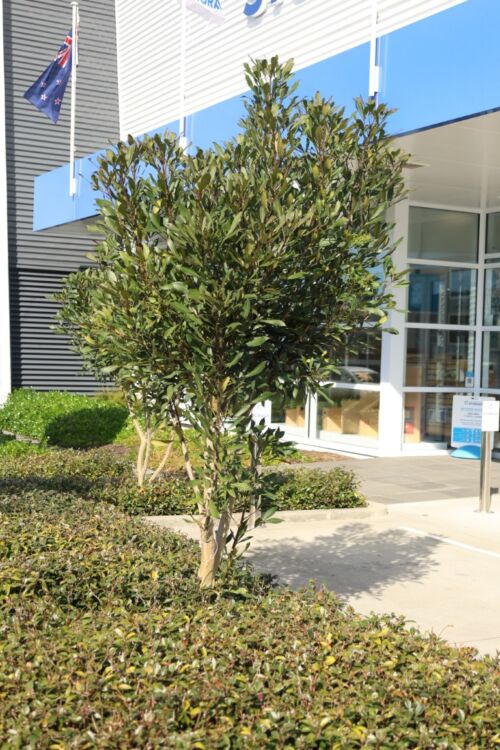
- Pseudopanax ‘Sabre’ is a striking evergreen tree native to New Zealand. It grows at a reasonably fast pace and showcases long, leathery, lance-shaped leaves in deep green, with a yellow orange mid rib —hence the name ‘Sabre’. Although similar to P. crassifolium, this variety grows faster and features wider, thicker foliage. As a result, it offers a bolder presence in the garden while remaining easy to manage. It thrives in most soil types and adapts well to both full sun and semi-shade. Moreover, its resilience makes it an excellent choice for coastal gardens and exposed sites. Over time, ‘Sabre’ matures into a more open habit. However, you can easily trim it to maintain shape and height, making it ideal for smaller gardens. It typically reaches around 4 x 3 metres at maturity.
- Pseudopanax ferox – Savage Lancewood (Horoeka) is an unusual New Zealand native, closely resembling Pseudopanax crassifolium. In its juvenile stage, it grows with a single thin stem and long, slender pale grey-brown leaves. These leaves feature distinctive saw-like teeth along the edges, giving the plant a striking appearance. After 10–15 years, the tree reaches maturity. At this stage, the leaves become shorter, wider, and dark green. Its form changes into a more typical tree shape, with spreading branches that build a rounded crown. In ideal conditions, Savage Lancewood can reach around 6 metres in height with a trunk up to 25 cm in diameter. The mature trunk develops distinctive vertical grooves, sometimes twisting slightly, adding further character. This species prefers well-drained soil and tolerates drier conditions once established. It grows best in full sun, slowly reaching approximately 6 x 1 metres over many years. Perfect as a statement specimen, it adds drama and uniqueness to any garden.
- Pseudopanax lessonii – Houpara is an evergreen New Zealand native that grows as a multi-branched shrub or small tree. Fast-growing, it features fleshy, palmate-shaped dark green leaves with three to five leaflets, creating a lush and tropical look. From December to February, small green flowers appear, followed by dark purple fleshy fruit. These fruits attract birds, adding life and movement to the garden throughout the year. Houpara can be left to grow as a small shade tree. Alternatively, it trims well into a hedge or can be clipped to form a larger screen, offering versatility in garden design. This hardy species is ideal for coastal gardens as it withstands salt-laden winds. It prefers moist, well-drained soil in full sun or partial shade and tolerates clay soils, though not waterlogged conditions. Growing to approximately 4 x 2.5 metres, Houpara makes an excellent choice for structured planting and year-round greenery.
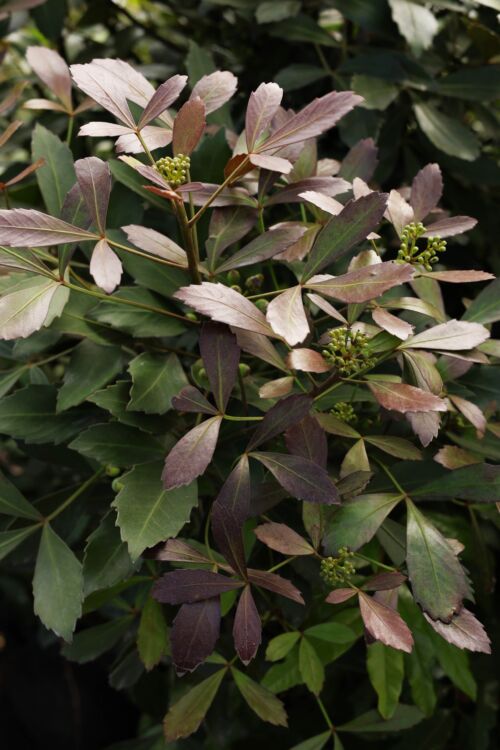
- Pseudopanax lessonii ‘Purpurea’ is a fast-growing evergreen shrub or small tree native to New Zealand. Multi-branched and compact, it features fleshy, palmate leaves in striking dark purple-red tones with three to five leaflets. From December to February, small green flowers appear, followed by dark purple fleshy fruit. These fruits attract birds, adding seasonal interest and wildlife appeal to the garden. This variety prefers moist, well-drained soil but will not tolerate waterlogging. For the best colour, plant in full sun where its foliage shines most vividly. ‘Purpurea’ can be left to grow as a small shade tree. Alternatively, it trims well into a compact hedge or can be clipped to form a larger bushy screen, offering flexibility in garden design. Ideal for coastal gardens, it withstands salt-laden winds and thrives in exposed conditions. Growing to approximately 4 x 2.5 metres, it provides structure, colour, and resilience year-round.
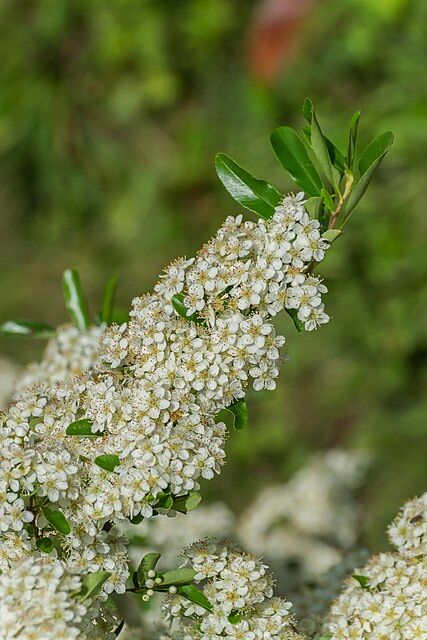
- Pyracantha ‘Brilliant’ – Scarlet Firethorn is a compact evergreen shrub known for its glossy green foliage and occasional thorns. In spring, it bursts into masses of small, delicate white flowers, adding seasonal charm to any garden. As autumn arrives, vibrant orange-red berries cover the plant, lasting through winter. These berries not only add colour but also attract birds, enhancing garden biodiversity. This hardy shrub thrives in full sun to semi-shade and prefers well-drained, moist soils. It tolerates frost, wind, and suits both sheltered and coastal locations. Often chosen for hedging and screening, Pyracantha ‘Brilliant’ also makes an excellent security hedge. It grows to approximately 2.5 x 2.5 metres and is easily clipped to shape.
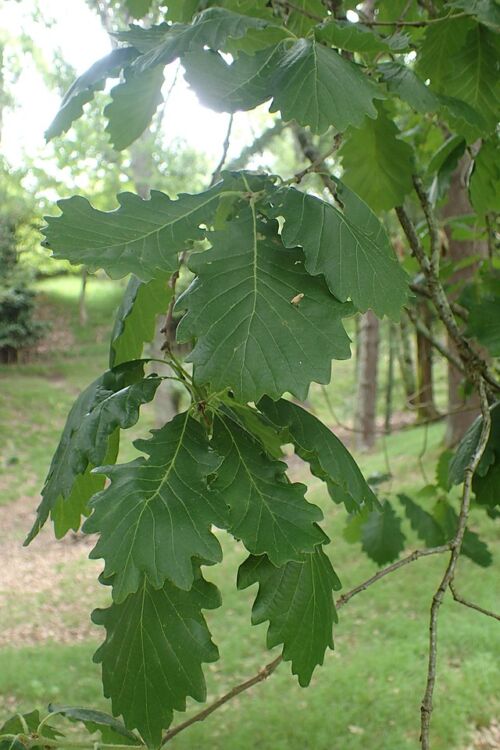
- Quercus canariensis – Algerian or Mirbeck Oak is a large, deciduous tree native to the Western Mediterranean. With a stout trunk and broad crown, it produces striking dark green leaves that create a lush canopy. In warmer climates, it may remain semi-evergreen, offering year-round appeal. This oak thrives in exposed sites, tolerating heat and drier conditions with ease. Moreover, it adapts well to most soils and shows greater tolerance of clay than many other oak species, though it dislikes waterlogged ground. Additionally, Quercus canariensis withstands coastal environments, making it versatile for varied landscapes. It grows approximately 10 x 6m in ten years, and at maturity, it can reach 25 x 25m. With its impressive size and spreading habit, it serves as an excellent shade tree for large gardens or open spaces.
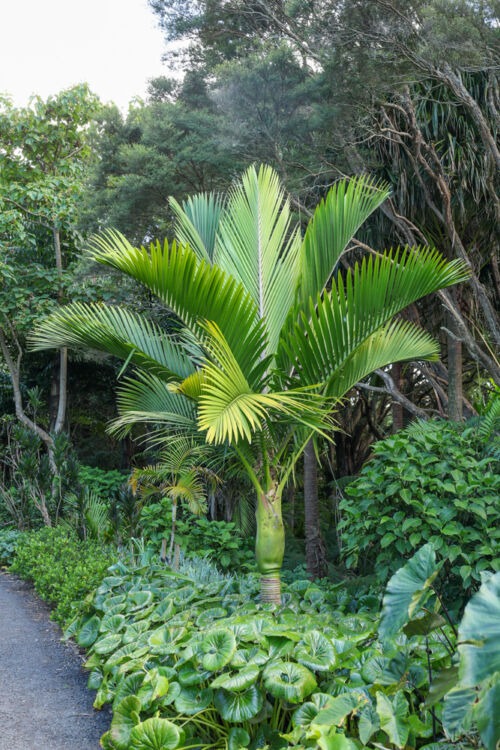
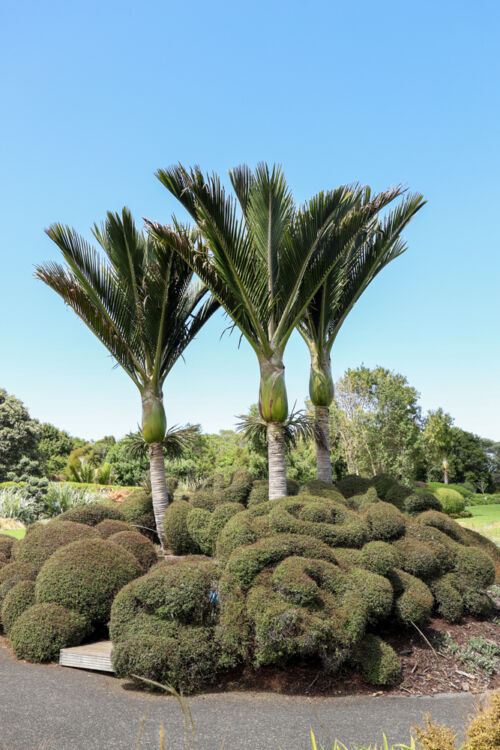
- Rhopalostylis baueri var. cheesemanii – Kermadec Island Nikau Kermadec Island Nikau is a native New Zealand palm from the northern Kermadec Island group. Originating from a warmer climate, it grows noticeably faster than other Nikau varieties. This palm features a more open, umbrella-like form with broader fronds. Each leaflet is slightly spaced, giving the foliage a light, airy appearance that adds a tropical feel to any setting. Over time, it develops a trunk marked with rings from fallen leaves. While young, it prefers a shady position but will tolerate full sun as it matures. It thrives in moist, well-drained soil with a cool root run and benefits from a sheltered location. This makes it ideal for subtropical gardens or protected outdoor spaces. Whether planted as a garden specimen or grown in a large container, it offers year-round appeal. With moderate, slow growth, it can eventually reach up to 10 metres over many years. Cheesemanii is in reference to plants named after the New Zealand botanist Thomas Cheeseman
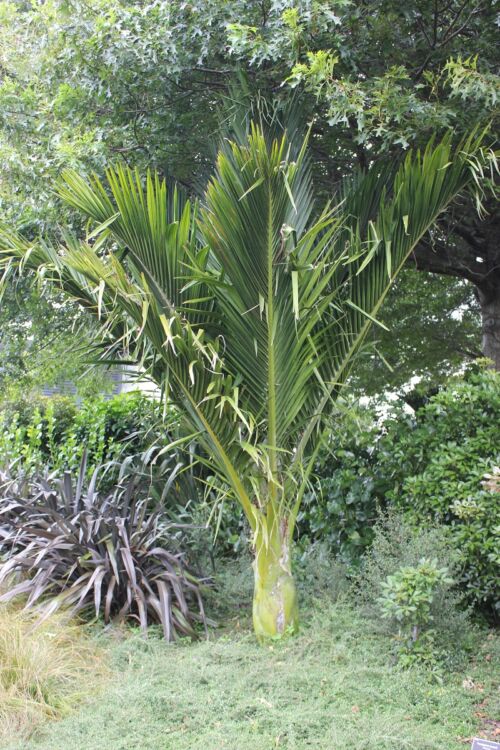
- Rhopalostylis sapida, commonly known as NZ Nikau, is a native New Zealand palm with elegant tropical appeal. In its juvenile stage, it produces long, graceful fronds reaching up to 3 metres. Over time, a slender trunk develops, marked with rings from fallen leaves. This trunk is crowned with rich green, fan-like fronds that add lush texture to shaded garden spaces. Nikau palms thrive in partial to full shade and prefer moist, well-drained soil rich in organic matter. They flourish in warm, sheltered environments with protection from strong winds and heavy frosts. For best results, plant in a shady spot with sunlight on the crown and cool, shaded roots. This mimics their natural forest habitat and enhances their appearance. Nikau is an excellent choice for garden specimens or large pots. Though very slow-growing, it can reach 10 metres and more over many years.
- Rhopalostylis sapida ‘Chathamica’ – Chatham or Pitt Island Nikau is a native New Zealand palm originating from the southern Chatham and Pitt Islands. It offers a unique twist on the mainland Nikau. This variety features longer fronds, wider leaflets, and a subtle silvery hue to its stems. Its red fruit are noticeably larger, adding seasonal interest and contrast. Adapted to cooler climates, it tolerates full sun, wind, cold, and coastal conditions better than other Nikau types. It’s also known for its tidier growth habit. Thriving in moist, well-drained soils, this palm is ideal for sheltered gardens or coastal landscapes. Its slow growth makes it easy to manage over time. Although very slow-growing, it can eventually form a trunk and reach up to 10 metres over many years, making it a long-term feature in any garden.
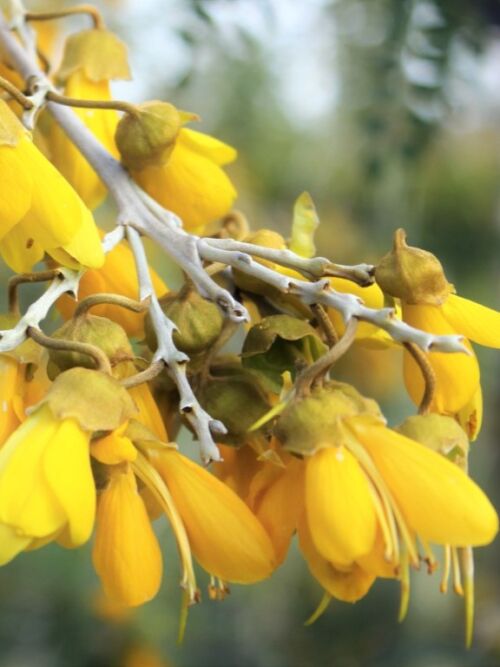
- Native to New Zealand, Sophora chathamica (Coastal Kowhai) is a semi-deciduous tree known for its spreading form and vibrant spring display. It features small, pinnate green leaflets that create a soft, open canopy. Unlike other Kowhai species, Coastal Kowhai does not have a divaricating (Zig-Zag) juvenile stage. Instead, it grows with a naturally elegant structure from an early age, making it easy to identify. In spring, the tree bursts into golden-yellow, tubular flowers arranged in pendulous racemes. These 45mm blooms appear en masse and attract Tui and other nectar-loving birds, adding life and movement to any garden. Coastal Kowhai thrives in moist, well-drained soil and thrives in coastal forest environments. It’s often found on banks overlooking estuarine rivers or sheltered inlets, where it enjoys mild conditions and good drainage. Previously classified as Sophora microphylla, this species is now recognized for its distinct traits. It makes a stunning feature tree in small gardens and typically grows to around 6 metres tall and 4 metres wide.
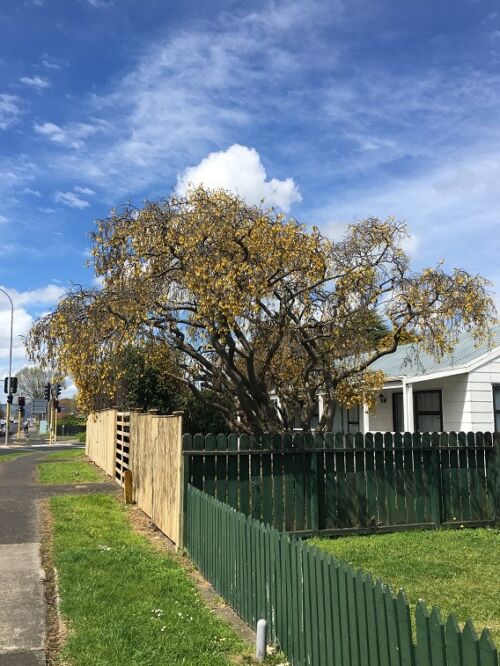
- Sophora chathamica ‘Milligold’, commonly known as Weeping Kowhai, is an evergreen native tree from New Zealand. It features deep green foliage and a compact, graceful weeping form. Branches do not have the divaricating (Zig Zag) form and foliage is larger than the smaller microphylla. In spring, it produces masses of bright yellow flowers which makes a spectacular display and also attracts nectar‑seeking birds such as the Tui. ‘Milligold’ prefers well‑drained, moist soil and should not sit in waterlogged areas to avoid root rot. It grows best in full sun or partial shade. Typically reaching 2–4 meters in height and width, it suits courtyards, smaller gardens, and works beautifully as a container specimen.
- From the Three Kings Islands, Tecomanthe speciosa is a vigorous climber with large handsome glossy leaves. The large tubular cream flowers are borne in bunches during the winter months. Tui visit flowers for nectar. Frost sensitive but can be grown successfully in colder districts under the shelter of trees. Ideal grown up a terrace pole, strong trellis, up into trees. Takes some years to flower.
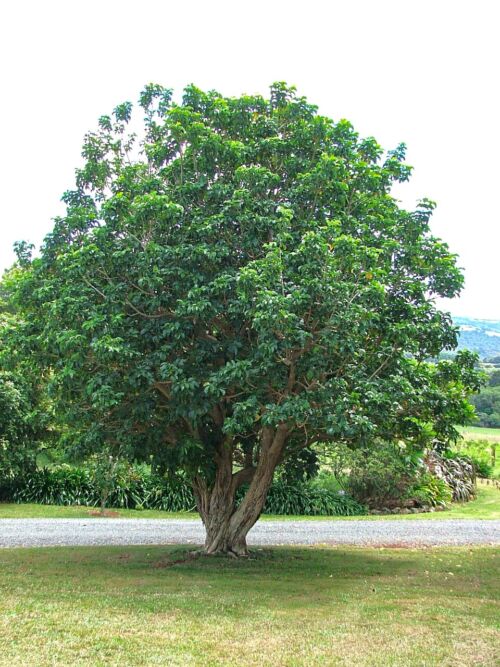
- Vitex lucens, commonly known as Puriri, is a large, spreading native tree of New Zealand, historically prized for its strong and durable timber. Its dark green leaves consist of multiple leaflets joined together, creating a lush and textured canopy. In addition, Puriri produces cup-shaped, dull red flowers around 25mm in size, which are followed by vibrant orange-red fruits. These fruits are highly attractive to native birds, adding life to your garden throughout the seasons. Moreover, this hardy tree thrives near coastal areas and tolerates wind well, making it suitable for exposed sites. While it prefers free-draining soil, it performs best in warmer temperate climates. Whether planted as a striking specimen or integrated into a larger landscape, Puriri offers both beauty and resilience. Ultimately, it can grow to over 15 x 8 meters, although it responds well to pruning and can be shaped to suit smaller spaces.