Coastal Trees
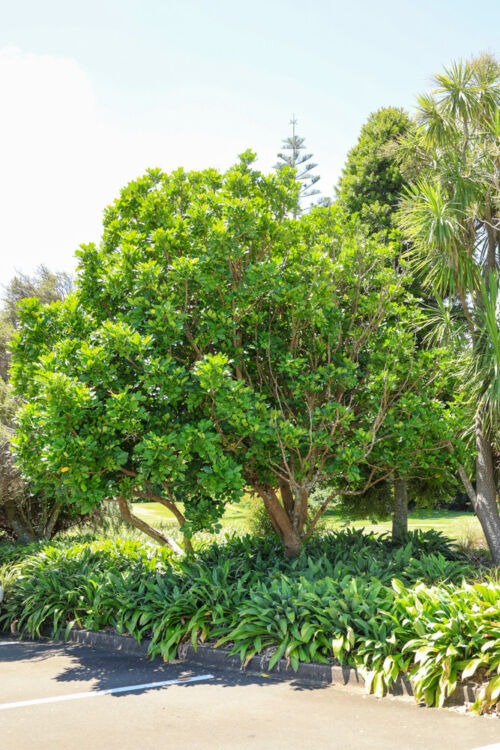
- Alectryon excelsus 'Grandis', also known as the Three Kings Island Titoki, is a compact, spreading native tree from New Zealand. It’s ideal for smaller gardens thanks to its modest size. Compared to the standard Titoki, 'Grandis' features larger, glossier leaves and a more compact growth habit. This makes it a standout choice for coastal or urban landscapes. In autumn, it produces fruit with seeds that attract and nourish native birdlife. This seasonal interest adds ecological value to your garden. It prefers full sun and thrives in moist, free-draining soil. However, its tolerance for coastal conditions makes it a versatile option for exposed sites. Growing to approximately 5 meters tall and 3 meters wide, it’s an excellent specimen for compact spaces or mixed native plantings.
- Alnus jorullensis, commonly known as the Evergreen or Mexican Alder, is a vigorous, fast-growing tree and as the name suggests, native to Mexico and South America. This species thrives in warmer climates, where it often remains evergreen throughout the year. With pale, papery grey bark and green, birch-like serrated foliage, it offers a soft, elegant appearance. Its drooping branches add a graceful touch to any landscape. Moreover, this tree is highly adaptable—it can fix nitrogen and tolerates poor, clay, damp, or even wet soils, making it a resilient choice for challenging sites. Thanks to its rapid growth and tolerance for trimming, Alnus jorullensis is ideal for creating shelter belts or privacy screens. Alternatively, it can be planted as a striking standalone shade tree, especially in areas where quick canopy cover is desired. Growing to approximately 7 metres tall and 3 metres wide, this versatile tree brings both beauty and function to gardens, rural properties, coastal and urban landscapes alike.
- Callistemon ‘Kings Park Special’ is a vigorous, evergreen small tree native to Australia. Its long, narrow green leaves decorate slightly pendulous branches, creating a graceful form in the garden. Furthermore, masses of red, fluffy, bottlebrush flowers with golden anthers bloom in spring and autumn. These vibrant flowers provide abundant nectar, attracting bees and birds while adding seasonal colour. In addition, this hardy tree tolerates poor dry soils once established, as well as clay, coastal, and windy conditions. However, avoid wet or poorly drained sites. Best grown in full sun, it reaches approximately 3m high and 2m wide if left untrimmed but trimmed also makes an excellent screen or hedge.
- Callistemon ‘Red Cluster’ is an evergreen, vigorous shrub native to Australia. Its upright branches carry short, narrow, stiff dark green leaves that first emerge with a silvery-pink hue, adding seasonal interest. Moreover, masses of striking red bottlebrush flowers with golden anthers appear in spring and autumn. These blooms provide nectar for bees and birds, making the shrub both decorative and wildlife-friendly. In addition, this hardy plant tolerates poor dry soils once established, as well as clay, coastal, and windy conditions. However, avoid wet or poorly drained sites. Trim after flowering to encourage bushiness, or shape easily for hedging. At maturity, it grows to approximately 3m high and 2m wide..
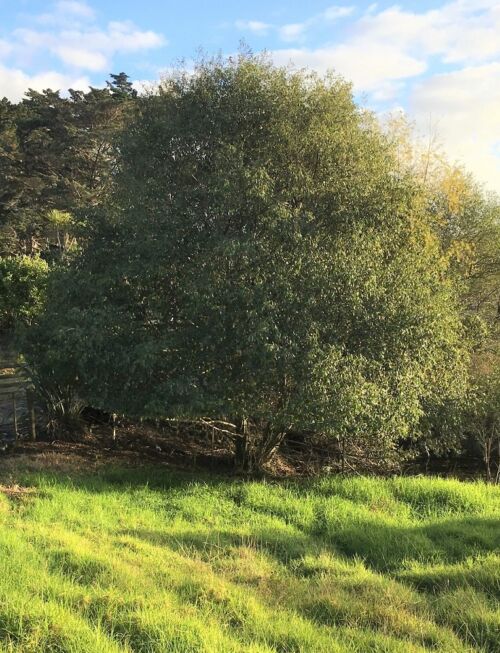
- Carpodetus serratus – Putaputaweta is a small, rounded evergreen tree native to New Zealand. Its upright branches carry dark green serrated leaves, giving the tree a distinctive texture and form. In early summer, masses of tiny white flowers appear, creating a delicate display. This tree prefers a sheltered site and tolerates damp conditions, making it versatile in challenging environments. Moreover, Putaputaweta occurs across diverse habitats, from coastal areas to mountain regions, along streams and forest edges. Growing to approximately 5m high and 3m wide, it makes an excellent small shade tree. Interestingly, the epithet serratus comes from Latin, meaning “saw-toothed” or “serrated” and refers to the leaves.
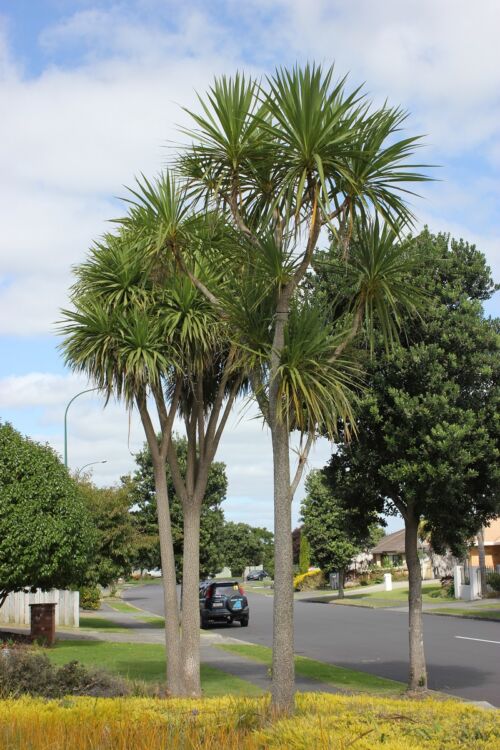
- Cordyline australis, commonly known as the Cabbage Tree or Ti Kouka, is a striking native tree found throughout New Zealand. With its upright trunk and clusters of long, drooping leaves—often reaching up to 1 metre—it resembles a palm and adds architectural flair to any landscape. In late spring, this hardy tree bursts into large heads of creamy white, scented flowers. These blooms are rich in nectar, attracting bees and other pollinators. As summer progresses, the tree produces fruit that draws native birds from January to April, enhancing biodiversity in your garden or property. Cordyline australis thrives in a wide range of environments—from swampy wetlands to dry, windy hill slopes. It’s commonly seen across farmland, open spaces, and scrubland in both the North and South Islands. While it tolerates clay soils, it performs best in free-draining ground and is resistant to coastal winds and harsh conditions. The name “Cabbage Tree” arose from early European settlers who, like Maori, used the tender heart-shoots as a vegetable. Its Latin name, australis, fittingly means “southern” or “of the south,” reflecting its deep roots in New Zealand’s southern landscapes. This iconic tree typically grows to around 6 metres tall and 2 metres wide, making it a bold and resilient choice for coastal gardens, rural properties, and native restoration projects.
- 6 x 2m
- Medium 5-10m
- Slow - Moderate
- Palm
- Upright
- New Zealand/div>
- Nikau Palms
- Green
- White
- Fragrant
- Dry once established, Damp-Wet, Clay
- Coastal, Windy, Hardy
- Bird Feeding, Small Gardens
- Corokia virgata ‘Geenty’s Green’ is a compact, bushy shrub native to New Zealand, celebrated for its vibrant green foliage and star-shaped yellow flowers that bloom in early summer. These are followed by small dark red berries that attract native birds, adding seasonal interest and biodiversity to your garden. Ideal for hedging, this versatile plant trims neatly into a tidy shape, ideal for low hedges or borders in larger or smaller gardens. It can be left to grow naturally into a larger screen as well. Once established, it thrives in exposed coastal, windy or dry conditions, making it a resilient choice for challenging sites. Mature plants reach approximately 2 metres high by 1.2 metres wide. Named in honour of New Zealand plantsman and Corokia enthusiast Mike Geenty, this cultivar has the Latin virgata, meaning “twiggy”—a reference to its fine branching structure.
- Corynocarpus laevigatus – Karaka is a dense, evergreen tree native to New Zealand. Its lush, glossy green foliage creates a bold, tropical impression—perfect for adding instant visual appeal to gardens and landscapes. Flowering in late winter to spring, it produces delicate green-cream clusters. By summer, vibrant orange berry-like fruits emerge, attracting native kererū, who help disperse the seeds. Exceptionally hardy, Karaka withstands strong winds, coastal exposure, and drought. However, it dislikes waterlogged soils. Ideal as a privacy screen or shade canopy, this tree grows to approximately 15–20 metres tall and 8 metres wide.
- Corynocarpus laevigatus ‘Minima’ – Karaka, is a compact male form of the New Zealand native Karaka tree. Its glossy green leaves resemble the standard Karaka but are noticeably smaller, creating a lush, tropical look. As a male cultivar, it rarely produces fruit or seed. This makes it a tidy choice for urban gardens or formal landscapes where minimal litter is preferred. Thriving in full sun, it prefers moist, well-drained soil. It also tolerates coastal conditions and wind, making it highly versatile. With its dense branching and slower growth, ‘Minima’ is ideal for hedging, screening, or shaping into a privacy barrier.Interestingly, the species name laevigatus means “smooth” in Latin, referring to the texture of its foliage. In eight years, it typically reaches around 4.5 x 3.0 metres.
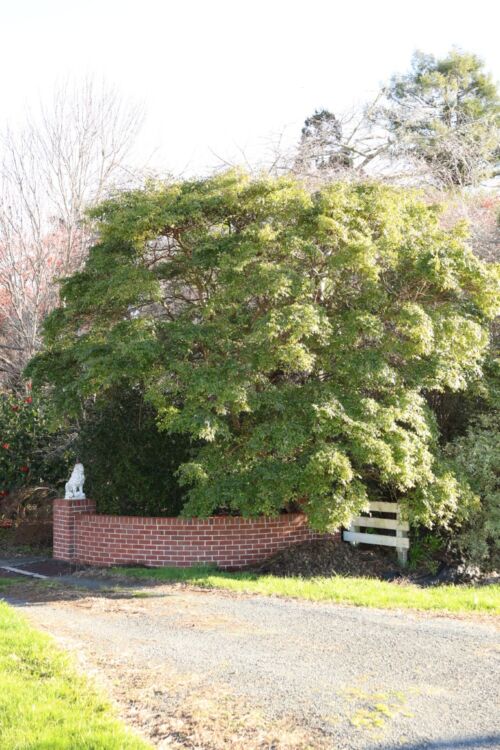
- Cryptomeria japonica, or Japanese Cedar, is an evergreen tree native to Japan. It grows quickly and forms a tall, pyramidal shape with a straight, columnar trunk. Its reddish‑brown bark peels in vertical strips, adding year‑round interest. The soft, awl‑shaped leaves spiral along the twigs and turn a warm copper‑bronze in winter.The branches spread slightly with a soft, pendulous habit. This tree thrives in moist, well‑drained soil and full sun, yet it will not tolerate wet conditions. Thanks to its dense growth, it works exceptionally well as a shelter belt and can be trimmed into a narrow, tidy “wall.” It also tolerates both windy sites and coastal environments, making it a versatile choice for exposed landscapes.Japanese Cedar typically reaches around 10 × 5 m in ten years. However, in ideal conditions, it can grow to approximately 20 m at full maturity.
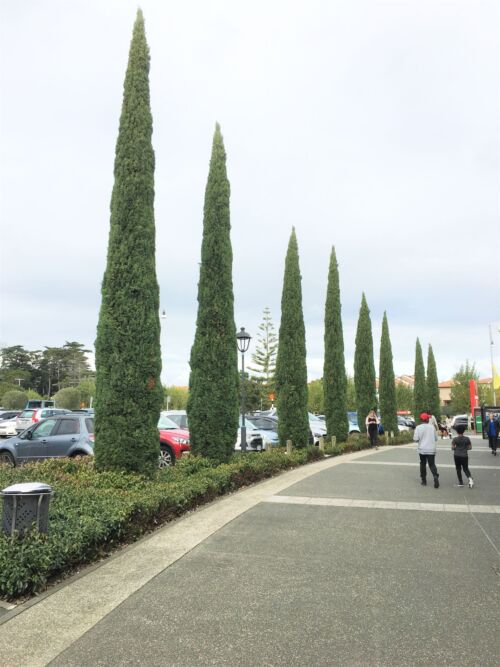
- Cupressus sempervirens 'Totem', commonly known as Totem Cypress, is a tightly upright-growing conifer with striking bluish-green foliage. Notably, these trees are iconic in Italy—especially throughout Tuscany—where they define the landscape and grace Renaissance gardens with timeless elegance. Thanks to their slender, vertical form, Totem Cypresses create bold architectural accents that elevate formal landscapes. Moreover, this cutting-grown cultivar ensures a consistently narrow columnar shape and even growth rate, making it a reliable choice for symmetry and structure. Unlike other varieties, its foliage remains dense and intact, resisting the tendency to “fall out.” Additionally, it offers improved resistance to fungal canker, making it a hardy option for challenging conditions. Often planted in rows as living pillars, it’s ideal for lining entranceways and avenues with a commanding presence. For optimal performance, Totem Cypress prefers drier soil and well-drained sites. Ultimately, it grows to approximately 10 meters tall and 2 meters wide delivering a bold, sculptural impact wherever it’s planted.
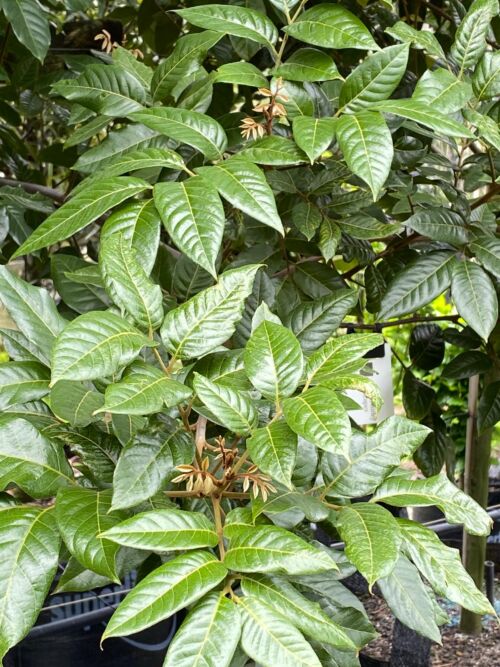
- Didymocheton spectabilis – Kohekohe is a striking evergreen tree native to New Zealand. Found naturally in coastal forests across the North Island, it grows quickly and forms a handsome canopy, ideal for coastal gardens. Its large, tropical-looking leaves can reach up to 40cm long. From March to June, elegant, small waxy white flowers bloom directly from the trunk and branches, followed by fruit that enhances its exotic appeal. Kohekohe prefers moist, well-drained soil and full sun. It tolerates coastal conditions but dislikes waterlogged areas. In ten years, it typically reaches around 10 x 4 metres. At full maturity, it can grow up to 15 metres tall. Formerly known as Dysoxylum spectabilis, it remains a standout choice for native planting schemes.
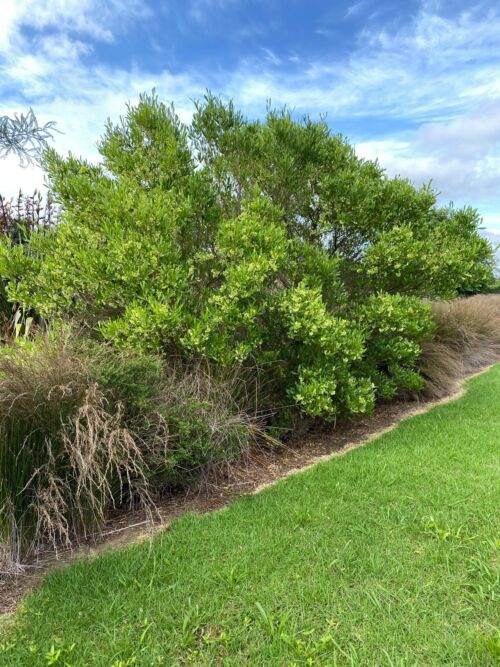
- Dodonaea viscosa also known as Ake Ake, is a small, spreading evergreen tree native to New Zealand. Its long, leathery light green leaves bring a fresh, vibrant look to any landscape. In summer, it produces unusual yellow-green papery flower clusters, adding seasonal interest. Once established, Ake Ake is highly tolerant of dry, sandy or rocky soils, salt spray, wind, and drought, but prefers a moist well drained soil. This hardy tree thrives in full sun and is ideal for exposed or coastal sites. It works beautifully as a windbreak or privacy screen in tough conditions. To maintain a dense, bushy form, regular trimming is recommended. Typically, it grows to around 3.5 metres high and 2 metres wide.
- Dodonaea viscosa ‘Purpurea’ – Purple Akeake is a tough, upright native New Zealand tree with bold, glossy purple-red foliage that deepens in colour during the cooler months. In summer, it puts on a show with unusual light red to purple papery flower clusters that add a rugged splash of contrast. Over time, Purple Akeake spreads out, making it a good choice for privacy screening or adding colour into compact garden spaces. It handles a wide range of soil types, salt spray, wind, and drought once established—but thrives best in moist, well-drained soil. Trim regularly to maintain a dense, bushy form. The name viscosa refers to the sticky texture of its seeds. Grows to approximately 3.5m high x 2.0m wide.
- Ficus Tuffi is a compact, upright shrub known for its dense growth and vibrant emerald green foliage. Native to Australia, it’s a standout choice for creating smart, formal hedges thanks to its easy-to-trim nature and minimal leaf drop—making it especially ideal around pools. This versatile plant pairs beautifully in layered hedging alongside Buxus or other small shrubs to maintain a polished, structured look. It also lends itself well to topiary work, whether planted directly in the garden or styled in pots for a refined touch. Ficus Tuffi performs best in moist, well-drained soil, flourishes in full sun to partial shade, and is resilient to coastal conditions though not in direct salt spray. Reaching approximately 4 metres tall and 2.5 metres wide, it can also be used as a larger screen. Standards have a clear trunk and are bushy on top. As a group planted together they create a hedge or screen "on stilts" and are called a "pleached hedge".
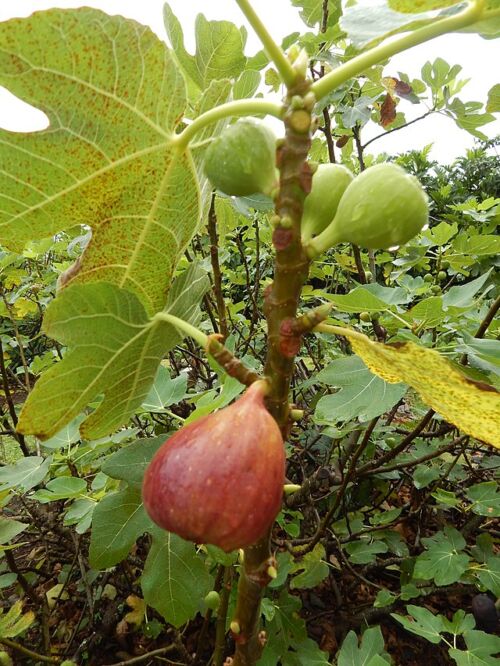
- Fig ‘Brown Turkey’ (Ficus carica) This compact shrub or small tree features gnarled, twisted branches and bold, tropical-style leaves. Ideally, it should be planted in a sunny, sheltered, location. In addition, it thrives when provided with abundant moisture. Notably, ‘Brown Turkey’ is a well-known hardy selection that produces generous crops of green figs with a distinctive brown tinge and white to amber flesh. Because of its size, it’s excellent for small gardens and furthermore, it tolerates coastal conditions with ease. Although it can grow up to 5 x 5 metres, it’s easy to trim to your preferred size and shape. Therefore, it’s a versatile choice for many garden styles. Be quick to harvest the fruit before the birds do—typically, the season runs from February to April. Finally, this variety is proudly recognised as a Heritage Tree.
- Fig ‘French Sugar (Ficus carica) This compact shrub or small tree features gnarled, twisted branches and bold, tropical-style leaves. Ideally, it should be planted in a sunny, sheltered, location. In addition, it thrives when provided with abundant moisture. Notably, ‘Mrs Williams’ is a well-known hardy selection that produces generous crops of high-quality, large figs. Unlike many other varieties, it ripens earlier in the season, making it a popular choice among gardeners. The fruit is dark green in colour with succulent pale pink flesh. As a heavy cropper, this variety consistently produces abundant yields. As a result, the figs are sweet, juicy, and perfect for both fresh eating and preserving. Typically, the harvest period runs from February to April but be quick to harvest the fruit before the birds do. Because of its compact size, this fig is ideal for small gardens. Moreover, it tolerates coastal conditions with ease, adding to its versatility. Although it can grow up to 5 x 5 metres, it’s easy to trim to your preferred size and shape. Therefore, it’s a versatile choice for many garden styles.
- Fig ‘Mrs Williams’ (Ficus carica) This deciduous, compact shrub or small tree features gnarled, twisted branches and bold, tropical-style leaves. Ideally, it should be planted in a sunny, sheltered, location. In addition, it thrives when provided with abundant moisture. Notably, ‘Mrs Williams’ is a well-known hardy selection that produces generous crops of high-quality, large figs. Unlike many other varieties, it ripens earlier in the season, making it a popular choice among gardeners. The fruit is dark in colour—sometimes even purple—with flesh ranging from light amber to rich red. As a result, the figs are sweet, juicy, and perfect for fresh eating or preserving. Typically, the harvest period runs from February to April, but be quick to harvest the fruit before the birds do. Because of its compact size, this fig is ideal for small gardens. Moreover, it tolerates coastal conditions with ease, adding to its versatility. Although it can grow up to 5 x 5 metres, it’s easy to trim to your preferred size and shape. Therefore, it’s a versatile choice for many garden styles
- Fraxinus griffithii, commonly known as Evergreen Ash, is a fast-growing tree with a rounded form. Its dark green pinnate leaflets create lush foliage, while masses of small white fragrant flowers appear in large, loose panicles during spring, almost covering the entire tree. This hardy tree performs best in well-drained soil and becomes drought tolerant once established. However, avoid waterlogged areas to prevent root rot. Although evergreen, Evergreen Ash can become semi-deciduous in colder climates. It grows to around 6 x 4 metres, forming a beautiful shade tree for gardens and landscapes. The tree is easily clipped to maintain shape and height, making it versatile for design. Very hardy, it also thrives in industrial sites, carparks, and coastal areas, offering resilience and reliability in challenging conditions.
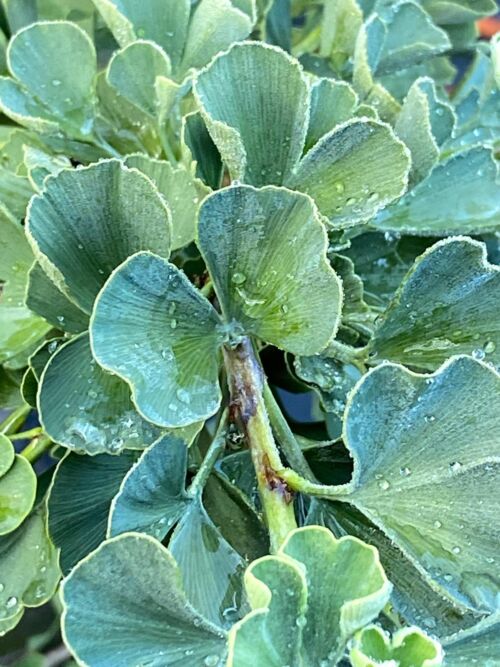
- Ginkgo biloba ‘Jade Butterflies’ is a compact, deciduous dwarf male cultivar from the Ginkgo family. It forms an upright, vase-shaped structure and grows slowly. Its deeply bi‑lobed, jade‑green leaves resemble butterflies, which inspired its name. In autumn, the foliage transforms into a soft cream‑yellow display. This variety prefers fertile, moist soil; however, it also tolerates compacted, poor, or urban soils though will not tolerate wet soils. It thrives in full sun, which enhances its vibrant yellow autumn colour. Additionally, it withstands coastal salt spray and pollution, making it ideal for urban, seaside, and exposed locations. Mature plants reach approximately 3 x 2 metres. Its compact size suits small gardens, courtyards, or container planting. It requires minimal pruning, though shaping in late winter or early spring works well. The term biloba refers to the two-lobed leaves. Although Ginkgo trees are native to China, ‘Jade Butterflies’ was developed in New Plymouth, New Zealand.