Fragrant Flowering Trees
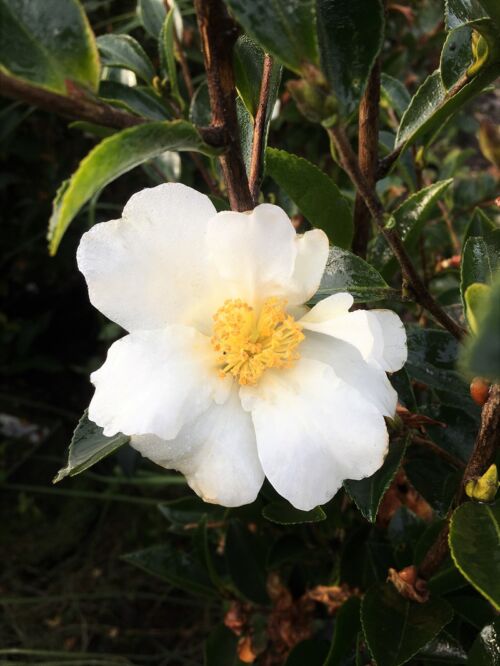
- Camellia sasanqua ‘Setsugekka’ is among the most popular flowering camellias. This moderately fast-growing upright shrub showcases white blooms from autumn through winter. Each flower features a ruffled edge, a bright cluster of golden stamens at the centre, and a delightful fragrance that enhances the garden. In addition to its flowers, the shrub offers dense, glossy green foliage. Therefore, it is an excellent choice for hedging at various heights. It responds well to trimming and, alternatively, can be grown as a striking standalone specimen or shaped as a topiary. Although camellias originate from China, cultivars like ‘Setsugeka’ are now bred worldwide. As a result, they are admired for their ornamental appeal and adaptability, making them suitable for diverse garden styles and climates. For best results, position this plant in full sun or dappled shade. To ensure healthy growth, place it in well-draining, acidic soil enriched with organic matter. Moreover, pruning after flowering promotes bushier and more compact growth. Typically, this variety grows to around 2.5m tall and 2.0m wide; however, it can be allowed to expand further, creating an effective screen in the garden
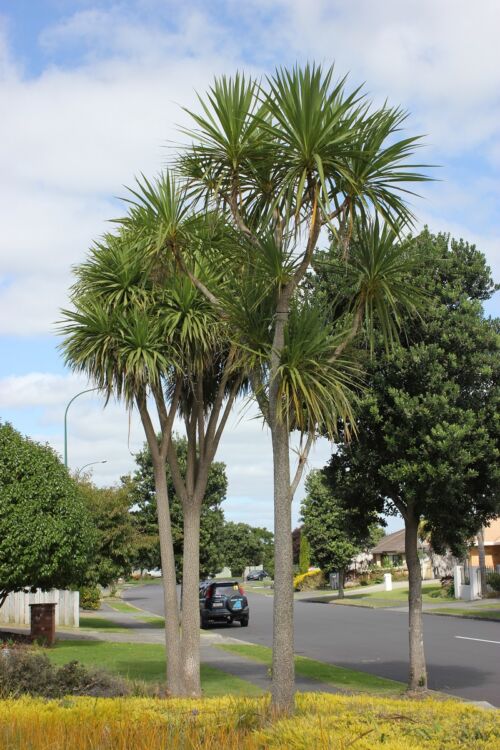
- Cordyline australis, commonly known as the Cabbage Tree or Ti Kouka, is a striking native tree found throughout New Zealand. With its upright trunk and clusters of long, drooping leaves—often reaching up to 1 metre—it resembles a palm and adds architectural flair to any landscape. In late spring, this hardy tree bursts into large heads of creamy white, scented flowers. These blooms are rich in nectar, attracting bees and other pollinators. As summer progresses, the tree produces fruit that draws native birds from January to April, enhancing biodiversity in your garden or property. Cordyline australis thrives in a wide range of environments—from swampy wetlands to dry, windy hill slopes. It’s commonly seen across farmland, open spaces, and scrubland in both the North and South Islands. While it tolerates clay soils, it performs best in free-draining ground and is resistant to coastal winds and harsh conditions. The name “Cabbage Tree” arose from early European settlers who, like Maori, used the tender heart-shoots as a vegetable. Its Latin name, australis, fittingly means “southern” or “of the south,” reflecting its deep roots in New Zealand’s southern landscapes. This iconic tree typically grows to around 6 metres tall and 2 metres wide, making it a bold and resilient choice for coastal gardens, rural properties, and native restoration projects.
- 6 x 2m
- Medium 5-10m
- Slow - Moderate
- Palm
- Upright
- New Zealand/div>
- Nikau Palms
- Green
- White
- Fragrant
- Dry once established, Damp-Wet, Clay
- Coastal, Windy, Hardy
- Bird Feeding, Small Gardens
- Port Wine Magnolia - Michelia figo is a slow-growing, compact shrub that features a rounded shape and vibrant lime-green foliage. In early spring, it bursts into bloom with masses of small, cream-colored flowers streaked with purple, which release a rich fragrance. As a result, it becomes a standout feature in any garden. Depending on light conditions, the shrub’s form can vary. When grown in shade, it tends to develop a looser, more open structure. Conversely, plants grown in full sun are typically more compact and display denser foliage. Moreover, it thrives in humus-rich, well-drained, slightly acidic soil, making it adaptable to a range of garden environments. Whether planted in sun or shade, Port Wine Magnolia performs beautifully. It can be trimmed into a neat, low hedge, allowed to grow as a striking standalone specimen, or placed in a large decorative pot for added versatility. Originating from Western China, this elegant shrub typically reaches up to 3 metres tall and 2.5 metres wide.
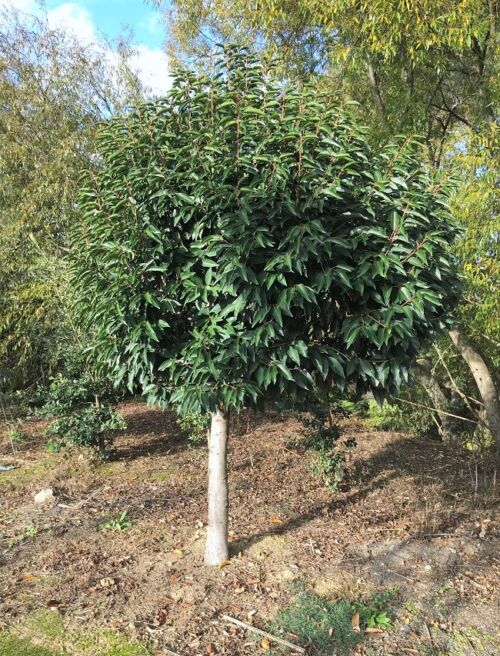
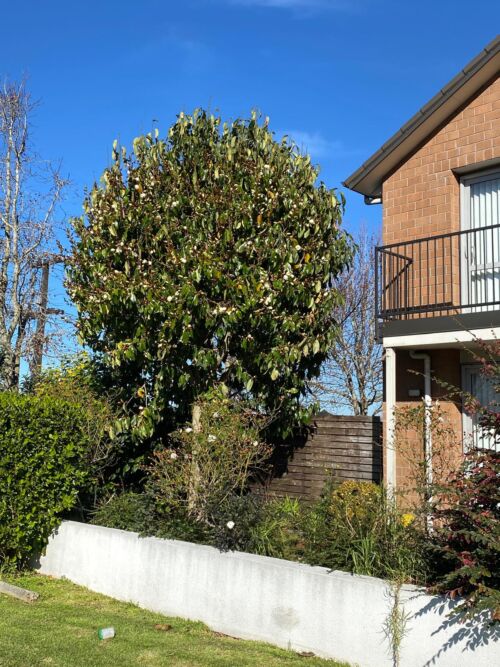
- Prunus lusitanica - Portuguese Laurel, is a versatile evergreen shrub or small tree with dark, glossy green oval leaves. Native to Western Europe, including regions of France, Spain, Portugal, and Morocco, it brings both structure and elegance to garden landscapes. In late spring to summer, it produces white flowers with a subtle hawthorn-like scent, arranged in long, slender racemes. These are soon followed by small fruits, adding further seasonal interest. Moreover, this plant thrives in moist, well-drained soils, though it will not tolerate waterlogged conditions. Therefore, it’s best planted in a sunny, sheltered position to ensure healthy growth. Thanks to its dense foliage and upright habit, Portuguese Laurel is excellent for trimming into formal hedges or shaping into a clipped screen. Additionally, it can be trained as a pleached hedge or sculpted into topiary forms, offering flexibility for both traditional and contemporary garden designs. Typically growing to approximately 5 x 4 metres, it makes a bold yet refined statement in any outdoor space. The name lusitanica refers to Lusitania, the ancient Roman name for Portugal, highlighting its rich heritage.
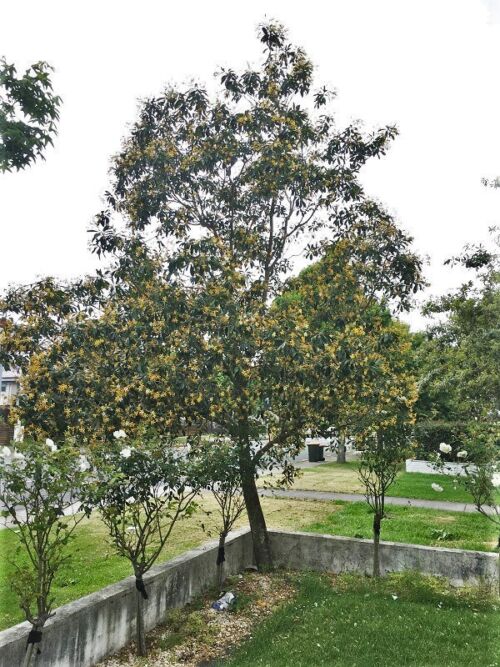
- Hymenosporum flavum known as the Australian Frangipani, is a vigorous, evergreen tree with an upright habit and open form. Its long glossy green foliage provides year-round interest, while the tree’s elegant structure makes it a standout feature in any garden. During spring and early summer, it bursts into clusters of creamy yellow flowers. These blooms release a delightful fragrance, attracting bees, butterflies, and nectar-loving birds, which in turn bring vibrant life and movement to your outdoor space. Native to Australia, this tree thrives in moist, well-drained soil and full sun. However, it benefits from being planted in a sheltered position, away from strong winds, ensuring healthy growth and long-lasting beauty. Reaching approximately 10m high and 4m wide, it suits both spacious and smaller gardens. With regular trimming, you can easily maintain a compact shape and control its height, making it a versatile choice for modern landscapes.
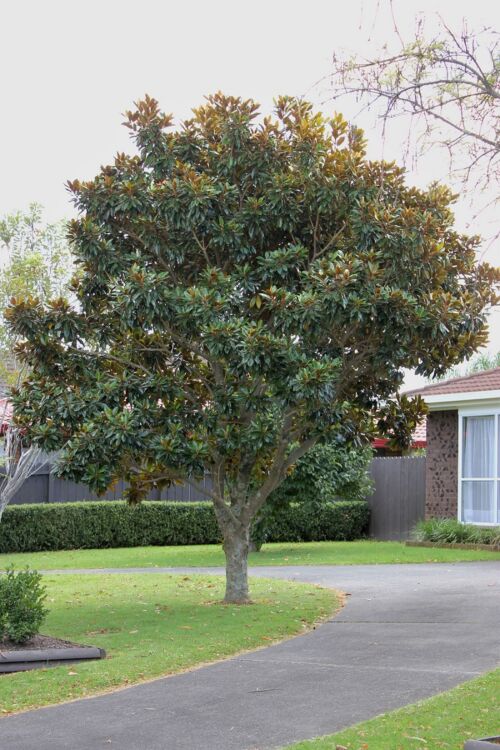
- Magnolia grandiflora ‘Little Gem’ is a compact evergreen tree originating from the USA. With its rounded form and slower growth, it provides year‑round structure and elegance in the garden. The glossy deep green leaves, highlighted by russet undersides, are typical of grandiflora magnolias. Moreover, creamy white flowers appear freely from an early age, filling the air with fragrance and charm. This magnolia tolerates clay soils; however, avoid overly wet conditions. In addition, it grows to approximately 5m tall by 3m wide but can be pruned easily to maintain shape and height. Because of its size and adaptability, ‘Little Gem’ is excellent for smaller gardens or large pots, offering beauty and versatility in both traditional and modern landscapes
- Michelia ‘Bubbles’ is an evergreen, compact tree that grows to a small or medium size. Its bushy form is enhanced by large, leathery leaves that begin fresh green and mature to a deep, glossy shade. In spring and summer, strongly scented creamy white flowers appear in abundance. They bloom over a long succession, creating a striking display that adds fragrance and beauty to the garden. This cultivar was developed in Whangarei, New Zealand. It is a hybrid of Michelia figo and Michelia doltsopa, both native to Asia, combining their best qualities into one resilient tree. Michelia ‘Bubbles’ thrives in full sun or partial shade. It prefers rich, moisture-retentive yet free-draining soil, making it versatile for different garden conditions. Growing to approximately 4 x 2 metres, it is an excellent choice as a specimen tree. Moreover, it works well as a trimmed shelter screen, offering structure and year-round greenery.
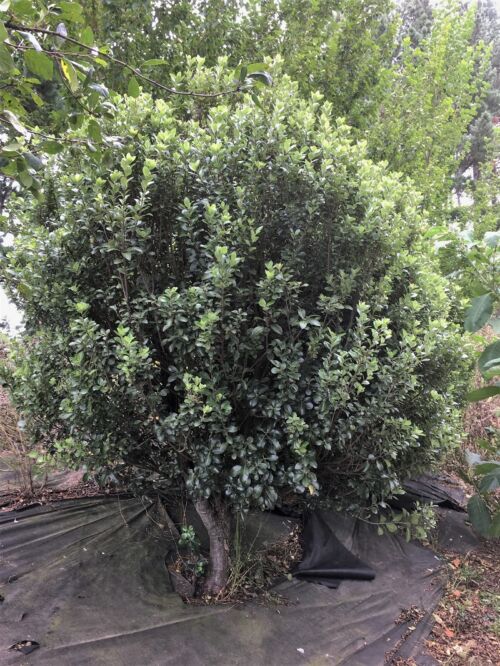
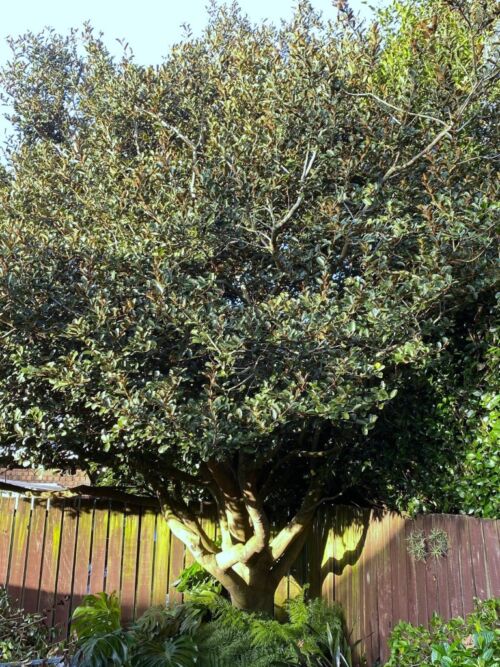
- Pittosporum ‘Stephens Island’ is a smaller evergreen tree native to New Zealand. It forms a rounded shape with smooth, dark green, pointed leathery leaves, creating an attractive and compact appearance. This variety is highly useful for hedging and screening. Small purple flowers, lightly scented and most fragrant in the quiet of early morning or evening, produce seed that attracts small feeding birds. Originating from a windy island in the Cook Strait, it is well-suited to exposed coastal gardens. Moreover, it can withstand salt spray and thrives in moist, well-drained soils. Growing to approximately 4 x 2 metres, Pittosporum ‘Stephen’s Island’ makes an excellent smaller hedge. When kept trimmed, it maintains bushiness and provides year-round structure and greenery.
- Pittosporum tenuifolium – Kohuhu is an evergreen tree native to New Zealand. It is the parent plant of many popular cultivars, which have developed from the natural variation found in seed‑grown plants. Within the tenuifolium family, foliage varies widely. Leaves range from deep green to softly variegated or glaucous tones, with both long and short forms. Because of this diversity, many cutting‑grown cultivars have emerged over time. As a tree, Kohuhu grows quickly and develops a dense, rounded habit. It prefers full sun and moist, well‑drained soil. Furthermore, it trims easily, making it ideal for larger screens or compact hedges. In spring, it produces small purple flowers with a sweet fragrance, especially noticeable on still mornings or evenings. Ultimately, Pittosporum tenuifolium reaches approximately 5 × 3 metres.
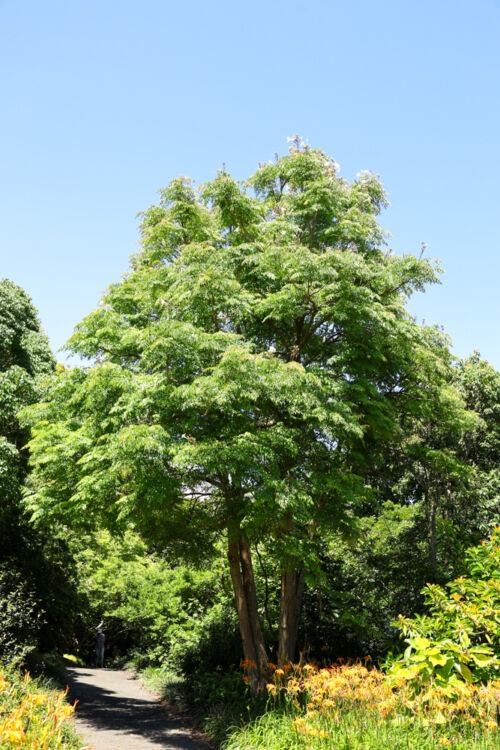
- Radermachera sinica, also known as Canton Lace or China Doll, is a sub tropical, fast growing evergreen tree native to Southern China. It has an open, spreading form and features emerald green bipinnate leaves that reach up to 50 cm. In summer, the tree produces long, white, trumpet shaped flowers that create a striking display. It prefers moist, well drained soil in full sun, and should be kept evenly moist during dry periods for best growth. Because young plants are sensitive to cold, they should be protected from frost. Easily pruned to maintain height or shape, making it ideal for hedging or privacy screens. Additionally, it grows well indoors as a houseplant. A mature Radermachera sinica typically reaches around 8 × 5 metres.
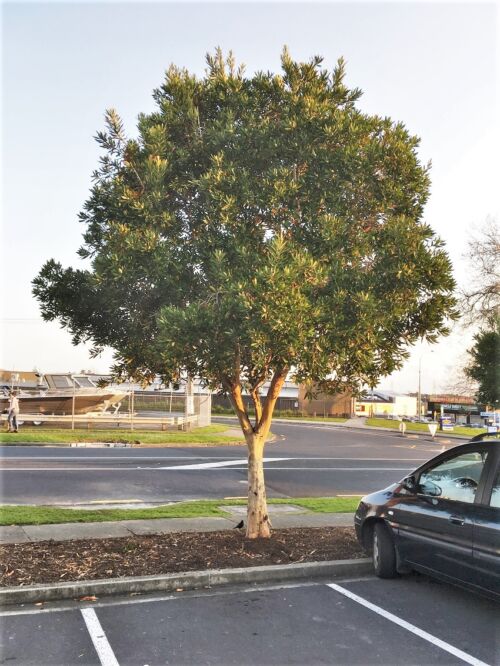
- Tristaniopsis laurina – Kanooka or Water Gum is a medium-sized evergreen tree with a rounded, compact form. Its dark, glossy green leaves provide year-round appeal, making it a striking feature in any landscape. Native to Australia, this tree produces clusters of small, fragrant yellow flowers during summer. These blooms not only enhance its beauty but also attract pollinators, bringing extra life and movement to your garden. Kanooka Water Gum tolerates clay soils, yet it performs best in moist, well-drained conditions. For optimal growth and colour, plant it in full sun while avoiding sites that are overly wet or dry. Versatile and adaptable, it suits street planting, lawn specimens, and smaller gardens where shade is desired. Typically reaching 7 metres tall and 4 metres wide, it can also be pruned to maintain a neat, compact shape.
- Michelia ‘Gracipes’ is a compact, evergreen tree with a rounded form, making it ideal for smaller gardens. Its dark, olive-green leaves feature a distinctive brown felt underside, adding subtle texture and year-round interest. From late winter into early spring, this wonderful tree produces small, round, perfumed cream flowers with prominent stamens. These blooms emerge from furry brown buds, creating a charming and fragrant display. For best results, plant in moist, well-drained soil in a sheltered, sunny position. While it is slow-growing, it responds well to trimming and can be shaped into a hedge or left to grow on showcased as a specimen tree. Interestingly, Michelia ‘Gracipes’ was bred and developed in New Zealand. Although its lineage may include Chinese species such as Michelia yunnanensis, this particular cultivar is proudly of New Zealand origin. It prefers protection from strong winds so it’s well-suited to sheltered urban gardens. Reaching approximately 4 x 3 metres at maturity, it offers compact beauty and refined structure.
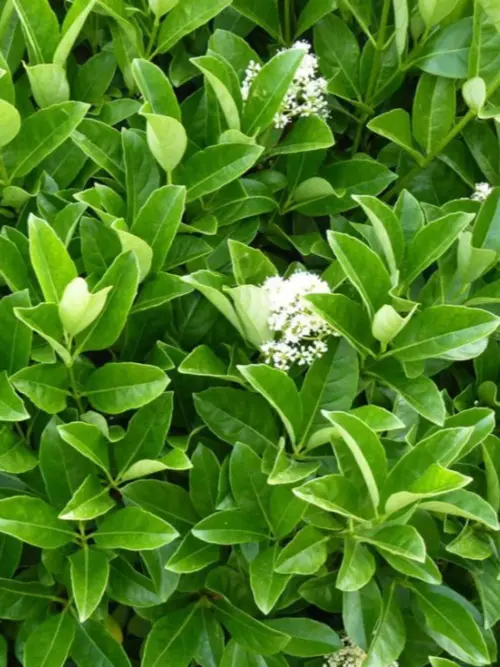
- Viburnum odoratissimum ‘Dense Fence’ is an evergreen shrub bred to create fast-growing, dense hedges. As a result, it provides excellent screening and privacy in gardens or landscapes. Its glossy, dark green leaves emerge with a striking red flush, while clusters of fragrant white flowers appear in spring. Consequently, the shrub offers year-round interest with minimal pruning required to maintain a tidy hedge. This hardy plant prefers moist, well-drained soil in full sun to partial shade. Moreover, once established, it tolerates light frost and grows to approximately 3 x 2 metres. Interestingly, the epithet odoratissimum comes from Latin, meaning “very fragrant” or “most fragrant,” perfectly reflecting its delightful spring bloom
- Flower Fragrant? Yes
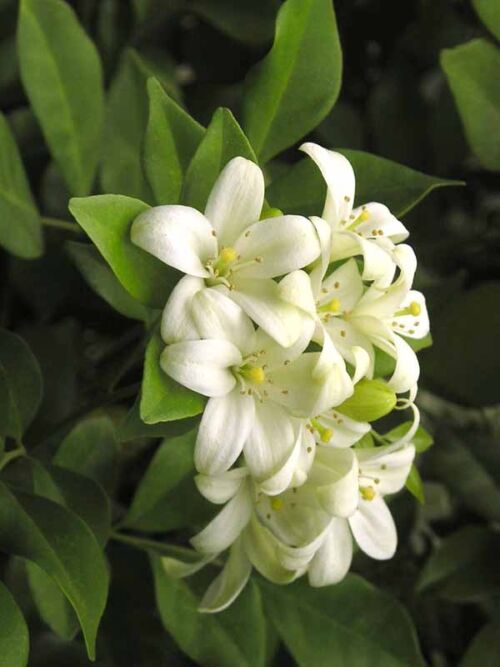
- Murraya paniculata, commonly known as Orange Jessamine, is a small tropical evergreen tree or shrub with glossy, dark green pinnate leaves. It grows densely and compactly, while also maintaining a moderate growth rate. In spring, it produces masses of highly fragrant white flowers with a citrus-like scent. These blooms smell similar to orange blossoms and become most fragrant at night. Orange Jessamine is native to a wide region across tropical and subtropical Asia and Australia and grows best in rich, moist, well-drained soil and thrives in full sun to part shade. Moreover, it performs well in sheltered locations protected from strong winds. This popular shrub is ideal for creating small hedges or borders and is well suited to compact gardens and containers. The common hedging height is 1.0–3.0 m, although it can reach 4 × 3 m when left untrimmed.
-
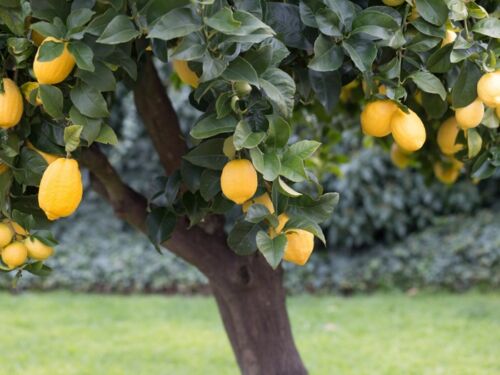
We also stock Larger growing lemon varieties with a more citric taste. These can include Eureka, Lisbon, Yen Ben, and Genoa. Make enquiries as to which varieties we have available now or see our online catalogue.- DESCRIPTION
One of the most popular. Low spreading growth habit with few thorns. Large yellow-orange fruit when ripe with smooth skin and lower acid level than other lemon varieties. Very high juice content. Plant in warm sheltered position and rich well- drained moist soil in full sun Feed regularly during growing season and water well in summer. Mulch with well-rotted compost. Good in containers. HARVEST – JUN-AUG Height x Width 2.5 x 2.5 Height Range Small 1-5m Growth Rate Moderate Plant Type Tree Shape / Habit Round Country of Origin China Similar to Consider Other Lemons, Oranges, Mandarins, - LEAF
Leaf Colour Dark Green - FLOWER
Flower Colour White with pink buds Fragrant? Yes - USES
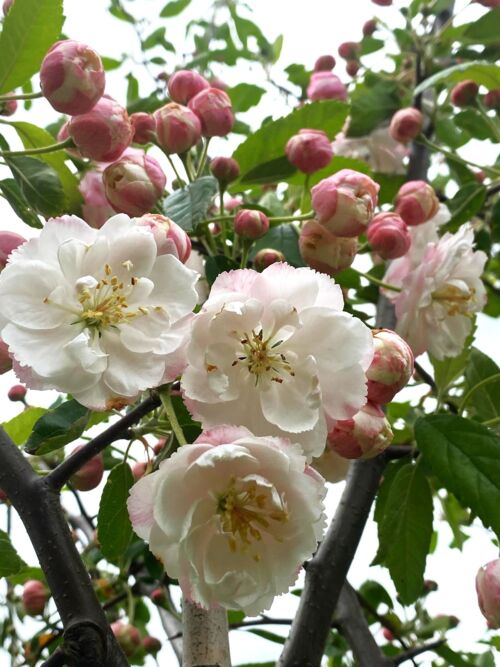
Fruit Producing Yes Small Garden Yes Note: Growth, height and grade information are given in good faith but are subject to natural variables beyond our control. - Malus ioensis 'Plena', also known as Bechtel’s Crabapple, is a compact, deciduous tree with a rounded, spreading form. Its bright green foliage creates a lush summer canopy. As the seasons shift, the leaves transform into a vibrant orange-red, adding a splash of autumn colour to your garden. In spring, this tree truly shines. It bursts into bloom with large, soft pink double flowers that are both fragrant and eye-catching. Although it produces a few yellow-green fruits, they are not edible. However, the real showstopper is undoubtedly the floral display. For best results, plant in a sunny, sheltered spot with moist, well-drained soil. Thanks to its modest size—reaching approximately 4 x 3 metres—it’s ideal for smaller gardens or limited spaces. Interestingly, Malus ioensis 'Plena' was discovered in the mid-1800s by E.A. Bechtel in the Illinois Prairies of the American Midwest. This origin also gives rise to its other common name: Prairie Crabapple.
-
- Description
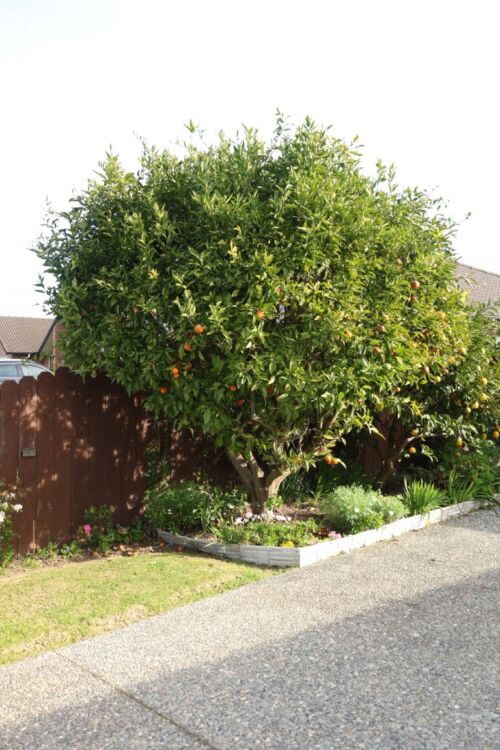
A smaller growing tree with smaller bright orange fruit. Classic mandarin flavour, which is robust, and sweet. Normally seedless but can produce pips if cross pollinated with other pipped citrus. Smaller growing makes it ideal for a smaller garden or large pot. Harvest over winter apx June to August. Feed in spring and summer with citrus fertilisers to encourage maximum fruiting and flowering. Grows to apx 2 x 1.5m Height x Width 2 x 1.5 Height Range Small 1-5m Growth Rate Moderate Plant Type Tree Shape / Habit Round Country of Origin Algeria, Northern Africa Similar to Consider Orange, Tangelo, Satsuma mandarin, - Leaf
Leaf Colour Dark Green - Flower
Flower Colour White Fragrant? Yes - Uses
Fruit Producing Small Garden Yes Yes Note: Growth, height and grade information are given in good faith but are subject to natural variables beyond our control. - A small slow growing tree with dense, upright growth habit. Fruit is slightly larger than other satsumas. Easy peel and seedless with good flavour. Heavy cropping. The latest ripening of the satsuma group. An excellent small home garden choice. Harvest winter months over May to June.
- Hybrid of Grapefruit and Tangerine. Yields high amounts of red orange fruit that is semi-flat and thin skinned. Flesh is sweet, very juicy and is almost seedless. Ripens during July-October. Smaller growing so ideal for the smaller garden.
- Tangor Ugli, also called the Jamaican tangelo, is a unique citrus hybrid combining grapefruit, orange, and tangerine. The tree grows vigorously with an upright habit and classic green citrus foliage. In summer, it produces fragrant white blossoms that soon develop into large, orange, bumpy fruit. Fruit matures from October to December, are easy to peel, juicy and sweet. Although its name sounds unusual, the fruit remains exceptionally delicious. First discovered growing wild in Jamaica between 1917 and 1924, Tangor Ugli has become a popular garden citrus. The tree typically reaches around 3 × 2 metres, making it suitable for small gardens and compact spaces. It grows best in full sun, which supports strong growth and reliable fruiting. This variety prefers fertile, well draining soil rich in organic matter. However, it does not tolerate heavy clay or waterlogged conditions. Because it is a heavy feeder, it benefits from regular citrus fertiliser during spring and summer. Tangor Ugli suits sheltered courtyards, smaller gardens, and even large containers. With the right care, it rewards growers with abundant crops and standout flavour, making it one of the most enjoyable citrus varieties to cultivate.