New Zealand Native Trees
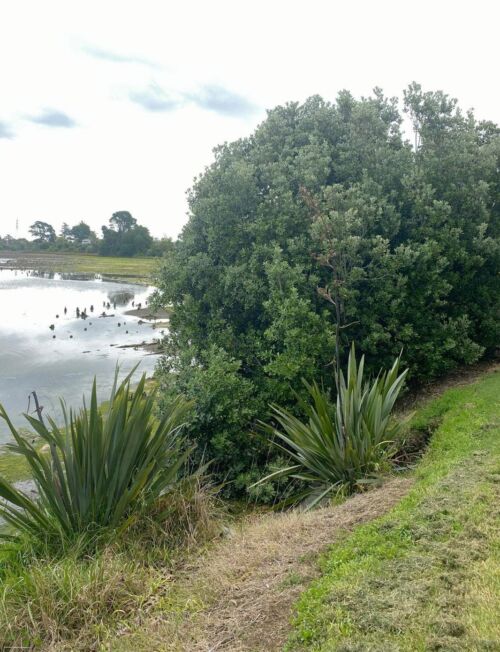
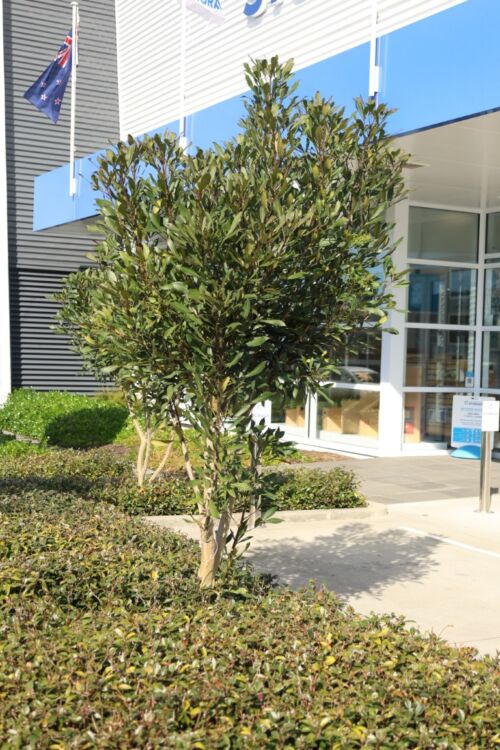
- Pittosporum crassifolium - Karo is a compact, evergreen tree native to New Zealand. Its bushy form and leathery dark green leaves, felted underneath, give it a lush appearance. In spring, it produces sweetly scented purple flowers, especially fragrant during calm mornings or evenings. After flowering, it forms seed capsules that attract and feed native and other small birds. Karo is easily trimmed into a tidy hedge or left to grow as a hardy screen, either trimmed or natural. It thrives in full sun and well-drained soil. Once established, it tolerates dry conditions, coastal exposure, and strong winds—making it ideal for challenging sites. This very hardy tree typically grows to around 6 metres tall and 4 metres wide, making it ideal for gardens needing structure and resilience.
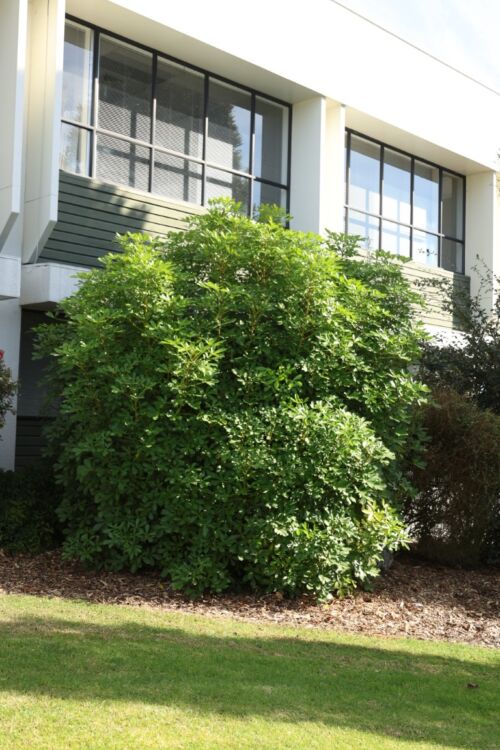
- Pittosporum crassifolium ‘Green Lustre’ is a hardy, evergreen tree native to New Zealand. Closely related to the standard Karo, it differs in that it features glossy green leaves on top with a soft, felted underside. This compact tree adds texture and depth to any garden. In spring, it blooms with sweetly scented purple flowers. These are especially fragrant during still mornings or calm evenings, adding charm to outdoor spaces. It thrives in full sun and well-drained soil. Once established, it tolerates dry conditions and handles windy sites and coastal exposure. Whether trimmed into a neat hedge or left to grow naturally, it forms a dense screen. Typically, it reaches around 6 metres tall and 4 metres wide.
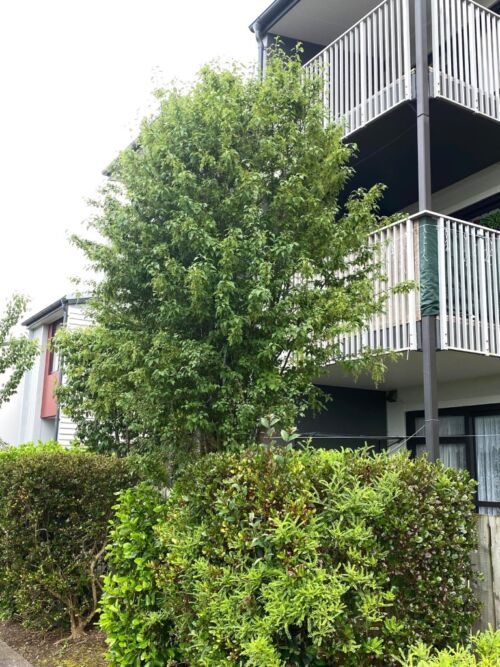
- Pittosporum eugenioides – Lemonwood, also known as Tatara, is a moderately fast-growing evergreen tree native to New Zealand. It naturally forms a bushy, pyramidal shape, making it a striking addition to any landscape. Its large green leaves release a refreshing lemon scent when crushed. In spring, clusters of small white-cream flowers bloom with a fragrant aroma. These are followed by black seed capsules that attract native and seed-loving birds. This tree thrives in full sun and prefers free-draining soil. Once established, it tolerates moderately windy conditions. Ideal for medium sized hedging or larger screening, Lemonwood responds beautifully to trimming. It typically grows to around 6 metres tall and 4 metres wide, offering both height and density.
- Pittosporum pimeleoides is a rare, native evergreen shrub of New Zealand and is considered nationally endangered. With its much-branched, low-growing form, it features very tiny, narrow, often whorled leaves. This distinctive shrub produces fragrant, red-striped yellow flowers, followed by capsules containing black, sticky seeds in bright orange pith. Endemic to the northern North Island, it naturally thrives in coastal shrubland and is often associated with kauri forest habitats. Growing to around 80-1.0m metres tall, Pittosporum pimeleoides prefers well-drained soil as it struggles in heavy, wet clay. However, it adapts well to both high-light and shaded conditions. Its rarity and winter fragrance makes it a perfect talking point in any garden but is well suited for smaller gardens or pots.
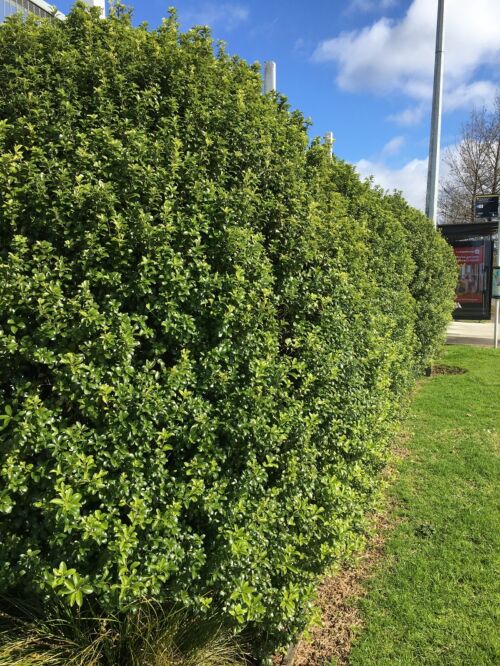
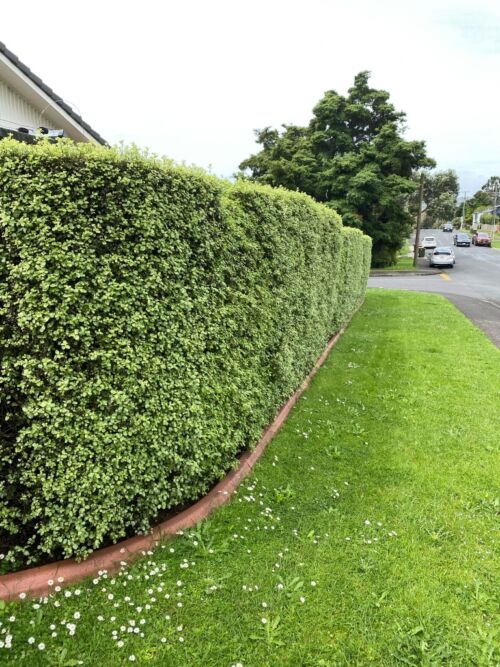
- Pittosporum tenuifolium – Kohuhu is an evergreen tree native to New Zealand. It is the parent plant of many popular cultivars, which have developed from the natural variation found in seed‑grown plants. Within the tenuifolium family, foliage varies widely. Leaves range from deep green to softly variegated or glaucous tones, with both long and short forms. Because of this diversity, many cutting‑grown cultivars have emerged over time. As a tree, Kohuhu grows quickly and develops a dense, rounded habit. It prefers full sun and moist, well‑drained soil. Furthermore, it trims easily, making it ideal for larger screens or compact hedges. In spring, it produces small purple flowers with a sweet fragrance, especially noticeable on still mornings or evenings. Ultimately, Pittosporum tenuifolium reaches approximately 5 × 3 metres.
-
- Description
Compact bushy small tree with an excellent rounded habit. Leaves lettuce green small and fresh-looking. Small purple flowers are fragrant in the stillness or morning or evening. Full sun dry tolerant once established. Trims well so ideal as a hedge planted in rows or individually as a specimen or left to grow on as a trimmed screen. Ideal in a smaller garden. Height x Width 3 x 3 Range Small 1-5m Growth Rate Moderate Plant Type Tree Shape Round Country of Origin New Zealand Similar to Consider Other Pittosporums - Leaf
Leaf Colour Green Lime - Flower
Flower Colour Red Purple Fragrant? No - Uses
Screening Yes Hedging Yes Bird Feeding Yes Small Garden Yes Note: Growth, height and grade information are given in good faith but are subject to natural variables beyond our control. - Pittosporum tenuifolium ‘Wrinkle Blue’ – Kohuhu, is an evergreen tree native to New Zealand. Compact and fast-growing, it naturally forms a pyramidal shape, making it ideal for structured landscapes. Its wavy, green-blue leaves add texture and colour year-round. In spring, purple flowers bloom, releasing a sweet fragrance during early mornings and evenings. This tree thrives in moist, well-drained soil and prefers a sunny position. When regularly trimmed, it makes an excellent hedge. Typically, it grows to approximately 4 metres tall and 3 metres wide. Interestingly, tenuifolium translates to “with slender leaves,” reflecting its elegant foliage
- Plagianthus regius – Manatu or Ribbonwood is one of the few deciduous trees native to New Zealand. It begins life as a slender, columnar tree with tangled branches and small, green, toothed leaves. As it matures, the tree develops a rounded crown and its leaves enlarge, resembling those of a birch. Meanwhile, its bark becomes stringy and peels into ribbon-like strips—though peeling is harmful and should be avoided. In spring, masses of small yellow-green flowers blanket the tree, creating a soft glow that attracts nectar-feeding birds. This seasonal display adds charm and biodiversity to any garden. Ribbonwood thrives in full sun and prefers moist, well-drained soil. Growing to approximately 6 x 3 meters, it suits narrow spaces beautifully and adds vertical interest to compact landscapes. Endemic to New Zealand, this unique tree offers both ecological value and ornamental appeal..
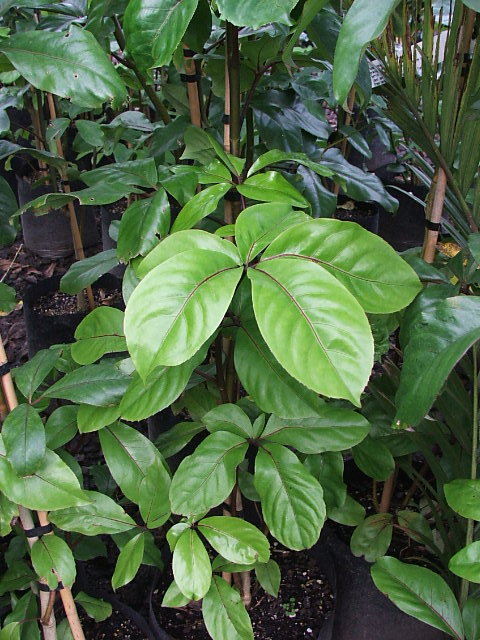
- Planchonella costata – Tawapou is a compact, round-spreading coastal tree native to New Zealand. Its glossy, leathery green leaves—pale underneath—add texture and contrast to any garden. In spring, delicate light green flowers appear, followed by 25mm fruit that ripens from green to purple-black by December. These fruits are a favourite of the New Zealand wood pigeon, enhancing local biodiversity. Tawapou can be trimmed into a shelter hedge, making it both functional and attractive. It also serves as an excellent small shade tree in coastal or urban settings. Typically growing to around 6 x 3 meters, it fits well in compact spaces. Interestingly, the name costata refers to the rib-like veins visible on its leaves.
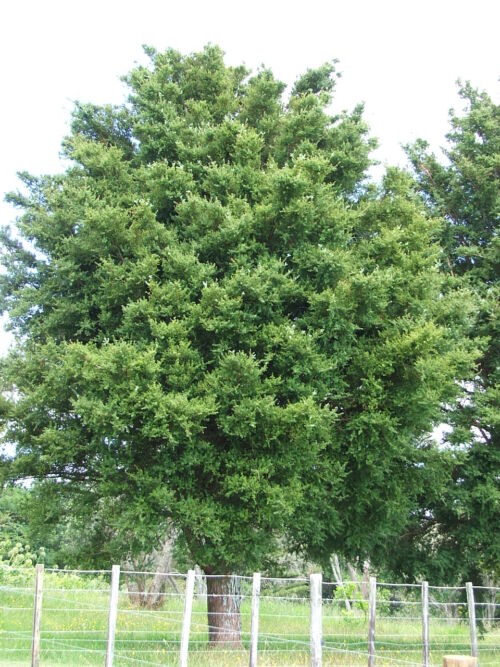
- Podocarpus totara, commonly known as Totara, is a large evergreen tree native to New Zealand. It’s well-suited to spacious landscapes and admired for its strong form and resilience. In its juvenile stage, Totara grows quickly with slender branches and bronze, needle-like foliage. As it matures, growth slows and the tree develops a denser, more branching habit. Eventually, it forms a broad, rounded crown with short, dark green foliage. The stout trunk features rough, reddish-brown bark, adding texture and character. Totara thrives in well-drained soil and, once established, tolerates dry conditions. It’s ideal as a stand-alone specimen, for screening, or clipped into a formal hedge. Under ideal conditions, Totara can reach 20–25 metres at full maturity. In about 10 years, expect growth of approximately 10 x 4 metres.
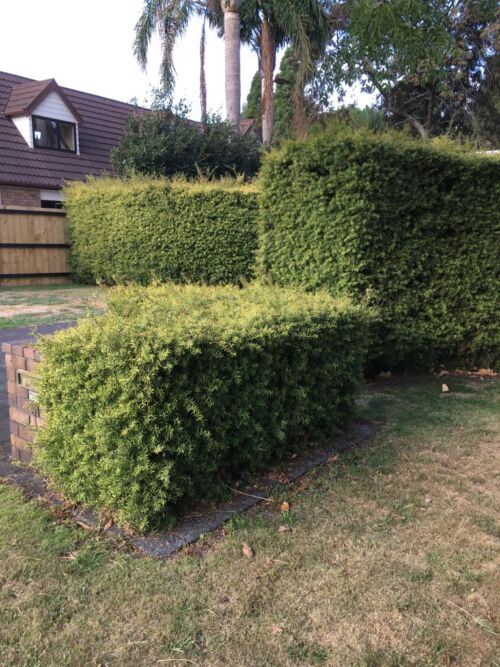
- Podocarpus totara 'Black Bridge', also known as Upright Totara, is a bushier and more upright form of the native NZ Totara. Unlike the standard Totara, it skips the thin juvenile stage and instead develops a dense, strong structure from an early age. As a result, it offers a robust and tidy appearance right from the start. With a moderate growth rate, this versatile tree is ideal as a stand-alone specimen in areas where space is limited. Alternatively, it can be easily trimmed into a compact hedge or allowed to grow on and shaped into a screen or shelter belt. Furthermore, once established, it tolerates drier conditions well—although it still prefers moist, well-drained soil for optimal health. Thanks to its hardiness and adaptability, 'Totora Black Bridge' is an excellent choice for a wide range of garden styles. Ultimately, it reaches approximately 8 x 5 meters, making it a striking yet manageable feature in any landscape.
-
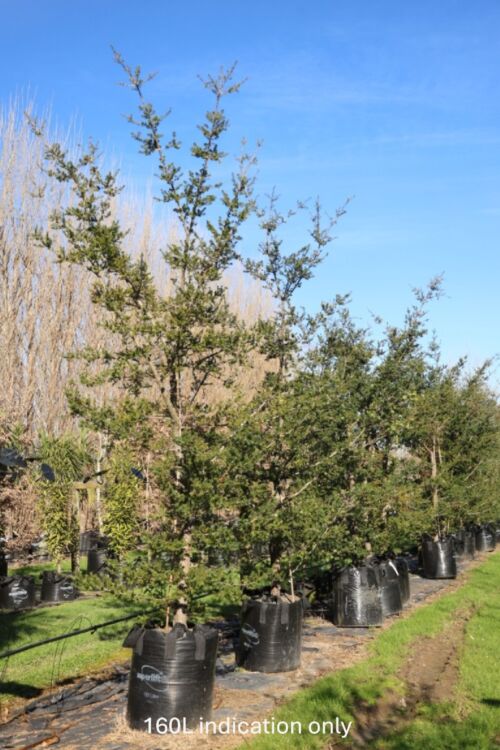
- Podocarpus totara ‘Matapouri Blue’ – Blue Totara is a distinctive New Zealand native Totara with a more upright, open pyramidal form. Its striking blue-grey, needle-like foliage adds unique colour and texture to any landscape. This slow-growing evergreen prefers full sun and moist, well-drained soil. It’s hardy and adaptable, making it suitable for a range of garden styles and conditions. Ideal as a specimen tree, it can also be trimmed into a hedge or left to grow as a natural screen. Its elegant structure offers year-round interest. In optimal conditions, Blue Totara can reach approximately 7 x 5 metres at maturity.
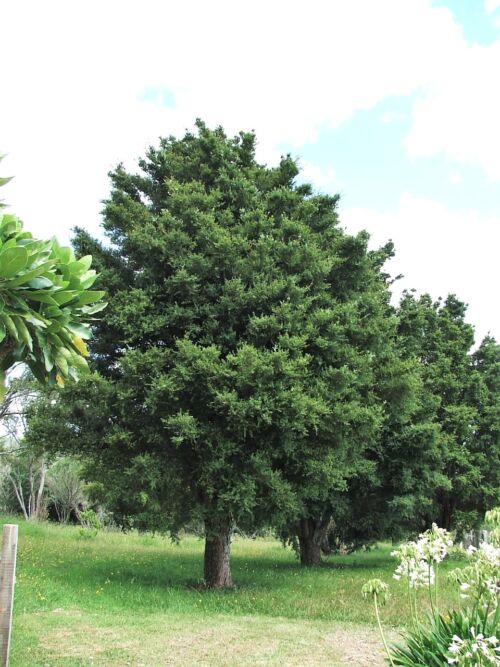
- Podocarpus totara ‘Ardmore Green’ is a strong, sturdy evergreen native to New Zealand. From an early age, it displays dense, dark green foliage, closely resembling the mature Totara tree. It thrives in full sun and prefers moist, well-drained soil. Thanks to its tolerance for wind and coastal conditions, it suits a wide range of garden environments. With slow, steady growth, ‘Ardmore Green’ is easy to manage in gardens of any size. Its compact nature makes it ideal for structured planting. Use it as a stand-alone specimen, for avenues, or as a large screen or shelter. When trimmed, it forms a robust hedge with a Yew-like appearance. In ideal conditions, it can reach approximately 7 x 5 metres at maturity.
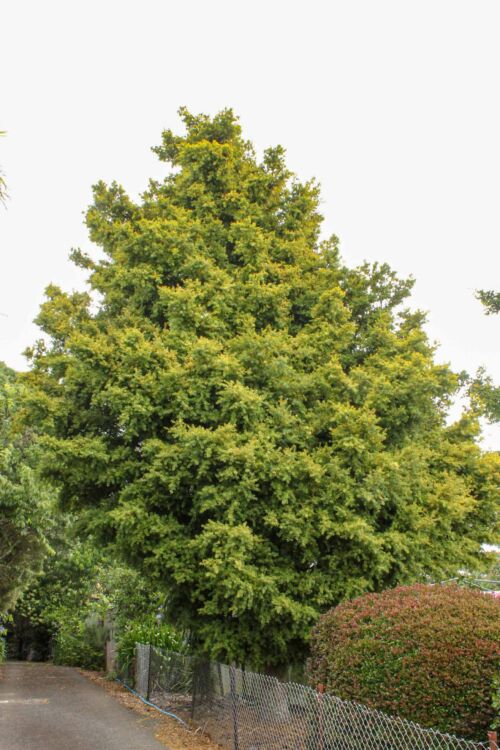
- Podocarpus totara ‘Aurea’ – Golden Totara, is a striking evergreen tree native to New Zealand. Closely resembling its parent species, it stands out with rich golden foliage when grown in full sun. From a young age, it forms a bushy, compact shape that adds texture and colour to any landscape. It prefers moist, well-drained soil and should not be planted in wet areas. This hardy tree tolerates wind and coastal conditions, making it suitable for exposed sites. Its slow growth allows for easy maintenance in gardens of all sizes. Golden Totara can be trimmed to shape and works beautifully as a hedge, screen, or larger shelter. In ideal conditions, it reaches approximately 10 x 6 metres at maturity.
- Pseudopanax ‘Cyril Watson’ is an evergreen shrub native to New Zealand. This unusual cultivar stands out with glossy tropical leaves shaped like a duck’s foot, adding a distinct touch to any garden. Moreover, its compact, bushy habit makes it highly popular. Gardeners often use it as a neatly trimmed hedge or clip it into a larger screen, creating structure and style with ease. In addition, Pseudopanax ‘Cyril Watson’ prefers fertile, moist, and well-drained soil. It thrives in full sun to partial shade, while tolerating coastal conditions and moderate frost once established. It was first discovered by Cyril Watson in 1965 on the slopes of Mt. Taranaki in the North Island of New Zealand. The plant was named in honour of Watson, who was a renowned botanist and naturalist. Growing to approximately 3 x 2 metres, it offers both resilience and beauty
- Pseudopanax ‘Sabre’ is a striking evergreen tree native to New Zealand. It grows at a reasonably fast pace and showcases long, leathery, lance-shaped leaves in deep green, with a yellow orange mid rib —hence the name ‘Sabre’. Although similar to P. crassifolium, this variety grows faster and features wider, thicker foliage. As a result, it offers a bolder presence in the garden while remaining easy to manage. It thrives in most soil types and adapts well to both full sun and semi-shade. Moreover, its resilience makes it an excellent choice for coastal gardens and exposed sites. Over time, ‘Sabre’ matures into a more open habit. However, you can easily trim it to maintain shape and height, making it ideal for smaller gardens. It typically reaches around 4 x 3 metres at maturity.
- Pseudopanax ferox – Savage Lancewood (Horoeka) is an unusual New Zealand native, closely resembling Pseudopanax crassifolium. In its juvenile stage, it grows with a single thin stem and long, slender pale grey-brown leaves. These leaves feature distinctive saw-like teeth along the edges, giving the plant a striking appearance. After 10–15 years, the tree reaches maturity. At this stage, the leaves become shorter, wider, and dark green. Its form changes into a more typical tree shape, with spreading branches that build a rounded crown. In ideal conditions, Savage Lancewood can reach around 6 metres in height with a trunk up to 25 cm in diameter. The mature trunk develops distinctive vertical grooves, sometimes twisting slightly, adding further character. This species prefers well-drained soil and tolerates drier conditions once established. It grows best in full sun, slowly reaching approximately 6 x 1 metres over many years. Perfect as a statement specimen, it adds drama and uniqueness to any garden.
- Pseudopanax laetus – Large Leaf Five Finger. Native to New Zealand, Pseudopanax laetus is a striking evergreen shrub. It features a rounded, spreading form with deep green, glossy leaves made up of 5–7 broad oval leaflets. Notably, its foliage is the largest among the pseudopanax family. As it matures, this plant quickly becomes a bushy, multi-branched specimen. In spring, clusters of tiny white flowers appear, later developing into purple seeds that attract native birds. Although tolerant of most soil types, it thrives best with consistent moisture. Thanks to its fast growth, it’s ideal as a background or screening plant and can also be trimmed to a desired height. Alternatively, let it grow into a small shade tree. Expect it to reach approximately 5 metres high and 3 metres wide, making it a bold addition to any garden.
- Pseudopanax lessonii – Houpara is an evergreen New Zealand native that grows as a multi-branched shrub or small tree. Fast-growing, it features fleshy, palmate-shaped dark green leaves with three to five leaflets, creating a lush and tropical look. From December to February, small green flowers appear, followed by dark purple fleshy fruit. These fruits attract birds, adding life and movement to the garden throughout the year. Houpara can be left to grow as a small shade tree. Alternatively, it trims well into a hedge or can be clipped to form a larger screen, offering versatility in garden design. This hardy species is ideal for coastal gardens as it withstands salt-laden winds. It prefers moist, well-drained soil in full sun or partial shade and tolerates clay soils, though not waterlogged conditions. Growing to approximately 4 x 2.5 metres, Houpara makes an excellent choice for structured planting and year-round greenery.
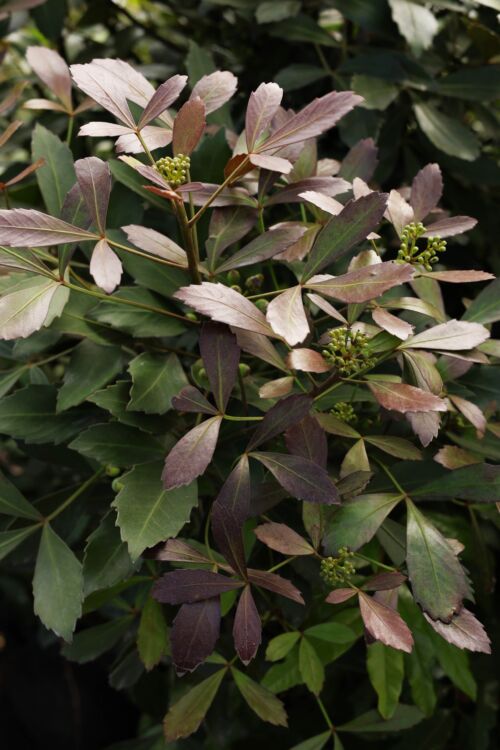
- Pseudopanax lessonii ‘Purpurea’ is a fast-growing evergreen shrub or small tree native to New Zealand. Multi-branched and compact, it features fleshy, palmate leaves in striking dark purple-red tones with three to five leaflets. From December to February, small green flowers appear, followed by dark purple fleshy fruit. These fruits attract birds, adding seasonal interest and wildlife appeal to the garden. This variety prefers moist, well-drained soil but will not tolerate waterlogging. For the best colour, plant in full sun where its foliage shines most vividly. ‘Purpurea’ can be left to grow as a small shade tree. Alternatively, it trims well into a compact hedge or can be clipped to form a larger bushy screen, offering flexibility in garden design. Ideal for coastal gardens, it withstands salt-laden winds and thrives in exposed conditions. Growing to approximately 4 x 2.5 metres, it provides structure, colour, and resilience year-round.