Dry Tolerant Trees
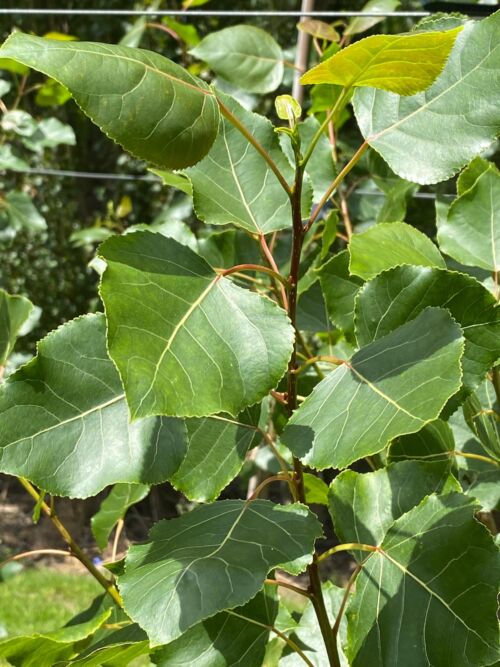
- Populus 'Tasman' - Tasman poplar, is a bold and fast-growing deciduous tree with a broadly columnar shape. During summer, its lush green foliage creates a vibrant canopy. Then, as autumn arrives, the leaves turn a brilliant golden yellow—often earlier than other poplar varieties. Not only visually striking, this tree is also highly functional. It performs exceptionally well in erosion control, large shelter belts, and timber production, thanks to its sturdy form and rapid growth. Moreover, Poplar 'Tasman' thrives in windy and wet conditions, making it ideal for exposed or challenging sites. Its resilience adds long-term value to both rural and urban landscapes. Reaching approximately 20 x 15 metres or more, it offers impressive height and presence. Whether for practical use or aesthetic impact, this tree delivers reliable performance and natural beauty.
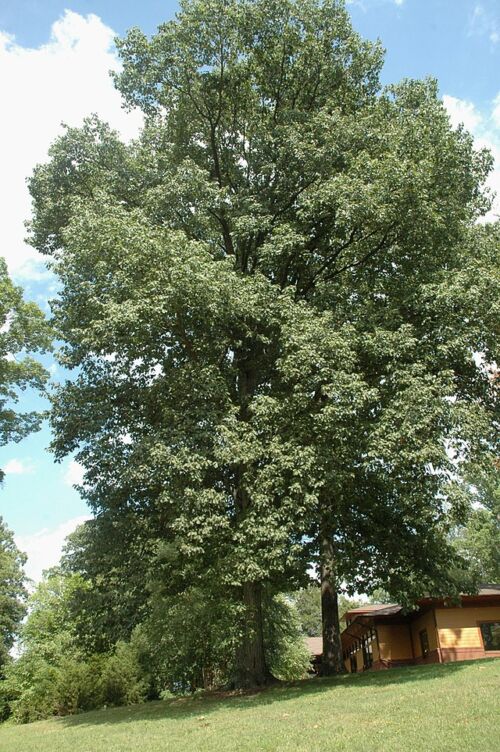
- Quercus rubra, commonly known as Northern Red Oak, is a deciduous tree native to North America. It forms a large, impressive specimen with broad, spreading branches. In spring, new leaves emerge a deep, rich red before turning vibrant green through summer.As autumn arrives, the foliage shifts to striking shades of dark red and orange. This tree thrives in full sun and grows best in deep, well‑drained, slightly acidic loam. However, it also adapts well to clay, sandy, and urban soils. Although tolerant of varied conditions, it prefers consistent moisture and dislikes prolonged flooding. Northern Red Oak makes an excellent specimen or shade tree for larger gardens, estates, parks, or reserves. It grows to approximately 10 × 7 metres in ten years and can eventually mature to around 20 metres.
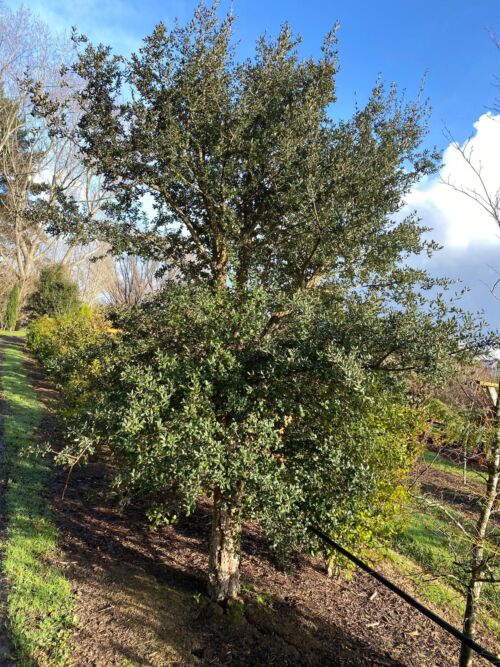
- Quercus suber, commonly known as Cork Oak, is a striking evergreen tree native to the Mediterranean region. It grows large with a short stem and wide-spreading canopy, making it a bold feature in any landscape. Notably, its thick, rugged bark is deeply fissured and harvested for cork production. This unique trait makes it both functional and visually captivating. The tree displays a gnarled, spreading habit with dark green, leathery leaves that reveal a grayish underside. As a result, it adds texture and contrast throughout the year. Thriving in warm, dry climates, Cork Oak prefers well-drained soils and shows excellent drought tolerance once established. It can reach over 15 metres at full maturity. Moreover, its dramatic form and historical use make it an excellent conversation piece. Interestingly, the Latin word suber translates to “cork bark.”
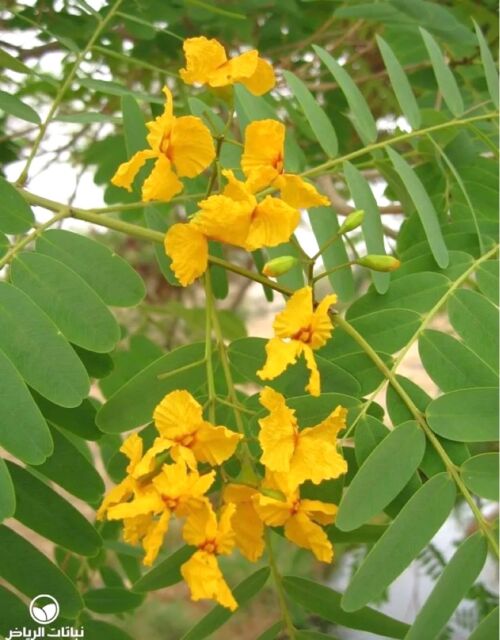
- Tipuana tipu, commonly known as Rosewood or Pride of Bolivia, is a fast‑growing evergreen tree with slender form and small, dark green, acacia‑like leaflets. It develops a broad, slightly flattened crown that offers excellent shade.In spring, the tree produces masses of bright yellow flowers with orange throats, followed by distinctive woody, winged seed pods. Native to Bolivia and South America, it thrives in full sun and remains evergreen in warmer climates. Rosewood prefers well‑draining, moderately fertile soil and adapts well to large landscape settings. Its timber is highly valued for fine furniture, musical instruments, and decorative pieces due to its durability and attractive grain. Reaching approximately 15 × 10 metres, it serves as an impressive shade tree for spacious gardens or parks.
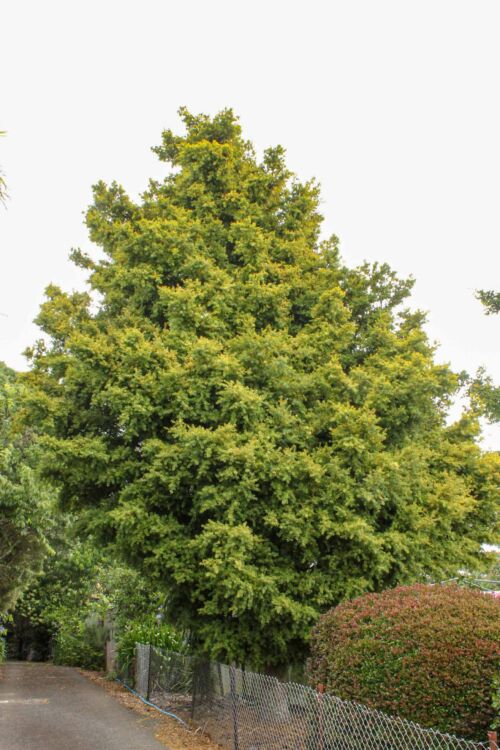
- Podocarpus totara ‘Aurea’ – Golden Totara, is a striking evergreen tree native to New Zealand. Closely resembling its parent species, it stands out with rich golden foliage when grown in full sun. From a young age, it forms a bushy, compact shape that adds texture and colour to any landscape. It prefers moist, well-drained soil and should not be planted in wet areas. This hardy tree tolerates wind and coastal conditions, making it suitable for exposed sites. Its slow growth allows for easy maintenance in gardens of all sizes. Golden Totara can be trimmed to shape and works beautifully as a hedge, screen, or larger shelter. In ideal conditions, it reaches approximately 10 x 6 metres at maturity.
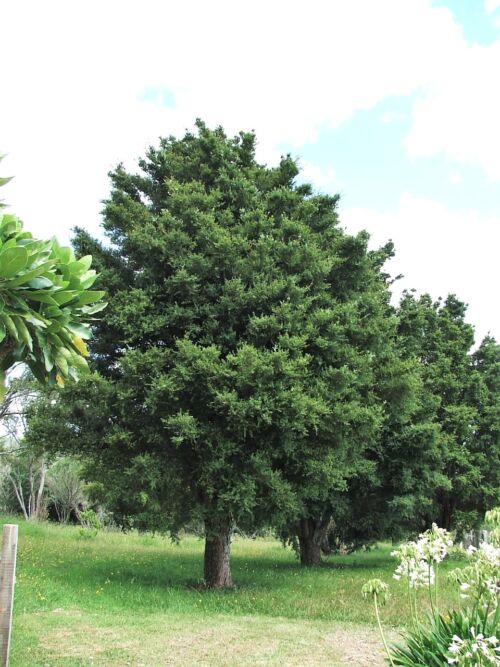
- Podocarpus totara ‘Ardmore Green’ is a strong, sturdy evergreen native to New Zealand. From an early age, it displays dense, dark green foliage, closely resembling the mature Totara tree. It thrives in full sun and prefers moist, well-drained soil. Thanks to its tolerance for wind and coastal conditions, it suits a wide range of garden environments. With slow, steady growth, ‘Ardmore Green’ is easy to manage in gardens of any size. Its compact nature makes it ideal for structured planting. Use it as a stand-alone specimen, for avenues, or as a large screen or shelter. When trimmed, it forms a robust hedge with a Yew-like appearance. In ideal conditions, it can reach approximately 7 x 5 metres at maturity.
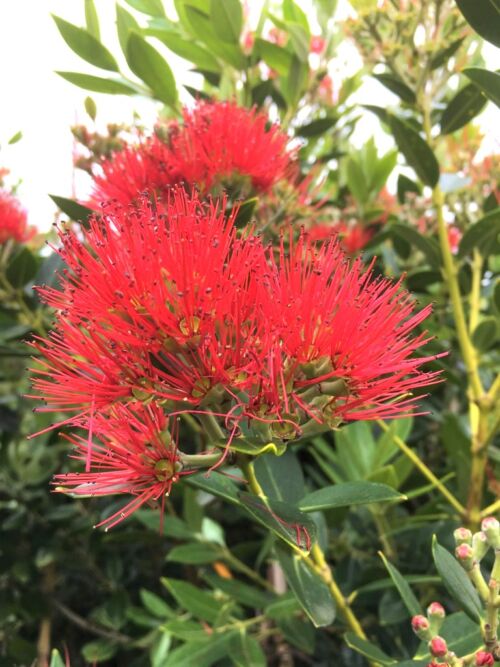
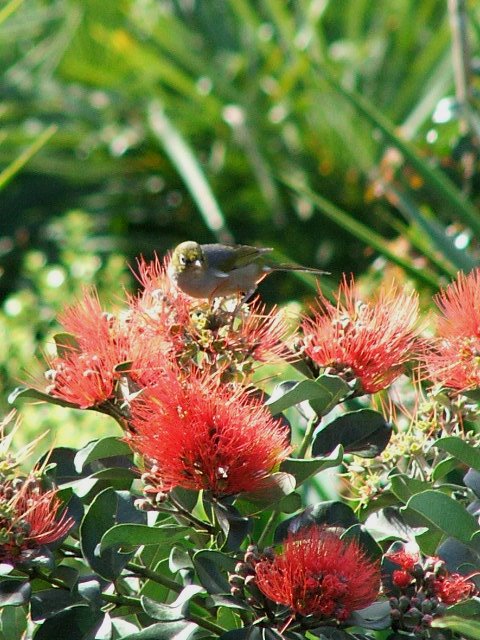
- Metrosideros excelsa 'Lighthouse' is a compact, upright evergreen tree discovered on Rangitoto Island in the Auckland region. Its green leaves feature striking silver-grey undersides, adding texture and contrast to the foliage. In December, vibrant red flowers burst into bloom, covering the entire tree. These blossoms not only dazzle but also produce seeds that attract and nourish small birds. Thriving in coastal environments, this Pohutukawa is impressively resilient. It tolerates poor soils, excess moisture, and even drought conditions with ease. Moreover, it withstands salt-laden winds and arid landscapes. While it adapts to clay and wet soils, it performs best in moist, well-drained earth. Ideal as an avenue or specimen tree, 'Lighthouse' grows to approximately 7 meters tall and 4 meters wide, making it a standout feature in any garden.
- Metrosideros excelsa ‘Long Bay’ – Pohutukawa is a striking evergreen New Zealand native tree. Originating from Long Bay on Auckland’s North Shore, it features fresh lime-green foliage on new growth, adding vibrant colour throughout the year. In late spring, ‘Long Bay’ bursts into brilliant red flowers that cover the tree in a spectacular display. These blooms are not only eye-catching but also provide an important food source for native birds, enhancing biodiversity. Moreover, Metrosideros excelsa flourish in coastal environments and show remarkable resilience. They endure poor soil conditions, excess moisture, and drought, while also withstanding harsh elements such as salt-laden winds and arid landscapes. Additionally, this variety tolerates clay and wet soils, though it thrives best in moist, well-drained earth. Growing to approximately 7 x 5 metres, it makes a beautiful coastal shade tree and a standout feature in any landscape.
- Metrosideros excelsa x umbellata ‘Maungapiko’ – Pohutukawa is an evergreen tree native to New Zealand. As a cross between Southern Rata and Pohutukawa, it develops a narrow, upright form with an open habit. Its slender, glossy dark‑green leaves create a striking contrast in any landscape. Bright crimson flowers appear in December and January, slightly later than most Pohutukawa varieties. This cultivar also tolerates frost better than others. Additionally, Maungapiko thrives in coastal conditions and withstand poor soils, drought, and salt‑laden winds. Although they cope with clay soils, these trees perform best in moist, well‑drained ground and full sun. Growing up to 8 metres tall and 3 metres wide, ‘Maungapiko’ makes a stunning feature for urban gardens, coastal settings, or cooler regions. Can also be used as a shelter belt.
- Metrosideros collina ‘Springfire’ (Pacific Island Pohutukawa) is a vigorous fast growing tree from the Pacific Islands, admired for its striking grey‑green foliage. As one of the earliest Pohutukawa to bloom, it bursts into vibrant orange‑red flowers that signal the arrival of Spring. This hardy tree tolerates clay soils and, once established, withstands dry conditions. Furthermore, it thrives in coastal and windy sites, making it a versatile choice for challenging environments. Its compact size suits smaller gardens, while regular trimming allows easy shaping into a colourful hedge. However, protect young plants from frost to ensure healthy growth and long‑term success. Growing to approximately 4m tall by 3m wide, ‘Springfire’ offers manageable proportions and year‑round appeal, combining resilience with striking seasonal beauty.
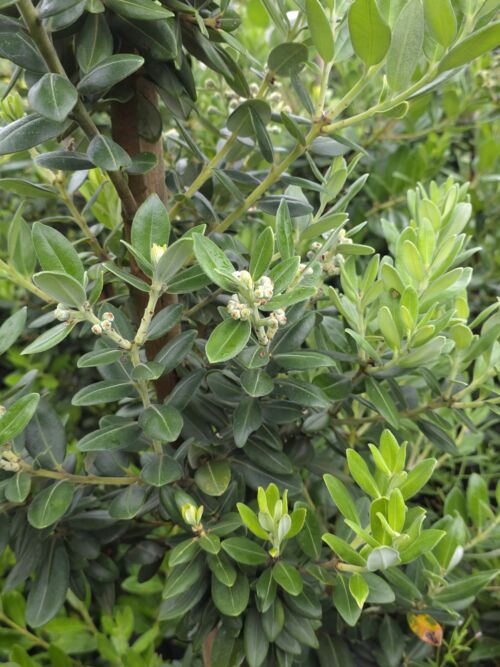
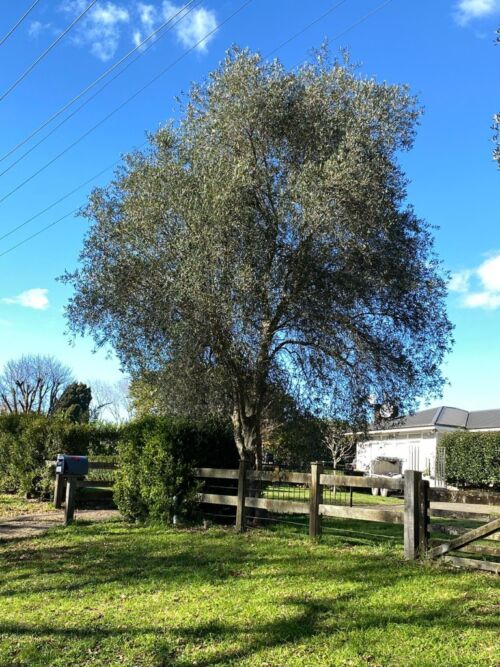
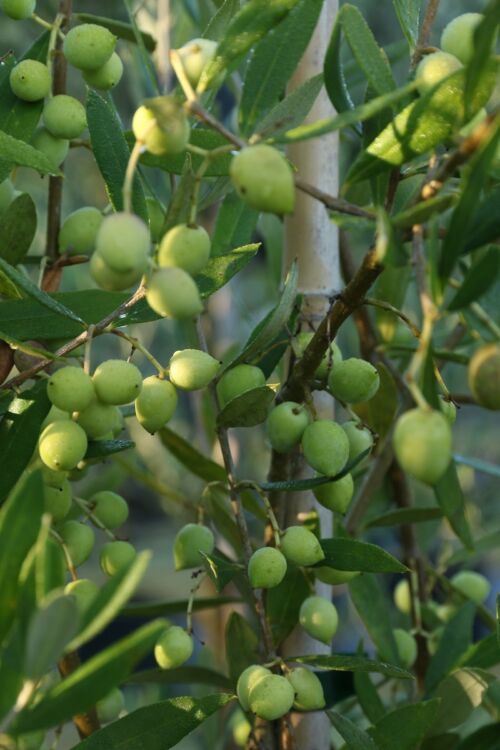
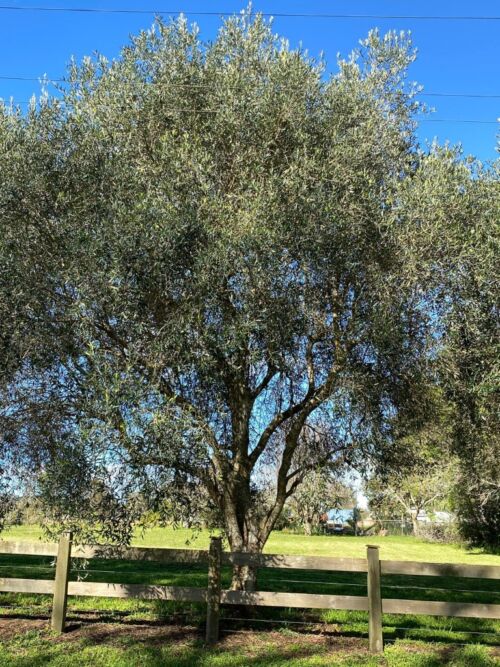
- Olea europaea ‘Ascolano’ is a rounded, moderately fast-growing evergreen with a bushy habit. It features silvery-green, leathery leaves and strong, rigid branches. This variety is well known for producing large, mild table olives, making it both ornamental and productive. Ascolano is suitable for hedging or screening and can also be left to grow as a specimen tree. When mature, it reaches approximately 6 x 3 metres, offering structure and beauty in the landscape. Originating from the Marche and Tuscany regions of Italy, Ascolano thrives in full sun and well-drained soil. Once established, it tolerates wind, coastal conditions, and dry spells, making it a hardy and versatile choice for gardens.
- Commercial oil Olive. Smaller leaves with dense habit. Small fruit produced in abundance with high oil content. Fruits from an early age. Will tolerate warmer climates. Being from the Mediterranean olive trees require full sun and will tolerate wind coastal and can also survive extended dry periods once established.
- Olea europaea ‘Verdale’ – Olive is an evergreen tree with a spreading, weeping form. Its long leaves show distinct green‑silver or grey‑green tones on top, while the undersides appear silvery grey. This gives the tree one of the most strikingly silvery canopies among olive varieties.Verdale originates from southern France. It is a traditional French cultivar valued for its large green olives, which are ideal for pickling. In addition, it produces a mild, fruity oil and is known for cropping reliably each season. This olive thrives in full sun and prefers moist, well‑drained soil. It also tolerates wind and coastal conditions. Once established, it can withstand extended dry periods, making it a hardy and versatile choice for many landscapes. Reaching around 5 metres, Verdale is used in commercial orchards. In residential gardens, it works beautifully as a shade tree that offers a dappled light.
- Gleditsia tricanthos ‘Inermis’, commonly known as Thornless Honey Locust, is a smart, spreading deciduous tree that makes an excellent shade choice. Its graceful form adds structure and beauty to any landscape. During summer, the tree is adorned with bright-green, fine-textured leaves. As autumn arrives, these leaves transition to a warm yellow, creating seasonal interest and vibrant contrast. Originating from the United States, ‘Inermis’ thrives in diverse soil conditions. It tolerates compacted, clay, poor-quality, and even drought-prone soils, making it highly adaptable. Furthermore, this tree withstands heat, salt, and harsh urban environments. As an added benefit, it also fixes nitrogen, improving soil health and resilience. Use Thornless Honey Locust as a specimen in a lawn, a recreational shade tree, or a reliable street tree. It grows to approximately 10m tall and 8m wide, yet it can be pruned to suit shape and height. Closely resembling Gleditsia ‘Shademaster’, this thornless variety offers versatility, durability, and elegance for modern landscapes.
- Gleditsia triacanthos ‘Skyline’, or Honey Locust, is an upright spreading tree with a compact branching structure. Its dense, finely divided foliage is deep green through summer, turning a striking golden yellow in autumn. This hardy tree tolerates a wide range of soils, including sandy, loamy, and heavy clay. It grows best in well-drained soil but adapts to very dry periods. With full sun, it thrives in wind, coastal, and heat-exposed sites. Reaching approximately 6 x 4 metres, Honey Locust makes an excellent specimen, shade, or livestock shade tree. (ASPCA Ok - recommend own peace of mind research) Its resilience and adaptability ensure reliable performance across diverse conditions.
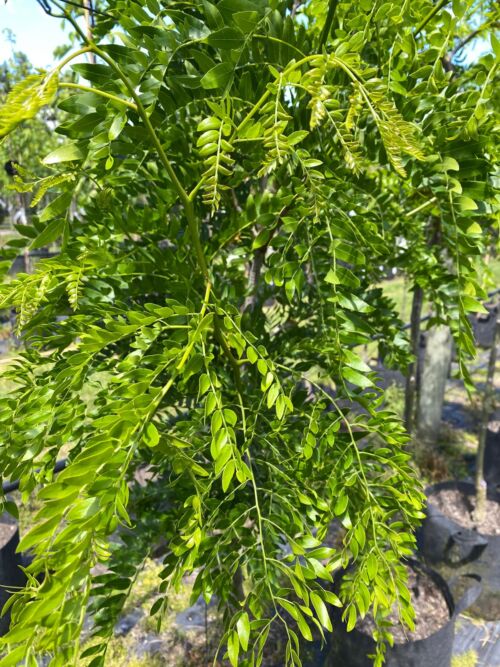
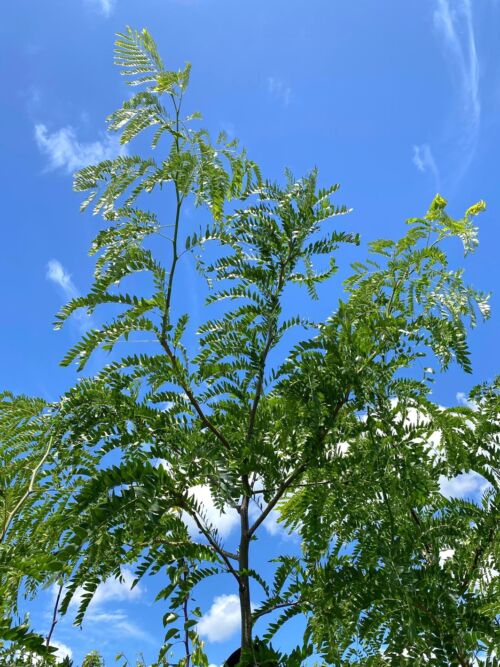
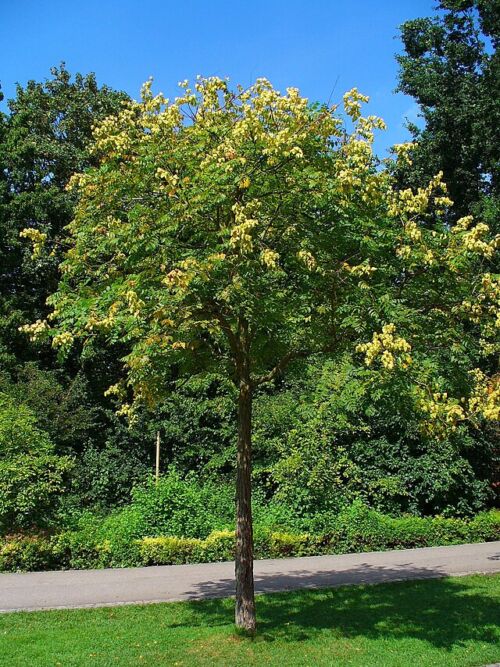
- Koelreuteria paniculata, known as the Golden Rain Tree, is a medium‑sized deciduous tree with a broad, spreading canopy. Its long pinnate leaves emerge pinkish in spring, mature to green in summer, and turn a brilliant yellow in autumn. In early summer, elongated panicles of golden‑yellow flowers appear, creating a magnificent display. With origins in China, Korea, and Japan, this tree is hardy once established, tolerating heat, drought, and urban conditions with ease. Highly adaptable, the Golden Rain Tree grows in clay, loam, or sandy soils. Moreover, it can thrive even in nutritionally poor soils, although it will not tolerate waterlogged ground. Compact yet striking, it grows to approximately 5m tall by 4m wide, making it a standout specimen for smaller gardens or feature plantings.
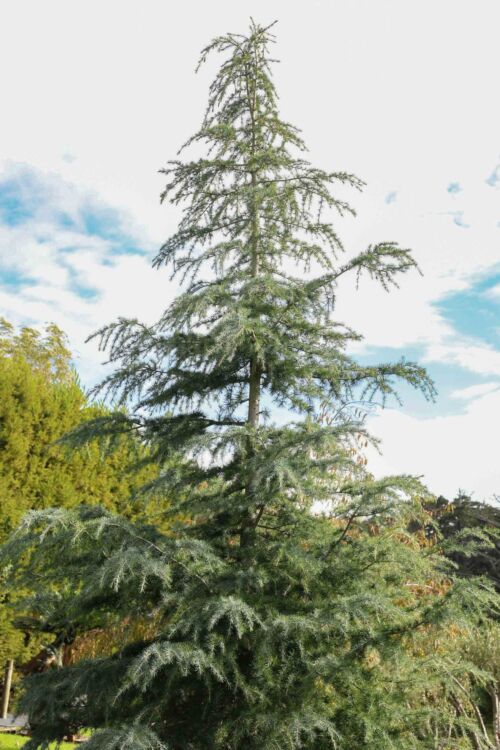
- A distinctly upright pyramidal tree, with evenly spaced weeping branches in layers. Slender needle like leaves are blue grey. An excellent specimen tree.
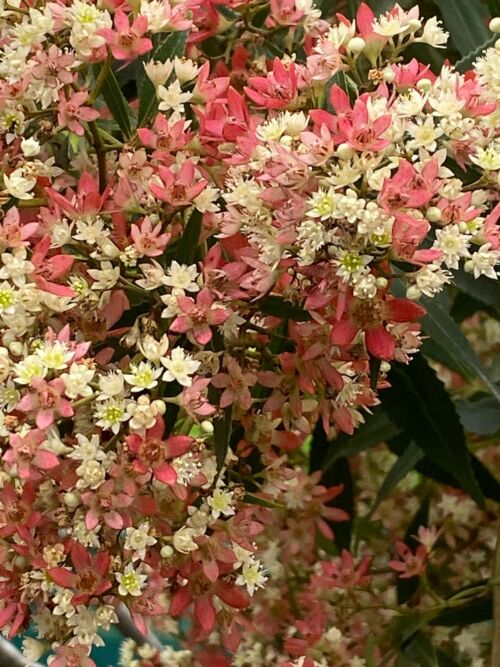
- Ceratopetalum gummiferum, known as the New South Wales Christmas Bush, is a small evergreen tree native to Australia. Its narrow leaves emerge pinkish-bronze before maturing to dark green, creating year-round interest in the garden. In summer, clusters of small white flowers in creamy bracts transform into vivid red-pink, completely covering the tree. This spectacular display occurs around Christmas, making it a highly popular choice. This is where the common name comes from...New South Wales Christmas Bush It thrives in full sun and prefers moist, well-drained soil, yet tolerates drier conditions once established. Growing to approximately 5 × 3 metres, it can be trimmed easily and works beautifully as a large screen or feature plant.
- Dodonaea viscosa ‘Purpurea’ – Purple Akeake is a tough, upright native New Zealand tree with bold, glossy purple-red foliage that deepens in colour during the cooler months. In summer, it puts on a show with unusual light red to purple papery flower clusters that add a rugged splash of contrast. Over time, Purple Akeake spreads out, making it a good choice for privacy screening or adding colour into compact garden spaces. It handles a wide range of soil types, salt spray, wind, and drought once established—but thrives best in moist, well-drained soil. Trim regularly to maintain a dense, bushy form. The name viscosa refers to the sticky texture of its seeds. Grows to approximately 3.5m high x 2.0m wide.
- Callistemon ‘Kings Park Special’ is a vigorous, evergreen small tree native to Australia. Its long, narrow green leaves decorate slightly pendulous branches, creating a graceful form in the garden. Furthermore, masses of red, fluffy, bottlebrush flowers with golden anthers bloom in spring and autumn. These vibrant flowers provide abundant nectar, attracting bees and birds while adding seasonal colour. In addition, this hardy tree tolerates poor dry soils once established, as well as clay, coastal, and windy conditions. However, avoid wet or poorly drained sites. Best grown in full sun, it reaches approximately 3m high and 2m wide if left untrimmed but trimmed also makes an excellent screen or hedge.