Dry Tolerant Trees
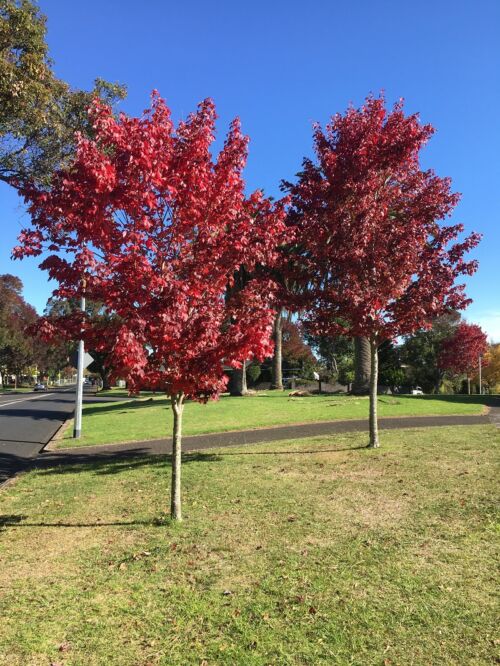
- Acer freemanii ‘Jeffers Red’ – Freeman Maple is a fast-growing, upright, deciduous tree featuring strong ascending branches and a dense, broad-oval crown. Its rich green summer foliage transforms into brilliant red in autumn, creating a stunning seasonal display. It thrives in moist, well-drained soil but adapts to clay, poor, wet, or dry conditions. More wind-tolerant than other maples. Ideal as a specimen or avenue tree, it reaches approximately 10m tall by 5m wide.
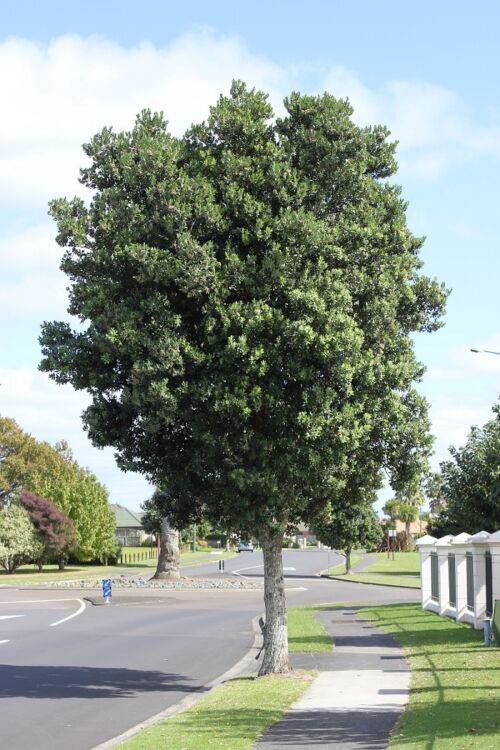
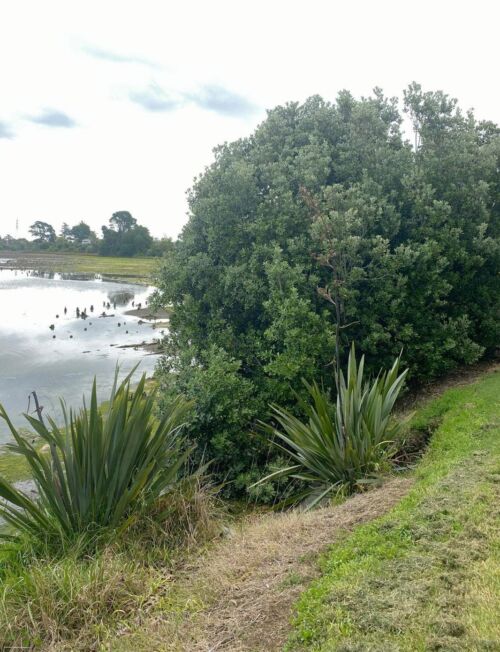
- Corynocarpus laevigatus – Karaka is a dense, evergreen tree native to New Zealand. Its lush, glossy green foliage creates a bold, tropical impression—perfect for adding instant visual appeal to gardens and landscapes. Flowering in late winter to spring, it produces delicate green-cream clusters. By summer, vibrant orange berry-like fruits emerge, attracting native kererū, who help disperse the seeds. Exceptionally hardy, Karaka withstands strong winds, coastal exposure, and drought. However, it dislikes waterlogged soils. Ideal as a privacy screen or shade canopy, this tree grows to approximately 15–20 metres tall and 8 metres wide.
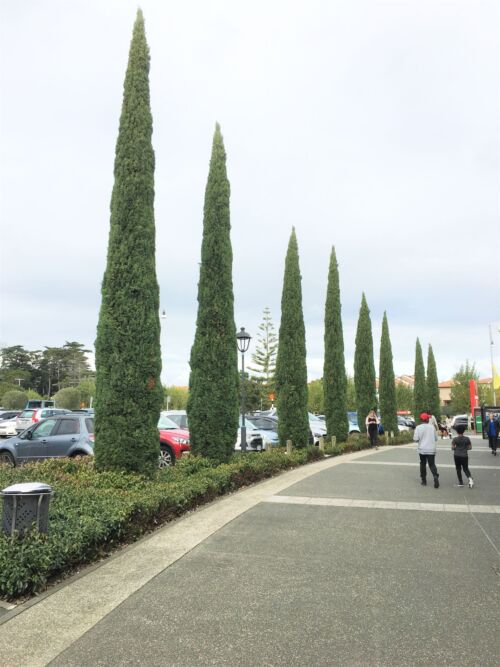
- Cupressus sempervirens 'Totem', commonly known as Totem Cypress, is a tightly upright-growing conifer with striking bluish-green foliage. Notably, these trees are iconic in Italy—especially throughout Tuscany—where they define the landscape and grace Renaissance gardens with timeless elegance. Thanks to their slender, vertical form, Totem Cypresses create bold architectural accents that elevate formal landscapes. Moreover, this cutting-grown cultivar ensures a consistently narrow columnar shape and even growth rate, making it a reliable choice for symmetry and structure. Unlike other varieties, its foliage remains dense and intact, resisting the tendency to “fall out.” Additionally, it offers improved resistance to fungal canker, making it a hardy option for challenging conditions. Often planted in rows as living pillars, it’s ideal for lining entranceways and avenues with a commanding presence. For optimal performance, Totem Cypress prefers drier soil and well-drained sites. Ultimately, it grows to approximately 10 meters tall and 2 meters wide delivering a bold, sculptural impact wherever it’s planted.
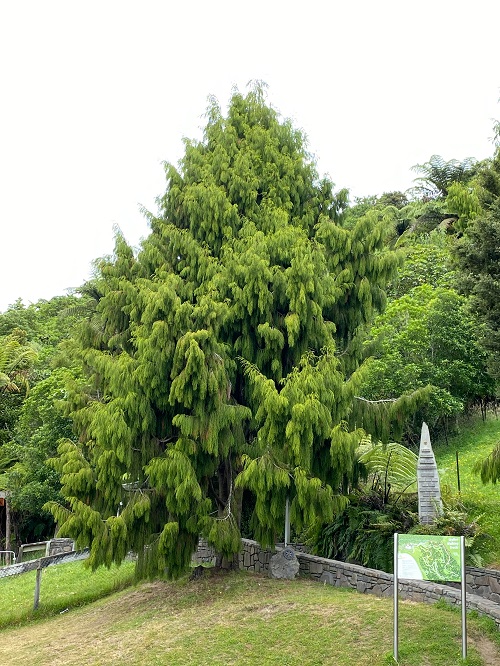
- Dacrydium cupressinum – Rimu, is and evergreen conifer native to New Zealand and is one of the most widespread and easily recognised forest trees in both the North and South Islands. With a slow to moderate growth rate, it develops into a commanding presence over time—ideal for both natural landscapes and structured garden settings. In its juvenile form, Rimu presents as a striking, pyramidal specimen with gracefully weeping branches and small, awl-shaped dark green leaves. As the tree matures, it broadens into a more upright form, shedding bark in thick, scaly plates that add rugged texture to its trunk. Thriving in cool, moist conditions, Rimu is well-suited to temperate gardens and native restoration projects. Within 10 years, it typically reaches around 10 metres in height and 4 metres in width. Given time, it can attain a majestic size of up to 25 metres tall and 9 metres wide. Whether planted for its ornamental value or ecological significance, Rimu stands as a bold and enduring symbol of New Zealand’s forest heritage.
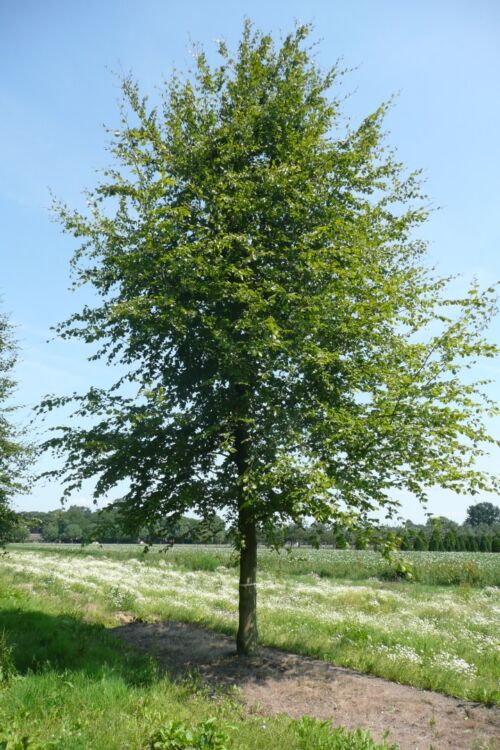
- Fagus sylvatica – English Beech is a handsome, deciduous tree with a naturally pyramidal shape. Originating from Southern Europe, it produces glossy green foliage in spring. When young, the leaves are covered with fine silken hairs, and they mature to golden yellows in autumn, creating a striking seasonal display. This tree thrives in well-draining loamy soil, especially when lime is present. It prefers a sunny position, where it grows vigorously and develops into an excellent lawn specimen or shade tree. English Beech reaches approximately 10 x 5 metres. However, it can also be trained into a large screen or woven together to form a formal hedge, offering versatility in landscape design. Interestingly, sylvatica is a Latin adjective meaning “of the woods” or “forest-dwelling.”.
- Fraxinus griffithii, commonly known as Evergreen Ash, is a fast-growing tree with a rounded form. Its dark green pinnate leaflets create lush foliage, while masses of small white fragrant flowers appear in large, loose panicles during spring, almost covering the entire tree. This hardy tree performs best in well-drained soil and becomes drought tolerant once established. However, avoid waterlogged areas to prevent root rot. Although evergreen, Evergreen Ash can become semi-deciduous in colder climates. It grows to around 6 x 4 metres, forming a beautiful shade tree for gardens and landscapes. The tree is easily clipped to maintain shape and height, making it versatile for design. Very hardy, it also thrives in industrial sites, carparks, and coastal areas, offering resilience and reliability in challenging conditions.
-
- Description
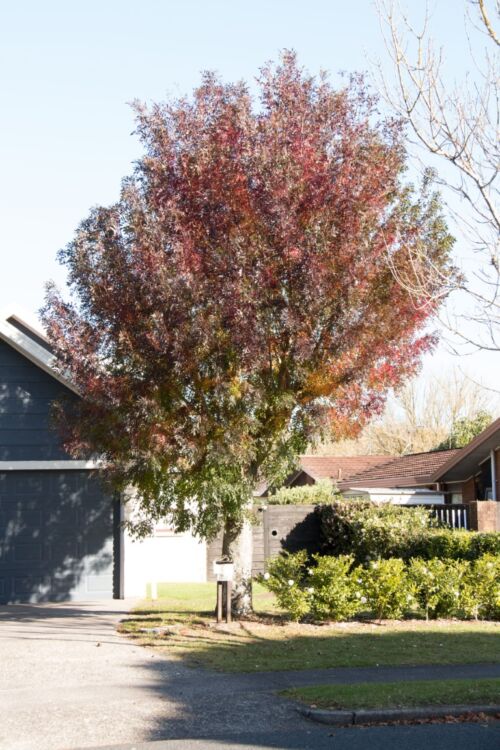
A distinct pyramidal form in its early years, matures to a large rounded, broad spreading tree. Green leaves in summer are narrow and serrated, and transform to a vibrant, deep red colour in autumn, earning it the name "Claret Ash" Hardy to a wide range of conditions. Excellent landscaping, street, specimen or shade tree. Height x Width 15 x 8 Height Range Tall 10+ Growth Rate Fast Plant Type Tree Shape / Habit Round Country of Origin Australia Similar to Consider Prunus Thundercloud, Fagus Riversii, Fagus Sylv Purp, Acer Tamuke Yama, Acer Bloodgood. - Leaf
Leaf Colour Green Deciduous Leaf Colour Red - Flower
Flower Nil - Uses
Specimen Yes Good Shade Tree? Yes Accent Yes Note: Growth, height and grade information are given in good faith but are subject to natural variables beyond our control. - Gleditsia triacanthos ‘Sunburst’ – Honey Locust is a deciduous tree with a neatly rounded crown and graceful weeping branches. Its lacy, double-pinnate foliage emerges lime-yellow in spring, deepens to fresh green in summer, and finally glows bright yellow in autumn, offering year-round interest. Successive flushes of new growth appear through summer, creating a striking contrast against older leaves. Native to North America, ‘Sunburst’ has become a popular choice for both residential and landscape plantings. This tree tolerates a wide range of soils, including clay, yet it thrives best in moist, well-drained conditions. For optimal growth, plant in full sun. Mature specimens typically reach around 6 metres high and 5 metres wide, making them excellent lawn, shade, or specimen trees.
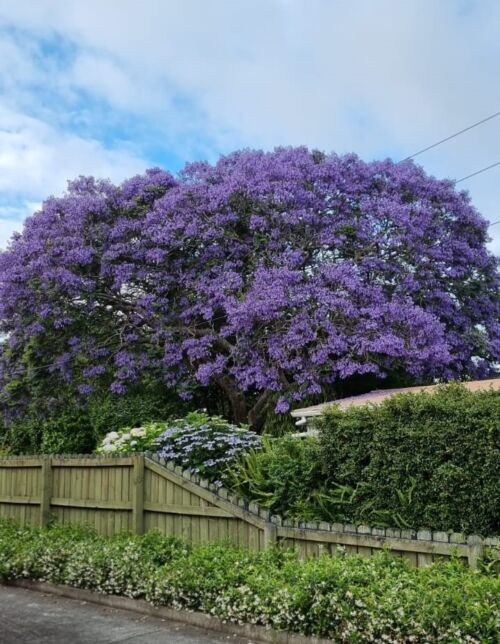
- Jacaranda mimosafolia - Jacaranda is a bold, fast-growing tree with a rugged, irregular crown and dynamic branches reaching outward, the Jacaranda instantly commands attention in any landscape. Although it is deciduous in all but the warmest climates, it still offers year-round visual interest thanks to its fine, feathery green foliage. As early summer arrives, its canopy transforms into a striking display, when soft purple blooms blanket the tree in breath taking colour. Not only does it provide beauty, but it also makes an excellent dappled shade tree. Native to south-central South America, this sub-tropical species thrives in sunny locations with moist, well-drained soil but will tolerate dryer once established. Typically, it grows to around 7 meters tall and 5 meters wide, making it a standout feature in gardens or larger landscapes.
- Kunzea ericoides, commonly known as Kanuka, is a tall, fast-growing New Zealand native tree with a broad, spreading crown. Because of its vigorous growth, it’s widely recognised and valued in native landscapes. Although its tiny needle-like leaves resemble Manuka, they feel noticeably softer to the touch. During summer, small white flowers blanket the tree, creating an almost snow-like effect that’s highly attractive to bees. Compared to Manuka, Kanuka grows larger and produces smaller seeds. Once established, it withstands windy coastal conditions and thrives in dry soils. Furthermore, it tolerates clay, though overly wet areas should be avoided. Extremely hardy, Kanuka reaches approximately 6 x 4 metres. As a result, it’s used extensively as a cover tree to protect newly planted native revegetation, offering both shelter and ecological support.
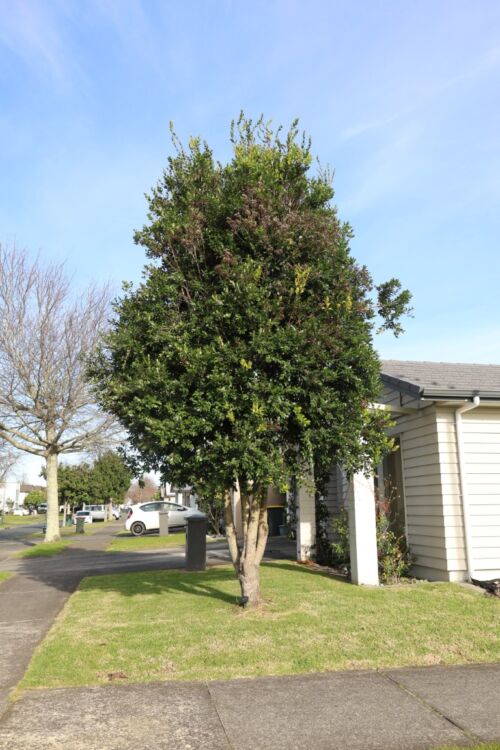
- Laurus nobilis – Bay Laurel is a compact evergreen tree native to the Mediterranean region. Its dark green, leathery leaves are highly aromatic and widely valued for culinary use. In spring, small yellow flowers appear, followed by clusters of dark berries that add seasonal interest. Bay Laurel can be easily trimmed to shape, making it ideal as a screen or hedge. Moreover, it performs beautifully as a standard or ornamental tree, offering versatility in both formal and informal garden designs. This tree prefers moist, well-drained soil, yet it will tolerate drier conditions once established. In addition, it withstands coastal and windy aspects, making it a resilient choice for challenging sites. Mature specimens typically reach around 5 metres high and 3 metres wide. Interestingly, the name nobilis reflects its impressive quality and noble reputation.
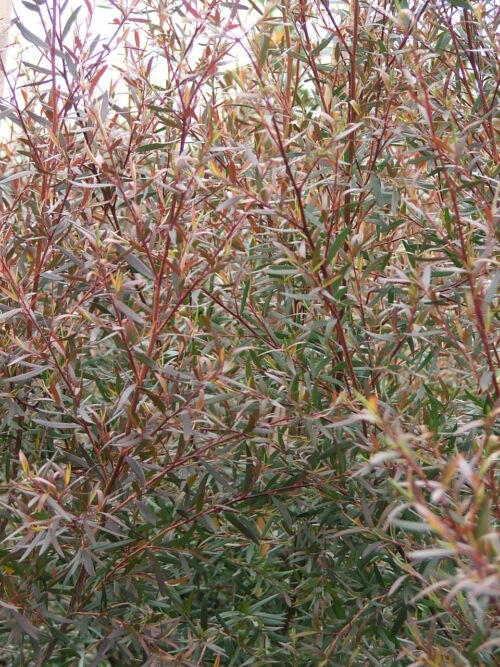
- Leptospermum nitidum ‘Coppersheen’ is a popular, fast-growing evergreen native to Tasmania. It is admired for its striking bronze-red foliage, red stems, and masses of white flowers that bloom profusely in summer, adding vibrant contrast to the garden. Easily trimmed, Coppersheen makes an excellent hedge or larger screen. When left to grow naturally, it reaches approximately 6 x 4 metres, forming a spreading tree with strong visual appeal. This hardy plant tolerates drought and coastal conditions. It grows best in full sun with moist, well-drained soil, making it a versatile choice for many landscapes.
- Leptospermum scoparium – Manuka or Tea Tree is a compact, native New Zealand tree known for its resilience and beauty. It’s ideal for gardens seeking year-round interest and biodiversity. Dark green foliage is narrow, lance-shaped and sharply pointed. From late autumn to early spring, the tree bursts into single or double flowers, offering a vibrant display and nectar for bees. These are followed by its berries, which resemble tiny hot cross buns. Manuka is also prized for its high-quality honey, making it a valuable addition to any landscape. Hardy and adaptable, Manuka tolerates clay soils and thrives in windy coastal areas or dry conditions once established. Avoid overly wet soils for best results. It typically grows to around 5 meters tall and 3 meters wide.
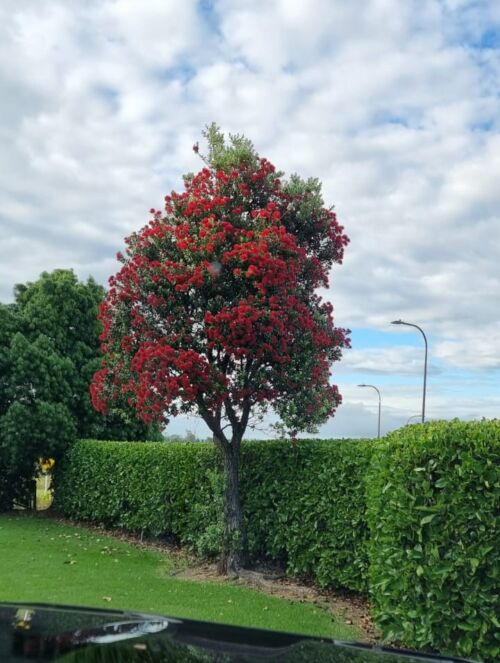
- Metrosideros excelsa 'Maori Princess' is a refined cultivar of the iconic Pohutukawa, selected for its upright, pyramidal growth habit. Its foliage is a distinctive deep green, offering a lush contrast to its vivid red flowers. Because of its compact form and neat structure, this tree is ideal for smaller gardens or urban landscapes. In addition, its tidy shape makes it easy to maintain and visually appealing year-round. In late spring, 'Maori Princess' produces brilliant red flowers that cover the tree in a spectacular display. These blooms are not only eye-catching but also serve as a valuable food source for native birds. Consequently, this tree adds both beauty and biodiversity to your garden. Growing to around 7 x 5 metres, it can be clipped to shape, making it suitable as a screen, hedge, or standout specimen. Metrosideros varieties, including 'Maori Princess', thrive in coastal environments and are impressively resilient. They tolerate poor soil, excess moisture, and even drought. Moreover, they withstand salt-laden winds and arid conditions, making them perfect for exposed sites. While they can grow in clay and wet soils, they perform best in moist, well-drained earth. Therefore, this cultivar is not only tough but also an excellent shade tree for compact outdoor spaces.
- Metrosideros excelsa 'Scarlet Pimpernel', commonly known as Pohutukawa, is a striking member of New Zealand’s iconic native tree family. This compact evergreen variety features a bushy growth habit and smaller leaves than traditional Pohutukawa, making it ideal for smaller gardens or urban landscapes. Also known as the New Zealand Christmas tree due to its prolific flowering in December when vibrant orange-red flowers bloom which attract bees, birds, and beneficial insects. Renowned for its resilience, 'Scarlet Pimpernel' thrives in coastal environments and tolerates poor soils, excess moisture, drought, and salt-laden winds. It also adapts well to clay and wet conditions, though it prefers moist, well-drained soil for optimal growth. Perfect as a shade tree or trimmed into a screen, this hardy native grows to approximately 4 metres tall and 2 metres wide. A beautiful, low-maintenance choice for coastal and urban planting.
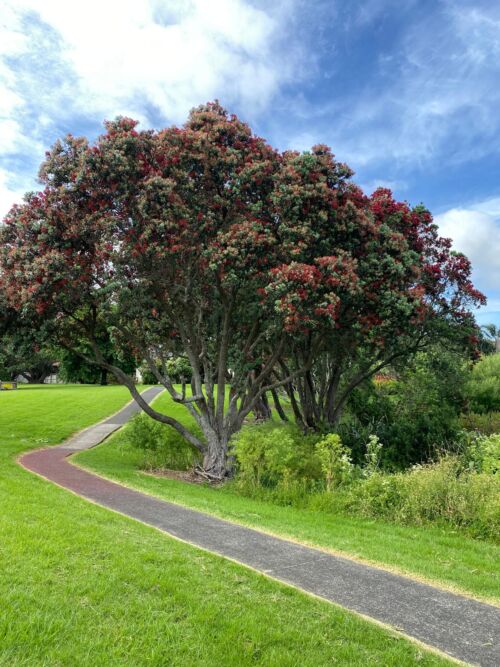
- Metrosideros excelsa, commonly known as Pohutukawa, is one of New Zealand’s most iconic native trees. Excelsa stands out as the giant of the species, with a wide-spreading canopy and olive-green foliage. From December, it bursts into bright crimson, fluffy flowers. For this reason it’s often called the New Zealand Christmas tree. Flowers also attract bees, birds, and beneficial insects. Thriving in coastal environments, Pohutukawa trees are incredibly resilient. They endure poor soil, excess moisture, and even drought. Moreover, they withstand salt-laden winds and dry, exposed landscapes. Their thick roots often anchor into cliff faces, showcasing their strength and adaptability. Pohutukawa prefers moist, well-drained earth, but will grow in a wide range of soils. With proper space, this majestic tree can grow up to 15 metres tall and 10 metres wide, making it a stunning feature in larger gardens or coastal settings.
- Metrosideros excelsa x robusta 'Mistral', commonly known as Pohutukawa, is a stunning native tree discovered on the Coromandel Peninsula, located on the north-western coast of New Zealand’s North Island. As a natural hybrid of Metrosideros excelsa and robusta, Mistral offers a more compact and upright form. Its fresh green foliage matures into a darker shade, creating year-round interest. Moreover, its tidy growth habit makes it ideal for smaller spaces. In late spring, Mistral bursts into deep scarlet red flowers that blanket the entire tree, creating a breathtaking display. Not only are these blooms visually striking, but they also attract native birds, adding ecological value to your garden. Growing to approximately 5 x 3 metres, this tree is easily clipped into shape. Therefore, it works beautifully as a screen, hedge, or standout specimen in compact landscapes. Metrosideros varieties thrive in coastal environments and are impressively resilient. They tolerate poor soils, excess moisture, and even drought conditions. Furthermore, they withstand salt-laden winds and arid climates, making them perfect for exposed sites. While they can grow in clay and wet soils, they perform best in moist, well-drained earth. As a result, Mistral is not only hardy but also an excellent shade tree for smaller gardens.
- Olea europaea, commonly known as the European olive, is a versatile and iconic tree traditionally found throughout the Mediterranean Basin. Although native to this region, it is now widely cultivated across the globe, including Australia, New Zealand, North and South America, and South Africa. Just a few of the many varieties include, Kalamata, Koroneiki, Ascolano, El Greco J5 Typically grown as a small tree, the olive is prized for its fruit, which is harvested for oil, eating, or both. Its adaptability and resilience make it a popular choice for a variety of climates and landscapes. Because it originates from the Mediterranean, Olea europaea thrives in full sun, tolerates coastal winds and extended dry periods once established. It performs well in warmer, sunny environments and is remarkably drought tolerant. In addition, it makes a beautiful lightly dappled shade tree. With a mature size of approximately 7 x 3 metres, it’s ideal for gardens, courtyards, or orchard-style plantings, bringing both ornamental charm and practical value.
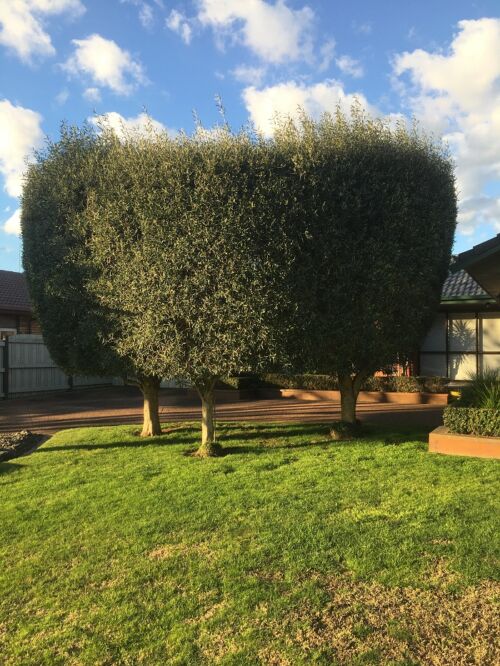
- Olea europaea ‘El Greco’ – Greek Olive is a compact evergreen olive known for its small green leaves and dense, tidy habit. Often used as a hedging olive, it may produce some fruit if left untrimmed, although this is not typical. This variety prefers moist, well‑drained soil but tolerates dry periods once established. Since it originates from the Mediterranean, it thrives in full sun and copes well with wind and coastal conditions. Because of its naturally dense, bushy form, ‘El Greco’ easily trims into neat low or tall hedges, making it ideal for smaller gardens. It grows to approximately 3 × 2 metres.
- Pittosporum crassifolium - Karo is a compact, evergreen tree native to New Zealand. Its bushy form and leathery dark green leaves, felted underneath, give it a lush appearance. In spring, it produces sweetly scented purple flowers, especially fragrant during calm mornings or evenings. After flowering, it forms seed capsules that attract and feed native and other small birds. Karo is easily trimmed into a tidy hedge or left to grow as a hardy screen, either trimmed or natural. It thrives in full sun and well-drained soil. Once established, it tolerates dry conditions, coastal exposure, and strong winds—making it ideal for challenging sites. This very hardy tree typically grows to around 6 metres tall and 4 metres wide, making it ideal for gardens needing structure and resilience.