Wind Tolerant Trees
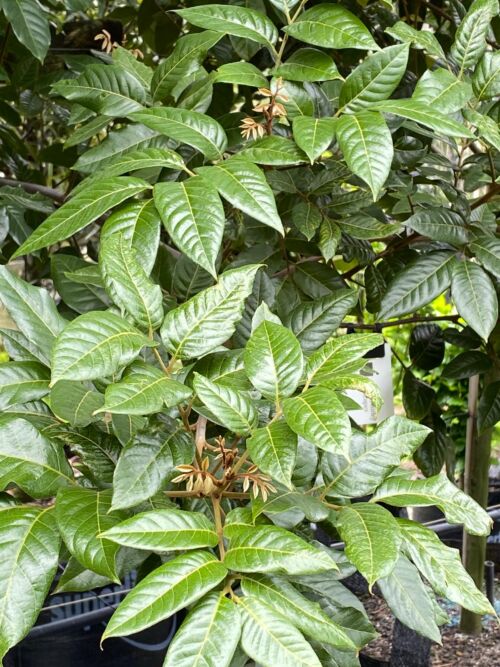
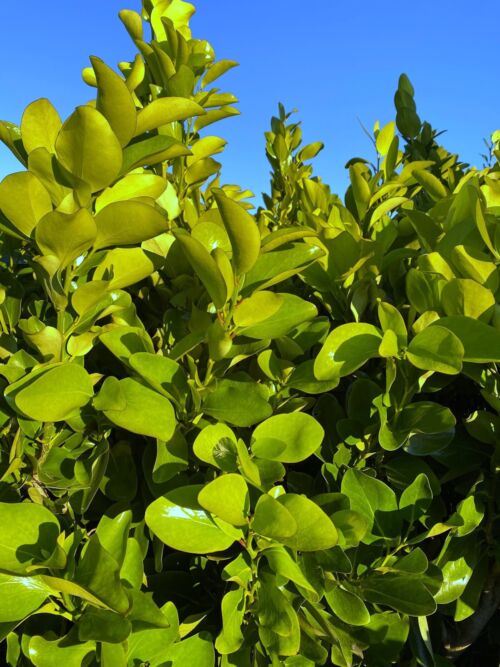
- Alectryon excelsus 'Grandis', also known as the Three Kings Island Titoki, is a compact, spreading native tree from New Zealand. It’s ideal for smaller gardens thanks to its modest size. Compared to the standard Titoki, 'Grandis' features larger, glossier leaves and a more compact growth habit. This makes it a standout choice for coastal or urban landscapes. In autumn, it produces fruit with seeds that attract and nourish native birdlife. This seasonal interest adds ecological value to your garden. It prefers full sun and thrives in moist, free-draining soil. However, its tolerance for coastal conditions makes it a versatile option for exposed sites. Growing to approximately 5 meters tall and 3 meters wide, it’s an excellent specimen for compact spaces or mixed native plantings.
- Callistemon ‘Kings Park Special’ is a vigorous, evergreen small tree native to Australia. Its long, narrow green leaves decorate slightly pendulous branches, creating a graceful form in the garden. Furthermore, masses of red, fluffy, bottlebrush flowers with golden anthers bloom in spring and autumn. These vibrant flowers provide abundant nectar, attracting bees and birds while adding seasonal colour. In addition, this hardy tree tolerates poor dry soils once established, as well as clay, coastal, and windy conditions. However, avoid wet or poorly drained sites. Best grown in full sun, it reaches approximately 3m high and 2m wide if left untrimmed but trimmed also makes an excellent screen or hedge.
- Callistemon ‘Red Cluster’ is an evergreen, vigorous shrub native to Australia. Its upright branches carry short, narrow, stiff dark green leaves that first emerge with a silvery-pink hue, adding seasonal interest. Moreover, masses of striking red bottlebrush flowers with golden anthers appear in spring and autumn. These blooms provide nectar for bees and birds, making the shrub both decorative and wildlife-friendly. In addition, this hardy plant tolerates poor dry soils once established, as well as clay, coastal, and windy conditions. However, avoid wet or poorly drained sites. Trim after flowering to encourage bushiness, or shape easily for hedging. At maturity, it grows to approximately 3m high and 2m wide..
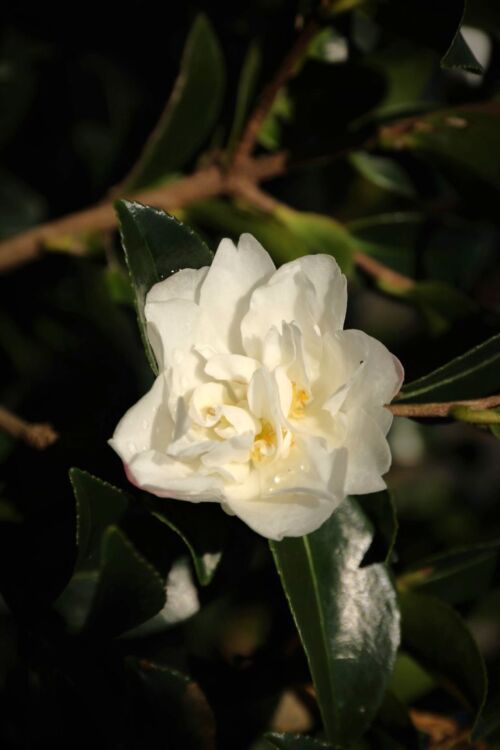
- Camellia sasanqua ‘Silver Dollar’ is a compact evergreen shrub that grows smaller in size yet makes a big impact. From autumn into winter, it produces pure white, ruffled double flowers of medium size, adding elegance to the garden. In addition to its blooms, the shrub displays dense, glossy green foliage. Consequently, it is an excellent choice for hedging at various heights. It responds well to trimming and, alternatively, can be shaped into topiaries or grown as a striking specimen. Although camellias originate from China, cultivars like ‘Silver Dollar’ are now bred worldwide. As a result, they are valued for their ornamental appeal and adaptability across different climates and garden styles. For best results, plant in full sun or dappled shade in moist, well-drained acidic soil. Furthermore, pruning after flowering encourages bushier, more compact growth. Typically, this variety reaches around 2.0m tall by 1.5m wide, yet it can grow larger to form an effective screen.
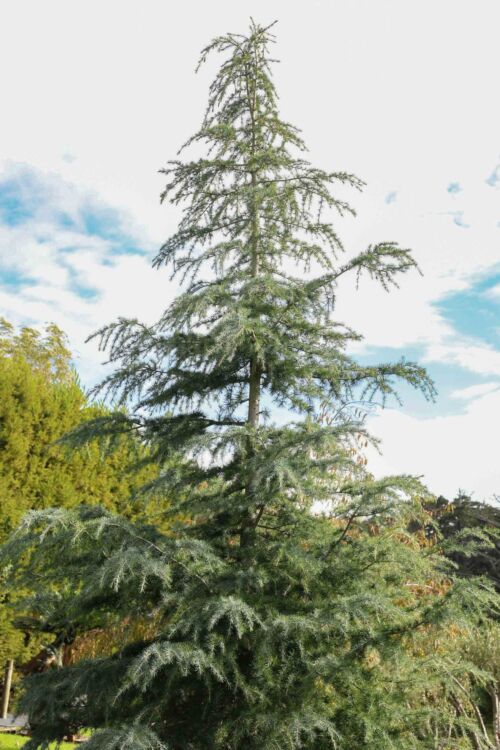
- A distinctly upright pyramidal tree, with evenly spaced weeping branches in layers. Slender needle like leaves are blue grey. An excellent specimen tree.
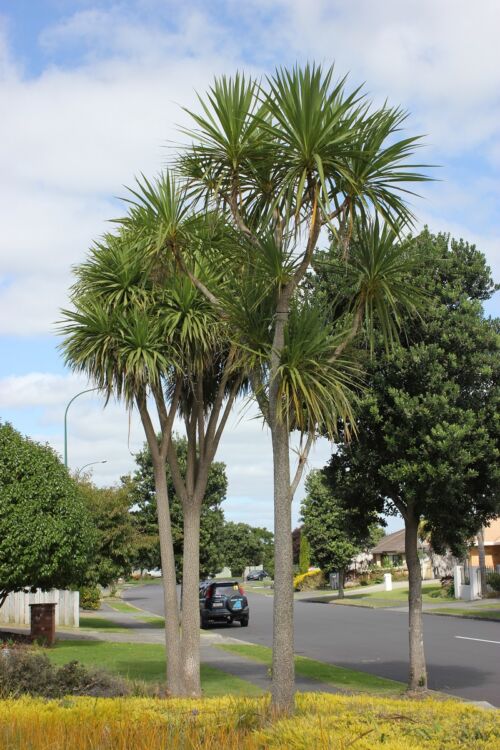
- Cordyline australis, commonly known as the Cabbage Tree or Ti Kouka, is a striking native tree found throughout New Zealand. With its upright trunk and clusters of long, drooping leaves—often reaching up to 1 metre—it resembles a palm and adds architectural flair to any landscape. In late spring, this hardy tree bursts into large heads of creamy white, scented flowers. These blooms are rich in nectar, attracting bees and other pollinators. As summer progresses, the tree produces fruit that draws native birds from January to April, enhancing biodiversity in your garden or property. Cordyline australis thrives in a wide range of environments—from swampy wetlands to dry, windy hill slopes. It’s commonly seen across farmland, open spaces, and scrubland in both the North and South Islands. While it tolerates clay soils, it performs best in free-draining ground and is resistant to coastal winds and harsh conditions. The name “Cabbage Tree” arose from early European settlers who, like Maori, used the tender heart-shoots as a vegetable. Its Latin name, australis, fittingly means “southern” or “of the south,” reflecting its deep roots in New Zealand’s southern landscapes. This iconic tree typically grows to around 6 metres tall and 2 metres wide, making it a bold and resilient choice for coastal gardens, rural properties, and native restoration projects.
- 6 x 2m
- Medium 5-10m
- Slow - Moderate
- Palm
- Upright
- New Zealand/div>
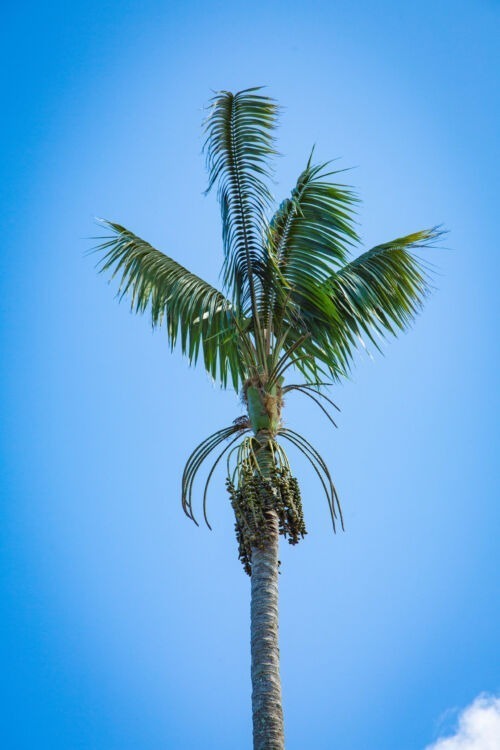
- Nikau Palms
- Green
- White
- Fragrant
- Dry once established, Damp-Wet, Clay
- Coastal, Windy, Hardy
- Bird Feeding, Small Gardens
- Corokia virgata ‘Geenty’s Green’ is a compact, bushy shrub native to New Zealand, celebrated for its vibrant green foliage and star-shaped yellow flowers that bloom in early summer. These are followed by small dark red berries that attract native birds, adding seasonal interest and biodiversity to your garden. Ideal for hedging, this versatile plant trims neatly into a tidy shape, ideal for low hedges or borders in larger or smaller gardens. It can be left to grow naturally into a larger screen as well. Once established, it thrives in exposed coastal, windy or dry conditions, making it a resilient choice for challenging sites. Mature plants reach approximately 2 metres high by 1.2 metres wide. Named in honour of New Zealand plantsman and Corokia enthusiast Mike Geenty, this cultivar has the Latin virgata, meaning “twiggy”—a reference to its fine branching structure.
- Corynocarpus laevigatus – Karaka is a dense, evergreen tree native to New Zealand. Its lush, glossy green foliage creates a bold, tropical impression—perfect for adding instant visual appeal to gardens and landscapes. Flowering in late winter to spring, it produces delicate green-cream clusters. By summer, vibrant orange berry-like fruits emerge, attracting native kererū, who help disperse the seeds. Exceptionally hardy, Karaka withstands strong winds, coastal exposure, and drought. However, it dislikes waterlogged soils. Ideal as a privacy screen or shade canopy, this tree grows to approximately 15–20 metres tall and 8 metres wide.
- Corynocarpus laevigatus ‘Minima’ – Karaka, is a compact male form of the New Zealand native Karaka tree. Its glossy green leaves resemble the standard Karaka but are noticeably smaller, creating a lush, tropical look. As a male cultivar, it rarely produces fruit or seed. This makes it a tidy choice for urban gardens or formal landscapes where minimal litter is preferred. Thriving in full sun, it prefers moist, well-drained soil. It also tolerates coastal conditions and wind, making it highly versatile. With its dense branching and slower growth, ‘Minima’ is ideal for hedging, screening, or shaping into a privacy barrier.Interestingly, the species name laevigatus means “smooth” in Latin, referring to the texture of its foliage. In eight years, it typically reaches around 4.5 x 3.0 metres.
- Cryptomeria japonica, or Japanese Cedar, is an evergreen tree native to Japan. It grows quickly and forms a tall, pyramidal shape with a straight, columnar trunk. Its reddish‑brown bark peels in vertical strips, adding year‑round interest. The soft, awl‑shaped leaves spiral along the twigs and turn a warm copper‑bronze in winter.The branches spread slightly with a soft, pendulous habit. This tree thrives in moist, well‑drained soil and full sun, yet it will not tolerate wet conditions. Thanks to its dense growth, it works exceptionally well as a shelter belt and can be trimmed into a narrow, tidy “wall.” It also tolerates both windy sites and coastal environments, making it a versatile choice for exposed landscapes.Japanese Cedar typically reaches around 10 × 5 m in ten years. However, in ideal conditions, it can grow to approximately 20 m at full maturity.
- Cupressus leylandii ‘Ovensii’ is a vigorous, evergreen conifer known for its rapid growth and resistance to canker. Its attractive dark green, flattened foliage adds density making it a standout performer in functional landscapes. Thanks to its fast growth and abundant branching, this variety excels as a shelterbelt—especially when regularly trimmed to maintain shape and strength. Consequently, it’s a popular choice for Kiwifruit orchards and other commercial plantings where protection from wind is essential. Although rarely grown as a specimen tree, ‘Ovensii’ thrives in moist, well-drained soils. However, it does not tolerate poorly drained conditions. Furthermore, it’s notably hardy to wind, reinforcing its reputation as a reliable barrier in exposed environments. Ultimately, this robust cultivar reaches approximately 10 meters in height and 5 meters in width, creating a bold, practical presence in any rural or commercial setting.
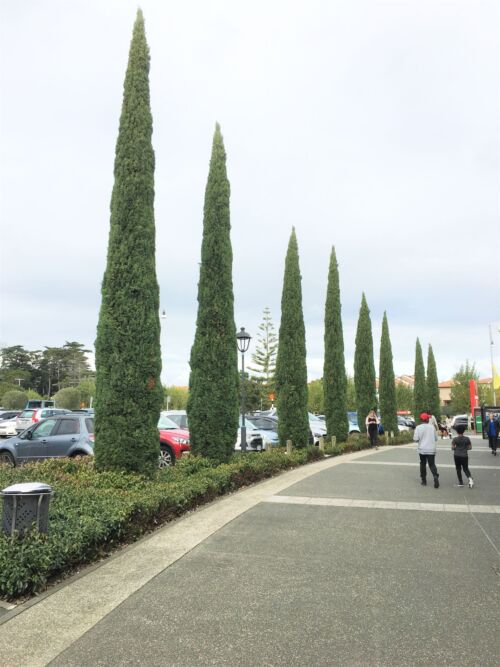
- Cupressus sempervirens 'Totem', commonly known as Totem Cypress, is a tightly upright-growing conifer with striking bluish-green foliage. Notably, these trees are iconic in Italy—especially throughout Tuscany—where they define the landscape and grace Renaissance gardens with timeless elegance. Thanks to their slender, vertical form, Totem Cypresses create bold architectural accents that elevate formal landscapes. Moreover, this cutting-grown cultivar ensures a consistently narrow columnar shape and even growth rate, making it a reliable choice for symmetry and structure. Unlike other varieties, its foliage remains dense and intact, resisting the tendency to “fall out.” Additionally, it offers improved resistance to fungal canker, making it a hardy option for challenging conditions. Often planted in rows as living pillars, it’s ideal for lining entranceways and avenues with a commanding presence. For optimal performance, Totem Cypress prefers drier soil and well-drained sites. Ultimately, it grows to approximately 10 meters tall and 2 meters wide delivering a bold, sculptural impact wherever it’s planted.
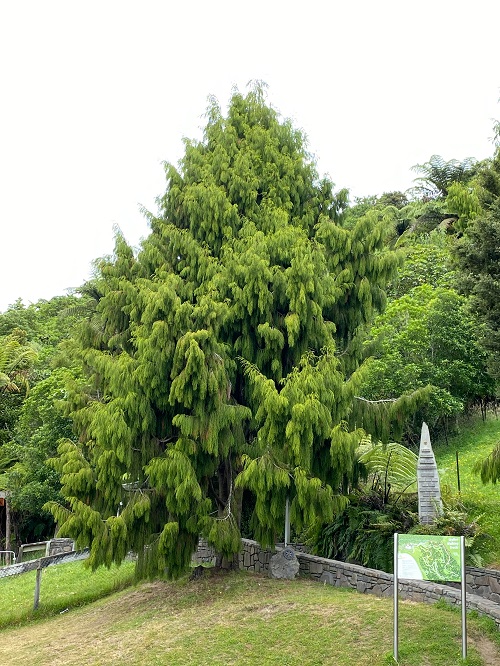
- Dacrydium cupressinum – Rimu, is and evergreen conifer native to New Zealand and is one of the most widespread and easily recognised forest trees in both the North and South Islands. With a slow to moderate growth rate, it develops into a commanding presence over time—ideal for both natural landscapes and structured garden settings. In its juvenile form, Rimu presents as a striking, pyramidal specimen with gracefully weeping branches and small, awl-shaped dark green leaves. As the tree matures, it broadens into a more upright form, shedding bark in thick, scaly plates that add rugged texture to its trunk. Thriving in cool, moist conditions, Rimu is well-suited to temperate gardens and native restoration projects. Within 10 years, it typically reaches around 10 metres in height and 4 metres in width. Given time, it can attain a majestic size of up to 25 metres tall and 9 metres wide. Whether planted for its ornamental value or ecological significance, Rimu stands as a bold and enduring symbol of New Zealand’s forest heritage.
- Dodonaea viscosa ‘Purpurea’ – Purple Akeake is a tough, upright native New Zealand tree with bold, glossy purple-red foliage that deepens in colour during the cooler months. In summer, it puts on a show with unusual light red to purple papery flower clusters that add a rugged splash of contrast. Over time, Purple Akeake spreads out, making it a good choice for privacy screening or adding colour into compact garden spaces. It handles a wide range of soil types, salt spray, wind, and drought once established—but thrives best in moist, well-drained soil. Trim regularly to maintain a dense, bushy form. The name viscosa refers to the sticky texture of its seeds. Grows to approximately 3.5m high x 2.0m wide.
- Fraxinus excelsior ‘Purple Spire’, commonly known as Purple Ash, is a deciduous, upright-growing tree with a remarkably even branching structure. Over time, it develops into an oval shape, with a moderate to fast growth rate. Throughout spring and summer, it bears glossy green foliage that transforms into striking shades of purple and orange in autumn, adding seasonal interest. Interestingly, this cultivar was developed in New Zealand, although its Fraxinus parentage traces back to Europe. Ideally, it prefers moist, well-drained soil and will tolerate some wind, making it a resilient choice for various landscapes. As such, it’s excellent for planting along streets, avenues, or long driveways. Typically, it reaches approximately 8 x 4 metres, offering structure and colour without overwhelming smaller spaces. PVR Pending
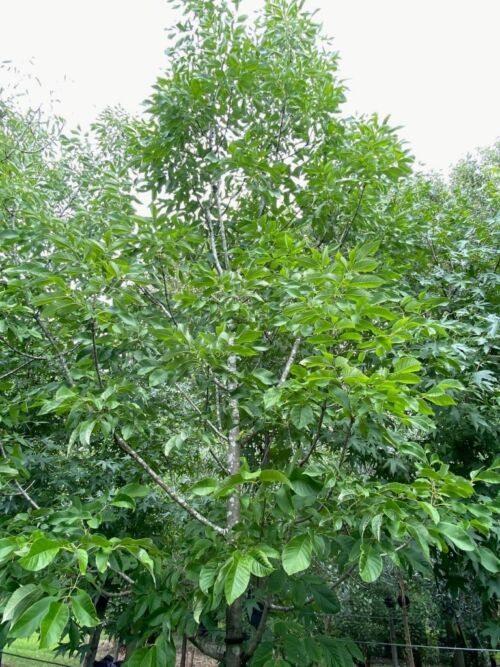
- Fraxinus griffithii, commonly known as Evergreen Ash, is a fast-growing tree with a rounded form. Its dark green pinnate leaflets create lush foliage, while masses of small white fragrant flowers appear in large, loose panicles during spring, almost covering the entire tree. This hardy tree performs best in well-drained soil and becomes drought tolerant once established. However, avoid waterlogged areas to prevent root rot. Although evergreen, Evergreen Ash can become semi-deciduous in colder climates. It grows to around 6 x 4 metres, forming a beautiful shade tree for gardens and landscapes. The tree is easily clipped to maintain shape and height, making it versatile for design. Very hardy, it also thrives in industrial sites, carparks, and coastal areas, offering resilience and reliability in challenging conditions.
- A fast growing, large tree from central America. With its broad, rounded canopy of lush green foliage, this tree is an exceptional choice for providing ample shade in spacious areas. Evergreen. Grows to apx 10 x 8m
- A bold and fast-growing native of New Zealand, Griselinia littoralis 'Broadway Mint' or Kapuka, is a robust shrub or small tree—an impressive variety of littoralis. Its light mint-green leaves are glossy with a wavy edge that adds texture and strength to any landscape. Moreover, this versatile plant is easily clipped into a tidy smaller garden hedge or, if preferred, allowed to grow into a larger, structured screen. Not only does it thrive in coastal conditions, but it also stands up well to strong winds and frosts—making it a reliable choice for exposed sites. For best results, ensure good drainage. Ultimately, it reaches approximately 3.0 x 3.0 meters in size, offering both presence and practicality. Interestingly, the Latin word littoralis translates to “growing by the sea,” a fitting nod to its coastal resilience.
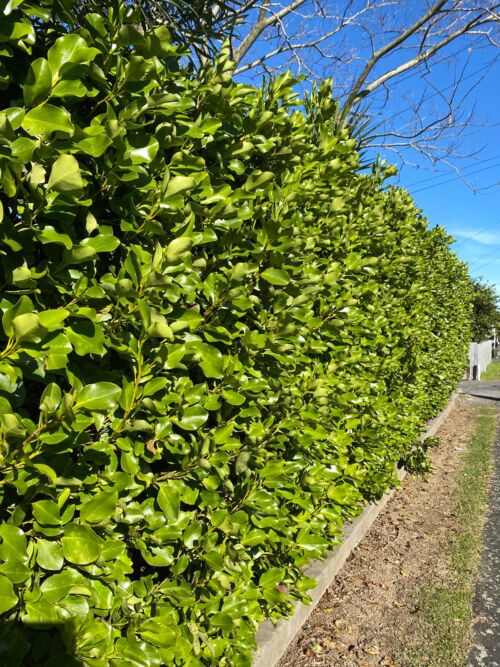
- Griselinia lucida, also known as Akapuka, is a robust New Zealand native. Whether grown as a shrub or shaped into a small, rounded tree, it features thick, glossy lime-green foliage with a bold, tropical feel. Thanks to its compact form, it’s easily trimmed into a neat hedge or left to fill out as a natural screen. Whether facing wind or salt spray, this plant stands strong. It thrives in both full sun and shaded areas, making it a reliable option for coastal gardens or sheltered urban spaces. However, for best results, ensure good drainage. Reaching around 3 metres tall by 2 metres wide, it’s perfect for compact areas needing bold structure and lush greenery.
- Howea forsteriana, commonly known as the Kentia Palm, is an elegant, arching palm with shiny green fronds. Because of their feather-like appearance, these fronds create a graceful silhouette, making this palm one of the most popular choices for both indoor and outdoor settings. As the fronds naturally shed, the slender trunk becomes beautifully ringed. Over time, this adds visual texture and enhances its tropical appeal. Native to Lord Howe Island, it thrives in a range of climates between Australia and New Zealand. Thanks to its slow and steady growth, the Kentia Palm is perfect as a standout feature in tropical gardens. Moreover, it tolerates very low light, coastal exposure, and windy conditions, making it incredibly versatile. When young, it’s important to keep the palm moist and partly shaded. Eventually, it reaches around 5 metres in 10 years and can grow beyond 10 metres at full maturity, offering lasting impact with minimal fuss