Wind Tolerant Trees
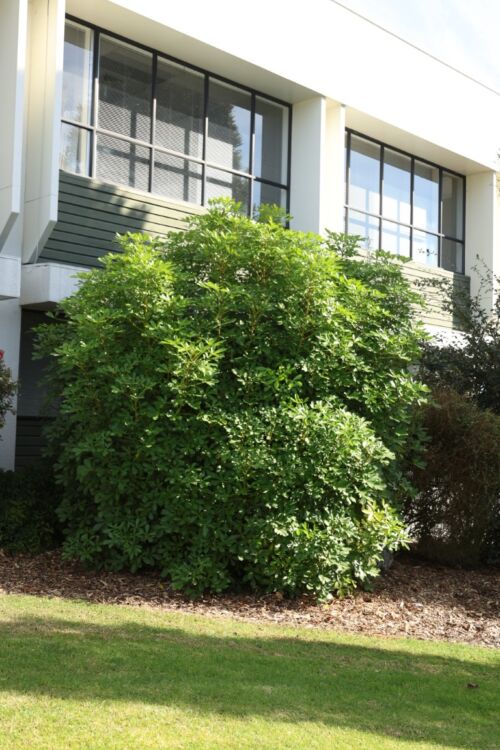
- Pseudopanax lessonii – Houpara is an evergreen New Zealand native that grows as a multi-branched shrub or small tree. Fast-growing, it features fleshy, palmate-shaped dark green leaves with three to five leaflets, creating a lush and tropical look. From December to February, small green flowers appear, followed by dark purple fleshy fruit. These fruits attract birds, adding life and movement to the garden throughout the year. Houpara can be left to grow as a small shade tree. Alternatively, it trims well into a hedge or can be clipped to form a larger screen, offering versatility in garden design. This hardy species is ideal for coastal gardens as it withstands salt-laden winds. It prefers moist, well-drained soil in full sun or partial shade and tolerates clay soils, though not waterlogged conditions. Growing to approximately 4 x 2.5 metres, Houpara makes an excellent choice for structured planting and year-round greenery.
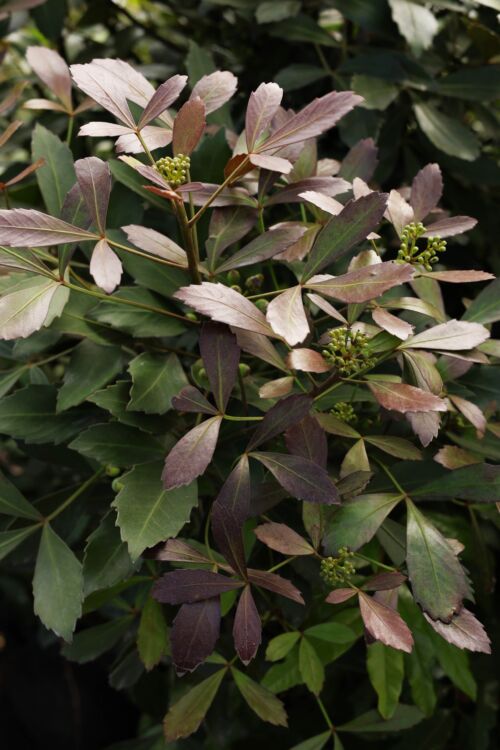
- Pseudopanax lessonii ‘Purpurea’ is a fast-growing evergreen shrub or small tree native to New Zealand. Multi-branched and compact, it features fleshy, palmate leaves in striking dark purple-red tones with three to five leaflets. From December to February, small green flowers appear, followed by dark purple fleshy fruit. These fruits attract birds, adding seasonal interest and wildlife appeal to the garden. This variety prefers moist, well-drained soil but will not tolerate waterlogging. For the best colour, plant in full sun where its foliage shines most vividly. ‘Purpurea’ can be left to grow as a small shade tree. Alternatively, it trims well into a compact hedge or can be clipped to form a larger bushy screen, offering flexibility in garden design. Ideal for coastal gardens, it withstands salt-laden winds and thrives in exposed conditions. Growing to approximately 4 x 2.5 metres, it provides structure, colour, and resilience year-round.
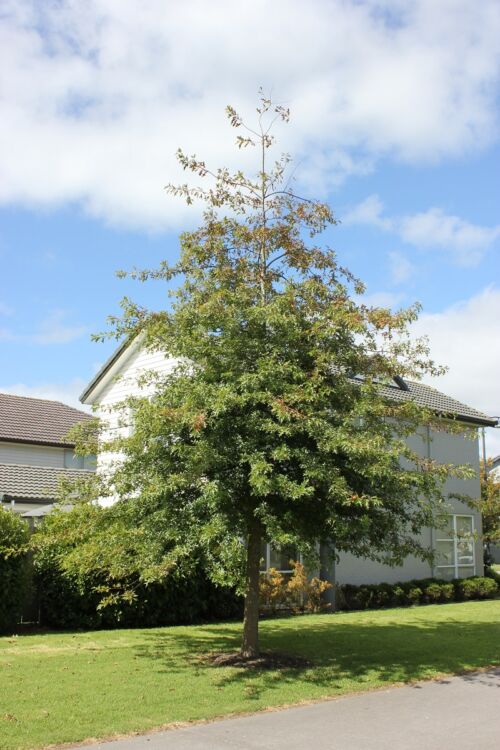
- Pyrus calleryana ‘Aristocrat’, also known as the Callery Pear, is a deciduous tree with a pyramidal shape and origins in China. Its dense, upright branching supports glossy dark green foliage throughout summer, which transforms into vibrant shades of red, orange, and maroon in autumn. In early spring, the tree produces a stunning display of white blossoms, adding ornamental value to any landscape. This adaptable tree can be trained into standards and is well-suited for small gardens, street plantings, or mass landscaping projects. It tolerates poor drainage but performs best in moist, well-drained soils. Growing to approximately 7 metres tall and 4 metres wide, Aristocrat is an excellent choice as a shade tree or for formal avenue planting, offering year-round interest and structure.
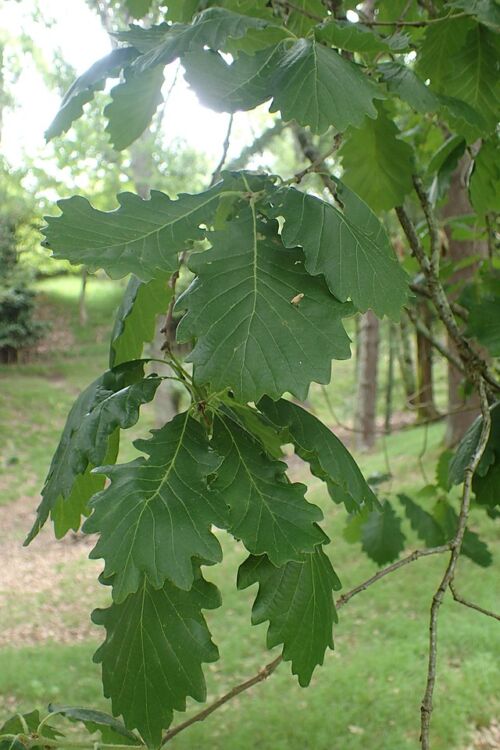
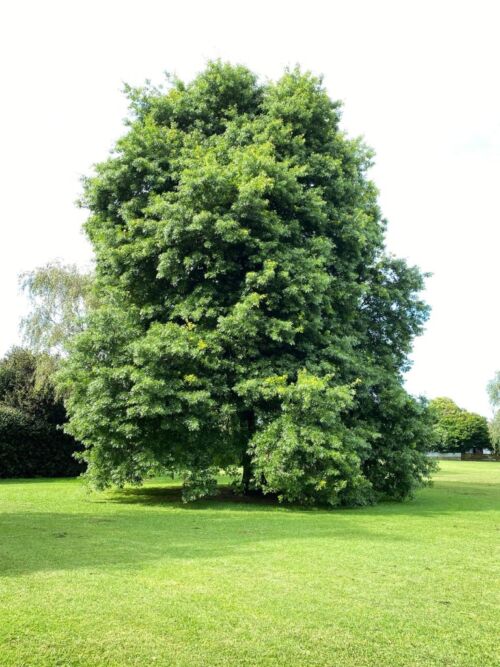
- Quercus canariensis – Algerian or Mirbeck Oak is a large, deciduous tree native to the Western Mediterranean. With a stout trunk and broad crown, it produces striking dark green leaves that create a lush canopy. In warmer climates, it may remain semi-evergreen, offering year-round appeal. This oak thrives in exposed sites, tolerating heat and drier conditions with ease. Moreover, it adapts well to most soils and shows greater tolerance of clay than many other oak species, though it dislikes waterlogged ground. Additionally, Quercus canariensis withstands coastal environments, making it versatile for varied landscapes. It grows approximately 10 x 6m in ten years, and at maturity, it can reach 25 x 25m. With its impressive size and spreading habit, it serves as an excellent shade tree for large gardens or open spaces.
- Quercus cerris – Turkey Oak is a handsome, wide-spreading deciduous tree native to south-eastern Europe and Western Asia. Its rich green, oblong lobed leaves create a striking display before turning golden yellow in autumn, adding seasonal interest to any landscape. This oak thrives in diverse soil types, including sandy, loamy, and heavy clay, though it resents waterlogged conditions. Thanks to its robust root system, it becomes dry tolerant once established. Moreover, it prefers full sun and withstands exposed sites. Growing to approximately 10 x 6m in ten years, Turkey Oak matures to around 25 x 14m. With its impressive size and broad crown, it provides excellent shade, making it a valuable choice for large gardens, parks, or open spaces.
- Quercus coccinea – Scarlet Oak is a majestic deciduous tree that forms a large, stately specimen characterized by an oval crown and upward-reaching branches. Its glossy green, deeply lobed leaves create a lush summer canopy, while in autumn they transform into a brilliant display of scarlet red, which offers exceptional seasonal colour. In addition to its foliage, the bark develops a reddish-brown tinge during winter, adding subtle interest even in the colder months. Native to North America, this oak variety is well-suited to a range of climates. Once established, Scarlet Oak tolerates dry conditions, although it prefers moist, free-draining soil for optimal growth. With its impressive size, reaching approximately 15 x 10 metres in ideal conditions, it makes an outstanding specimen tree or a grand shade tree for larger landscapes. Whether you're designing a parkland setting or enhancing a spacious garden, Quercus coccinea brings structure, beauty, and seasonal interest to any outdoor space.
- Quercus palustris – Pin Oak (Swamp Oak) is a deciduous tree native to North America, known for its pyramidal growth habit and distinctive brownish-grey bark. Its deeply cut, glossy green leaves provide lush summer foliage, which eventually transforms into a brilliant scarlet red display in autumn. Notably, the lower branches tend to droop toward the ground, adding architectural interest to its form. The Latin name palustris translates to “of marshland” or “of swamps,” reflecting its natural preference for moist to wet, acidic soil conditions. Pin Oaks tolerate damp to wet environments and thrives best in full sun. In ideal conditions, it can reach approximately 8 x 6 metres within 10 years and may grow to over 20 metres at full maturity—making it an excellent choice for large landscapes or as a commanding shade tree. Whether you're planting in parklands, spacious gardens, or wetland edges, Quercus palustris offers seasonal beauty and structural elegance.
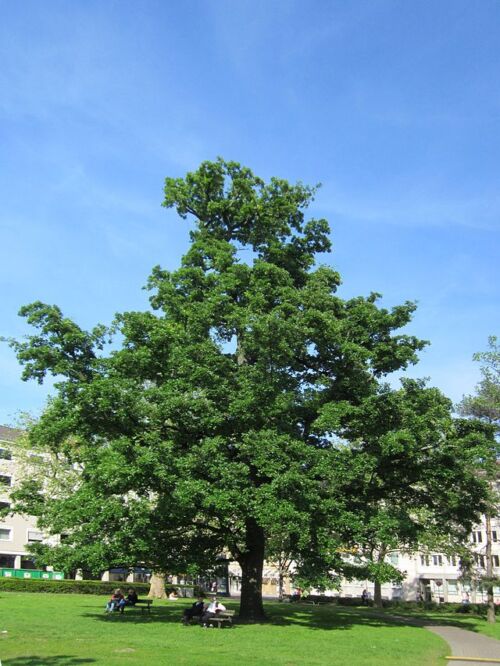
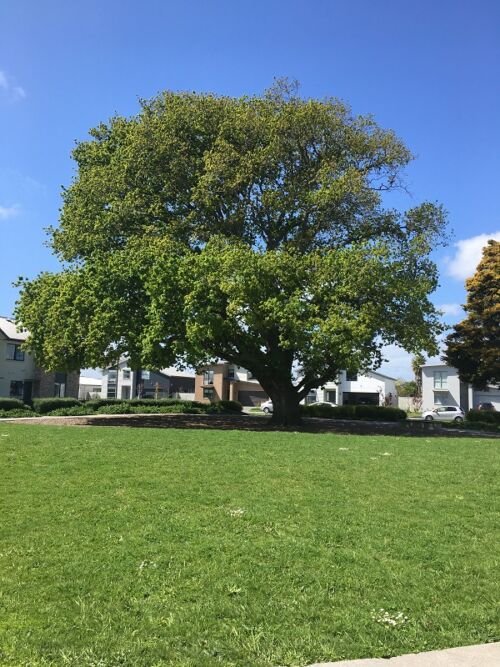
- Quercus robur – English Oak is one of the worlds most recognised trees. It is a deciduous, long‑lived tree native to Europe. It grows into a very large specimen with a broad crown of rugged, open branches. Its dark green leaves turn a clear yellow in autumn, while acorns ripen and fall throughout the season. As it matures, the tree develops short, attractive fissured bark that adds strong visual character. Although it tolerates clay soils, it is best to avoid sites that remain consistently wet. In the Landscape its expansive canopy, it makes an excellent shade tree for parks, reserves, farms, and larger open spaces. The English Oak is also valued for its durable timber. Its heartwood is highly sought after for interior use and quality furniture work. This impressive tree typically reaches around 10 × 6 m in ten years and can surpass 30 m at full maturity. The Latin word robur refers to hardwood, especially oak, and conveys strength, firmness, power, and resilience.
- Quercus robur ‘Fastigiata’ – Upright English Oak is a deciduous, narrow-upright form of the classic English Oak. Its strongly vertical branches hold dark green leaves that turn a warm yellow in autumn. Acorns develop through the season and fall in late autumn. As the tree matures, it gradually shifts from a strict columnar shape to a more pyramidal form. It tolerates clay soils; however, you should avoid planting it in areas that remain overly wet. Because of its tidy structure, it works extremely well for avenue plantings and for compact residential or commercial spaces. It typically reaches around 8 × 3 m in ten years and may grow to 20 × 4 m at full maturity. The name robur in Latin refers to hardwood—especially oak—and also conveys strength, firmness, power, and resilience.
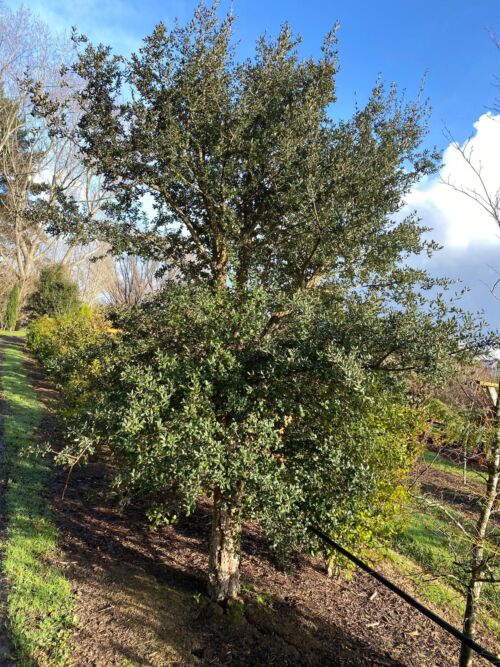
- Quercus suber, commonly known as Cork Oak, is a striking evergreen tree native to the Mediterranean region. It grows large with a short stem and wide-spreading canopy, making it a bold feature in any landscape. Notably, its thick, rugged bark is deeply fissured and harvested for cork production. This unique trait makes it both functional and visually captivating. The tree displays a gnarled, spreading habit with dark green, leathery leaves that reveal a grayish underside. As a result, it adds texture and contrast throughout the year. Thriving in warm, dry climates, Cork Oak prefers well-drained soils and shows excellent drought tolerance once established. It can reach over 15 metres at full maturity. Moreover, its dramatic form and historical use make it an excellent conversation piece. Interestingly, the Latin word suber translates to “cork bark.”
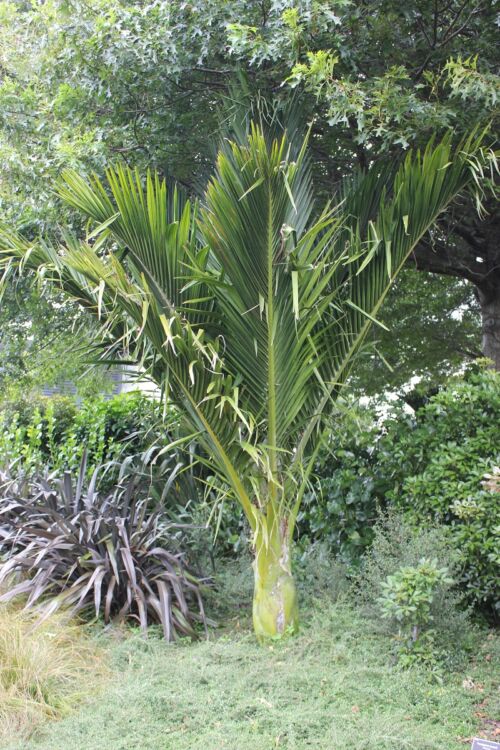
- Rhopalostylis sapida, commonly known as NZ Nikau, is a native New Zealand palm with elegant tropical appeal. In its juvenile stage, it produces long, graceful fronds reaching up to 3 metres. Over time, a slender trunk develops, marked with rings from fallen leaves. This trunk is crowned with rich green, fan-like fronds that add lush texture to shaded garden spaces. Nikau palms thrive in partial to full shade and prefer moist, well-drained soil rich in organic matter. They flourish in warm, sheltered environments with protection from strong winds and heavy frosts. For best results, plant in a shady spot with sunlight on the crown and cool, shaded roots. This mimics their natural forest habitat and enhances their appearance. Nikau is an excellent choice for garden specimens or large pots. Though very slow-growing, it can reach 10 metres and more over many years.
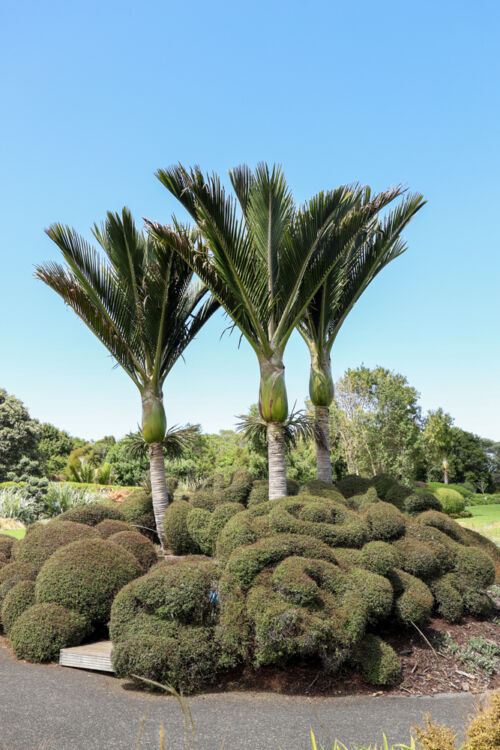
- Rhopalostylis sapida ‘Chathamica’ – Chatham or Pitt Island Nikau is a native New Zealand palm originating from the southern Chatham and Pitt Islands. It offers a unique twist on the mainland Nikau. This variety features longer fronds, wider leaflets, and a subtle silvery hue to its stems. Its red fruit are noticeably larger, adding seasonal interest and contrast. Adapted to cooler climates, it tolerates full sun, wind, cold, and coastal conditions better than other Nikau types. It’s also known for its tidier growth habit. Thriving in moist, well-drained soils, this palm is ideal for sheltered gardens or coastal landscapes. Its slow growth makes it easy to manage over time. Although very slow-growing, it can eventually form a trunk and reach up to 10 metres over many years, making it a long-term feature in any garden.
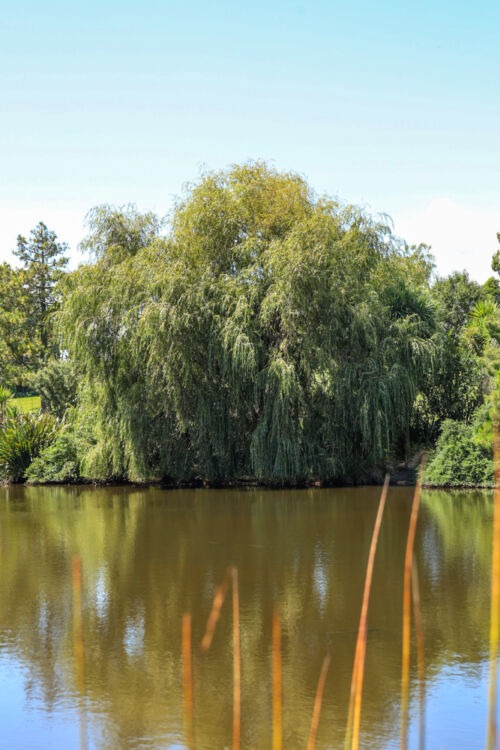
- Salix babylonica, commonly known as Weeping Willow, is a medium to large deciduous tree with a wide-spreading canopy. Its graceful, pendulous branches carry narrow, light green leaves that cascade to the ground. As autumn arrives, the foliage transforms into a soft yellow, adding seasonal charm. In spring, slender catkins emerge alongside fresh leaves, attracting bees and enhancing biodiversity. Because of its fast growth and tolerance for wet soil, this tree thrives near streams, ponds, or in damp areas. It also makes an excellent shade tree for large gardens or on farmland for livestock. Weeping Willow prefers full sun and typically grows to around 12 metres tall and 12 metres wide, offering both beauty and function
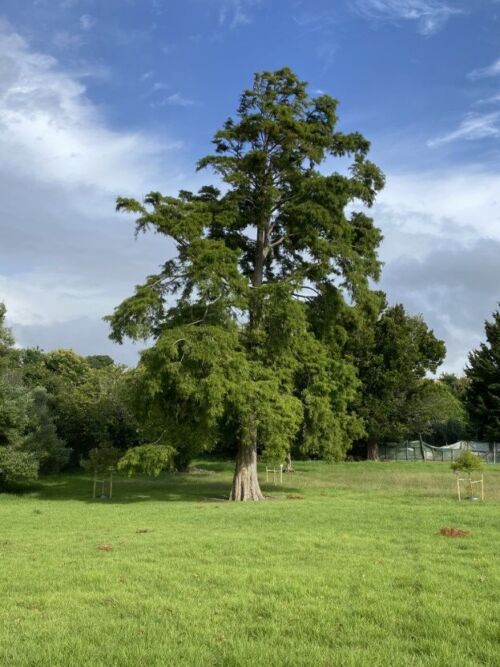
- Taxodium distichum – Swamp Cypress, is a vigorous, deciduous conifer known for its striking pyramidal shape with origins in the United States. This bold tree adds structure to any larger landscape. In spring and summer, its soft, green needle-like foliage creates a lush canopy. As autumn arrives, the leaves shift to brilliant shades of golden yellow, warm orange, and rich brown—an eye-catching seasonal transformation. Remarkably tolerant of wet soils, Swamp Cypress thrives near ponds, streams, and other damp areas. Its adaptability makes it an ideal choice for wetland gardens or low-lying spaces. Typically, it reaches around 9 x 4 metres within ten years. At full maturity, it can grow to an impressive 25+ x 10 metres, offering long-term impact and shade. Interestingly, the species name distichum means “two-ranked,” referring to the elegant, two-rowed arrangement of its leaves along the branches.
- From the Three Kings Islands, Tecomanthe speciosa is a vigorous climber with large handsome glossy leaves. The large tubular cream flowers are borne in bunches during the winter months. Tui visit flowers for nectar. Frost sensitive but can be grown successfully in colder districts under the shelter of trees. Ideal grown up a terrace pole, strong trellis, up into trees. Takes some years to flower.
- Thuja Green Giant is a resilient, fast-growing evergreen conifer admired for its dense, dark green foliage and upright pyramidal form. Propagated from cuttings, it maintains a uniform habit, remains disease-free, making it ideal for consistent planting. Because of its vigour, Thuja Green Giant is widely used for privacy screens and hedges. Moreover, it serves as a successful shelter belt worldwide. Originating in Denmark, this hybrid combines parent species from North America and Japan. In addition, it tolerates a wide range of soils, from sandy to clay, although it dislikes standing water. It also withstands windy sites and thrives best in full sun. For hedging or shelter, plant approximately 1.5–2.0 meters apart. At maturity, Thuja Green Giant reaches around 12 meters tall and 4 meters wide, creating an impressive and lasting landscape feature.
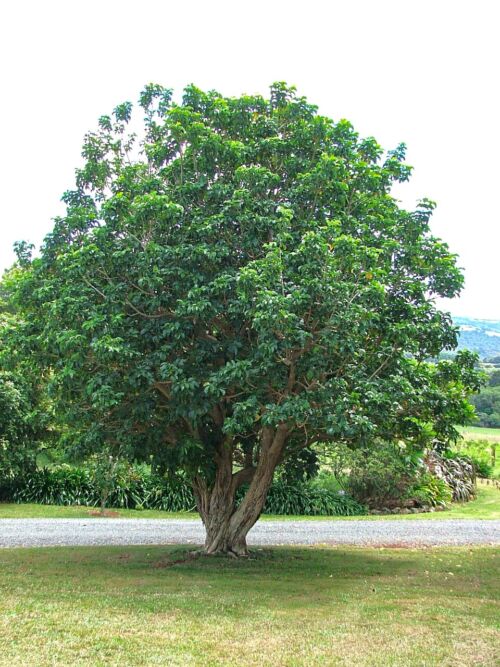
- Vitex lucens, commonly known as Puriri, is a large, spreading native tree of New Zealand, historically prized for its strong and durable timber. Its dark green leaves consist of multiple leaflets joined together, creating a lush and textured canopy. In addition, Puriri produces cup-shaped, dull red flowers around 25mm in size, which are followed by vibrant orange-red fruits. These fruits are highly attractive to native birds, adding life to your garden throughout the seasons. Moreover, this hardy tree thrives near coastal areas and tolerates wind well, making it suitable for exposed sites. While it prefers free-draining soil, it performs best in warmer temperate climates. Whether planted as a striking specimen or integrated into a larger landscape, Puriri offers both beauty and resilience. Ultimately, it can grow to over 15 x 8 meters, although it responds well to pruning and can be shaped to suit smaller spaces.