Order Quality Trees Online – Delivered Straight to Your Door
Welcome to Our Online Plant Store
From our nursery to your backyard — it’s never been easier to create the garden you’ve been dreaming of. Whether you’re after statement trees, hedging, or lush planting to fill your outdoor spaces, you can now browse and order directly online.
We provide an extensive range of high-quality plants and trees that are perfect for residential landscapes — all backed by the same expert care and service we’re known for. No trade account needed, no back-and-forth calls. Just beautiful plants, delivered to your door.
Shop by category
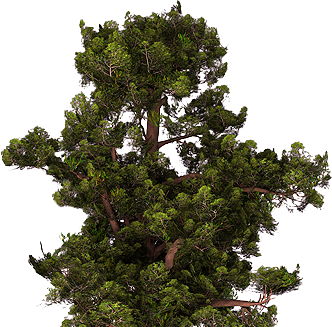
New Zealand Native Trees
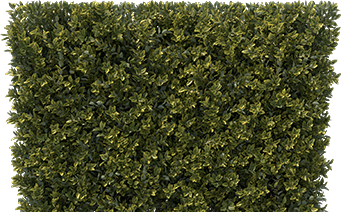
Hedging Plants
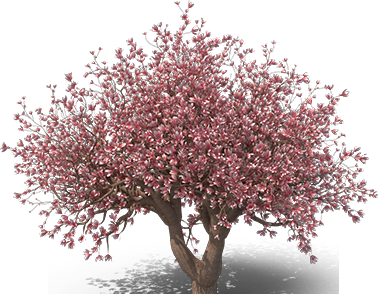
Flowering Trees

Evergreen Exotic Trees
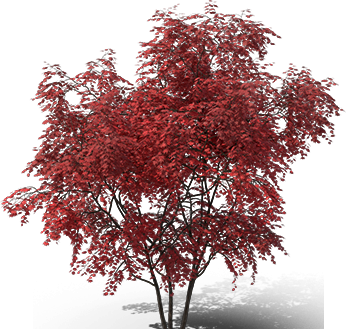
Deciduous trees
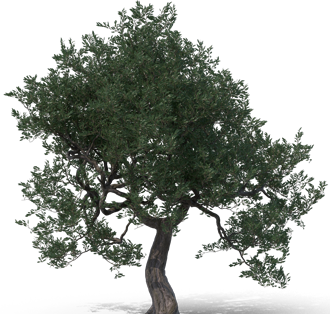
Character Olive Trees
Browse all Trees
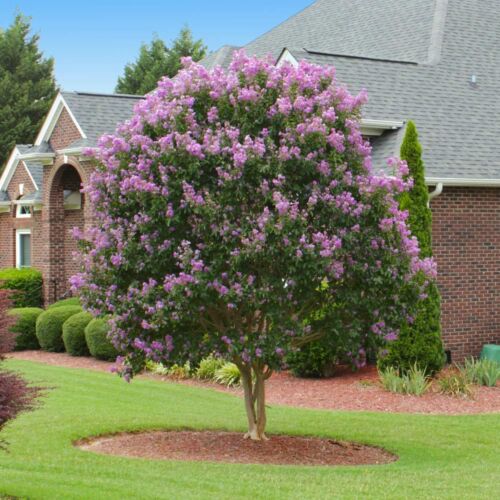
- Lagerstroemia indica ‘De Puard’ – Crepe Myrtle is a delightful small deciduous tree with a compact, rounded form. During summer, its lime-green foliage creates a fresh display, before transforming into rich autumn tones of brilliant red. At the same time, lilac-mauve flowers with a crepe-paper texture cover the tree in abundance, offering a truly spectacular sight throughout the warmer months. Furthermore, its smooth, mottled pinkish-gray bark provides striking year-round interest. This variety grows best in moist, well-drained soil and full sun, ensuring maximum flower production. In addition, it makes an elegant feature in a sheltered small garden. Reaching approximately 4 x 3 metres, it can also be easily trimmed to suit your preferred shape and size, giving both flexibility and charm
- Knightia excelsa, commonly known as Rewarewa, is a striking evergreen native to New Zealand. It forms a slender, erect, and tapering tree with long, green serrated leaves that adds texture and structure to the landscape. In spring, it produces very unusual tubular reddish-brown flowers with yellow tips that are highly attractive to native birds, adding both ecological value and seasonal interest. Because of its upright habit, Rewarewa is ideal for smaller gardens and narrow spaces. Additionally, it is well-suited to coastal gardens. While it tolerates clay soils, overly wet conditions should be avoided. Likewise, phosphate-based fertilizers are not recommended. Typically, it grows to approximately 7 x 3 metres, making it a manageable yet elegant choice for urban and rural settings alike. Interestingly, the Latin name Excelsa refers to its tall, strong stature.
- 7 x 3m
- Medium 5-10m
- Moderate
- Tree
- Columnar
- Evergreen
- New Zealand
- Liriodendron tulipifera fastigiata, Olea El Greco, Dacrydium Cupressinum, Acer Bowall, Poplar crow’s nest, Quercus robur fastigiata, Carpinus Betulus fastigiata, Dacrycarpus Dacrydoidies, Cupressus totem
- Green
- Reddish Brown
- No
- Prefers Moist well drained, Will tolerate clay, Not Wet
- Coastal, Wind
- Avenue, Small Garden, Bird Feeding, Narrow Spaces
- Fraxinus griffithii, commonly known as Evergreen Ash, is a fast-growing tree with a rounded form. Its dark green pinnate leaflets create lush foliage, while masses of small white fragrant flowers appear in large, loose panicles during spring, almost covering the entire tree. This hardy tree performs best in well-drained soil and becomes drought tolerant once established. However, avoid waterlogged areas to prevent root rot. Although evergreen, Evergreen Ash can become semi-deciduous in colder climates. It grows to around 6 x 4 metres, forming a beautiful shade tree for gardens and landscapes. The tree is easily clipped to maintain shape and height, making it versatile for design. Very hardy, it also thrives in industrial sites, carparks, and coastal areas, offering resilience and reliability in challenging conditions.
- Didymocheton spectabilis – Kohekohe is a striking evergreen tree native to New Zealand. Found naturally in coastal forests across the North Island, it grows quickly and forms a handsome canopy, ideal for coastal gardens. Its large, tropical-looking leaves can reach up to 40cm long. From March to June, elegant, small waxy white flowers bloom directly from the trunk and branches, followed by fruit that enhances its exotic appeal. Kohekohe prefers moist, well-drained soil and full sun. It tolerates coastal conditions but dislikes waterlogged areas. In ten years, it typically reaches around 10 x 4 metres. At full maturity, it can grow up to 15 metres tall. Formerly known as Dysoxylum spectabilis, it remains a standout choice for native planting schemes.
- Alnus jorullensis, commonly known as the Evergreen or Mexican Alder, is a vigorous, fast-growing tree and as the name suggests, native to Mexico and South America. This species thrives in warmer climates, where it often remains evergreen throughout the year. With pale, papery grey bark and green, birch-like serrated foliage, it offers a soft, elegant appearance. Its drooping branches add a graceful touch to any landscape. Moreover, this tree is highly adaptable—it can fix nitrogen and tolerates poor, clay, damp, or even wet soils, making it a resilient choice for challenging sites. Thanks to its rapid growth and tolerance for trimming, Alnus jorullensis is ideal for creating shelter belts or privacy screens. Alternatively, it can be planted as a striking standalone shade tree, especially in areas where quick canopy cover is desired. Growing to approximately 7 metres tall and 3 metres wide, this versatile tree brings both beauty and function to gardens, rural properties, coastal and urban landscapes alike.
- Acer palmatum - Japanese Maple, is a deciduous ornamental tree admired for its form and vibrant seasonal colour. Summer sees fresh green foliage transform into a display of oranges, reds, and yellows in autumn. Originating from Japan, Acer Palmatum is best planted in a sheltered spot away from strong winds to protect its delicate leaves. Its compact size and elegant structure make it a versatile choice for a wide range of garden styles—from traditional to contemporary. Ideal as a shade tree for smaller gardens, the Japanese Maple typically reaches around 5 metres tall and 4 metres wide, offering year-round visual interest and appeal.
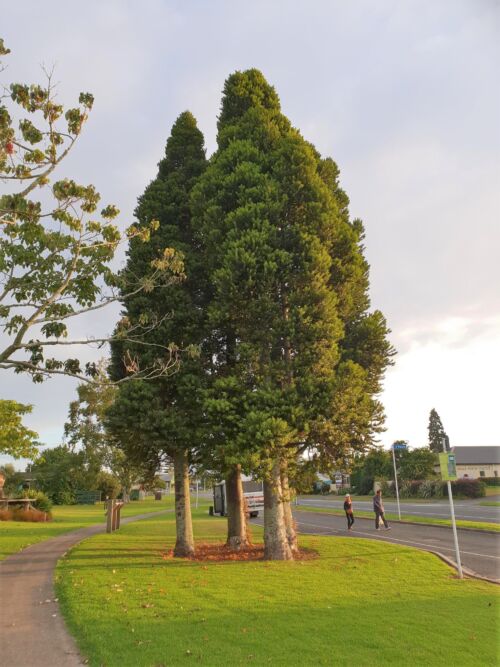
- Agathis australis, commonly known as the New Zealand Kauri, is a slow-growing native tree admired for its longevity and architectural beauty. Remarkably, it retains its juvenile, pyramidal form for up to 50 years, making it a unique presence in any landscape. Its narrow, leathery leaves display a striking bronze-green hue, while the smooth grey bark gradually becomes scaly as the tree matures. Over time, adult specimens develop into stately, straight-trunked trees with a rounded crown—adding grandeur and structure to larger garden spaces. Ideally, this species thrives in rich, fertile, moist, and well-draining soil. However, it is intolerant of persistent wetness and does not cope well with strong winds, therefore, it prefers a warm temperate climate and a sheltered position for optimal growth. In the first decade, the Kauri can reach over 6 metres in height. Eventually, mature trees may grow to an impressive 30–50 metres tall so as a result, it makes an exceptional statement tree and a true icon of the New Zealand forest. Whether planted as a legacy tree or a focal point in a native garden, Agathis australis offers timeless appeal and ecological significance.
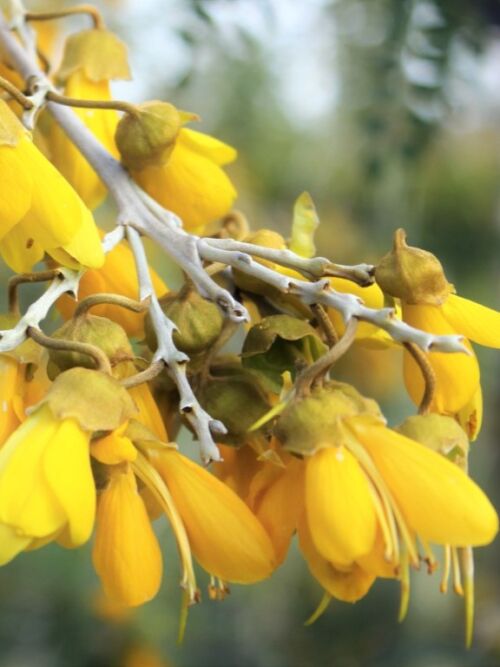
- Sophora chathamica ‘Milligold’, commonly known as Weeping Kowhai, is an evergreen native tree from New Zealand. It features deep green foliage and a compact, graceful weeping form. Branches do not have the divaricating (Zig Zag) form and foliage is larger than the smaller microphylla. In spring, it produces masses of bright yellow flowers which makes a spectacular display and also attracts nectar‑seeking birds such as the Tui. ‘Milligold’ prefers well‑drained, moist soil and should not sit in waterlogged areas to avoid root rot. It grows best in full sun or partial shade. Typically reaching 2–4 meters in height and width, it suits courtyards, smaller gardens, and works beautifully as a container specimen.
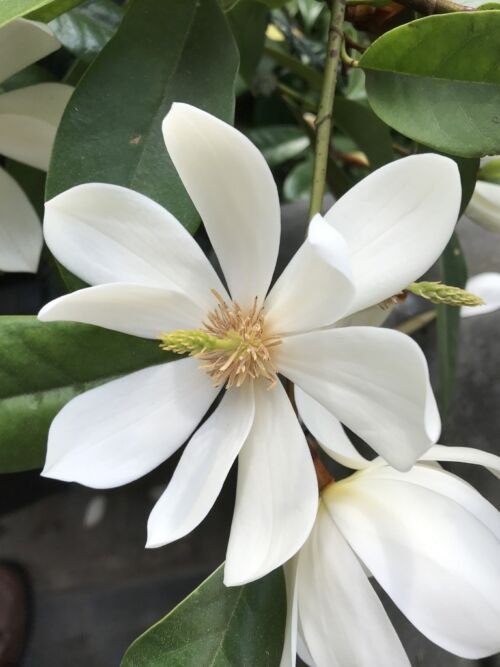
- Michelia ‘Fairy White’ is an evergreen large shrub or small tree with dark green foliage and a naturally bushy habit. From early spring, it forms long brown buds that open into star‑shaped, pure‑white, fragrant flowers from approximately September to November. Bred in 2013 by renowned New Zealand nurseryman Mark Jury in Tikorangi, Taranaki, this variety is valued for its beauty and reliability. Excellent drainage is essential, as the plant cannot tolerate heavy, waterlogged, or clay soils. It performs best in slightly acidic, free‑draining soil that keeps the root zone healthy. The plant responds well to pruning, making it ideal for hedging or screening. Alternatively, if allowed to grow into a small specimen tree, it reaches around 3.5 × 2.5 metres. Its compact form makes it perfect for smaller gardens, courtyards, or use as an attractive potted tree.
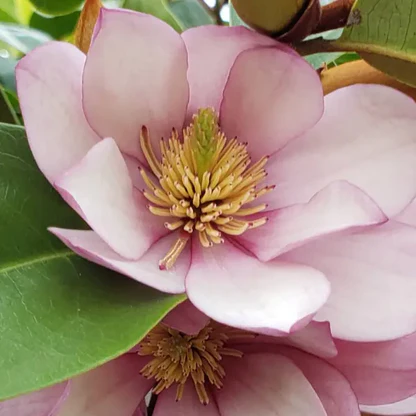
- Michelia ‘Fairy Blush’ is an evergreen, dense, and bushy shrub with soft pale‑green leaves. From late winter to spring, it produces fragrant lilac‑pink flowers that add colour and scent to the garden. Bred by renowned New Zealand nurseryman Mark Jury in Tikorangi, Taranaki, this variety is admired for its reliability and charm. As the plant does not tolerate heavy, waterlogged, or clay soils, excellent drainage is essential. It grows best in slightly acidic, free‑draining ground that keeps the roots healthy. The shrub responds well to pruning, which makes it ideal for hedging or screening. Alternatively, when left to grow as a small specimen tree, it reaches around 3.5 × 2.5 metres. Because of its compact size, it suits smaller gardens, courtyards, or even large containers as a potted feature.
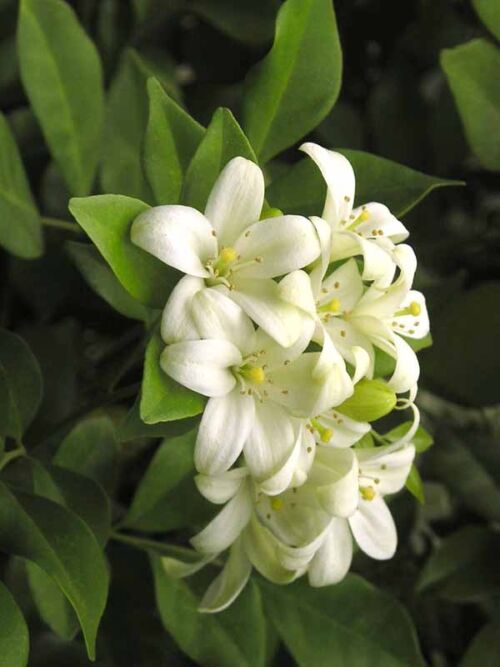
- Murraya paniculata, commonly known as Orange Jessamine, is a small tropical evergreen tree or shrub with glossy, dark green pinnate leaves. It grows densely and compactly, while also maintaining a moderate growth rate. In spring, it produces masses of highly fragrant white flowers with a citrus-like scent. These blooms smell similar to orange blossoms and become most fragrant at night. Orange Jessamine is native to a wide region across tropical and subtropical Asia and Australia and grows best in rich, moist, well-drained soil and thrives in full sun to part shade. Moreover, it performs well in sheltered locations protected from strong winds. This popular shrub is ideal for creating small hedges or borders and is well suited to compact gardens and containers. The common hedging height is 1.0–3.0 m, although it can reach 4 × 3 m when left untrimmed.
- Tangor Ugli, also called the Jamaican tangelo, is a unique citrus hybrid combining grapefruit, orange, and tangerine. The tree grows vigorously with an upright habit and classic green citrus foliage. In summer, it produces fragrant white blossoms that soon develop into large, orange, bumpy fruit. Fruit matures from October to December, are easy to peel, juicy and sweet. Although its name sounds unusual, the fruit remains exceptionally delicious. First discovered growing wild in Jamaica between 1917 and 1924, Tangor Ugli has become a popular garden citrus. The tree typically reaches around 3 × 2 metres, making it suitable for small gardens and compact spaces. It grows best in full sun, which supports strong growth and reliable fruiting. This variety prefers fertile, well draining soil rich in organic matter. However, it does not tolerate heavy clay or waterlogged conditions. Because it is a heavy feeder, it benefits from regular citrus fertiliser during spring and summer. Tangor Ugli suits sheltered courtyards, smaller gardens, and even large containers. With the right care, it rewards growers with abundant crops and standout flavour, making it one of the most enjoyable citrus varieties to cultivate.




Why buy online?
Buying plants and trees online doesn’t have to feel risky or impersonal. At Black Bridge Nurseries, we’ve made it simple, safe, and satisfying — so you can shop with confidence, from the comfort of home.