Moist Well Drained
- Camellia hybrid ‘Nicky Crisp’ is a slower-growing, compact shrub with dense foliage and deep green leaves. Its neat form makes it an attractive choice for structured plantings. In addition, small pale pink semi-double flowers with bright yellow stamens appear for 5–6 weeks during winter. These blooms add soft colour and seasonal interest to the garden. Moreover, this camellia thrives in full sun or dappled shade when planted in well-drained acidic soil. Prune after flowering to encourage bushiness. It makes an outstanding hedge or border, especially in smaller gardens, and can reach up to 2m if left untrimmed.
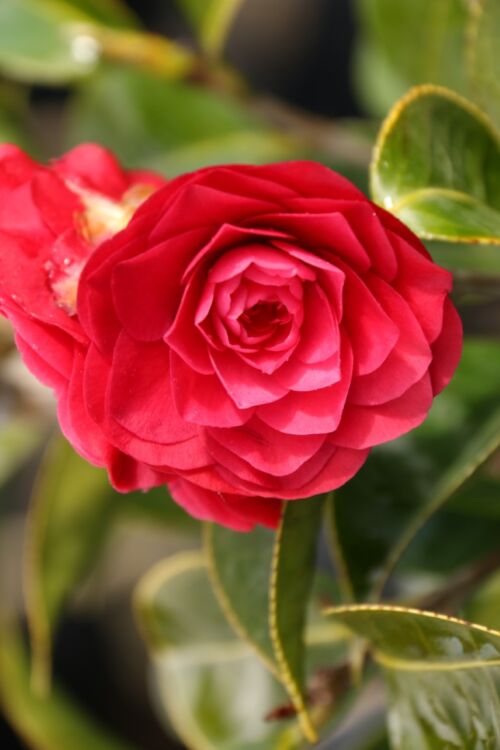
- Camellia japonica ‘Kramers Supreme’ features glowing red flowers are peony form with mixed petals and petaloides in full rounded forms. Mid-late season Fragrant. Vigorous compact growth. Japonica camellias make an excellent hedge but are also useful as a stand alone small tree in the garden. Plant in full sun or dappled shade in well drained acidic soil. Prune after flowering to encourage bushy growth. Can also be allowed to grow on to form a larger screen.
- Camellia japonica ‘Red Red Rose’ is an evergreen shrub with glossy green foliage. New growth shows attractive salmon tips, adding seasonal interest. In early summer, rich red, formal double blooms create a striking display that brightens the garden. Moreover, Japonica camellias are versatile. They make excellent hedges, yet they also shine as stand-alone small trees. Plant them in full sun or shaded areas, ensuring well-drained acidic soil for best results. After flowering, prune to encourage bushy growth. Alternatively, allow the plant to develop into a larger screen. In addition, this camellia can be planted in larger pots and also suits topiary work, offering flexibility for different garden designs
- Camellia japonica ‘Roger Hall’ is an evergreen shrub with glossy green foliage. In early summer, bright red, small to medium, formal double flowers create a striking display that brightens the garden. Moreover, Japonica camellias are versatile. They make excellent hedges, yet they also shine as stand-alone small trees. Plant them in full sun or shaded areas, ensuring well-drained acidic soil for best results. After flowering, prune to encourage bushy growth. Alternatively, allow the plant to develop into a larger screen. In addition, this camellia can be planted in larger pots and also suits topiary work, offering flexibility for different garden designs.
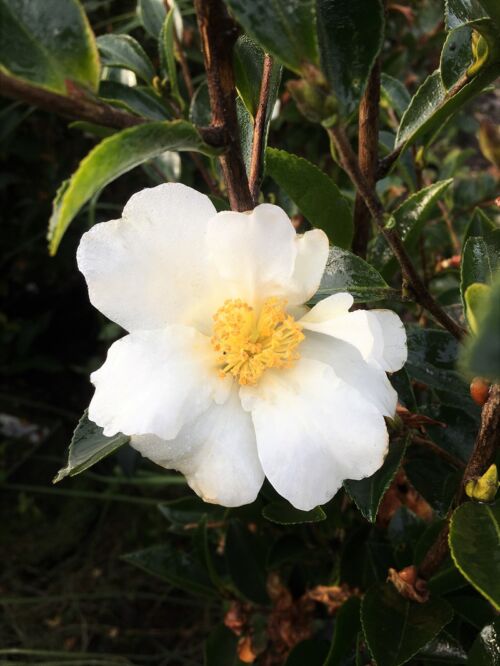
- Camellia sasanqua ‘Setsugekka’ is among the most popular flowering camellias. This moderately fast-growing upright shrub showcases white blooms from autumn through winter. Each flower features a ruffled edge, a bright cluster of golden stamens at the centre, and a delightful fragrance that enhances the garden. In addition to its flowers, the shrub offers dense, glossy green foliage. Therefore, it is an excellent choice for hedging at various heights. It responds well to trimming and, alternatively, can be grown as a striking standalone specimen or shaped as a topiary. Although camellias originate from China, cultivars like ‘Setsugeka’ are now bred worldwide. As a result, they are admired for their ornamental appeal and adaptability, making them suitable for diverse garden styles and climates. For best results, position this plant in full sun or dappled shade. To ensure healthy growth, place it in well-draining, acidic soil enriched with organic matter. Moreover, pruning after flowering promotes bushier and more compact growth. Typically, this variety grows to around 2.5m tall and 2.0m wide; however, it can be allowed to expand further, creating an effective screen in the garden
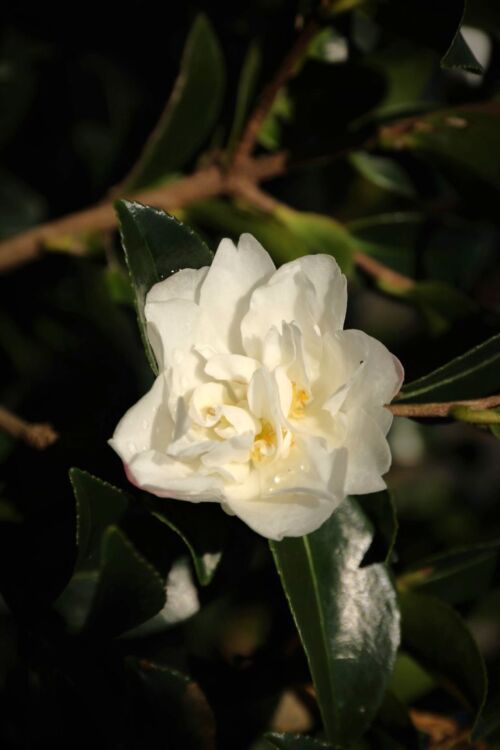
- Camellia sasanqua ‘Early Pearly’ is a moderately fast-growing upright shrub that adds seasonal colour to the garden. Beginning in autumn and continuing through winter, it showcases small, formal double blooms with a soft blush of pink and a subtle fragrance. In addition to its flowers, the plant features dense, glossy green foliage—making it an excellent choice for hedging at various heights. It responds well to trimming and, alternatively, can be grown as a striking standalone specimen. Although camellias originate from China, cultivars like ‘Early Pearly’ are now bred globally for their ornamental appeal and adaptability. For best results, plant in full sun or dappled shade in moist, well-drained acidic soil. After flowering, pruning will encourage bushier, more compact growth. Typically, this variety reaches approximately 2.0m tall by 1.5m wide; however, it can be allowed to grow larger to form an effective screen
- Camellia sasanqua ‘Paradise Helen’ is a moderately fast-growing upright shrub. In autumn and continuing into winter, it showcases masses of pink buds that open into dazzling double white flowers with bright yellow stamens, creating a striking seasonal display. In addition to its blooms, the shrub features dense, glossy green foliage. Therefore, it is an excellent choice for hedging at various heights. It responds well to trimming and, alternatively, can be grown as a bold standalone specimen. ‘Paradise Helen’ is an Australian-bred cultivar of the Camellia sasanqua species, which is native to China and Japan. It was developed by Paradise Plants, highlighting its strong ornamental appeal and adaptability. For best results, plant in full sun or dappled shade in moist, well-drained acidic soil. Furthermore, pruning after flowering encourages bushier, more compact growth. Typically, this variety reaches about 2.5m tall by 2.0m wide, yet it can grow larger to form an effective screen
- Camellia sasanqua ‘Silver Dollar’ is a compact evergreen shrub that grows smaller in size yet makes a big impact. From autumn into winter, it produces pure white, ruffled double flowers of medium size, adding elegance to the garden. In addition to its blooms, the shrub displays dense, glossy green foliage. Consequently, it is an excellent choice for hedging at various heights. It responds well to trimming and, alternatively, can be shaped into topiaries or grown as a striking specimen. Although camellias originate from China, cultivars like ‘Silver Dollar’ are now bred worldwide. As a result, they are valued for their ornamental appeal and adaptability across different climates and garden styles. For best results, plant in full sun or dappled shade in moist, well-drained acidic soil. Furthermore, pruning after flowering encourages bushier, more compact growth. Typically, this variety reaches around 2.0m tall by 1.5m wide, yet it can grow larger to form an effective screen.
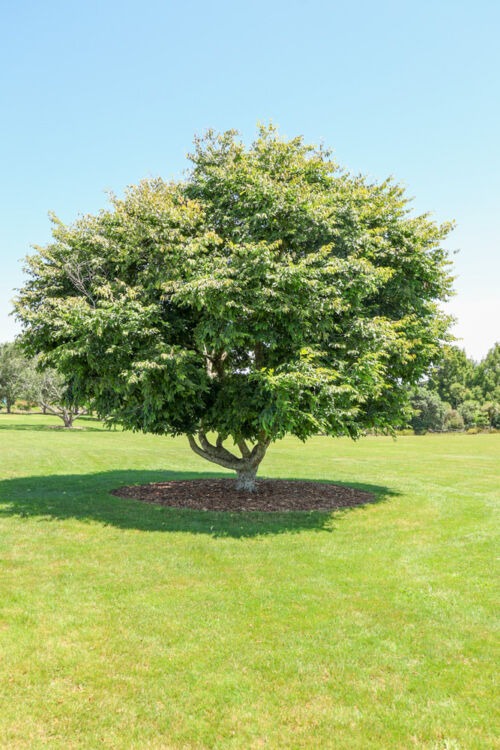
- Carpinus betulus, commonly known as Hornbeam, is a deciduous tree native to Europe, admired for its versatility and elegant form. Its pale grey, short, and slightly twisted trunk adds character, making it a standout in both formal and natural landscapes. Widely favoured for hedging, Hornbeam’s branches can be easily intertwined and trimmed to form dense screens, shelters, or low hedges. It can also be pleached to create structured, architectural lines—ideal for garden borders or avenues. The tree features oval, ribbed green leaves that transform in autumn with vibrant shades of yellow and orange, eventually turning brown and remaining on the tree well into winter, offering seasonal interest. Hornbeam prefers moist, well-drained soil and adapts well to regular pruning. While it can grow to approximately 12 metres tall and 7 metres wide, it responds beautifully to shaping and can be maintained at a desired height.
- Carpinus betulus 'Fastigiata', commonly known as Upright Hornbeam, is a deciduous tree with a narrow, columnar form that gradually broadens as it matures. This refined cultivar of the European Hornbeam remains in its tight form making it ideal for structured landscapes, offering both formality and seasonal interest. During summer, its oval, ribbed green leaves create a lush canopy. As autumn arrives, the foliage transitions into warm shades of yellow and orange, eventually turning brown and remaining on the tree well into winter adding texture and colour even in the colder months. Moreover, this tree thrives in moist, well-drained soil and prefers a sunny position. Thanks to its upright habit and tolerance for close planting, it makes an excellent choice for street planting, avenues, or as a screen. Reaching approximately 8 metres tall and 3 metres wide, The Upright Hornbeam is a versatile and low-maintenance option for both urban and rural settings.
- Carpodetus serratus – Putaputaweta is a small, rounded evergreen tree native to New Zealand. Its upright branches carry dark green serrated leaves, giving the tree a distinctive texture and form. In early summer, masses of tiny white flowers appear, creating a delicate display. This tree prefers a sheltered site and tolerates damp conditions, making it versatile in challenging environments. Moreover, Putaputaweta occurs across diverse habitats, from coastal areas to mountain regions, along streams and forest edges. Growing to approximately 5m high and 3m wide, it makes an excellent small shade tree. Interestingly, the epithet serratus comes from Latin, meaning “saw-toothed” or “serrated” and refers to the leaves.
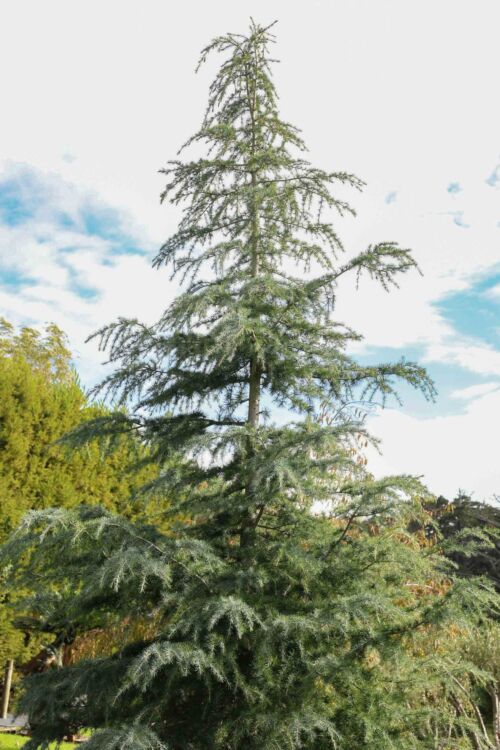
- A distinctly upright pyramidal tree, with evenly spaced weeping branches in layers. Slender needle like leaves are blue grey. An excellent specimen tree.
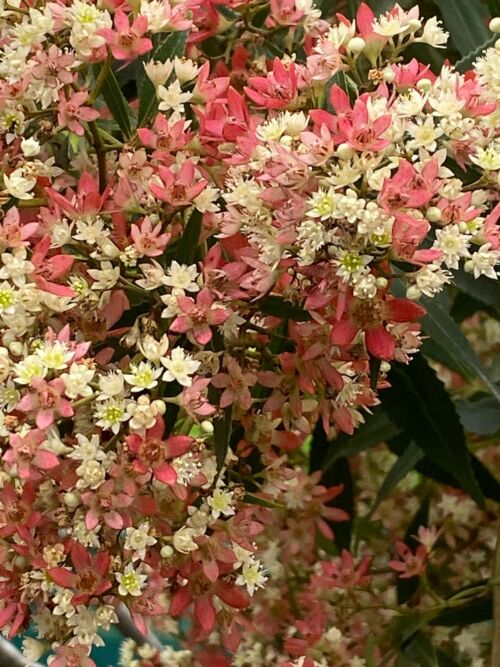
- Ceratopetalum gummiferum, known as the New South Wales Christmas Bush, is a small evergreen tree native to Australia. Its narrow leaves emerge pinkish-bronze before maturing to dark green, creating year-round interest in the garden. In summer, clusters of small white flowers in creamy bracts transform into vivid red-pink, completely covering the tree. This spectacular display occurs around Christmas, making it a highly popular choice. This is where the common name comes from...New South Wales Christmas Bush It thrives in full sun and prefers moist, well-drained soil, yet tolerates drier conditions once established. Growing to approximately 5 × 3 metres, it can be trimmed easily and works beautifully as a large screen or feature plant.
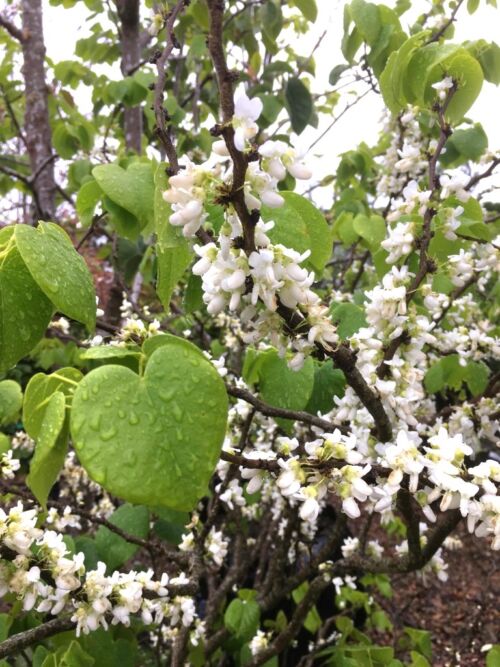
- Cercis canadensis 'Forest Pansy' is a small, deciduous tree with an open, spreading habit that gradually matures into a broad, rounded crown. In early spring, masses of small magenta, pea-like flowers burst into bloom on bare branches, creating a striking display before the foliage emerges. Soon after flowering, rich purple-red, heart-shaped leaves appear, adding depth and colour to the garden. As autumn approaches, these leaves transition into warm tones of orange and bronze, offering a final flourish before winter. Because of its compact size reaching approximately 3.5 x 3.0 metres, ‘Forest Pansy’ is an excellent feature tree for smaller gardens or courtyards. It responds well to pruning, making it easy to maintain a tidy shape. Additionally, it tolerates clay soils, although wet or poorly drained conditions should be avoided. For best results, plant in a more sheltered position to protect its delicate foliage. Interestingly, this tree originates from North America, and its Latin name canadensis fittingly means “of Canada” or “from Canada.” Whether you're designing a colourful garden or seeking a low-maintenance ornamental tree, ‘Forest Pansy’ delivers beauty across all seasons.
- 3.5 x 3.0m
- Small 1-5m
- Moderate - Fast
- Tree
- Round-Spreading
- Deciduous
- North America
- Prunus Thundercloud, Fagus Riversii, Fagus Sylv Purp, Acer Tamukeyama, Fraxinus Raywoodii, Acer Bloodgood.
- Purple-Red
- Oranges and Bronze
- Magenta
- No
- Moist well drained, Tolerates Clay
- Prefers Sheltered
- Small gardens, Courtyards
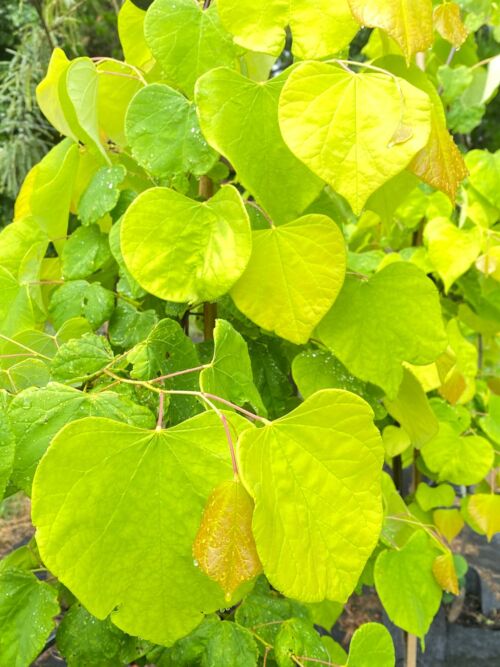
- Cercis canadensis 'Hearts of Gold' is a small, deciduous tree with an open, spreading habit that gradually matures into a broad, rounded crown. In early spring, masses of small magenta, pea-like flowers burst into bloom on bare branches, creating a striking display before the foliage emerges. Soon after flowering, golden yellow, heart-shaped leaves appear, adding light and colour to the garden. As autumn approaches, these leaves transition into warm tones of orange and bronze, offering a final flourish before winter. Because of its compact size reaching approximately 3.5 x 3.0 metres, ‘Hearts of Gold’ is an excellent feature tree for smaller gardens or courtyards. It responds well to pruning, making it easy to maintain a tidy shape. Additionally, it tolerates clay soils, although wet or poorly drained conditions should be avoided. For best results, plant in a more sheltered position to protect its delicate foliage. Interestingly, The 'Hearts of Gold' redbud was discovered in 2002 by Jon Roethling in a private garden in Greensboro, North Carolina, United States. It was then propagated and introduced to the market by Hidden Hollow Nursery in Tennessee.
- 3.5 x 3.0m
- Small 1-5m
- Moderate - Fast
- Tree
- Round-Spreading
- Deciduous
- North America
- Yellow
- Oranges and Bronze
- Magenta
- No
- Moist well drained, Tolerates Clay
- Prefers Sheltered
- Small gardens, Courtyards
- Cercis canadensis ‘Texas White’ is a small, deciduous tree with a rounded, vase‑like shape. Delicate branches reach upward and feature large, handsome, heart‑shaped leaves that shine green through summer and turn bright yellow in autumn. In early spring, masses of pure white, pea‑shaped flowers appear on the bare branches, creating a striking display. Moreover, this variety performs best in a sheltered position with moist, well‑drained soil and full sun. It grows to approximately 4 × 2.5 m, making it an excellent choice for smaller gardens. It also trims easily to maintain shape and height.
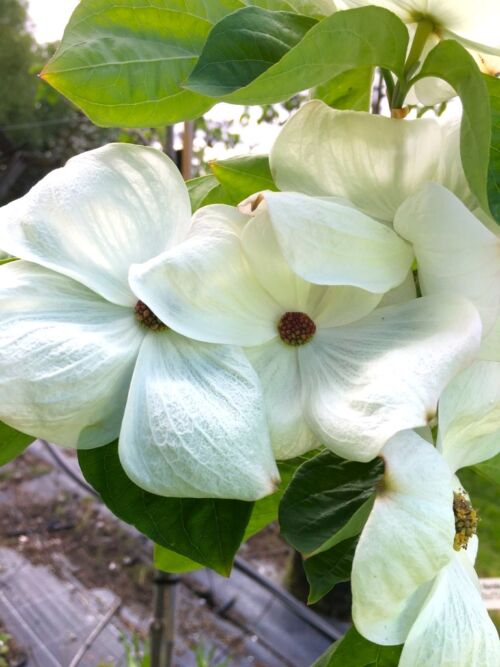
- Cornus ‘Eddies White Wonder’ is a compact deciduous tree with tiered, cascading branches and broad lime-green leaves. Its graceful form makes it a standout choice for smaller gardens. In spring, creamy-white flowers cover the branches, creating a stunning display. These blooms are followed by clusters of bright red berries, which attract birds and add seasonal interest. By autumn, the foliage transforms into spectacular shades of red and orange. This tree thrives in moist, well-drained soil, full sun, and sheltered spots. Reaching around 4 x 3 metres, it can be easily trimmed to maintain height and shape. As a result, it is the perfect specimen tree for limited spaces, offering beauty across all seasons.
- Corokia virgata ‘Geenty’s Green’ is a compact, bushy shrub native to New Zealand, celebrated for its vibrant green foliage and star-shaped yellow flowers that bloom in early summer. These are followed by small dark red berries that attract native birds, adding seasonal interest and biodiversity to your garden. Ideal for hedging, this versatile plant trims neatly into a tidy shape, ideal for low hedges or borders in larger or smaller gardens. It can be left to grow naturally into a larger screen as well. Once established, it thrives in exposed coastal, windy or dry conditions, making it a resilient choice for challenging sites. Mature plants reach approximately 2 metres high by 1.2 metres wide. Named in honour of New Zealand plantsman and Corokia enthusiast Mike Geenty, this cultivar has the Latin virgata, meaning “twiggy”—a reference to its fine branching structure.
- Corynocarpus laevigatus – Karaka is a dense, evergreen tree native to New Zealand. Its lush, glossy green foliage creates a bold, tropical impression—perfect for adding instant visual appeal to gardens and landscapes. Flowering in late winter to spring, it produces delicate green-cream clusters. By summer, vibrant orange berry-like fruits emerge, attracting native kererū, who help disperse the seeds. Exceptionally hardy, Karaka withstands strong winds, coastal exposure, and drought. However, it dislikes waterlogged soils. Ideal as a privacy screen or shade canopy, this tree grows to approximately 15–20 metres tall and 8 metres wide.
- Corynocarpus laevigatus ‘Minima’ – Karaka, is a compact male form of the New Zealand native Karaka tree. Its glossy green leaves resemble the standard Karaka but are noticeably smaller, creating a lush, tropical look. As a male cultivar, it rarely produces fruit or seed. This makes it a tidy choice for urban gardens or formal landscapes where minimal litter is preferred. Thriving in full sun, it prefers moist, well-drained soil. It also tolerates coastal conditions and wind, making it highly versatile. With its dense branching and slower growth, ‘Minima’ is ideal for hedging, screening, or shaping into a privacy barrier.Interestingly, the species name laevigatus means “smooth” in Latin, referring to the texture of its foliage. In eight years, it typically reaches around 4.5 x 3.0 metres.