Moist Well Drained
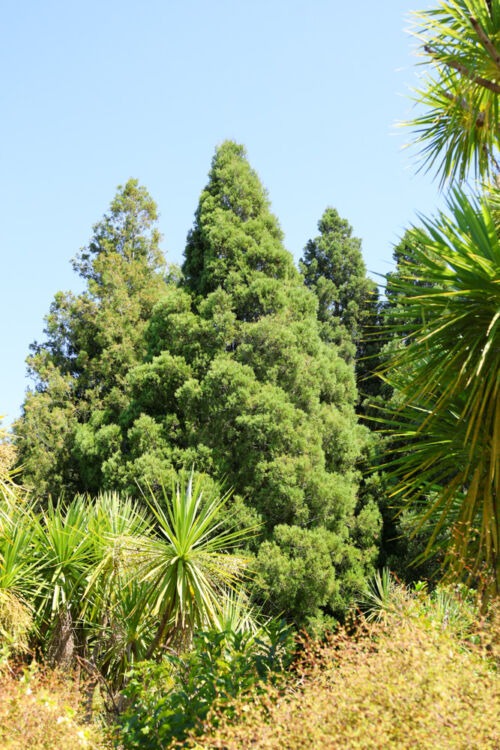
- Cryptomeria japonica, or Japanese Cedar, is an evergreen tree native to Japan. It grows quickly and forms a tall, pyramidal shape with a straight, columnar trunk. Its reddish‑brown bark peels in vertical strips, adding year‑round interest. The soft, awl‑shaped leaves spiral along the twigs and turn a warm copper‑bronze in winter.The branches spread slightly with a soft, pendulous habit. This tree thrives in moist, well‑drained soil and full sun, yet it will not tolerate wet conditions. Thanks to its dense growth, it works exceptionally well as a shelter belt and can be trimmed into a narrow, tidy “wall.” It also tolerates both windy sites and coastal environments, making it a versatile choice for exposed landscapes.Japanese Cedar typically reaches around 10 × 5 m in ten years. However, in ideal conditions, it can grow to approximately 20 m at full maturity.
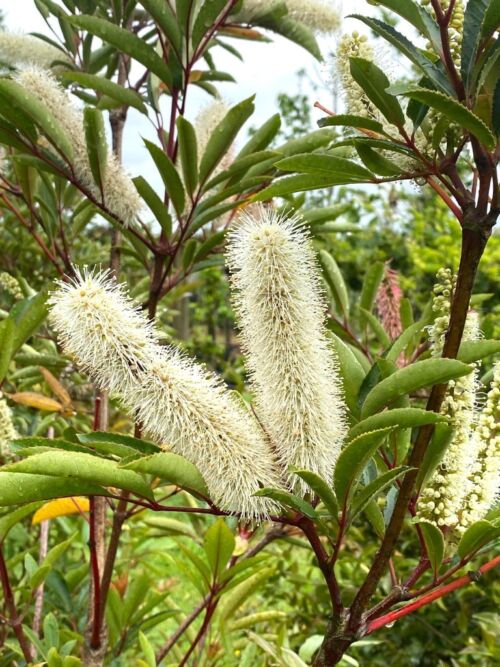
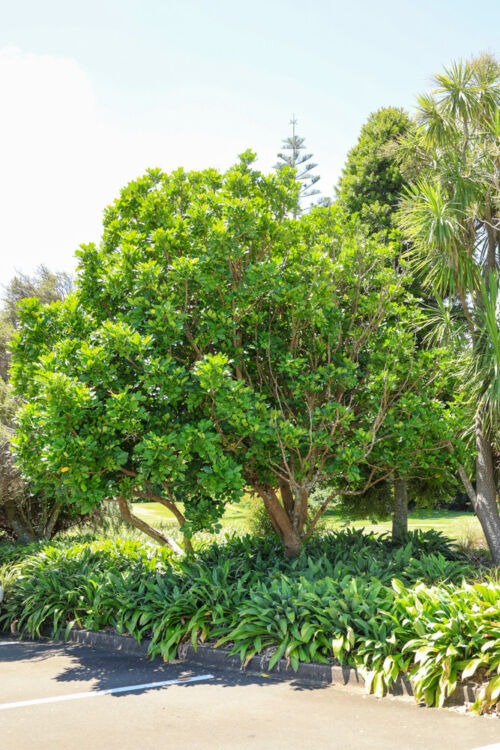
- Cunonia capensis, commonly known as Butter Knife Bush, is a compact evergreen tree. Its tropical dark green leaves are accented by reddish stems, while new growth emerges in a striking bronze hue. In late summer, it produces long, showy panicles of scented flowers with a bottlebrush-like appearance. These blooms add vibrant seasonal interest and attract pollinators to the garden. The tree’s name comes from its large stipules, which press together around the growth tip like a butter knife. “Capensis” refers to its origin near the Cape of Good Hope in South Africa. This beautiful tree suits smaller gardens perfectly. It thrives in full sun and prefers well-drained, moist soil. Expect it to reach around 5 metres tall and 3 metres wide.
- Cupressus leylandii ‘Ovensii’ is a vigorous, evergreen conifer known for its rapid growth and resistance to canker. Its attractive dark green, flattened foliage adds density making it a standout performer in functional landscapes. Thanks to its fast growth and abundant branching, this variety excels as a shelterbelt—especially when regularly trimmed to maintain shape and strength. Consequently, it’s a popular choice for Kiwifruit orchards and other commercial plantings where protection from wind is essential. Although rarely grown as a specimen tree, ‘Ovensii’ thrives in moist, well-drained soils. However, it does not tolerate poorly drained conditions. Furthermore, it’s notably hardy to wind, reinforcing its reputation as a reliable barrier in exposed environments. Ultimately, this robust cultivar reaches approximately 10 meters in height and 5 meters in width, creating a bold, practical presence in any rural or commercial setting.
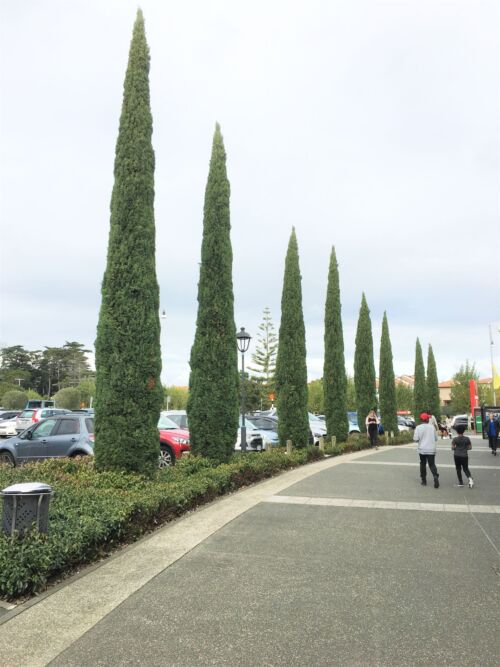
- Cupressus sempervirens 'Totem', commonly known as Totem Cypress, is a tightly upright-growing conifer with striking bluish-green foliage. Notably, these trees are iconic in Italy—especially throughout Tuscany—where they define the landscape and grace Renaissance gardens with timeless elegance. Thanks to their slender, vertical form, Totem Cypresses create bold architectural accents that elevate formal landscapes. Moreover, this cutting-grown cultivar ensures a consistently narrow columnar shape and even growth rate, making it a reliable choice for symmetry and structure. Unlike other varieties, its foliage remains dense and intact, resisting the tendency to “fall out.” Additionally, it offers improved resistance to fungal canker, making it a hardy option for challenging conditions. Often planted in rows as living pillars, it’s ideal for lining entranceways and avenues with a commanding presence. For optimal performance, Totem Cypress prefers drier soil and well-drained sites. Ultimately, it grows to approximately 10 meters tall and 2 meters wide delivering a bold, sculptural impact wherever it’s planted.
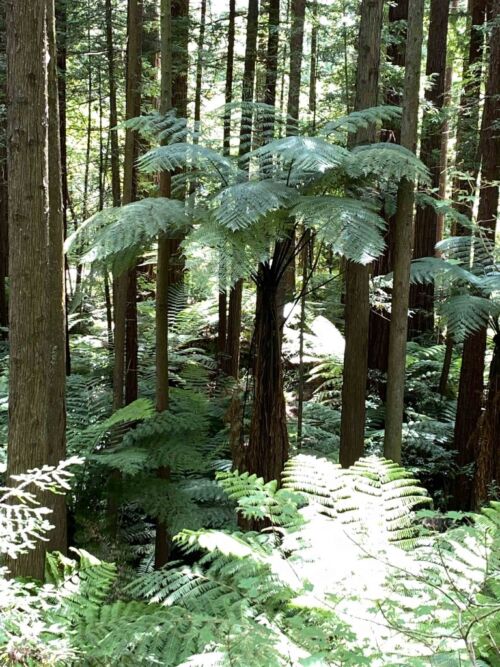
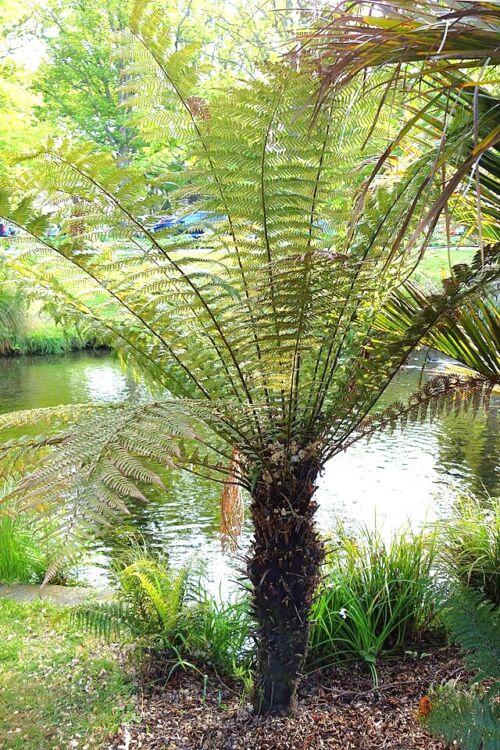
- Silver Fern Iconic New Zealand native tree fern and the inspiration of the national Emblem. Slow-growing, can reach heights of up to 12 meters. Its slender form is adorned with vibrant green fronds that can extend up to 4 meters, distinguished by their striking silver undersides. Can attain up to apx 12 x 4m in ideal conditions. Apx 6 x 4 10yr
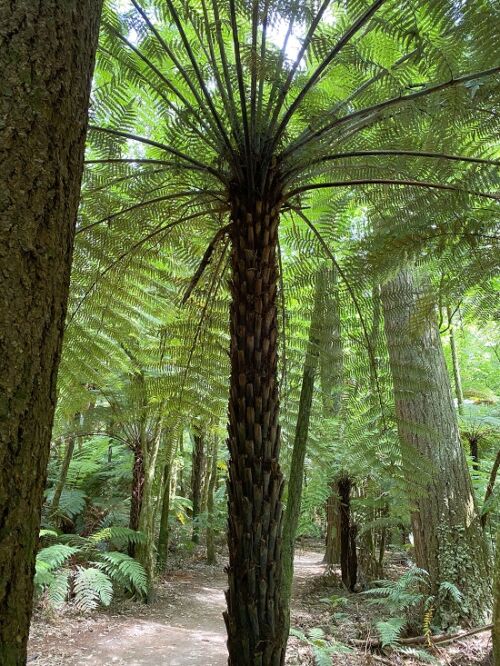
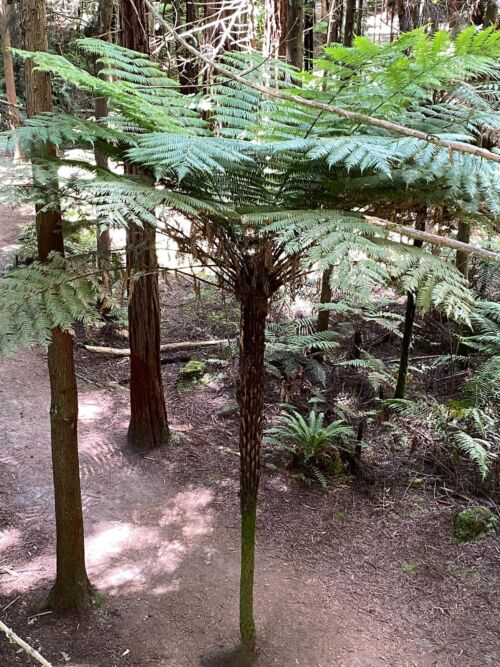
- The tallest & most common of NZ’s tree ferns. A fast-growing tree fern with a slender, black trunk that features hexagonal patterns where old fronds have grown. Forms a large crown of gracefully arching fronds up to 5m. Keep well-watered and the soil evenly damp, use a good mulch around the base. Will tolerate sun. Protect from frosts when young. Can attain apx 20 x 5m in ideal conditions. apx 7 x 5m 10yr
- Kahikatea, also known as White Pine, stands as New Zealand’s tallest native tree and commands attention with its strong, upright form. As a coniferous species, it grows relatively fast and develops a bold presence in wetland and lowland environments. In its juvenile stage, Kahikatea features drooping, needle-like foliage with a distinctive brown-bronze hue. Over time, this matures into a mid-green canopy as the tree gains height and structure. For many years, it maintains a columnar to oval shape before eventually opening into a broad, stately crown. Typically found growing in groups across swampy areas throughout New Zealand, Kahikatea thrives in damp soils and performs well in restoration projects and native plantings. Within 10 years, it can reach approximately 10 metres in height and 5 metres in width. Given time, it matures into a towering specimen—often exceeding 40 metres. This iconic tree is not only a symbol of strength and endurance but also plays a vital role in New Zealand’s ecological heritage.
- 10 x 5 in 10 Years, 40+ at maturity
- Tall 10+m
- Fast
- Tree
- Columnar-Oval
- Deciduous
- New Zealand/div>
- Dacrydium Cupressinum, Liriodendron tulipifera fastigiata, Olea El Greco, Knightia Excelsa, Acer Bowall, Poplar crow’s nest, Quercus robur fastigiata, Carpinus Betulus fastigiata
- Green
- Damp-Wet Tolerant
- Inhabits mostly lowland forests between 0–600 m in North and South Islands
- Statement tree, Bird feeding
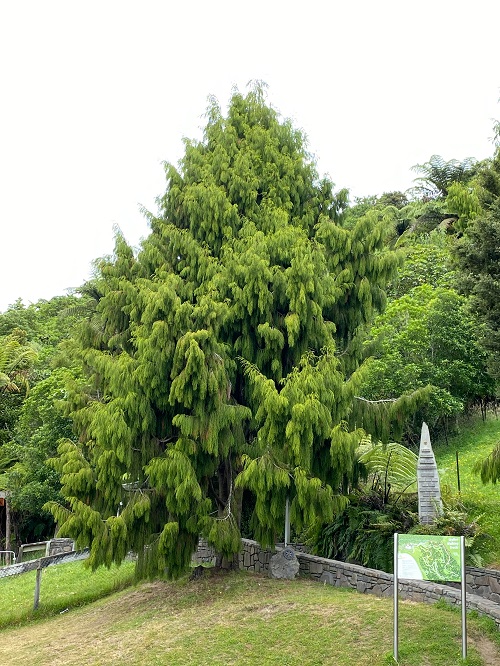
- Dacrydium cupressinum – Rimu, is and evergreen conifer native to New Zealand and is one of the most widespread and easily recognised forest trees in both the North and South Islands. With a slow to moderate growth rate, it develops into a commanding presence over time—ideal for both natural landscapes and structured garden settings. In its juvenile form, Rimu presents as a striking, pyramidal specimen with gracefully weeping branches and small, awl-shaped dark green leaves. As the tree matures, it broadens into a more upright form, shedding bark in thick, scaly plates that add rugged texture to its trunk. Thriving in cool, moist conditions, Rimu is well-suited to temperate gardens and native restoration projects. Within 10 years, it typically reaches around 10 metres in height and 4 metres in width. Given time, it can attain a majestic size of up to 25 metres tall and 9 metres wide. Whether planted for its ornamental value or ecological significance, Rimu stands as a bold and enduring symbol of New Zealand’s forest heritage.
- A stout tree fern, distinguished by its thick fibrous, soft trunk which can reach up to 6 m tall, over a very long time. Fronds grow 1-2m in length forming dense crown in the shape of a shuttlecock.. Dead fronds leave a tidy skirt beneath crown. While slower growing It does well in average garden conditions. This variety is suited to a sunny position or light shade. Found in lowland and lower mountain forest. Grows to apx 6 x 2m
-
- Description
Wheki or Brown Ponga is a hardy NZ native tree fern. It grows a tall, slender, brown trunk to approx 6m. Fronds can reach 1.5 to 3m in length which give it the appearance of a small “umbrella” on top of the trunk. It is the most popular New Zealand tree fern which is easy to grow and maintain. Hardiness and smaller dimensions make it an excellent garden variety. Height x Width 6 x 3 Height Range Medium 5-10m Growth Rate Moderate Plant Type Palm Shape / Habit Palm Country of Origin New Zealand Similar to Consider Cyathea medularis, Cyathea dealbata, Dicksonia fibrosa. - Leaf
Leaf Colour Green - Flower
Flower Colour Nil - Uses
Specimen Yes Accent Yes Note: Growth, height and grade information are given in good faith but are subject to natural variables beyond our control. - Didymocheton spectabilis – Kohekohe is a striking evergreen tree native to New Zealand. Found naturally in coastal forests across the North Island, it grows quickly and forms a handsome canopy, ideal for coastal gardens. Its large, tropical-looking leaves can reach up to 40cm long. From March to June, elegant, small waxy white flowers bloom directly from the trunk and branches, followed by fruit that enhances its exotic appeal. Kohekohe prefers moist, well-drained soil and full sun. It tolerates coastal conditions but dislikes waterlogged areas. In ten years, it typically reaches around 10 x 4 metres. At full maturity, it can grow up to 15 metres tall. Formerly known as Dysoxylum spectabilis, it remains a standout choice for native planting schemes.
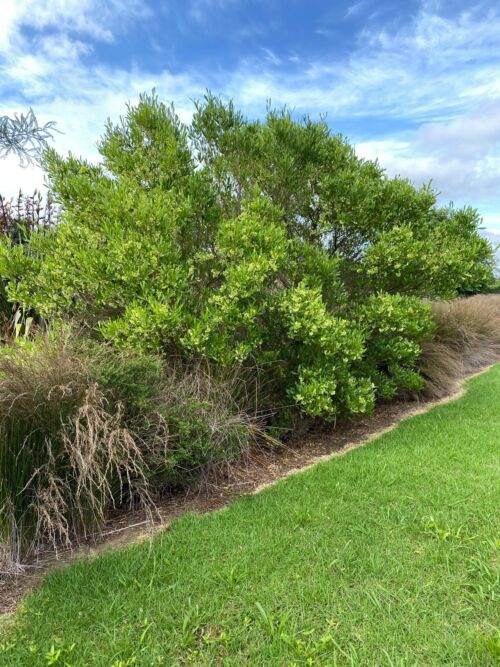
- Dodonaea viscosa also known as Ake Ake, is a small, spreading evergreen tree native to New Zealand. Its long, leathery light green leaves bring a fresh, vibrant look to any landscape. In summer, it produces unusual yellow-green papery flower clusters, adding seasonal interest. Once established, Ake Ake is highly tolerant of dry, sandy or rocky soils, salt spray, wind, and drought, but prefers a moist well drained soil. This hardy tree thrives in full sun and is ideal for exposed or coastal sites. It works beautifully as a windbreak or privacy screen in tough conditions. To maintain a dense, bushy form, regular trimming is recommended. Typically, it grows to around 3.5 metres high and 2 metres wide.
- Dodonaea viscosa ‘Purpurea’ – Purple Akeake is a tough, upright native New Zealand tree with bold, glossy purple-red foliage that deepens in colour during the cooler months. In summer, it puts on a show with unusual light red to purple papery flower clusters that add a rugged splash of contrast. Over time, Purple Akeake spreads out, making it a good choice for privacy screening or adding colour into compact garden spaces. It handles a wide range of soil types, salt spray, wind, and drought once established—but thrives best in moist, well-drained soil. Trim regularly to maintain a dense, bushy form. The name viscosa refers to the sticky texture of its seeds. Grows to approximately 3.5m high x 2.0m wide.
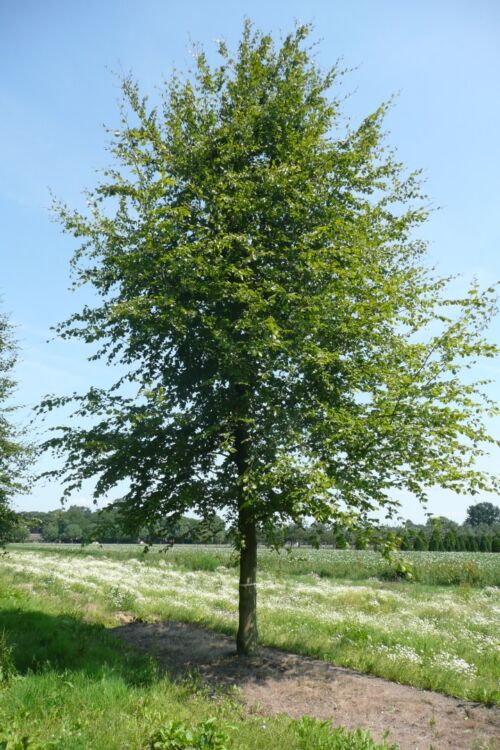
- Fagus sylvatica – English Beech is a handsome, deciduous tree with a naturally pyramidal shape. Originating from Southern Europe, it produces glossy green foliage in spring. When young, the leaves are covered with fine silken hairs, and they mature to golden yellows in autumn, creating a striking seasonal display. This tree thrives in well-draining loamy soil, especially when lime is present. It prefers a sunny position, where it grows vigorously and develops into an excellent lawn specimen or shade tree. English Beech reaches approximately 10 x 5 metres. However, it can also be trained into a large screen or woven together to form a formal hedge, offering versatility in landscape design. Interestingly, sylvatica is a Latin adjective meaning “of the woods” or “forest-dwelling.”.
- Fagus sylvatica ‘Purpurea’, or Copper Beech, is a magnificent deciduous tree with a dense, pyramid shape. Its new leaves emerge in striking shades of red, then mature into copper bronze tones and finally deep, rich purples. These colourful leaves are also popular for floral work. Originating from Southern Europe, this beech thrives naturally in forested environments, which is reflected in the name “sylvatica.” It grows best in fertile, well drained soil, and planting it in full sun helps maximise leaf colour throughout the season. Copper Beech makes an impressive lawn specimen for larger properties. It can also be trained into a tall screen or woven to form a striking, trimmed formal hedge. The tree reaches around 10 × 4 metres in about ten years and eventually matures to approximately 25 × 10 metres.
- Fagus sylvatica ‘Riversii’ – Rivers Purple Beech is a striking, round-shaped deciduous tree. Its deep purple-red, almost black leaves have wavy margins and drop cleanly in winter, creating a bold seasonal display. Originally developed in England, this variety was introduced by Thomas Rivers’ nursery around 1860. It remains the darkest of the copper beeches, admired for its dramatic foliage and heritage value. The Riversii Beech thrives in moist, well-drained soil and full sun, which enhances its rich colour. It grows to approximately 10 x 5 metres, making it an excellent shade tree for parks, avenues, and spacious landscapes.
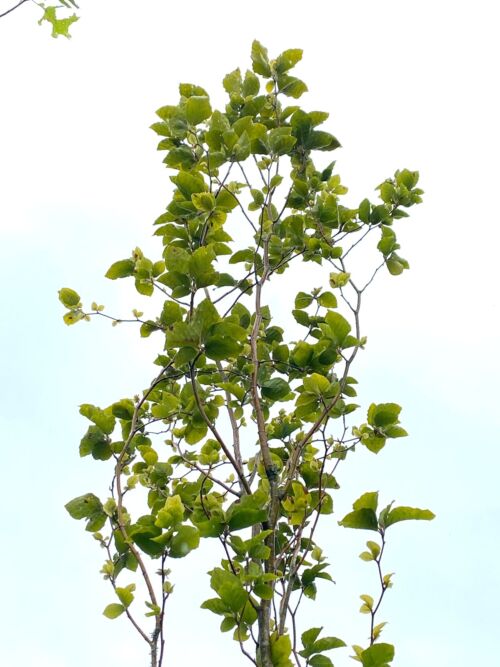
- Fagus sylvatica 'Dawyck' is a tall, columnar deciduous tree with a distinctly upright habit and moderate growth rate. Over time, its narrow form broadens, adding architectural style to any landscape. In early spring, its vertical branches are cloaked in bright glossy green leaves. As the seasons shift, the foliage transforms into a warm cinnamon brown over autumn. Thanks to its slender profile, 'Dawyck' is ideal for planting where space is limited—whether beside pathways, framing entrances, or standing as bold vertical accents. With origins in Scotland, it brings both heritage and sophistication to gardens and urban settings alike. Typically reaching around 8.0m in height and 2.5m in width, this beech variety is a standout specimen for structured planting schemes or formal avenues.
- Feijoa sellowiana – Feijoa (Acca sellowiana) is a smaller, fast-growing, evergreen tree with a compact, rounded shape. Its stout, leathery green leaves give it a lush, tropical appearance, ideal for adding texture to garden spaces. Native to South America, Feijoa is among the hardiest subtropical fruit trees. It tolerates light frost and produces abundant fruit from April to June, which drops easily when ripe. Sellowiana is the parent species of many popular grafted and cutting-grown cultivars. It thrives in full sun and prefers a moist, well-drained soil. Typically reaching around 4 x 3 metres tall they are easily trimmed to shape and make an excellent hedge, screen or stand-alone fruit tree. Ideal for a smaller garden.
- Ficus benjamina ‘Danielle’ is a well-loved indoor plant, yet it also flourishes outdoors in warmer climates. Native to South East Asia and Australia, its compact, bushy form and glossy dark green leaves bring a lush, tropical feel to any garden. This variety thrives in a sheltered position with bright, indirect light. For best results, plant in evenly moist, well-draining soil and protect from harsh conditions. It trims easily, making it perfect for creating neat, green hedges or shaped screens in smaller spaces. Indoors, its height varies depending on the container, often reaching up to 2.5 metres. Outdoors, it can grow to around 4 metres and responds well to regular pruning to maintain its form.
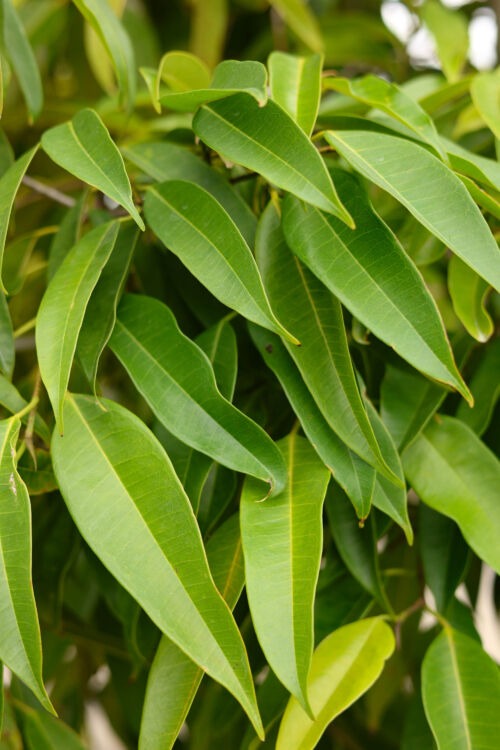
- Ficus binnendijkii ‘Amstel Queen’ – Narrow Leafed Fig, is a fast-growing evergreen tree with origins in North Africa. Its long, narrow dark green leaves are tightly packed, creating a graceful weeping effect that adds elegance to any garden. The lush foliage offers a tropical appeal, making it ideal for warm, sheltered outdoor spaces. It prefers moist, well-drained soil and thrives in protected positions. This versatile fig can also be grown in containers, both indoors and outdoors. Indoors, it performs best in a warm, brightly lit room, away from direct sunlight. Whether planted in the garden or kept in a pot, it makes an outstanding shade tree. Typically, it grows to around 7 metres tall and 5 metres wide.