Moist Well Drained
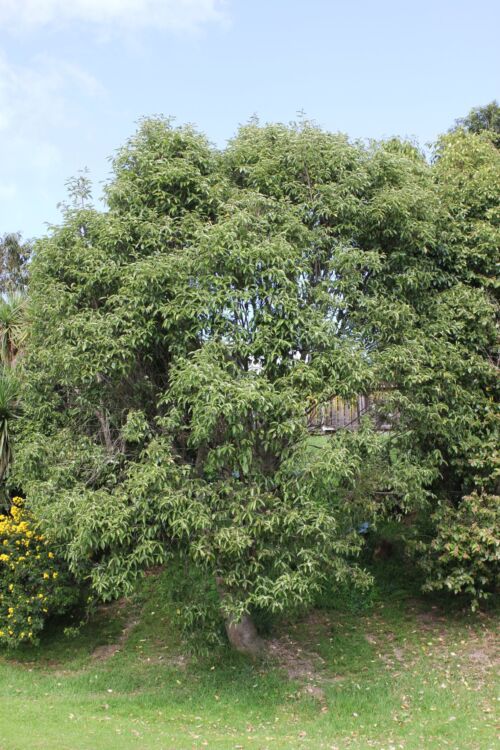
- Hoheria populnea, known as Lacebark, is a compact evergreen tree native to New Zealand. Its slender branches carry fresh, light green leaves that are semi-glossy, veined, and sharply toothed, giving it a delicate yet vibrant appearance. From late summer into autumn, the tree bursts into bloom with masses of starry, snow-white flowers. These striking blossoms often conceal the foliage, creating a dazzling seasonal display. The name “lacebark” refers to its fibrous inner bark, which resembles fine lace. This net-like material can be torn into ribbons and was traditionally used by Māori and Pākehā for weaving hats, capes, and baskets. Thriving in full sun, it prefers moist, well-drained soil that doesn’t dry out too much. With its graceful form and cultural significance, it makes an ideal shade tree for smaller gardens. Expect it to grow to approximately 5 metres tall and 3 metres wide.
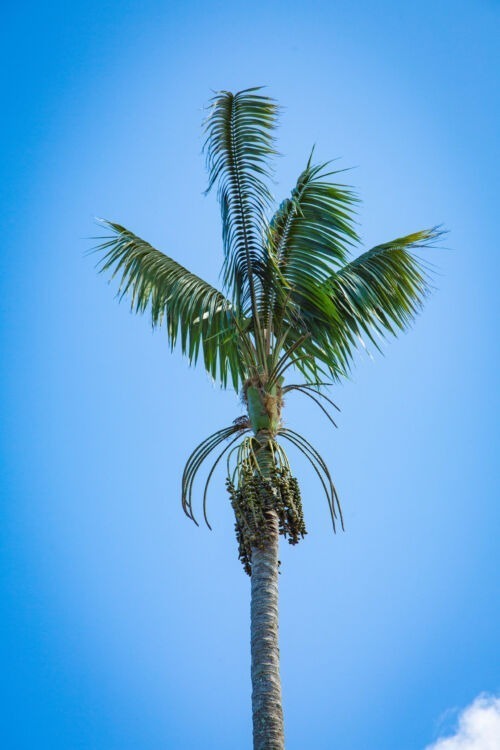
- Howea forsteriana, commonly known as the Kentia Palm, is an elegant, arching palm with shiny green fronds. Because of their feather-like appearance, these fronds create a graceful silhouette, making this palm one of the most popular choices for both indoor and outdoor settings. As the fronds naturally shed, the slender trunk becomes beautifully ringed. Over time, this adds visual texture and enhances its tropical appeal. Native to Lord Howe Island, it thrives in a range of climates between Australia and New Zealand. Thanks to its slow and steady growth, the Kentia Palm is perfect as a standout feature in tropical gardens. Moreover, it tolerates very low light, coastal exposure, and windy conditions, making it incredibly versatile. When young, it’s important to keep the palm moist and partly shaded. Eventually, it reaches around 5 metres in 10 years and can grow beyond 10 metres at full maturity, offering lasting impact with minimal fuss
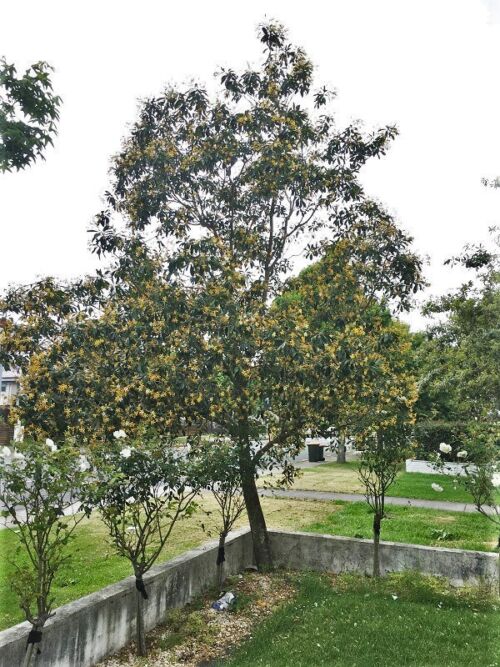
- Hymenosporum flavum known as the Australian Frangipani, is a vigorous, evergreen tree with an upright habit and open form. Its long glossy green foliage provides year-round interest, while the tree’s elegant structure makes it a standout feature in any garden. During spring and early summer, it bursts into clusters of creamy yellow flowers. These blooms release a delightful fragrance, attracting bees, butterflies, and nectar-loving birds, which in turn bring vibrant life and movement to your outdoor space. Native to Australia, this tree thrives in moist, well-drained soil and full sun. However, it benefits from being planted in a sheltered position, away from strong winds, ensuring healthy growth and long-lasting beauty. Reaching approximately 10m high and 4m wide, it suits both spacious and smaller gardens. With regular trimming, you can easily maintain a compact shape and control its height, making it a versatile choice for modern landscapes.
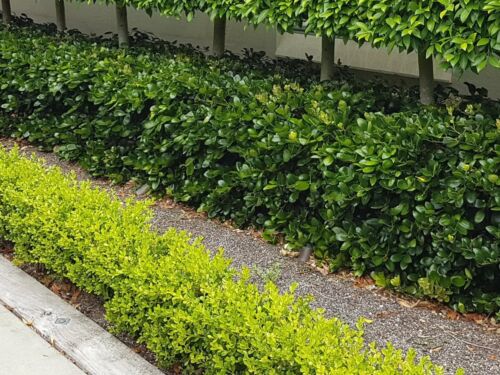
- Ilex ‘Largo’ Holly is a slower-growing, upright shrub with dense, bushy form. Its dark green oval leaves, developed in New Zealand, stand out because they have smooth edges, unlike the classic Holly. Moreover, this versatile shrub thrives in moist, well-drained soil and grows happily in full sun or partial shade. It performs beautifully as a border or hedge, and thanks to its compact size, it fits perfectly into smaller gardens. In addition, Ilex ‘Largo’ adapts well to coastal environments and can be shaped into elegant topiary. At maturity, it reaches approximately 3.5m high and 2.5m wide, making it both practical and decorative.
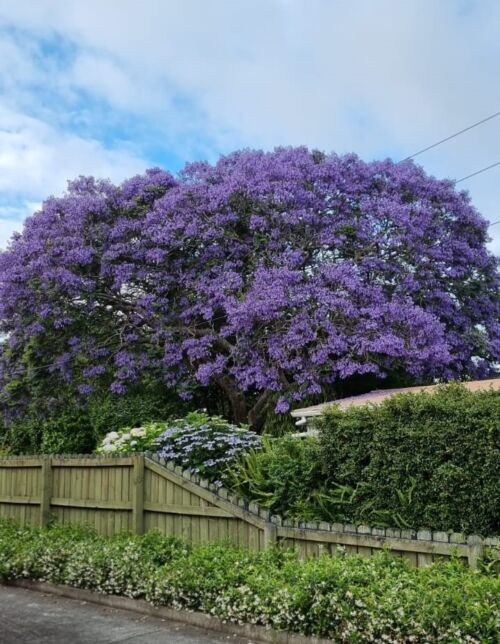
- Jacaranda mimosafolia - Jacaranda is a bold, fast-growing tree with a rugged, irregular crown and dynamic branches reaching outward, the Jacaranda instantly commands attention in any landscape. Although it is deciduous in all but the warmest climates, it still offers year-round visual interest thanks to its fine, feathery green foliage. As early summer arrives, its canopy transforms into a striking display, when soft purple blooms blanket the tree in breath taking colour. Not only does it provide beauty, but it also makes an excellent dappled shade tree. Native to south-central South America, this sub-tropical species thrives in sunny locations with moist, well-drained soil but will tolerate dryer once established. Typically, it grows to around 7 meters tall and 5 meters wide, making it a standout feature in gardens or larger landscapes.
- Juniperus chinensis ‘Kaizuka’, also known as Hollywood Juniper, is a striking evergreen renowned for its sculptural form. Its branches spiral upward in a distinctly twisting motion, adorned with vivid bright green foliage that adds year-round interest. Thanks to its versatility, this variety can be left to grow naturally or trimmed into soft, rounded pillows—creating the illusion of floating clouds in the landscape. Moreover, it tolerates drought, wind, and coastal conditions, making it a resilient and adaptable choice. As a result, it serves as a unique focal point in any garden setting. With moderately fast growth and parentage rooted in China and Japan, it brings both elegance and heritage to outdoor spaces. Importantly, it requires good drainage to thrive.
- Knightia excelsa, commonly known as Rewarewa, is a striking evergreen native to New Zealand. It forms a slender, erect, and tapering tree with long, green serrated leaves that adds texture and structure to the landscape. In spring, it produces very unusual tubular reddish-brown flowers with yellow tips that are highly attractive to native birds, adding both ecological value and seasonal interest. Because of its upright habit, Rewarewa is ideal for smaller gardens and narrow spaces. Additionally, it is well-suited to coastal gardens. While it tolerates clay soils, overly wet conditions should be avoided. Likewise, phosphate-based fertilizers are not recommended. Typically, it grows to approximately 7 x 3 metres, making it a manageable yet elegant choice for urban and rural settings alike. Interestingly, the Latin name Excelsa refers to its tall, strong stature.
- 7 x 3m
- Medium 5-10m
- Moderate
- Tree
- Columnar
- Evergreen
- New Zealand
- Liriodendron tulipifera fastigiata, Olea El Greco, Dacrydium Cupressinum, Acer Bowall, Poplar crow’s nest, Quercus robur fastigiata, Carpinus Betulus fastigiata, Dacrycarpus Dacrydoidies, Cupressus totem
- Green
- Reddish Brown
- No
- Prefers Moist well drained, Will tolerate clay, Not Wet
- Coastal, Wind
- Avenue, Small Garden, Bird Feeding, Narrow Spaces
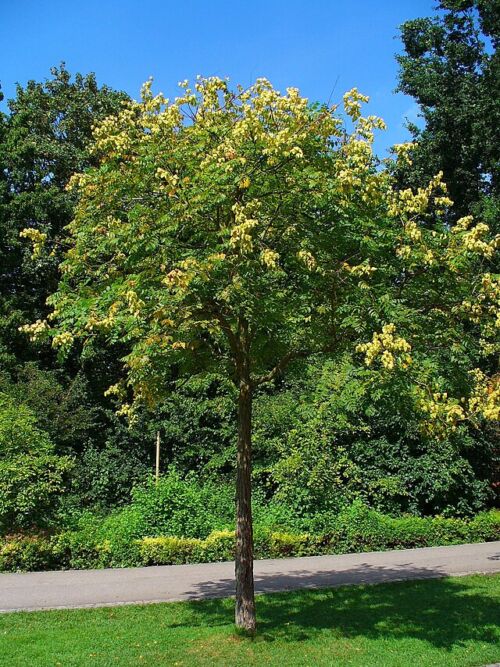
- Koelreuteria paniculata, known as the Golden Rain Tree, is a medium‑sized deciduous tree with a broad, spreading canopy. Its long pinnate leaves emerge pinkish in spring, mature to green in summer, and turn a brilliant yellow in autumn. In early summer, elongated panicles of golden‑yellow flowers appear, creating a magnificent display. With origins in China, Korea, and Japan, this tree is hardy once established, tolerating heat, drought, and urban conditions with ease. Highly adaptable, the Golden Rain Tree grows in clay, loam, or sandy soils. Moreover, it can thrive even in nutritionally poor soils, although it will not tolerate waterlogged ground. Compact yet striking, it grows to approximately 5m tall by 4m wide, making it a standout specimen for smaller gardens or feature plantings.
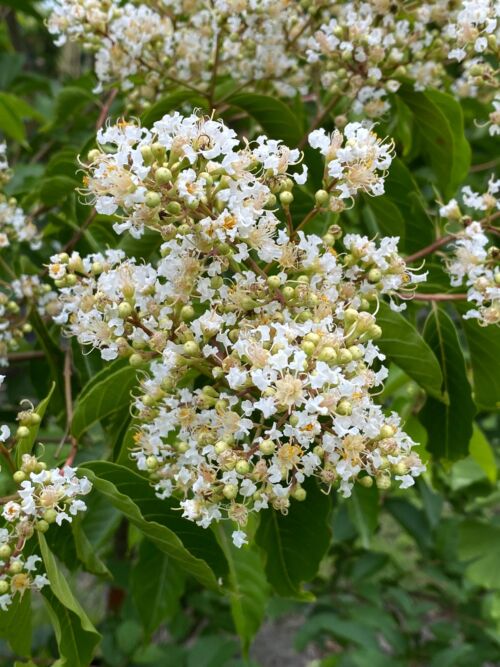
- Lagerstroemia fauriei ‘Townhouse’, better known as Crepe Myrtle, is a compact deciduous tree with a rounded canopy. Its bark sheds naturally, revealing smooth, trunks and branches that add structure and character. Through summer, the foliage stays deep green before shifting to fiery oranges and yellows in autumn. With a moderate growth rate and clean form, this tree brings style to smaller outdoor spaces. Come summer, ‘Townhouse’ produces large, cone-shaped clusters of white flowers—striking against its dark foliage. While it can handle moderate winds, it performs best in a sheltered spot with moist, well-drained soil. Reaching around 4 metres tall and wide, it’s easy to shape and makes a beautiful specimen tree in a smaller garden layout. Whether you're designing a modern garden or adding structure to a mixed border, ‘Townhouse’ Crepe Myrtle stands out. Its compact size, seasonal colour, and tough nature make it a solid choice for anyone who values form, function, and impact.
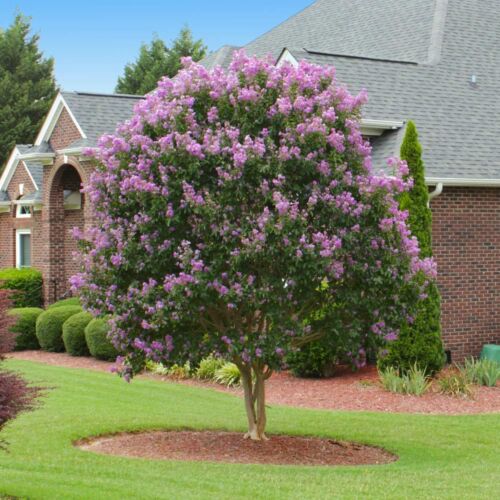
- Lagerstroemia indica ‘De Puard’ – Crepe Myrtle is a delightful small deciduous tree with a compact, rounded form. During summer, its lime-green foliage creates a fresh display, before transforming into rich autumn tones of brilliant red. At the same time, lilac-mauve flowers with a crepe-paper texture cover the tree in abundance, offering a truly spectacular sight throughout the warmer months. Furthermore, its smooth, mottled pinkish-gray bark provides striking year-round interest. This variety grows best in moist, well-drained soil and full sun, ensuring maximum flower production. In addition, it makes an elegant feature in a sheltered small garden. Reaching approximately 4 x 3 metres, it can also be easily trimmed to suit your preferred shape and size, giving both flexibility and charm
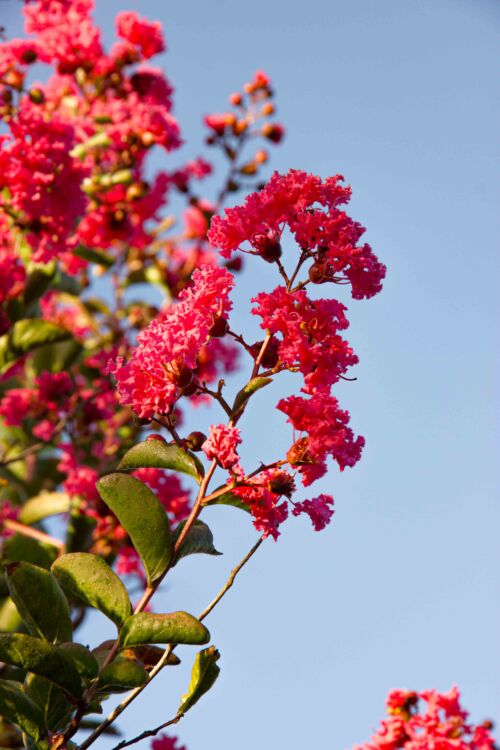
- A small deciduous tree which covers itself in ruffled, red crimson , flowers through summer. Lime green leaves over summer turn autumn colours of yellow, gold and red. Smooth shiny bark. Beautiful feature for a small garden.
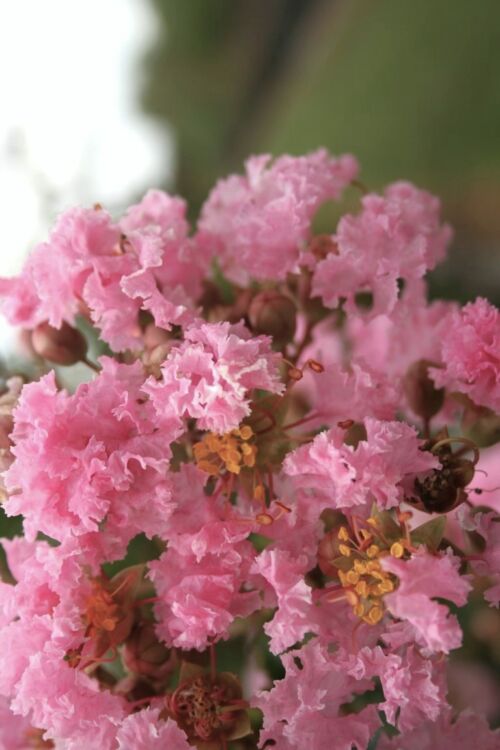
- Lagerstroemia indica ‘Soir D’ete’ – Crepe Myrtle is a charming small deciduous tree with a vase-shaped form. During summer, its lime-green leaves create a fresh display, before turning to rich autumn shades of yellow and gold. At the same time, ruffled light-pink flowers cover the tree in abundance, producing a truly spectacular sight throughout the warmer months. In addition, its smooth, shiny bark adds year-round interest. This variety thrives best in moist, well-drained soil and full sun, which ensures maximum flower production. Moreover, it makes a beautiful feature in a sheltered small garden. Growing to approximately 4 x 3 metres, it can also be easily trimmed to suit your desired shape and size, offering both flexibility and elegance
- Laurelia novae‑zealandiae – Pukatea is an evergreen native tree of New Zealand. It grows quickly, producing fresh green, oval, serrated foliage along shiny black branches. For many years, it maintains a columnar form before eventually developing into a large, round-headed specimen tree. Pukatea thrives in moist to wet, fertile soils. In fact, it excels in temperate to warm subtropical climates with high humidity and consistent rainfall. Its unique strength lies in its ability to grow in poorly drained, swampy areas where other trees often fail. Perfect for wetland areas. This tree is the perfect choice for challenging sites where others would not cope. In natural forest conditions, it can reach heights of up to 35 metres. However, in urban settings with compacted soils, it more commonly grows between 6 and 10 metres, making it suitable for gardens and landscapes.
-
We also stock Larger growing lemon varieties with a more citric taste. These can include Eureka, Lisbon, Yen Ben, and Genoa. Make enquiries as to which varieties we have available now or see our online catalogue.- DESCRIPTION
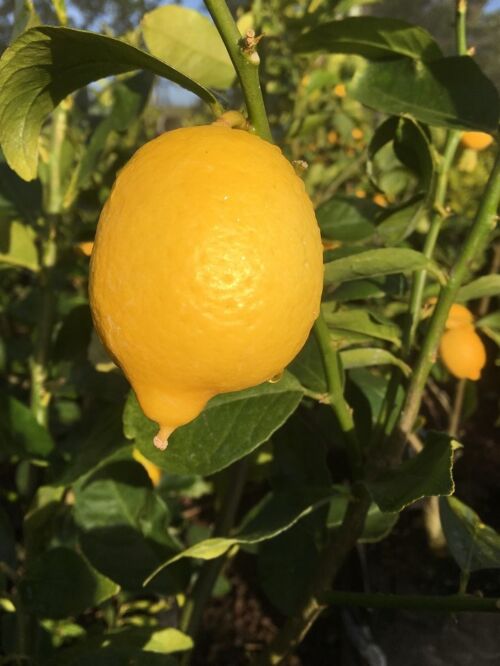
One of the most popular. Low spreading growth habit with few thorns. Large yellow-orange fruit when ripe with smooth skin and lower acid level than other lemon varieties. Very high juice content. Plant in warm sheltered position and rich well- drained moist soil in full sun Feed regularly during growing season and water well in summer. Mulch with well-rotted compost. Good in containers. HARVEST – JUN-AUG Height x Width 2.5 x 2.5 Height Range Small 1-5m Growth Rate Moderate Plant Type Tree Shape / Habit Round Country of Origin China Similar to Consider Other Lemons, Oranges, Mandarins, - LEAF
Leaf Colour Dark Green - FLOWER
Flower Colour White with pink buds Fragrant? Yes - USES
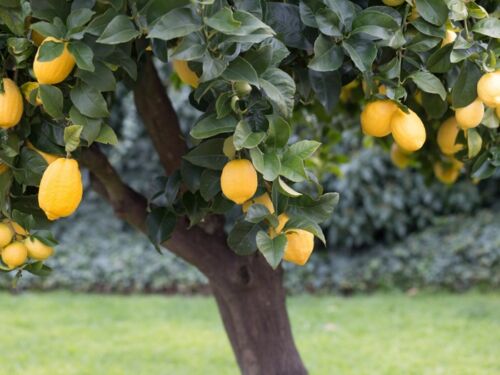
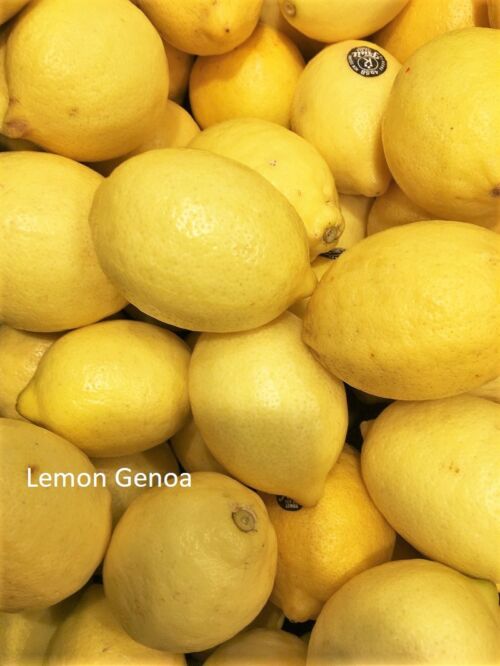
Fruit Producing Yes Small Garden Yes Note: Growth, height and grade information are given in good faith but are subject to natural variables beyond our control. - Lemon ‘Genoa’ (Citrus limon) - Italian Lemon is a Eureka type thornless lemon. Well-suited to most home gardens as the tree is typically smaller than most other lemons. Bears heavily from an early age, producing large, greenish yellow, very juicy fruit with low seed count. Also known as Genova or Italian Lemon. May bear fruit anytime of the year. Harvest – Jul – Dec. Lemons are heavy feeders so require a soil that can provide adequate nutrients. Feed with Citrus fertilizers. Harvest is during the winter months
- Lemon ‘Lisbon’ (Citrus limon) is a vigorous, large-growing tree bearing excellent crops of fruit. The lemons are large, with variable seed content & very thick rind. The flesh is very sour & moderately juicy. One of the hardiest lemons, tolerant of both heat & cold. Harvest is generally over the winter months but can also crop late summer. Lemons are heavy feeders so require a soil that can provide adequate nutrients. Feed with Citrus fertilizers.
- A hardier selection of Tahitian lime. Fruit is small to medium in size with dark green skin, turning lime yellow at maturity. Flesh tangy, juicy and seedless. Can be eaten green or yellow. Heavy scented flowers, aromatic foliage. Trim to shape. Harvest over the winter months. (named after John T. Bearss who developed this seedless variety)
- Liquidambar styraciflua – American Sweetgum is a striking deciduous tree known for its straight trunk and corky bark. It starts narrow and upright, gradually forming a broad, conical crown as it matures. Its green summer foliage transforms into vivid yellows, reds, purples, and oranges in autumn, creating an exceptional seasonal display. Native to North America, American Sweetgum thrives in moist areas and even tolerates poor drainage or clay soils. However, it performs best in moist, well‑drained soil with full sun. Reaching approximately 7 x 5 m, it makes an excellent avenue, specimen, or shade tree.
-
- Description
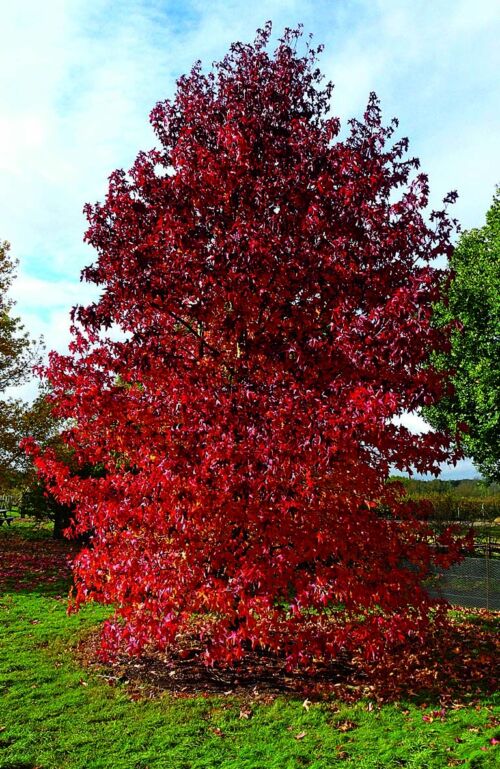
A pyramidal specimen tree with an upright broad growth habit. Green, star-shaped leaves over summer turn dark crimson during autumn. Makes a superb shade or specimen tree. Grows to apx 9 x 5m Height x Width 9 x 5m Range Medium 5-10m Growth Rate Fast Plant Type Tree Shape Pyramidical Country of Origin England Similar to Consider Other Liquidambars, Acer rubrum types, Quercus coccinea or rubra, Pyrus spp. Amelanchier Canadensis, Nyssa Sylvatica - Leaf
Leaf Colour Lush Green Deciduous Leaf Colour Crimson Red - Flower
Flower Nil - Uses
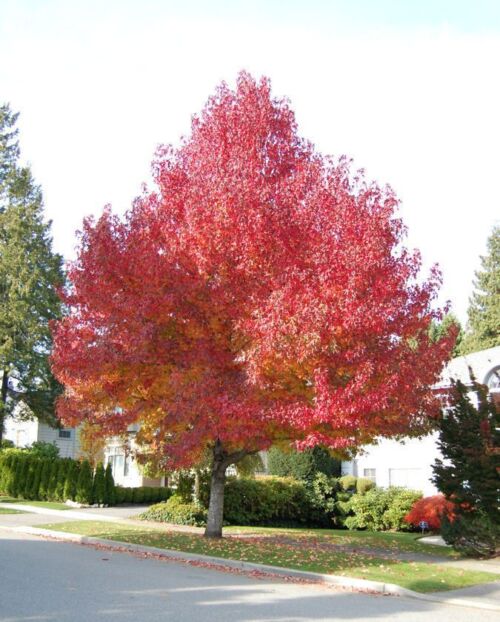
Specimen Yes Good Shade Tree? Yes Accent Yes Note: Growth, height and grade information are given in good faith but are subject to natural variables beyond our control. - Liquidambar styraciflua 'Worplesdon' is a striking deciduous tree with an upright, pyramidal habit and distinctive corky bark. Its deeply lobed, green ‘maple-like’ leaves provide lush foliage throughout spring and summer. As autumn arrives, the leaves transform into a brilliant display of fiery red, orange, and yellow making it a true seasonal highlight. Thanks to its form and colour, this variety is excellent for avenue planting, as a shade tree specimen, or as a feature in small gardens. Ideally, it prefers a sheltered position with moist, well-drained soil conditions. At maturity, it typically reaches around 6 metres tall by 4 metres wide, offering structure without overwhelming the space. Interestingly, the Latin name styraciflua refers to its gum-producing nature.
- 6 x 4m
- Medium 5-10m
- Fast
- Tree
- Round
- North America/div>
- Other Liquidambars, Acer rubrum types, Quercus coccinea or rubra, Pyrus Aristocrat or Bradford. Amelanchier Canadensis, Nyssa Sylvatica, Liriodendron Tulipefera, Platanus Autumn Glory.
- Green
- Reds, Oranges and Yellows
- Moist well drained
- Prefers sheltered