Deciduous trees
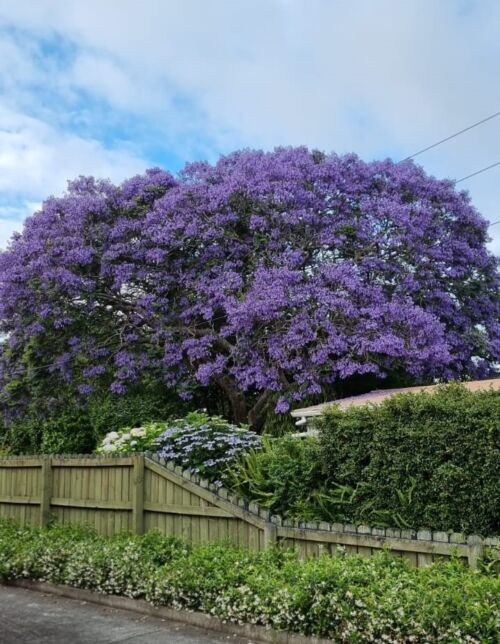
- Jacaranda mimosafolia - Jacaranda is a bold, fast-growing tree with a rugged, irregular crown and dynamic branches reaching outward, the Jacaranda instantly commands attention in any landscape. Although it is deciduous in all but the warmest climates, it still offers year-round visual interest thanks to its fine, feathery green foliage. As early summer arrives, its canopy transforms into a striking display, when soft purple blooms blanket the tree in breath taking colour. Not only does it provide beauty, but it also makes an excellent dappled shade tree. Native to south-central South America, this sub-tropical species thrives in sunny locations with moist, well-drained soil but will tolerate dryer once established. Typically, it grows to around 7 meters tall and 5 meters wide, making it a standout feature in gardens or larger landscapes.
- Cercis canadensis 'Forest Pansy' is a small, deciduous tree with an open, spreading habit that gradually matures into a broad, rounded crown. In early spring, masses of small magenta, pea-like flowers burst into bloom on bare branches, creating a striking display before the foliage emerges. Soon after flowering, rich purple-red, heart-shaped leaves appear, adding depth and colour to the garden. As autumn approaches, these leaves transition into warm tones of orange and bronze, offering a final flourish before winter. Because of its compact size reaching approximately 3.5 x 3.0 metres, ‘Forest Pansy’ is an excellent feature tree for smaller gardens or courtyards. It responds well to pruning, making it easy to maintain a tidy shape. Additionally, it tolerates clay soils, although wet or poorly drained conditions should be avoided. For best results, plant in a more sheltered position to protect its delicate foliage. Interestingly, this tree originates from North America, and its Latin name canadensis fittingly means “of Canada” or “from Canada.” Whether you're designing a colourful garden or seeking a low-maintenance ornamental tree, ‘Forest Pansy’ delivers beauty across all seasons.
- 3.5 x 3.0m
- Small 1-5m
- Moderate - Fast
- Tree
- Round-Spreading
- Deciduous
- North America
- Prunus Thundercloud, Fagus Riversii, Fagus Sylv Purp, Acer Tamukeyama, Fraxinus Raywoodii, Acer Bloodgood.
- Purple-Red
- Oranges and Bronze
- Magenta
- No
- Moist well drained, Tolerates Clay
- Prefers Sheltered
- Small gardens, Courtyards
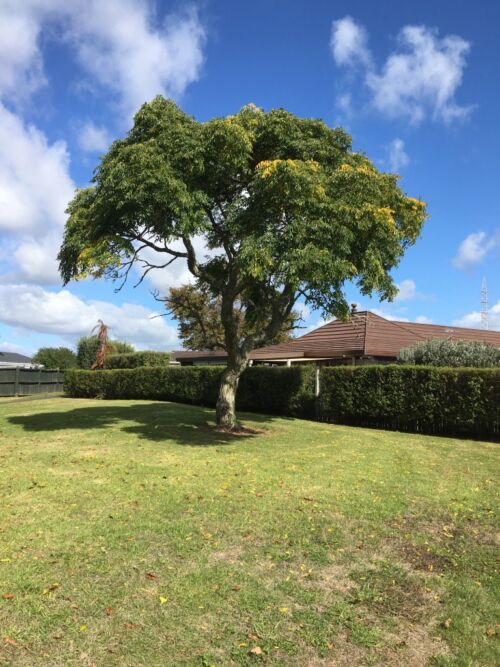
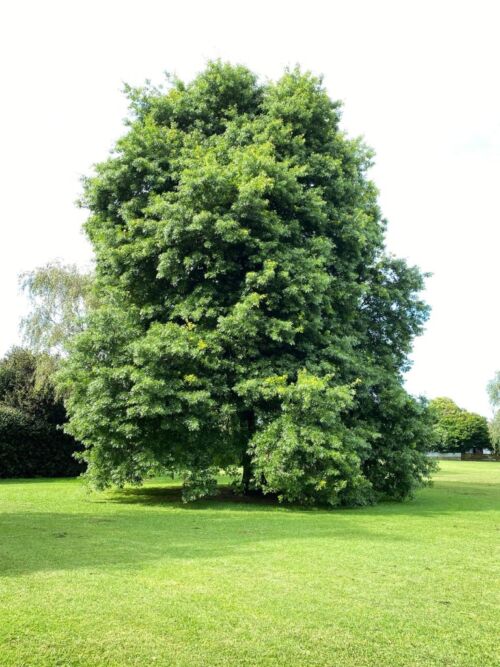
- Melia azedarach – Indian Bead Tree is a round-headed deciduous tree with glossy, compound green leaves. In spring, it produces scented pale lilac flowers. Later, during autumn, loose clusters of smooth oval berries appear, turning from green to bright yellow in winter. Not to be eaten. Tthe tree adapts well to a wide range of soils, provided they are well drained to prevent root rot. It grows best in full sun. Moreover, pruning helps open the crown and encourages the development of well-spaced limbs. Thanks to its dense leaf covering, it is ideal as a lawn specimen or shade tree. This hardy tree withstands frost, wind, and occasional dry periods. Finally, it reaches approximately 7m tall and 5m wide, making it a striking addition to any landscape.
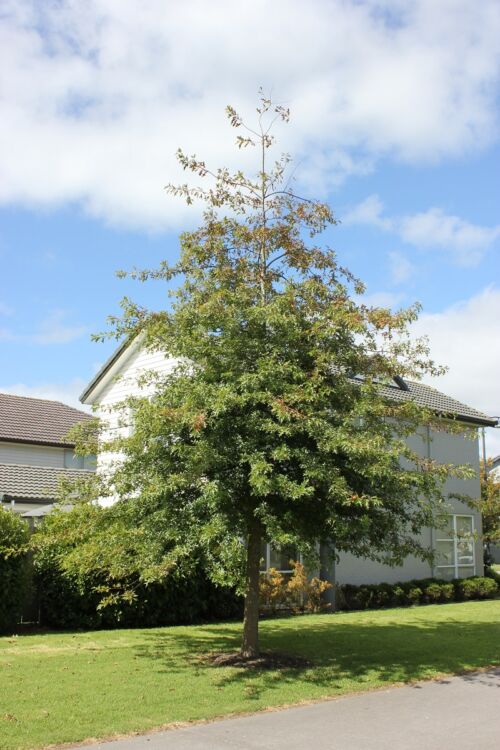
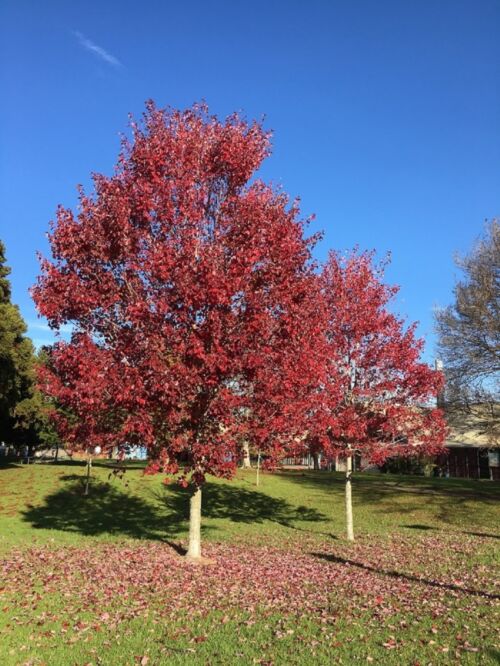
- Quercus palustris – Pin Oak (Swamp Oak) is a deciduous tree native to North America, known for its pyramidal growth habit and distinctive brownish-grey bark. Its deeply cut, glossy green leaves provide lush summer foliage, which eventually transforms into a brilliant scarlet red display in autumn. Notably, the lower branches tend to droop toward the ground, adding architectural interest to its form. The Latin name palustris translates to “of marshland” or “of swamps,” reflecting its natural preference for moist to wet, acidic soil conditions. Pin Oaks tolerate damp to wet environments and thrives best in full sun. In ideal conditions, it can reach approximately 8 x 6 metres within 10 years and may grow to over 20 metres at full maturity—making it an excellent choice for large landscapes or as a commanding shade tree. Whether you're planting in parklands, spacious gardens, or wetland edges, Quercus palustris offers seasonal beauty and structural elegance.
- Prunus serrulata ‘Shimidsu Sakura’ – Moonlight Cherry, is a stunning Japanese flowering cherry tree. This small deciduous tree features a spreading habit with graceful, arching branches Over summer, the foliage is a vibrant green, gradually shifting to yellow and orange hues in autumn, adding seasonal colour and interest. In late spring, buds emerge in soft pink tones, opening into double flowers that begin as pale pink and fade to pure snow white—a breath taking display that enhances any garden. Shimidsu sakura thrives in moist, well-drained soil and prefers a sheltered, sunny position. Because of its elegant form and manageable size, it serves beautifully as a feature specimen in smaller landscapes. Typically growing to approximately 4 x 4 metres, Moonlight Cherry is both ornamental and easy to maintain. The name Shimidsu-sakura refers to the specific cultivar, where sakura means cherry blossom in Japanese, and Shimidsu is the cultivar name itself.
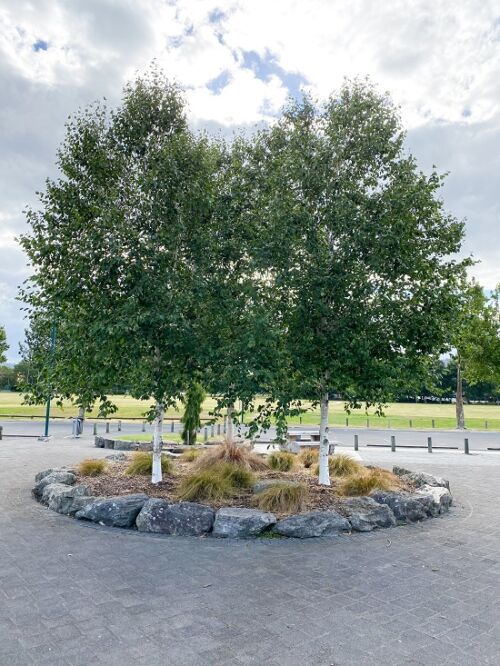
- Bold and architectural, Betula utilis 'Jacquemontii' or the Himalayan Birch is a medium-sized deciduous tree known for its upright form that gradually matures into a broad oval silhouette. Originating from the rugged terrains of China and the Himalayas, this fast-growing variety commands attention with its striking, powdery-white bark—a signature feature that sets it apart in any landscape. Throughout summer, its dark green foliage offers a rich contrast to the luminous trunk, before shifting to warm yellow hues in autumn, adding seasonal interest. Whether planted in structured avenues or grouped for visual impact, this birch delivers a refined yet natural presence. Additionally, it responds well to topping, allowing for the creation of standard-type trees where desired. Typically reaching approximately 7 metres in height and 3 metres in spread, Betula 'Jacquemontii' is a standout choice for those seeking elegance with a touch of rugged charm. Utilis = Useful
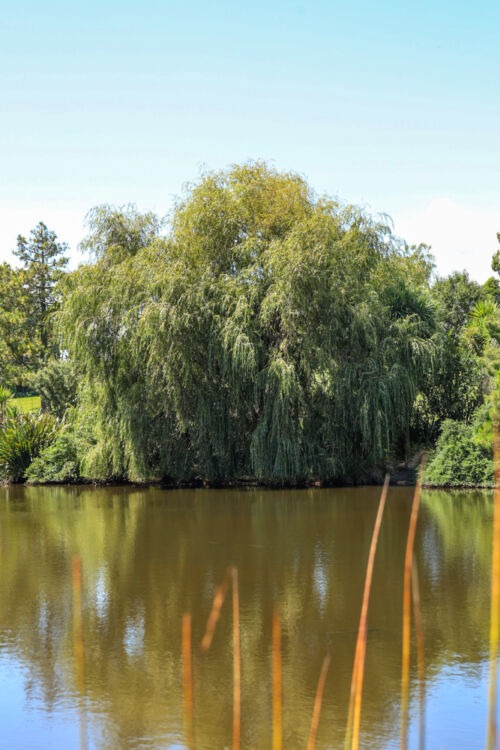
- Salix babylonica, commonly known as Weeping Willow, is a medium to large deciduous tree with a wide-spreading canopy. Its graceful, pendulous branches carry narrow, light green leaves that cascade to the ground. As autumn arrives, the foliage transforms into a soft yellow, adding seasonal charm. In spring, slender catkins emerge alongside fresh leaves, attracting bees and enhancing biodiversity. Because of its fast growth and tolerance for wet soil, this tree thrives near streams, ponds, or in damp areas. It also makes an excellent shade tree for large gardens or on farmland for livestock. Weeping Willow prefers full sun and typically grows to around 12 metres tall and 12 metres wide, offering both beauty and function
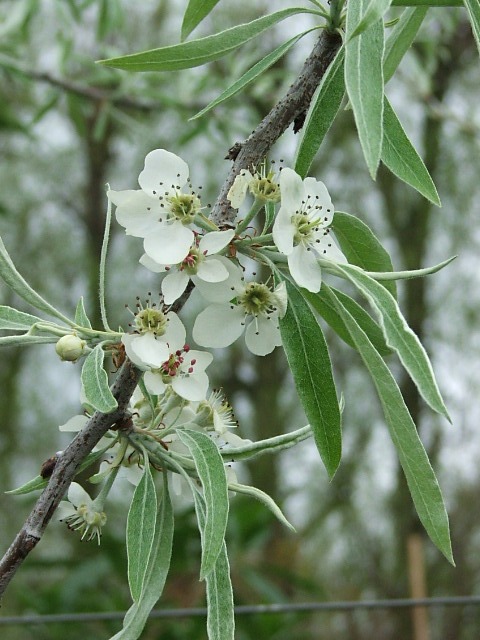
- Pyrus salicifolia ‘Pendula’ – Weeping Silver Pear is a compact, oval-rounded ornamental tree. Its graceful, weeping branches are adorned with willow-like, narrow, silver-gray leaves, creating a striking display in any garden. In spring, the Weeping Silver Paer bursts into life with small, white blossoms that cover the tree. Although part of the pear family, its fruit is tiny, sparsely produced, and inedible. This elegant tree traces its origins back to Germany in the 1850s. Over time, it has become a popular choice for gardeners seeking beauty and adaptability. Silver pears thrive in a wide range of soils, including clay. However, they prefer moderately fertile, moist, well-drained soil in full sun. Additionally, they tolerate light shade, making them versatile for different garden conditions. Interestingly, salicifolia translates to “leaves like a willow,” inspiring its other common name, the Willow-Leaf Pear. Growing to approximately 2 x 2 meters above the graft point, it is perfect for smaller gardens, as a standout specimen tree, planted into your favourite large pot or trimmed into a standard topiary.
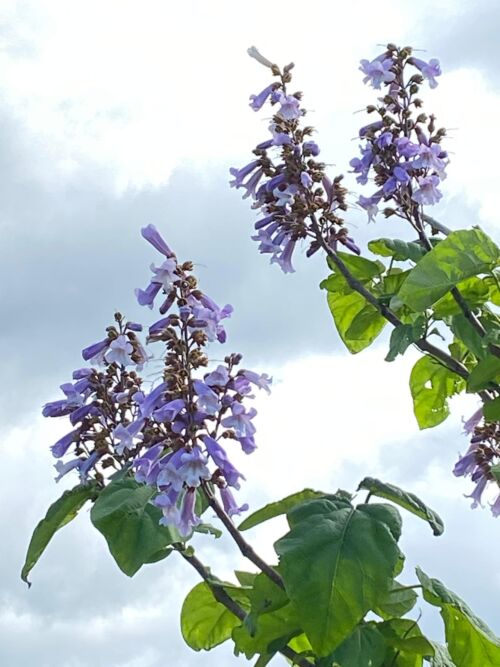
- Paulownia tomentosa ‘Princess Tree’, also known as the Empress Tree, is a fast-growing, broad-spreading deciduous tree that instantly adds a tropical feel to any garden. Thanks to its vigorous growth and lush form, it quickly becomes a focal point in both formal and informal landscapes. Its exceptionally large, soft green leaves form a dramatic canopy, making it an excellent choice for shade. Then, in spring, it bursts into bloom with fragrant violet-blue flowers featuring delicate white centres. These stunning blossoms add vibrant colour and a sweet scent, enhancing the overall garden experience. Although it prefers moist, well-drained soil in a sunny, sheltered position, it will also tolerate mild coastal conditions. This adaptability makes it suitable for a wide range of environments. Native to China and South Korea, this majestic tree typically reaches around 8 metres in height and 6 metres in width. As a result, it stands out beautifully in both small and large garden spaces.
- Fig ‘Mrs Williams’ (Ficus carica) This deciduous, compact shrub or small tree features gnarled, twisted branches and bold, tropical-style leaves. Ideally, it should be planted in a sunny, sheltered, location. In addition, it thrives when provided with abundant moisture. Notably, ‘Mrs Williams’ is a well-known hardy selection that produces generous crops of high-quality, large figs. Unlike many other varieties, it ripens earlier in the season, making it a popular choice among gardeners. The fruit is dark in colour—sometimes even purple—with flesh ranging from light amber to rich red. As a result, the figs are sweet, juicy, and perfect for fresh eating or preserving. Typically, the harvest period runs from February to April, but be quick to harvest the fruit before the birds do. Because of its compact size, this fig is ideal for small gardens. Moreover, it tolerates coastal conditions with ease, adding to its versatility. Although it can grow up to 5 x 5 metres, it’s easy to trim to your preferred size and shape. Therefore, it’s a versatile choice for many garden styles
- Apple ‘Granny Smith’ is one of the most iconic apples in New Zealand. Originating in Australia in 1868, this deciduous fruit tree produces apples with a distinctive green skin. Known worldwide, it remains a heritage variety that continues to delight growers and consumers alike. In spring, the tree bursts into life with white flowers tinged with pink. As summer advances, the fruit steadily matures until it reaches harvest time around May each year. This variety is highly prized for its crisp, juicy flesh and refreshing tart flavour. Consequently, it has become a favourite among apple lovers for generations, enjoyed both raw and in cooking. Its unique taste ensures it stands out from other apple varieties. Apple trees thrive best in well-drained, fertile soils. Moreover, they prefer sunny, sheltered positions to maximize fruit production. With the right growing conditions, Granny Smith trees reach a height of 4–5 meters, making them suitable for home orchards and larger gardens. To promote healthy growth, provide seasonal feeding and deep watering during dry spells. Additionally, apply mulch to retain soil moisture and prune annually. These steps encourage abundant fruiting and help maintain the tree’s attractive shape.
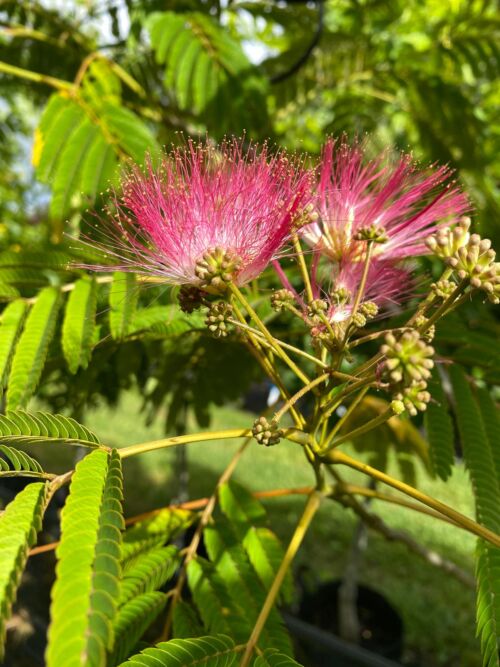
- A striking summer-flowering tree, Albizia julibrissin ‘Rosea’ is a selected form of the Silk Tree, known for its masses of bright rosy pink, tufted blooms that blanket the canopy in warm months. Its soft, fern-like foliage adds a delicate texture and tropical charm. Native to Asia and China, this deciduous tree thrives in warm, sunny positions in moist well drained soils and is easy to grow. It’s hardy and well-suited to a variety of garden styles. With its graceful, umbrella-shaped crown, it provides excellent shade making it a beautiful specimen tree, even in smaller gardens. It typically grows to approximately 5 metres tall and 4 metres wide. The name julibrissin comes from the Persian gul-i abrisham, meaning “silk flower” or “soft silken threads,” a poetic nod to its airy, elegant blooms.
- Acer rubrum ‘Bowhall’, commonly known as the Upright Red Maple, is a fast-growing, deciduous tree with a narrow, columnar form, ideal for tight spaces. Its strongly upright branches support glossy dark green leaves with silvery undersides, creating a striking contrast. In autumn, the foliage transforms into brilliant shades of yellow, orange, and reddish-orange, adding vibrant seasonal colour. This hardy tree adapts well to a wide range of soil conditions, from damp to dry, including clay and sandy soils. Native to North America, Bowhall is perfect for avenues, street plantings, or as a lawn specimen where space is limited. Mature height reaches approximately 12 metres with a spread of 3 metres.
- Acer rubrum ‘Autumn Glory’, also known as Red Canadian Maple, stands out as one of the most admired Red Maple cultivars. Its vibrant red foliage in autumn creates a breathtaking seasonal display, making it a favourite for landscape designers and homeowners alike. Thanks to its tidy, upright, and compact growth habit, this deciduous tree is ideal for residential gardens and street plantings. Compared to other rubrum varieties, it offers a more manageable size and shape. In early spring, striking red tassel flowers appear in dense clusters before the leaves emerge. These are soon followed by decorative winged seeds, adding further seasonal interest. Moreover, ‘Autumn Glory’ adapts well to a range of soil conditions, including poor soils. It grows at a medium to fast rate and typically reaches around 12 metres tall and 8 metres wide. In the Northern Hemisphere, this cultivar is often referred to as ‘October Glory’, in line with their autumn season.
- Quercus coccinea – Scarlet Oak is a majestic deciduous tree that forms a large, stately specimen characterized by an oval crown and upward-reaching branches. Its glossy green, deeply lobed leaves create a lush summer canopy, while in autumn they transform into a brilliant display of scarlet red, which offers exceptional seasonal colour. In addition to its foliage, the bark develops a reddish-brown tinge during winter, adding subtle interest even in the colder months. Native to North America, this oak variety is well-suited to a range of climates. Once established, Scarlet Oak tolerates dry conditions, although it prefers moist, free-draining soil for optimal growth. With its impressive size, reaching approximately 15 x 10 metres in ideal conditions, it makes an outstanding specimen tree or a grand shade tree for larger landscapes. Whether you're designing a parkland setting or enhancing a spacious garden, Quercus coccinea brings structure, beauty, and seasonal interest to any outdoor space.
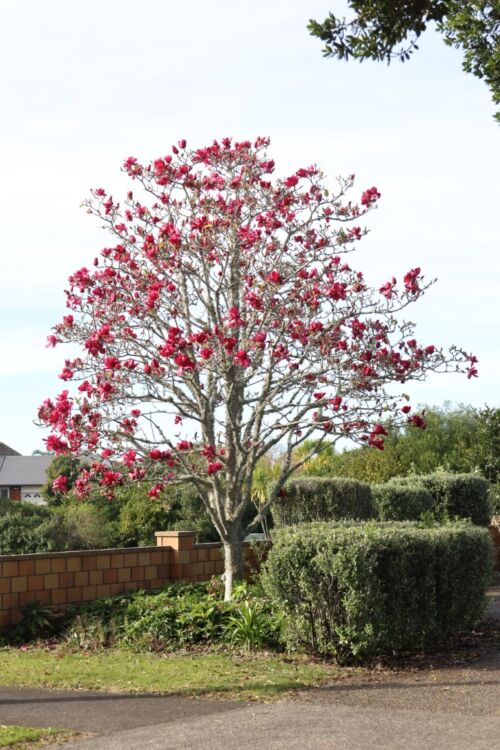
- Magnolia 'Vulcan' is a deciduous tree bred in New Zealand as part of the renowned Jury hybrid series. When young, it forms an erect, open-branched structure that matures into a narrow, rounded form, adding elegance to any garden. During summer, leathery green leaves create a lush canopy. Then, from late winter into early spring, the tree bursts into large, deep port wine-coloured flowers, delivering a spectacular seasonal display. It thrives in full sun and prefers moist, well-drained soil in a sheltered position. It typically grows to around 6 × 4 metres but can be pruned to suit shape and height. With its compact size and striking blooms, it makes a beautiful shade tree for smaller gardens.
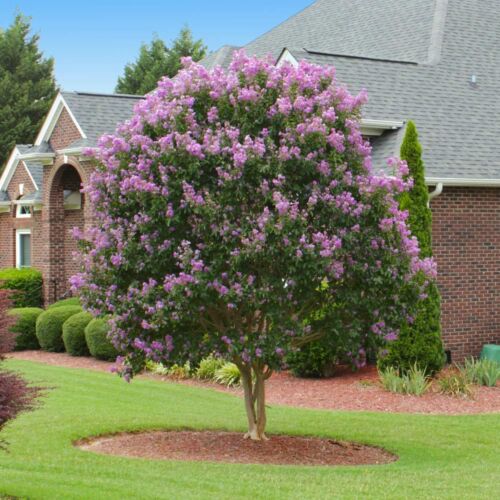
- Lagerstroemia indica ‘De Puard’ – Crepe Myrtle is a delightful small deciduous tree with a compact, rounded form. During summer, its lime-green foliage creates a fresh display, before transforming into rich autumn tones of brilliant red. At the same time, lilac-mauve flowers with a crepe-paper texture cover the tree in abundance, offering a truly spectacular sight throughout the warmer months. Furthermore, its smooth, mottled pinkish-gray bark provides striking year-round interest. This variety grows best in moist, well-drained soil and full sun, ensuring maximum flower production. In addition, it makes an elegant feature in a sheltered small garden. Reaching approximately 4 x 3 metres, it can also be easily trimmed to suit your preferred shape and size, giving both flexibility and charm
- Acer palmatum - Japanese Maple, is a deciduous ornamental tree admired for its form and vibrant seasonal colour. Summer sees fresh green foliage transform into a display of oranges, reds, and yellows in autumn. Originating from Japan, Acer Palmatum is best planted in a sheltered spot away from strong winds to protect its delicate leaves. Its compact size and elegant structure make it a versatile choice for a wide range of garden styles—from traditional to contemporary. Ideal as a shade tree for smaller gardens, the Japanese Maple typically reaches around 5 metres tall and 4 metres wide, offering year-round visual interest and appeal.
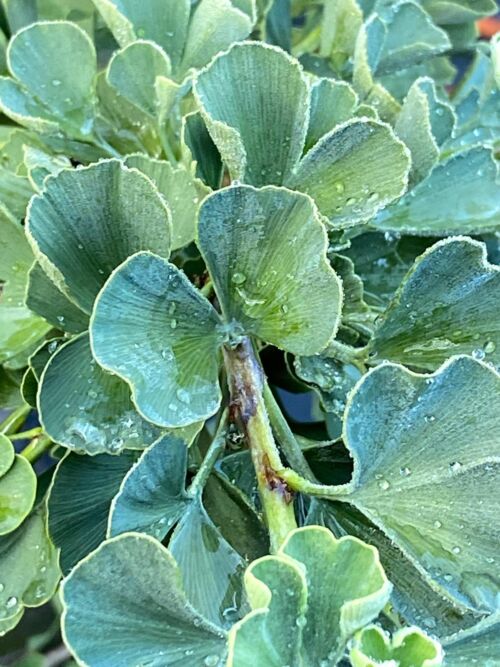
- Ginkgo biloba ‘Jade Butterflies’ is a compact, deciduous dwarf male cultivar from the Ginkgo family. It forms an upright, vase-shaped structure and grows slowly. Its deeply bi‑lobed, jade‑green leaves resemble butterflies, which inspired its name. In autumn, the foliage transforms into a soft cream‑yellow display. This variety prefers fertile, moist soil; however, it also tolerates compacted, poor, or urban soils though will not tolerate wet soils. It thrives in full sun, which enhances its vibrant yellow autumn colour. Additionally, it withstands coastal salt spray and pollution, making it ideal for urban, seaside, and exposed locations. Mature plants reach approximately 3 x 2 metres. Its compact size suits small gardens, courtyards, or container planting. It requires minimal pruning, though shaping in late winter or early spring works well. The term biloba refers to the two-lobed leaves. Although Ginkgo trees are native to China, ‘Jade Butterflies’ was developed in New Plymouth, New Zealand.
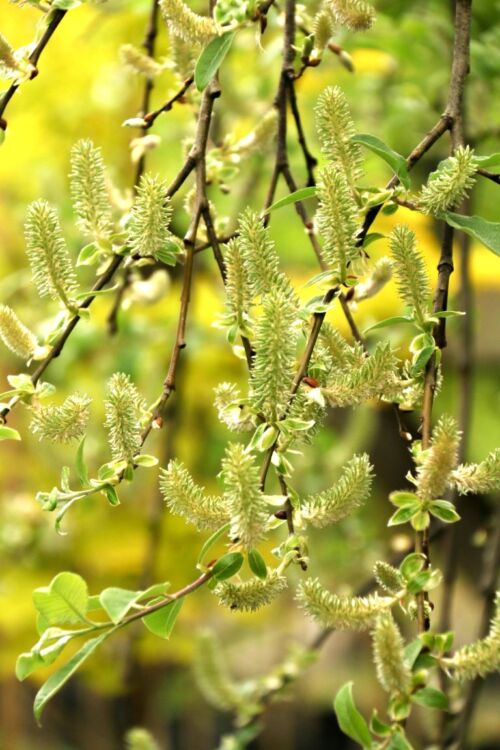
- Salix caprea ‘Kilmarnock’ is a small, deciduous, umbrella shaped weeping tree. Its stiff yellow brown branches hang gracefully and hold small, green serrated leaves that shift to yellow green in autumn. In early spring, large silver grey catkins with bright yellow anthers appear before the foliage. This charming cultivar entered commercial production in 1853, introduced by Thomas Lang of Kilmarnock, Ayrshire, Scotland. Since then, it has remained a popular choice for gardeners. Kilmarnock willow thrives in moist to wet, sunny locations. Because it is hardy and adaptable, it suits small gardens, containers, and areas with poor drainage. The final height depends entirely on the graft point, as all growth weeps downward from that position.