Deciduous trees
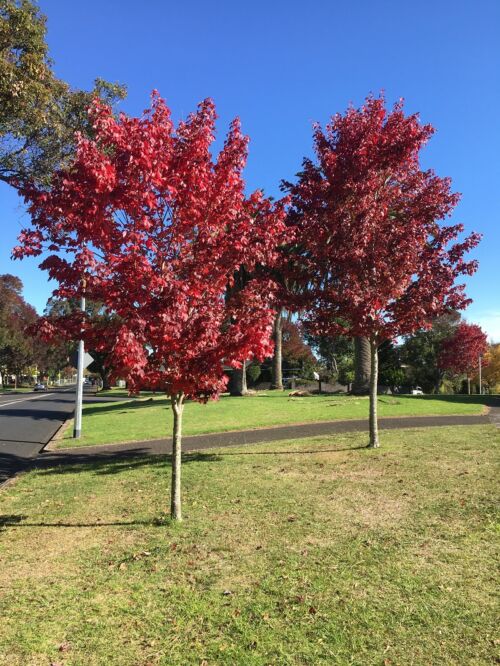
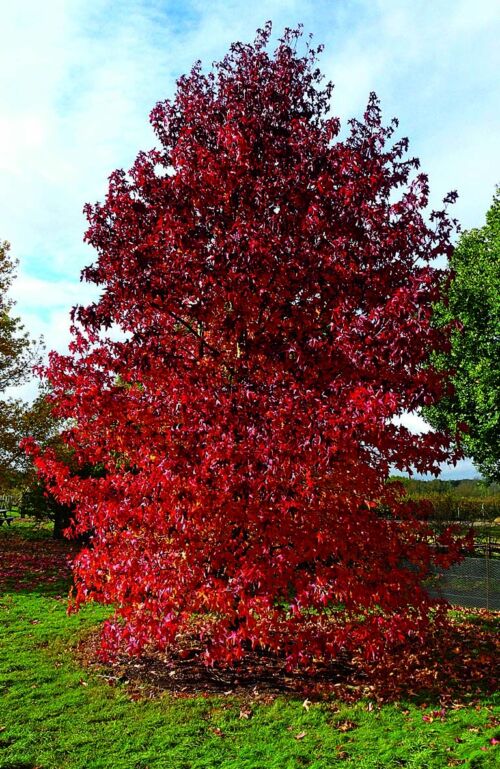
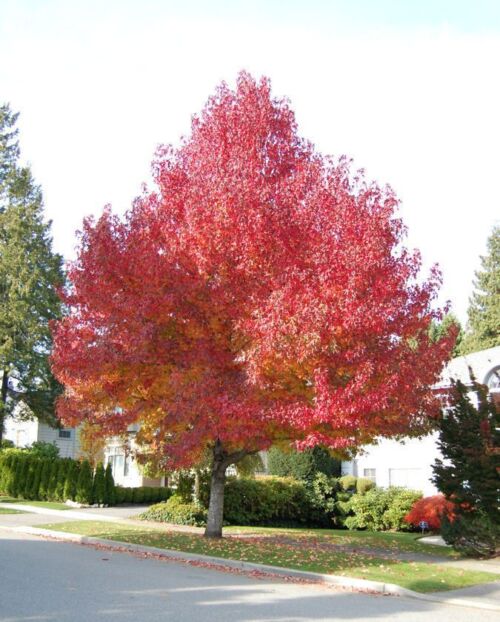
- Acer freemanii ‘Jeffers Red’ – Freeman Maple is a fast-growing, upright, deciduous tree featuring strong ascending branches and a dense, broad-oval crown. Its rich green summer foliage transforms into brilliant red in autumn, creating a stunning seasonal display. It thrives in moist, well-drained soil but adapts to clay, poor, wet, or dry conditions. More wind-tolerant than other maples. Ideal as a specimen or avenue tree, it reaches approximately 10m tall by 5m wide.
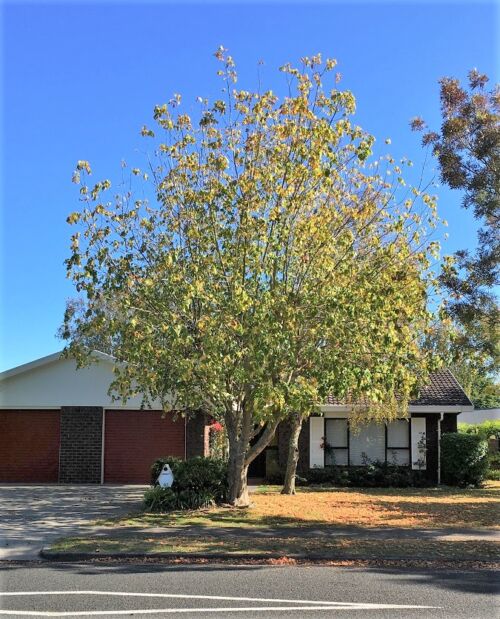
- Acer negundo ‘Kellys Gold’ brings a burst of seasonal brilliance to any garden. This standout deciduous tree is admired for its vibrant foliage and fast growth, making it a striking feature in smaller landscapes. New leaves emerge in a bold butter-yellow, gradually softening to fresh lime-green through summer. As autumn arrives, the foliage shifts back to glowing yellows, ensuring year-round interest and colour. Originating in New Zealand, Kellys Gold is a smart alternative to Ulmus species, which are restricted in Auckland due to Dutch Elm Disease. It reaches around 6m tall by 4m wide but responds well to pruning, allowing easy shaping and maintenance. This versatility makes it ideal for small gardens and urban spaces seeking canopy cover. It creates cool, inviting outdoor areas while thriving in clay soils. However, it prefers well-drained conditions, so avoid overly wet or poorly drained sites.
- With its origins in North America, Acer palmatum ‘Bloodgood’ is a compact, upright, deciduous tree that matures into a more rounded form. Its striking blackish-red stems support the deepest purple-red foliage, which remains vibrant throughout the summer months. As autumn arrives, the leaves blaze into fiery red tones, accompanied by decorative seed capsules that add seasonal interest. Acer Bloodgood thrives in moist, well-drained soil and benefits from a sheltered position. Approximate size at maturity being only 5 x 3m, it makes it perfect as a standout feature tree in a smaller garden or courtyard.
- Acer palmatum - Japanese Maple, is a deciduous ornamental tree admired for its form and vibrant seasonal colour. Summer sees fresh green foliage transform into a display of oranges, reds, and yellows in autumn. Originating from Japan, Acer Palmatum is best planted in a sheltered spot away from strong winds to protect its delicate leaves. Its compact size and elegant structure make it a versatile choice for a wide range of garden styles—from traditional to contemporary. Ideal as a shade tree for smaller gardens, the Japanese Maple typically reaches around 5 metres tall and 4 metres wide, offering year-round visual interest and appeal.
- Albizia julibrissin, commonly known as the Silk Tree, is a fast-growing, deciduous, compact tree with a wide, spreading canopy. Its delicate, fern-like leaves add a lush texture to any garden. During summer, it bursts into bloom with soft, pink, fluffy flowers that sit gracefully above the foliage. These rounded blossoms resemble silky brushes, creating a striking visual contrast. Although it thrives in hot, dry conditions once established, it prefers moist, well-drained soil. Therefore, regular watering during its early growth phase is beneficial. Interestingly, the name “julibrissin” originates from the Persian phrase gul-i abrisham, meaning “silk flower” or “soft silken threads.” This poetic name reflects the tree’s elegant appearance. Thanks to its umbrella-shaped canopy, the Silk Tree makes an excellent shade tree. It’s ideal for smaller gardens, growing to approximately 5 meters tall and 4 meters wide..
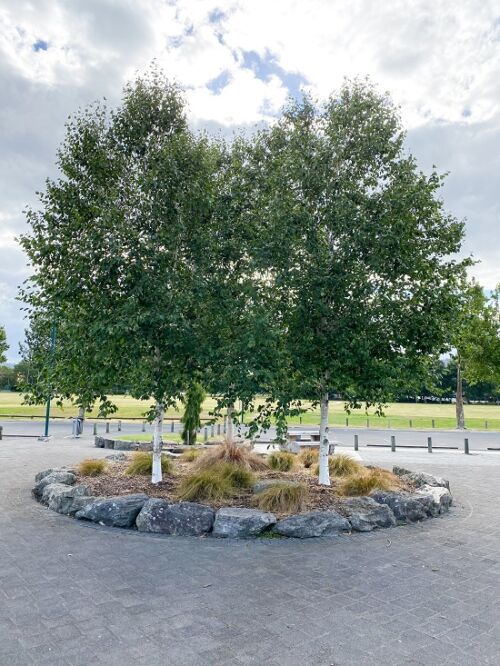
- Bold and architectural, Betula utilis 'Jacquemontii' or the Himalayan Birch is a medium-sized deciduous tree known for its upright form that gradually matures into a broad oval silhouette. Originating from the rugged terrains of China and the Himalayas, this fast-growing variety commands attention with its striking, powdery-white bark—a signature feature that sets it apart in any landscape. Throughout summer, its dark green foliage offers a rich contrast to the luminous trunk, before shifting to warm yellow hues in autumn, adding seasonal interest. Whether planted in structured avenues or grouped for visual impact, this birch delivers a refined yet natural presence. Additionally, it responds well to topping, allowing for the creation of standard-type trees where desired. Typically reaching approximately 7 metres in height and 3 metres in spread, Betula 'Jacquemontii' is a standout choice for those seeking elegance with a touch of rugged charm. Utilis = Useful
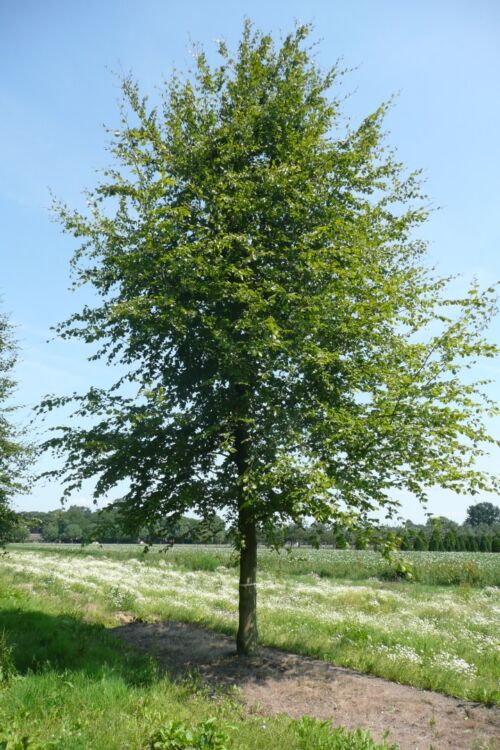
- Carpinus betulus 'Fastigiata', commonly known as Upright Hornbeam, is a deciduous tree with a narrow, columnar form that gradually broadens as it matures. This refined cultivar of the European Hornbeam remains in its tight form making it ideal for structured landscapes, offering both formality and seasonal interest. During summer, its oval, ribbed green leaves create a lush canopy. As autumn arrives, the foliage transitions into warm shades of yellow and orange, eventually turning brown and remaining on the tree well into winter adding texture and colour even in the colder months. Moreover, this tree thrives in moist, well-drained soil and prefers a sunny position. Thanks to its upright habit and tolerance for close planting, it makes an excellent choice for street planting, avenues, or as a screen. Reaching approximately 8 metres tall and 3 metres wide, The Upright Hornbeam is a versatile and low-maintenance option for both urban and rural settings.
- Cercis canadensis 'Forest Pansy' is a small, deciduous tree with an open, spreading habit that gradually matures into a broad, rounded crown. In early spring, masses of small magenta, pea-like flowers burst into bloom on bare branches, creating a striking display before the foliage emerges. Soon after flowering, rich purple-red, heart-shaped leaves appear, adding depth and colour to the garden. As autumn approaches, these leaves transition into warm tones of orange and bronze, offering a final flourish before winter. Because of its compact size reaching approximately 3.5 x 3.0 metres, ‘Forest Pansy’ is an excellent feature tree for smaller gardens or courtyards. It responds well to pruning, making it easy to maintain a tidy shape. Additionally, it tolerates clay soils, although wet or poorly drained conditions should be avoided. For best results, plant in a more sheltered position to protect its delicate foliage. Interestingly, this tree originates from North America, and its Latin name canadensis fittingly means “of Canada” or “from Canada.” Whether you're designing a colourful garden or seeking a low-maintenance ornamental tree, ‘Forest Pansy’ delivers beauty across all seasons.
- 3.5 x 3.0m
- Small 1-5m
- Moderate - Fast
- Tree
- Round-Spreading
- Deciduous
- North America
- Prunus Thundercloud, Fagus Riversii, Fagus Sylv Purp, Acer Tamukeyama, Fraxinus Raywoodii, Acer Bloodgood.
- Purple-Red
- Oranges and Bronze
- Magenta
- No
- Moist well drained, Tolerates Clay
- Prefers Sheltered
- Small gardens, Courtyards
- Fagus sylvatica ‘Purpurea’, or Copper Beech, is a magnificent deciduous tree with a dense, pyramid shape. Its new leaves emerge in striking shades of red, then mature into copper bronze tones and finally deep, rich purples. These colourful leaves are also popular for floral work. Originating from Southern Europe, this beech thrives naturally in forested environments, which is reflected in the name “sylvatica.” It grows best in fertile, well drained soil, and planting it in full sun helps maximise leaf colour throughout the season. Copper Beech makes an impressive lawn specimen for larger properties. It can also be trained into a tall screen or woven to form a striking, trimmed formal hedge. The tree reaches around 10 × 4 metres in about ten years and eventually matures to approximately 25 × 10 metres.
- Fagus sylvatica – English Beech is a handsome, deciduous tree with a naturally pyramidal shape. Originating from Southern Europe, it produces glossy green foliage in spring. When young, the leaves are covered with fine silken hairs, and they mature to golden yellows in autumn, creating a striking seasonal display. This tree thrives in well-draining loamy soil, especially when lime is present. It prefers a sunny position, where it grows vigorously and develops into an excellent lawn specimen or shade tree. English Beech reaches approximately 10 x 5 metres. However, it can also be trained into a large screen or woven together to form a formal hedge, offering versatility in landscape design. Interestingly, sylvatica is a Latin adjective meaning “of the woods” or “forest-dwelling.”.
-
- Description
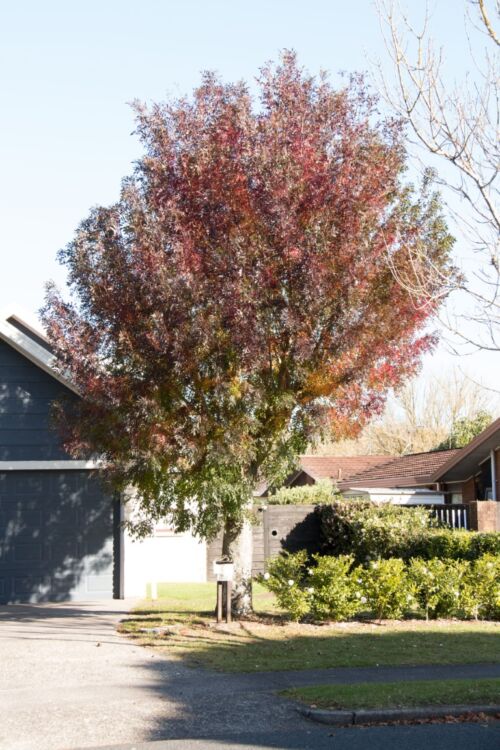
A distinct pyramidal form in its early years, matures to a large rounded, broad spreading tree. Green leaves in summer are narrow and serrated, and transform to a vibrant, deep red colour in autumn, earning it the name "Claret Ash" Hardy to a wide range of conditions. Excellent landscaping, street, specimen or shade tree. Height x Width 15 x 8 Height Range Tall 10+ Growth Rate Fast Plant Type Tree Shape / Habit Round Country of Origin Australia Similar to Consider Prunus Thundercloud, Fagus Riversii, Fagus Sylv Purp, Acer Tamuke Yama, Acer Bloodgood. - Leaf
Leaf Colour Green Deciduous Leaf Colour Red - Flower
Flower Nil - Uses
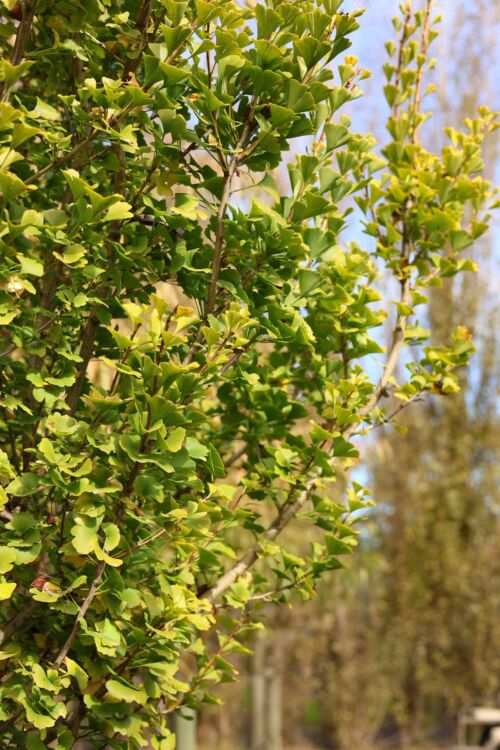
Specimen Yes Good Shade Tree? Yes Accent Yes Note: Growth, height and grade information are given in good faith but are subject to natural variables beyond our control. - Ginkgo biloba ‘Autumn Gold’ – Maidenhair Tree is a spectacular male clone from the renowned Ginkgo family. Because it is a selected male variety, it will not produce unpleasant fruit. Developed in San Jose, California, this tree grows with a pyramidal shape, featuring symmetrical branches and distinctive grey, corky bark. Its broad, fan-shaped leaves resemble sections of a maidenhair fern. Throughout summer, the foliage is light green and leathery. As autumn arrives, the tree transforms with brilliant golden-yellow colour that lasts for an extended period, creating a striking seasonal display. ‘Autumn Gold’ thrives in moist, well-drained soil. Moreover, it will tolerate clay conditions, provided the site is not waterlogged. For best growth, plant in a sunny position. Mature specimens typically reach around 6 metres high and 4 metres wide, making this an excellent specimen tree for gardens and landscapes.
- Ginkgo biloba ‘Fastigiata’ – Upright Ginkgo is a deciduous tree with a very neat, upright form. As a selected male variety, it will not produce unpleasant fruit. Its deep green, distinctive maidenhair leaves turn golden yellow in autumn, creating a striking seasonal display. The ‘Fastigiata’ cultivar was discovered and selected in France. By the 1980s, it had emerged as a popular narrow form, valued for its elegant shape and suitability in restricted spaces. This tree is highly effective in narrow streets, tight spaces, and small home gardens. Moreover, it can be trimmed to maintain an even neater appearance, making it versatile for both urban and residential landscapes. It thrives in moist, well-drained soil and will tolerate clay conditions, provided the site is not waterlogged. For best growth, plant in a sunny position. Mature specimens typically reach around 7 metres high and 3 metres wide.
- Ginkgo biloba – Maidenhair Tree is a hardy, deciduous tree with an ancient heritage originating in China. It develops into a graceful pyramidal form, featuring symmetrical branches and distinctive grey, corky bark. During summer, broad fan-shaped leaves emerge, resembling sections of a maidenhair fern. These leathery, light-green leaves create a lush canopy. As the seasons change, the tree transforms with spectacular autumn colour, displaying bright golden-yellow foliage that lasts for an extended period. This tree thrives best in moist, well-drained soil. Moreover, it will tolerate clay conditions, provided the site is not waterlogged. For optimal growth, plant in full sun. Mature specimens typically reach around 6 metres high and 4 metres wide, making them ideal for both gardens and landscapes.
- Gleditsia triacanthos ‘Sunburst’ – Honey Locust is a deciduous tree with a neatly rounded crown and graceful weeping branches. Its lacy, double-pinnate foliage emerges lime-yellow in spring, deepens to fresh green in summer, and finally glows bright yellow in autumn, offering year-round interest. Successive flushes of new growth appear through summer, creating a striking contrast against older leaves. Native to North America, ‘Sunburst’ has become a popular choice for both residential and landscape plantings. This tree tolerates a wide range of soils, including clay, yet it thrives best in moist, well-drained conditions. For optimal growth, plant in full sun. Mature specimens typically reach around 6 metres high and 5 metres wide, making them excellent lawn, shade, or specimen trees.
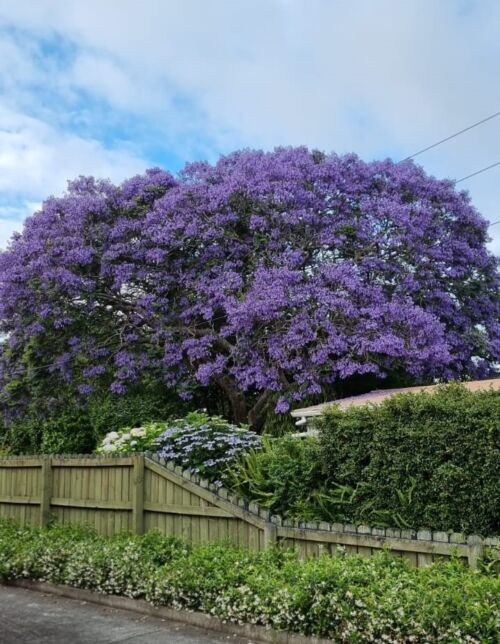
- Jacaranda mimosafolia - Jacaranda is a bold, fast-growing tree with a rugged, irregular crown and dynamic branches reaching outward, the Jacaranda instantly commands attention in any landscape. Although it is deciduous in all but the warmest climates, it still offers year-round visual interest thanks to its fine, feathery green foliage. As early summer arrives, its canopy transforms into a striking display, when soft purple blooms blanket the tree in breath taking colour. Not only does it provide beauty, but it also makes an excellent dappled shade tree. Native to south-central South America, this sub-tropical species thrives in sunny locations with moist, well-drained soil but will tolerate dryer once established. Typically, it grows to around 7 meters tall and 5 meters wide, making it a standout feature in gardens or larger landscapes.
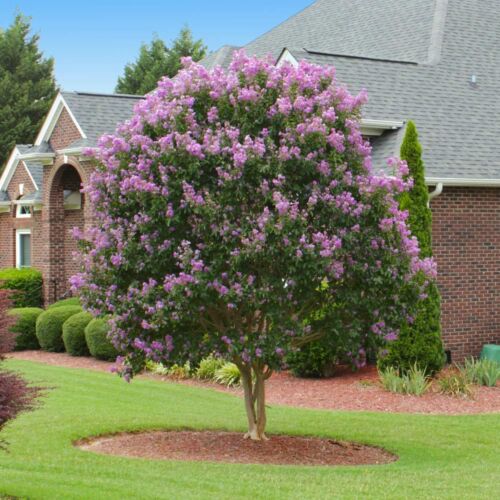
- Lagerstroemia indica ‘De Puard’ – Crepe Myrtle is a delightful small deciduous tree with a compact, rounded form. During summer, its lime-green foliage creates a fresh display, before transforming into rich autumn tones of brilliant red. At the same time, lilac-mauve flowers with a crepe-paper texture cover the tree in abundance, offering a truly spectacular sight throughout the warmer months. Furthermore, its smooth, mottled pinkish-gray bark provides striking year-round interest. This variety grows best in moist, well-drained soil and full sun, ensuring maximum flower production. In addition, it makes an elegant feature in a sheltered small garden. Reaching approximately 4 x 3 metres, it can also be easily trimmed to suit your preferred shape and size, giving both flexibility and charm
-
- Description
A pyramidal specimen tree with an upright broad growth habit. Green, star-shaped leaves over summer turn dark crimson during autumn. Makes a superb shade or specimen tree. Grows to apx 9 x 5m Height x Width 9 x 5m Range Medium 5-10m Growth Rate Fast Plant Type Tree Shape Pyramidical Country of Origin England Similar to Consider Other Liquidambars, Acer rubrum types, Quercus coccinea or rubra, Pyrus spp. Amelanchier Canadensis, Nyssa Sylvatica - Leaf
Leaf Colour Lush Green Deciduous Leaf Colour Crimson Red - Flower
Flower Nil - Uses
Specimen Yes Good Shade Tree? Yes Accent Yes Note: Growth, height and grade information are given in good faith but are subject to natural variables beyond our control. - Liquidambar styraciflua 'Worplesdon' is a striking deciduous tree with an upright, pyramidal habit and distinctive corky bark. Its deeply lobed, green ‘maple-like’ leaves provide lush foliage throughout spring and summer. As autumn arrives, the leaves transform into a brilliant display of fiery red, orange, and yellow making it a true seasonal highlight. Thanks to its form and colour, this variety is excellent for avenue planting, as a shade tree specimen, or as a feature in small gardens. Ideally, it prefers a sheltered position with moist, well-drained soil conditions. At maturity, it typically reaches around 6 metres tall by 4 metres wide, offering structure without overwhelming the space. Interestingly, the Latin name styraciflua refers to its gum-producing nature.
- 6 x 4m
- Medium 5-10m
- Fast
- Tree
- Round
- North America/div>
- Other Liquidambars, Acer rubrum types, Quercus coccinea or rubra, Pyrus Aristocrat or Bradford. Amelanchier Canadensis, Nyssa Sylvatica, Liriodendron Tulipefera, Platanus Autumn Glory.
- Green
- Reds, Oranges and Yellows
- Moist well drained
- Prefers sheltered
- Liquidambar styraciflua – American Sweetgum is a striking deciduous tree known for its straight trunk and corky bark. It starts narrow and upright, gradually forming a broad, conical crown as it matures. Its green summer foliage transforms into vivid yellows, reds, purples, and oranges in autumn, creating an exceptional seasonal display. Native to North America, American Sweetgum thrives in moist areas and even tolerates poor drainage or clay soils. However, it performs best in moist, well‑drained soil with full sun. Reaching approximately 7 x 5 m, it makes an excellent avenue, specimen, or shade tree.