Deciduous trees
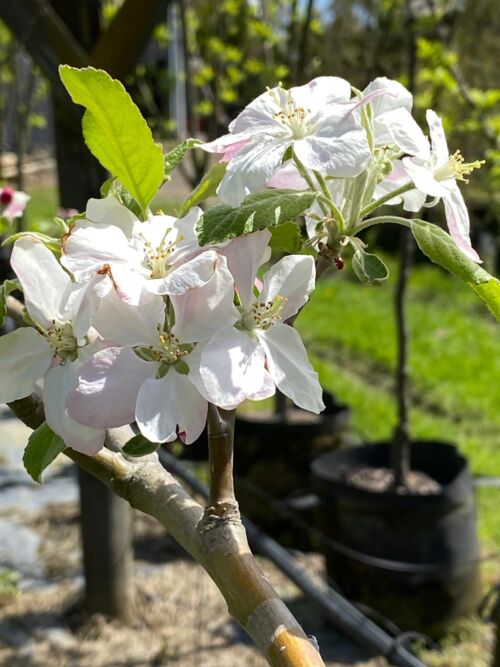
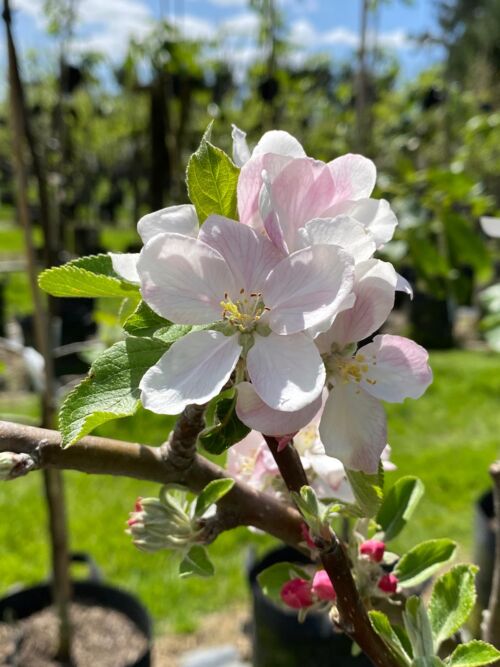
- Apple ‘Braeburn’ is a deciduous fruit tree that produces striking apples with red and yellow-striped skin. Originating in New Zealand in 1952 as a chance seedling, it quickly gained recognition for its quality and flavour. In spring, the tree bursts into bloom with clusters of white flowers. As summer advances, the fruit develops until it reaches full ripeness, ready for harvest around May each year. This heritage variety is celebrated for its crisp, juicy white flesh and superb sweet-tart flavour. Its distinctive taste has made it a favourite among apple lovers and continues to delight generations of growers and consumers. Apple trees thrive best in well-drained, fertile soils and prefer a sunny, sheltered position to maximize fruit production. Under ideal conditions, they grow to a height of 4–5 meters, making them suitable for both home gardens and orchards. For healthy growth, provide seasonal feeding and deep watering during dry spells. Moreover, apply mulch to conserve moisture and prune annually to shape the tree, ensuring strong structure and abundant fruiting year after year..
- Out of stockApple “Fuji”is a deciduous fruit tree that produces vibrant red apples with a yellow base. Originating in Japan during the 1930s, it quickly became a popular variety worldwide. Today, it remains a heritage apple that continues to impress growers and consumers alike. In spring, the tree bursts into life with delicate white flowers blushed with pink. As summer progresses, the fruit steadily matures until it is ready for harvest around May each year. This variety is highly valued for its large, sweet, and crisp apples with fine texture. Moreover, Fuji apples are excellent for eating fresh and store remarkably well, making them a reliable choice for long-term enjoyment. Apple trees thrive in well-drained, fertile soils. Furthermore, they prefer sunny, sheltered positions to maximize fruit production. With the right growing conditions, Fuji trees reach a height of 4–5 meters, making them suitable for both home gardens and orchards. To encourage healthy growth, provide seasonal feeding and deep watering during dry spells. Additionally, apply mulch to retain soil moisture and prune annually. These steps help shape the tree and ensure abundant fruiting year after year.
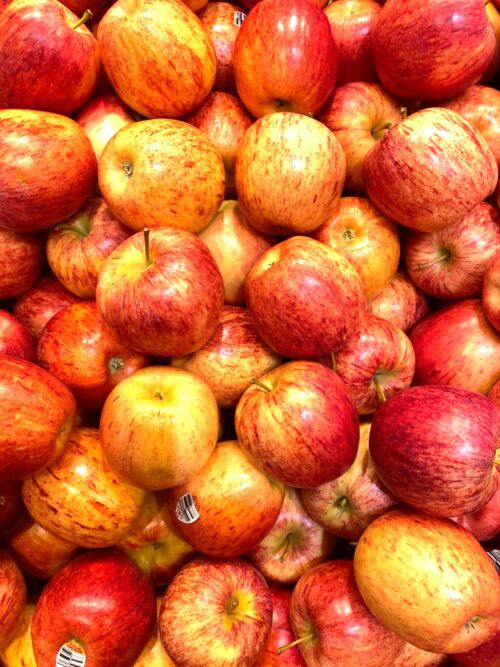
- Apple “Royal Gala” is a deciduous fruit tree that produces apples with a striking red stripe over a golden-yellow blush. Originating in New Zealand during the 1930s, it was developed by horticulturist J.H. Kidd as a cross between Kidd's Orange Red and Golden Delicious. Since then, it has become one of the world’s most popular apple varieties. In spring, the tree bursts into life with clusters of white flowers tinged with pink. As summer advances, the fruit steadily develops until it reaches harvest time between February and March each year. This heritage variety is highly prized for its pure white, sweet, and very crisp flesh. Because of its firm texture and refreshing flavour, Royal Gala is a favourite eating apple. Moreover, it is also enjoyed as a versatile dessert apple. Apple trees thrive in well-drained, fertile soils. Furthermore, they prefer sunny, sheltered positions to maximize fruit production. With the right conditions, Royal Gala trees grow to a height of 4–5 meters, making them suitable for both home gardens and orchards. To ensure healthy growth, provide seasonal feeding and deep watering during dry spells. Additionally, apply mulch to retain soil moisture and prune annually. These steps help shape the tree and encourage abundant fruiting year after year.
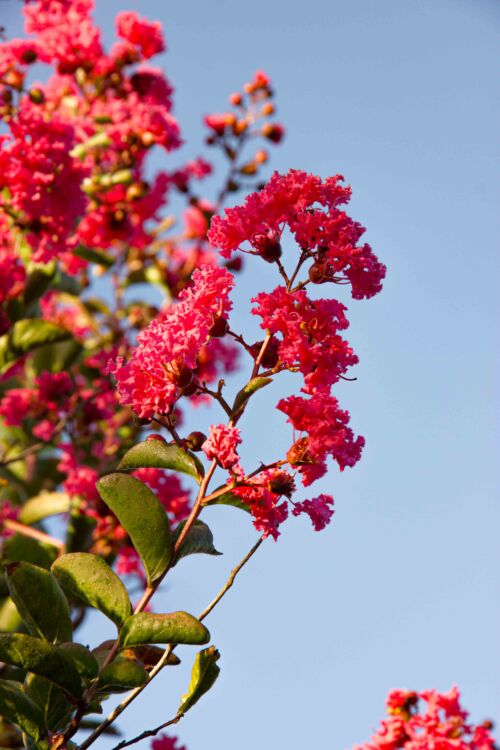
- A small deciduous tree which covers itself in ruffled, red crimson , flowers through summer. Lime green leaves over summer turn autumn colours of yellow, gold and red. Smooth shiny bark. Beautiful feature for a small garden.
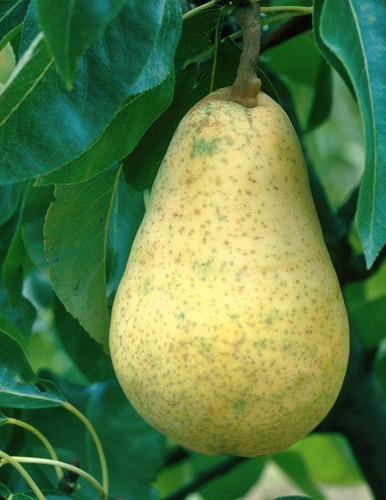
- Pear ‘ Williams Bon Chretien’ (Pyrus communis) is a large long necked, green- yellow fruit, that is ideal for eating and bottling. Harvest is apx Feb March. Branches are more horizontal making it an excellent choice for espaliering. Also known as the Bartlett pear. HERITAGE Pollinators: Beurre Bosc Winter Nelis, Conference, Doyenne du Comice.
- Apple ‘Cox’s Orange’ is a deciduous fruit tree that produces greenish-yellow apples with striking orange-red striping. Widely regarded as one of the finest apples ever grown, it combines beauty with exceptional flavour. In spring, the tree bursts into life with white flowers blushed pink. As summer progresses, the fruit matures until it is ready for harvest between January and February. This heritage variety is prized for its rich, aromatic flesh with a subtle nutty flavour. Its unique taste has made it a favourite among apple enthusiasts for generations. Apple trees thrive in well-drained, fertile soils and prefer a sunny, sheltered position to maximize fruit production. With the right conditions, they grow to a height of 4–5 meters. To ensure healthy growth, provide seasonal feeding and deep watering during dry spells. Additionally, apply mulch to retain moisture and prune annually to shape the tree and encourage abundant fruiting.
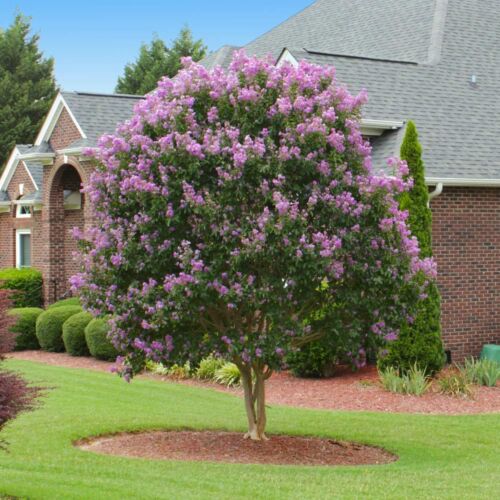
- Lagerstroemia indica ‘De Puard’ – Crepe Myrtle is a delightful small deciduous tree with a compact, rounded form. During summer, its lime-green foliage creates a fresh display, before transforming into rich autumn tones of brilliant red. At the same time, lilac-mauve flowers with a crepe-paper texture cover the tree in abundance, offering a truly spectacular sight throughout the warmer months. Furthermore, its smooth, mottled pinkish-gray bark provides striking year-round interest. This variety grows best in moist, well-drained soil and full sun, ensuring maximum flower production. In addition, it makes an elegant feature in a sheltered small garden. Reaching approximately 4 x 3 metres, it can also be easily trimmed to suit your preferred shape and size, giving both flexibility and charm
- Fagus sylvatica ‘Purpurea’, or Copper Beech, is a magnificent deciduous tree with a dense, pyramid shape. Its new leaves emerge in striking shades of red, then mature into copper bronze tones and finally deep, rich purples. These colourful leaves are also popular for floral work. Originating from Southern Europe, this beech thrives naturally in forested environments, which is reflected in the name “sylvatica.” It grows best in fertile, well drained soil, and planting it in full sun helps maximise leaf colour throughout the season. Copper Beech makes an impressive lawn specimen for larger properties. It can also be trained into a tall screen or woven to form a striking, trimmed formal hedge. The tree reaches around 10 × 4 metres in about ten years and eventually matures to approximately 25 × 10 metres.
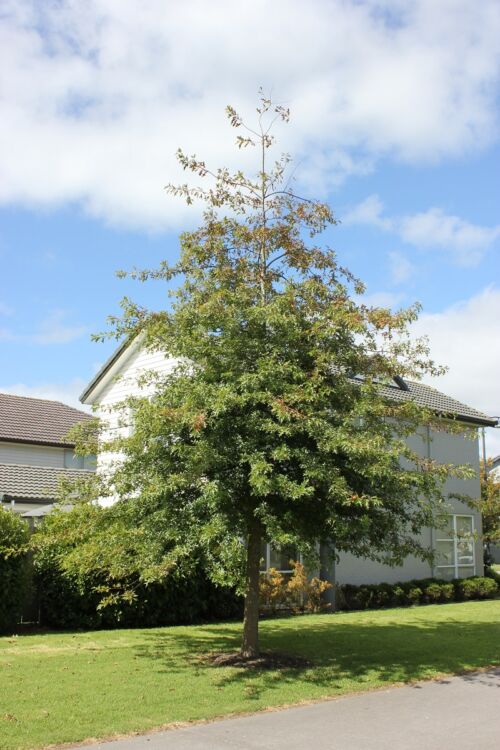
- Nyssa sylvatica – Black Tupelo is a medium-sized, deciduous tree with a graceful pyramidal shape. Native to North America, it brings seasonal interest and structure to gardens and landscapes. During summer, its dark green, glossy leaves—oval and pointed—reach up to 15 cm long. As autumn arrives, they transform into a stunning display of reds, oranges, and yellows, making it a true standout. This tree thrives near ponds or in damp, moist areas and tolerates clay soils well. Tiny flowers bloom discreetly, followed by small blue berries that attract birds and enhance biodiversity. Typically growing to around 7 meters tall and 4 meters wide, Black Tupelo is ideal for woodland-style plantings. The name sylvatica reflects its natural habitat—thriving in forested environments..
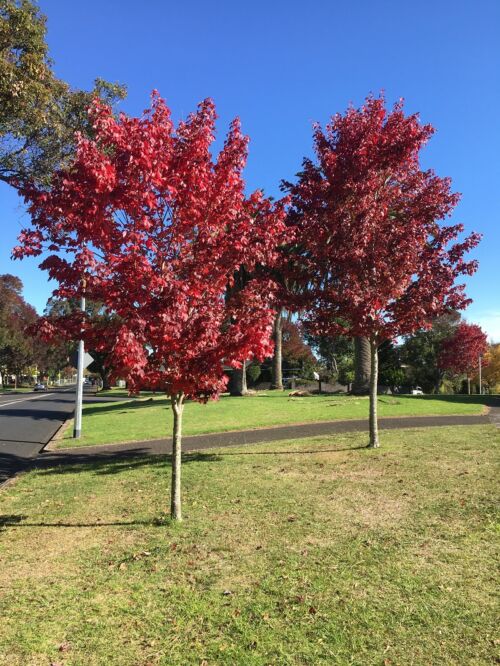
- Acer freemanii ‘Jeffers Red’ – Freeman Maple is a fast-growing, upright, deciduous tree featuring strong ascending branches and a dense, broad-oval crown. Its rich green summer foliage transforms into brilliant red in autumn, creating a stunning seasonal display. It thrives in moist, well-drained soil but adapts to clay, poor, wet, or dry conditions. More wind-tolerant than other maples. Ideal as a specimen or avenue tree, it reaches approximately 10m tall by 5m wide.
- Carpinus betulus 'Fastigiata', commonly known as Upright Hornbeam, is a deciduous tree with a narrow, columnar form that gradually broadens as it matures. This refined cultivar of the European Hornbeam remains in its tight form making it ideal for structured landscapes, offering both formality and seasonal interest. During summer, its oval, ribbed green leaves create a lush canopy. As autumn arrives, the foliage transitions into warm shades of yellow and orange, eventually turning brown and remaining on the tree well into winter adding texture and colour even in the colder months. Moreover, this tree thrives in moist, well-drained soil and prefers a sunny position. Thanks to its upright habit and tolerance for close planting, it makes an excellent choice for street planting, avenues, or as a screen. Reaching approximately 8 metres tall and 3 metres wide, The Upright Hornbeam is a versatile and low-maintenance option for both urban and rural settings.
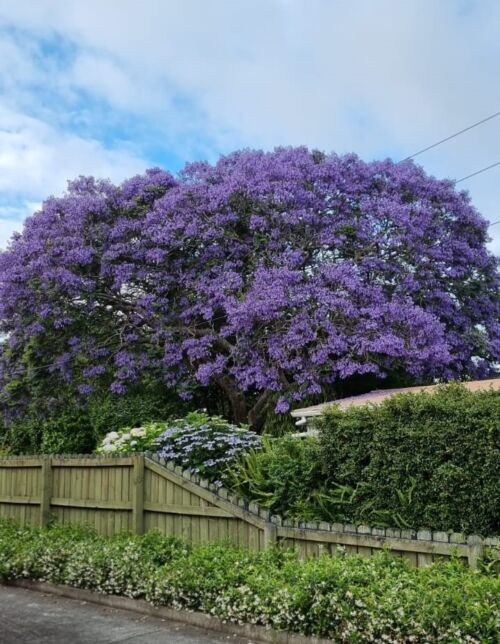
- Jacaranda mimosafolia - Jacaranda is a bold, fast-growing tree with a rugged, irregular crown and dynamic branches reaching outward, the Jacaranda instantly commands attention in any landscape. Although it is deciduous in all but the warmest climates, it still offers year-round visual interest thanks to its fine, feathery green foliage. As early summer arrives, its canopy transforms into a striking display, when soft purple blooms blanket the tree in breath taking colour. Not only does it provide beauty, but it also makes an excellent dappled shade tree. Native to south-central South America, this sub-tropical species thrives in sunny locations with moist, well-drained soil but will tolerate dryer once established. Typically, it grows to around 7 meters tall and 5 meters wide, making it a standout feature in gardens or larger landscapes.
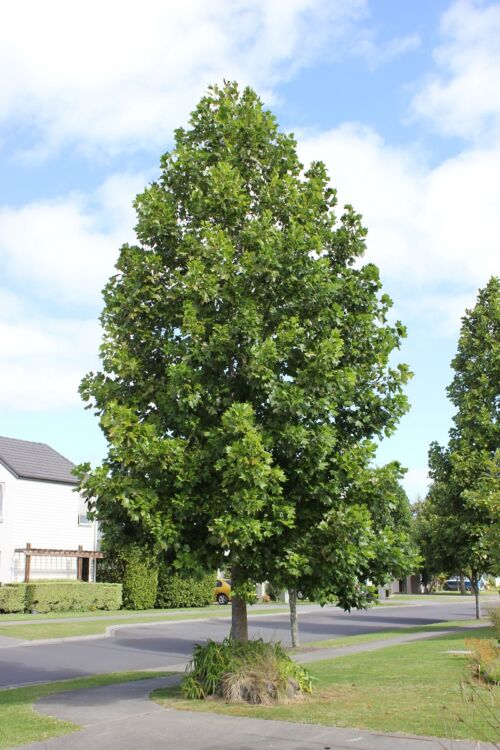
- Liriodendron tulipifera, commonly known as the Tulip Tree, is a fast-growing, pyramidal deciduous tree with a clean trunk and graceful spreading branches. Its large, lyre-shaped green leaves create a lush summer canopy and turn a vibrant butter-yellow in autumn, adding seasonal interest. In late spring, fragrant tulip-like flowers appear, showcasing greenish-yellow petals with a striking orange band at the base. These blooms make the tree a standout feature in any landscape. The Tulip Tree thrives in moist, well-drained soil and tolerates clay, provided it is not overly wet. It grows approximately 10 x 6 meters in 10 years and can reach 30 x 15 meters at maturity. Ideal as a shade or specimen tree, it also works beautifully in avenues to create a bold statement. The name “Tulipifera” refers to its distinctive tulip-shaped flowers, which are its most charming feature.
- Quercus palustris – Pin Oak (Swamp Oak) is a deciduous tree native to North America, known for its pyramidal growth habit and distinctive brownish-grey bark. Its deeply cut, glossy green leaves provide lush summer foliage, which eventually transforms into a brilliant scarlet red display in autumn. Notably, the lower branches tend to droop toward the ground, adding architectural interest to its form. The Latin name palustris translates to “of marshland” or “of swamps,” reflecting its natural preference for moist to wet, acidic soil conditions. Pin Oaks tolerate damp to wet environments and thrives best in full sun. In ideal conditions, it can reach approximately 8 x 6 metres within 10 years and may grow to over 20 metres at full maturity—making it an excellent choice for large landscapes or as a commanding shade tree. Whether you're planting in parklands, spacious gardens, or wetland edges, Quercus palustris offers seasonal beauty and structural elegance.
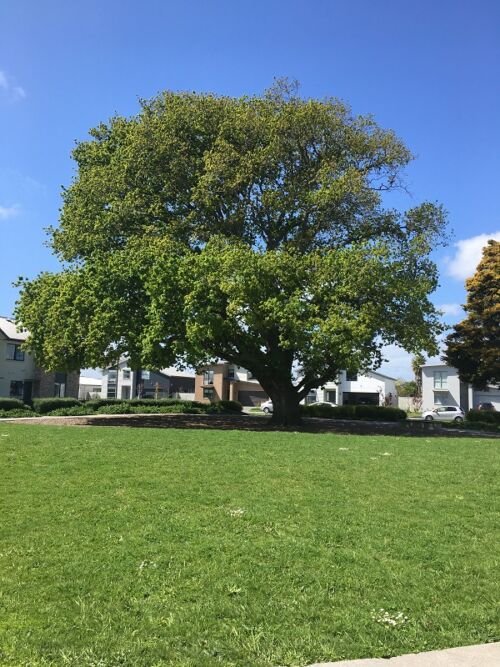
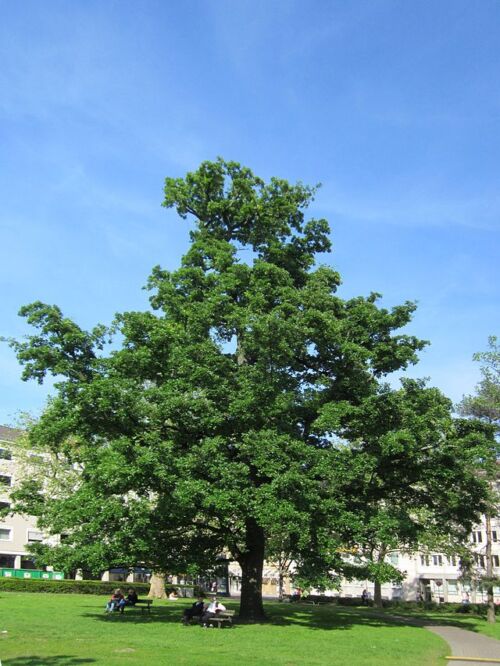
- Quercus robur – English Oak is one of the worlds most recognised trees. It is a deciduous, long‑lived tree native to Europe. It grows into a very large specimen with a broad crown of rugged, open branches. Its dark green leaves turn a clear yellow in autumn, while acorns ripen and fall throughout the season. As it matures, the tree develops short, attractive fissured bark that adds strong visual character. Although it tolerates clay soils, it is best to avoid sites that remain consistently wet. In the Landscape its expansive canopy, it makes an excellent shade tree for parks, reserves, farms, and larger open spaces. The English Oak is also valued for its durable timber. Its heartwood is highly sought after for interior use and quality furniture work. This impressive tree typically reaches around 10 × 6 m in ten years and can surpass 30 m at full maturity. The Latin word robur refers to hardwood, especially oak, and conveys strength, firmness, power, and resilience.
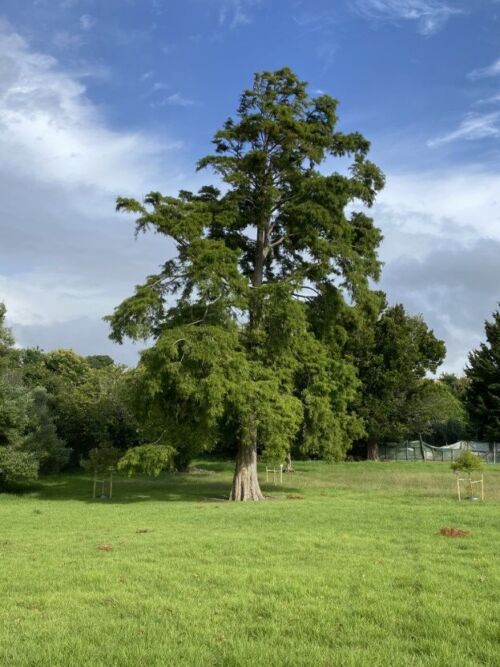
- Taxodium distichum – Swamp Cypress, is a vigorous, deciduous conifer known for its striking pyramidal shape with origins in the United States. This bold tree adds structure to any larger landscape. In spring and summer, its soft, green needle-like foliage creates a lush canopy. As autumn arrives, the leaves shift to brilliant shades of golden yellow, warm orange, and rich brown—an eye-catching seasonal transformation. Remarkably tolerant of wet soils, Swamp Cypress thrives near ponds, streams, and other damp areas. Its adaptability makes it an ideal choice for wetland gardens or low-lying spaces. Typically, it reaches around 9 x 4 metres within ten years. At full maturity, it can grow to an impressive 25+ x 10 metres, offering long-term impact and shade. Interestingly, the species name distichum means “two-ranked,” referring to the elegant, two-rowed arrangement of its leaves along the branches.
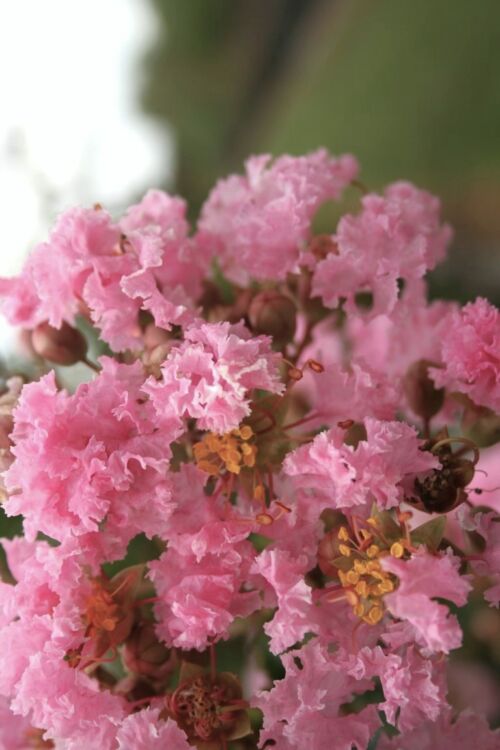
- Lagerstroemia indica ‘Soir D’ete’ – Crepe Myrtle is a charming small deciduous tree with a vase-shaped form. During summer, its lime-green leaves create a fresh display, before turning to rich autumn shades of yellow and gold. At the same time, ruffled light-pink flowers cover the tree in abundance, producing a truly spectacular sight throughout the warmer months. In addition, its smooth, shiny bark adds year-round interest. This variety thrives best in moist, well-drained soil and full sun, which ensures maximum flower production. Moreover, it makes a beautiful feature in a sheltered small garden. Growing to approximately 4 x 3 metres, it can also be easily trimmed to suit your desired shape and size, offering both flexibility and elegance
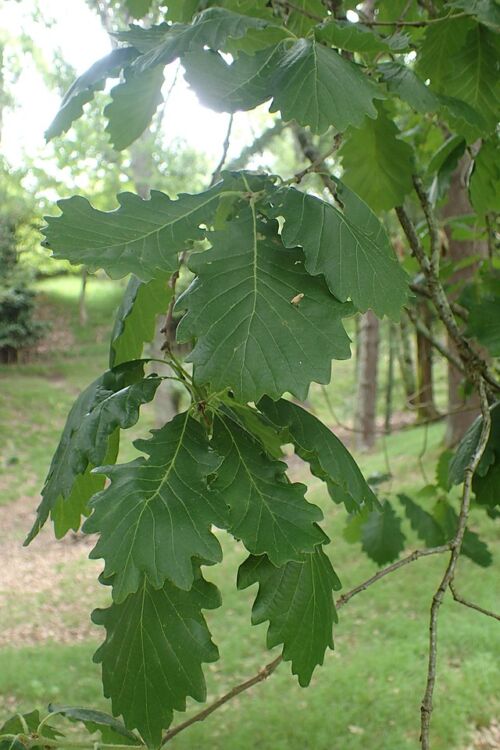
- Quercus canariensis – Algerian or Mirbeck Oak is a large, deciduous tree native to the Western Mediterranean. With a stout trunk and broad crown, it produces striking dark green leaves that create a lush canopy. In warmer climates, it may remain semi-evergreen, offering year-round appeal. This oak thrives in exposed sites, tolerating heat and drier conditions with ease. Moreover, it adapts well to most soils and shows greater tolerance of clay than many other oak species, though it dislikes waterlogged ground. Additionally, Quercus canariensis withstands coastal environments, making it versatile for varied landscapes. It grows approximately 10 x 6m in ten years, and at maturity, it can reach 25 x 25m. With its impressive size and spreading habit, it serves as an excellent shade tree for large gardens or open spaces.
- Quercus cerris – Turkey Oak is a handsome, wide-spreading deciduous tree native to south-eastern Europe and Western Asia. Its rich green, oblong lobed leaves create a striking display before turning golden yellow in autumn, adding seasonal interest to any landscape. This oak thrives in diverse soil types, including sandy, loamy, and heavy clay, though it resents waterlogged conditions. Thanks to its robust root system, it becomes dry tolerant once established. Moreover, it prefers full sun and withstands exposed sites. Growing to approximately 10 x 6m in ten years, Turkey Oak matures to around 25 x 14m. With its impressive size and broad crown, it provides excellent shade, making it a valuable choice for large gardens, parks, or open spaces.
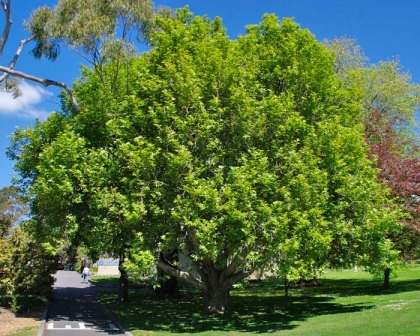
- Platanus orientalis ‘Autumn Glory’ is a selected form of the Oriental Plane, known for its fast growth and impressive structure. This deciduous tree quickly develops a large, rounded crown of branches, making it a standout in spacious landscapes. Its large, palmate green leaves resemble maple foliage and are deeply lobed into three or more sections. In autumn, they add seasonal interest with golden tones. The bark flakes in patches on older branches, revealing a dappled surface that adds year-round texture. While it tolerates most soils, it prefers moist, well-drained conditions for optimal growth. Ideal for parks, farms, avenues, and large properties, it provides excellent shade and visual appeal. Originating from Duncan and Davies in New Zealand, it typically grows to around 9 metres tall and 5 metres wide.