Tolerates Clay Soils
- Cercis canadensis 'Forest Pansy' is a small, deciduous tree with an open, spreading habit that gradually matures into a broad, rounded crown. In early spring, masses of small magenta, pea-like flowers burst into bloom on bare branches, creating a striking display before the foliage emerges. Soon after flowering, rich purple-red, heart-shaped leaves appear, adding depth and colour to the garden. As autumn approaches, these leaves transition into warm tones of orange and bronze, offering a final flourish before winter. Because of its compact size reaching approximately 3.5 x 3.0 metres, ‘Forest Pansy’ is an excellent feature tree for smaller gardens or courtyards. It responds well to pruning, making it easy to maintain a tidy shape. Additionally, it tolerates clay soils, although wet or poorly drained conditions should be avoided. For best results, plant in a more sheltered position to protect its delicate foliage. Interestingly, this tree originates from North America, and its Latin name canadensis fittingly means “of Canada” or “from Canada.” Whether you're designing a colourful garden or seeking a low-maintenance ornamental tree, ‘Forest Pansy’ delivers beauty across all seasons.
- 3.5 x 3.0m
- Small 1-5m
- Moderate - Fast
- Tree
- Round-Spreading
- Deciduous
- North America
- Prunus Thundercloud, Fagus Riversii, Fagus Sylv Purp, Acer Tamukeyama, Fraxinus Raywoodii, Acer Bloodgood.
- Purple-Red
- Oranges and Bronze
- Magenta
- No
- Moist well drained, Tolerates Clay
- Prefers Sheltered
- Small gardens, Courtyards
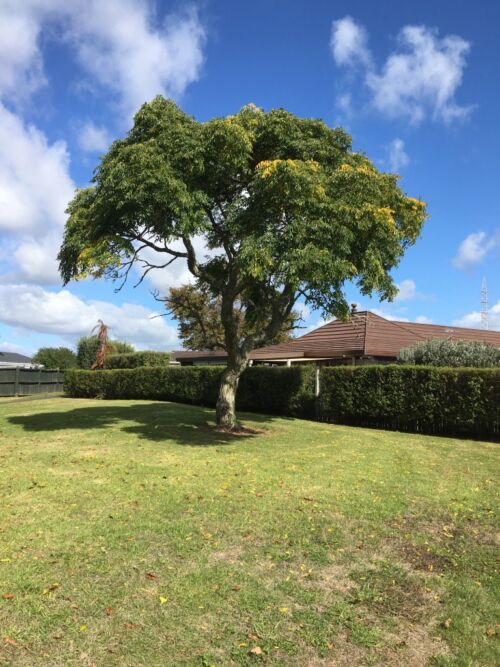
- Melia azedarach – Indian Bead Tree is a round-headed deciduous tree with glossy, compound green leaves. In spring, it produces scented pale lilac flowers. Later, during autumn, loose clusters of smooth oval berries appear, turning from green to bright yellow in winter. Not to be eaten. Tthe tree adapts well to a wide range of soils, provided they are well drained to prevent root rot. It grows best in full sun. Moreover, pruning helps open the crown and encourages the development of well-spaced limbs. Thanks to its dense leaf covering, it is ideal as a lawn specimen or shade tree. This hardy tree withstands frost, wind, and occasional dry periods. Finally, it reaches approximately 7m tall and 5m wide, making it a striking addition to any landscape.
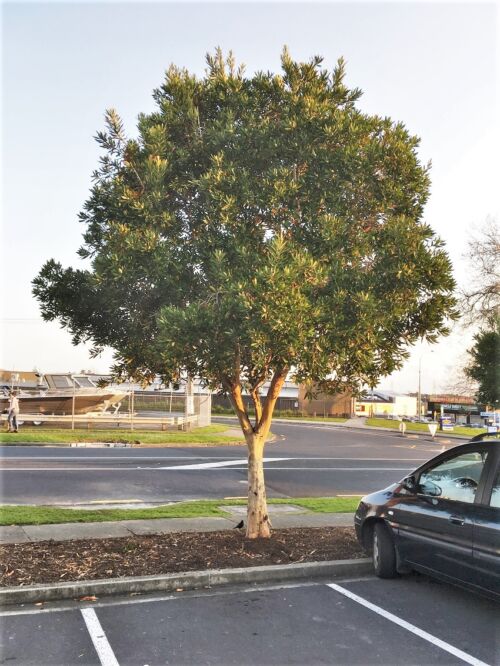
- Tristaniopsis laurina – Kanooka or Water Gum is a medium-sized evergreen tree with a rounded, compact form. Its dark, glossy green leaves provide year-round appeal, making it a striking feature in any landscape. Native to Australia, this tree produces clusters of small, fragrant yellow flowers during summer. These blooms not only enhance its beauty but also attract pollinators, bringing extra life and movement to your garden. Kanooka Water Gum tolerates clay soils, yet it performs best in moist, well-drained conditions. For optimal growth and colour, plant it in full sun while avoiding sites that are overly wet or dry. Versatile and adaptable, it suits street planting, lawn specimens, and smaller gardens where shade is desired. Typically reaching 7 metres tall and 4 metres wide, it can also be pruned to maintain a neat, compact shape.
- Leptospermum scoparium – Manuka or Tea Tree is a compact, native New Zealand tree known for its resilience and beauty. It’s ideal for gardens seeking year-round interest and biodiversity. Dark green foliage is narrow, lance-shaped and sharply pointed. From late autumn to early spring, the tree bursts into single or double flowers, offering a vibrant display and nectar for bees. These are followed by its berries, which resemble tiny hot cross buns. Manuka is also prized for its high-quality honey, making it a valuable addition to any landscape. Hardy and adaptable, Manuka tolerates clay soils and thrives in windy coastal areas or dry conditions once established. Avoid overly wet soils for best results. It typically grows to around 5 meters tall and 3 meters wide.
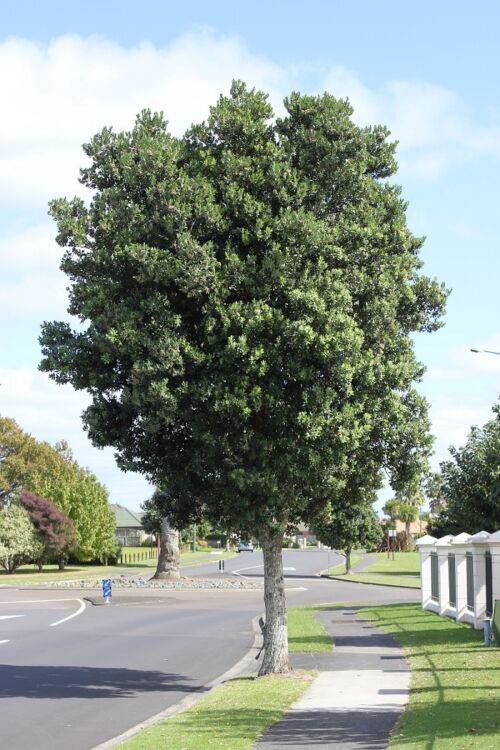
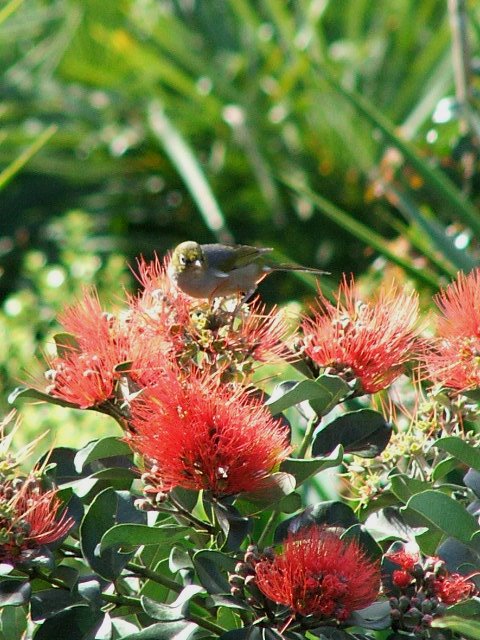
- Metrosideros excelsa 'Maori Princess' is a refined cultivar of the iconic Pohutukawa, selected for its upright, pyramidal growth habit. Its foliage is a distinctive deep green, offering a lush contrast to its vivid red flowers. Because of its compact form and neat structure, this tree is ideal for smaller gardens or urban landscapes. In addition, its tidy shape makes it easy to maintain and visually appealing year-round. In late spring, 'Maori Princess' produces brilliant red flowers that cover the tree in a spectacular display. These blooms are not only eye-catching but also serve as a valuable food source for native birds. Consequently, this tree adds both beauty and biodiversity to your garden. Growing to around 7 x 5 metres, it can be clipped to shape, making it suitable as a screen, hedge, or standout specimen. Metrosideros varieties, including 'Maori Princess', thrive in coastal environments and are impressively resilient. They tolerate poor soil, excess moisture, and even drought. Moreover, they withstand salt-laden winds and arid conditions, making them perfect for exposed sites. While they can grow in clay and wet soils, they perform best in moist, well-drained earth. Therefore, this cultivar is not only tough but also an excellent shade tree for compact outdoor spaces.
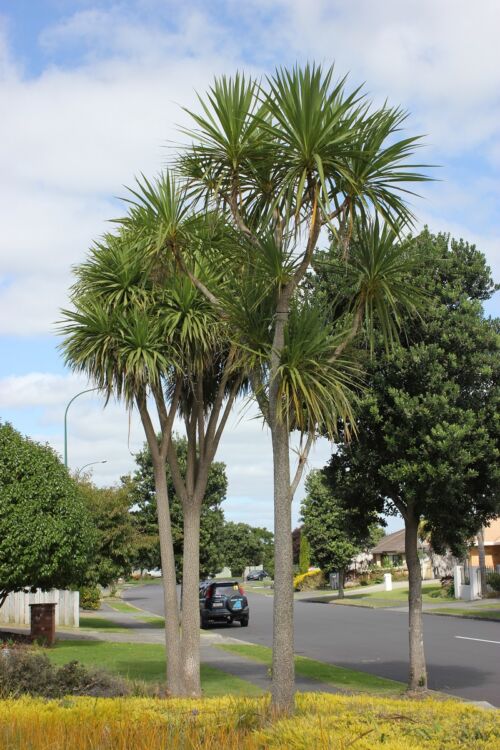
- Cordyline australis, commonly known as the Cabbage Tree or Ti Kouka, is a striking native tree found throughout New Zealand. With its upright trunk and clusters of long, drooping leaves—often reaching up to 1 metre—it resembles a palm and adds architectural flair to any landscape. In late spring, this hardy tree bursts into large heads of creamy white, scented flowers. These blooms are rich in nectar, attracting bees and other pollinators. As summer progresses, the tree produces fruit that draws native birds from January to April, enhancing biodiversity in your garden or property. Cordyline australis thrives in a wide range of environments—from swampy wetlands to dry, windy hill slopes. It’s commonly seen across farmland, open spaces, and scrubland in both the North and South Islands. While it tolerates clay soils, it performs best in free-draining ground and is resistant to coastal winds and harsh conditions. The name “Cabbage Tree” arose from early European settlers who, like Maori, used the tender heart-shoots as a vegetable. Its Latin name, australis, fittingly means “southern” or “of the south,” reflecting its deep roots in New Zealand’s southern landscapes. This iconic tree typically grows to around 6 metres tall and 2 metres wide, making it a bold and resilient choice for coastal gardens, rural properties, and native restoration projects.
- 6 x 2m
- Medium 5-10m
- Slow - Moderate
- Palm
- Upright
- New Zealand/div>
- Nikau Palms
- Green
- White
- Fragrant
- Dry once established, Damp-Wet, Clay
- Coastal, Windy, Hardy
- Bird Feeding, Small Gardens
- Pseudopanax lessonii – Houpara is an evergreen New Zealand native that grows as a multi-branched shrub or small tree. Fast-growing, it features fleshy, palmate-shaped dark green leaves with three to five leaflets, creating a lush and tropical look. From December to February, small green flowers appear, followed by dark purple fleshy fruit. These fruits attract birds, adding life and movement to the garden throughout the year. Houpara can be left to grow as a small shade tree. Alternatively, it trims well into a hedge or can be clipped to form a larger screen, offering versatility in garden design. This hardy species is ideal for coastal gardens as it withstands salt-laden winds. It prefers moist, well-drained soil in full sun or partial shade and tolerates clay soils, though not waterlogged conditions. Growing to approximately 4 x 2.5 metres, Houpara makes an excellent choice for structured planting and year-round greenery.
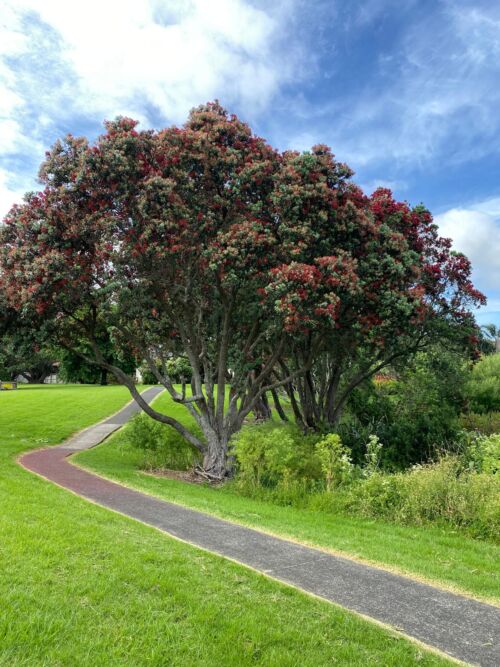
- Metrosideros excelsa x robusta 'Mistral', commonly known as Pohutukawa, is a stunning native tree discovered on the Coromandel Peninsula, located on the north-western coast of New Zealand’s North Island. As a natural hybrid of Metrosideros excelsa and robusta, Mistral offers a more compact and upright form. Its fresh green foliage matures into a darker shade, creating year-round interest. Moreover, its tidy growth habit makes it ideal for smaller spaces. In late spring, Mistral bursts into deep scarlet red flowers that blanket the entire tree, creating a breathtaking display. Not only are these blooms visually striking, but they also attract native birds, adding ecological value to your garden. Growing to approximately 5 x 3 metres, this tree is easily clipped into shape. Therefore, it works beautifully as a screen, hedge, or standout specimen in compact landscapes. Metrosideros varieties thrive in coastal environments and are impressively resilient. They tolerate poor soils, excess moisture, and even drought conditions. Furthermore, they withstand salt-laden winds and arid climates, making them perfect for exposed sites. While they can grow in clay and wet soils, they perform best in moist, well-drained earth. As a result, Mistral is not only hardy but also an excellent shade tree for smaller gardens.
- Metrosideros excelsa, commonly known as Pohutukawa, is one of New Zealand’s most iconic native trees. Excelsa stands out as the giant of the species, with a wide-spreading canopy and olive-green foliage. From December, it bursts into bright crimson, fluffy flowers. For this reason it’s often called the New Zealand Christmas tree. Flowers also attract bees, birds, and beneficial insects. Thriving in coastal environments, Pohutukawa trees are incredibly resilient. They endure poor soil, excess moisture, and even drought. Moreover, they withstand salt-laden winds and dry, exposed landscapes. Their thick roots often anchor into cliff faces, showcasing their strength and adaptability. Pohutukawa prefers moist, well-drained earth, but will grow in a wide range of soils. With proper space, this majestic tree can grow up to 15 metres tall and 10 metres wide, making it a stunning feature in larger gardens or coastal settings.
- Knightia excelsa, commonly known as Rewarewa, is a striking evergreen native to New Zealand. It forms a slender, erect, and tapering tree with long, green serrated leaves that adds texture and structure to the landscape. In spring, it produces very unusual tubular reddish-brown flowers with yellow tips that are highly attractive to native birds, adding both ecological value and seasonal interest. Because of its upright habit, Rewarewa is ideal for smaller gardens and narrow spaces. Additionally, it is well-suited to coastal gardens. While it tolerates clay soils, overly wet conditions should be avoided. Likewise, phosphate-based fertilizers are not recommended. Typically, it grows to approximately 7 x 3 metres, making it a manageable yet elegant choice for urban and rural settings alike. Interestingly, the Latin name Excelsa refers to its tall, strong stature.
- 7 x 3m
- Medium 5-10m
- Moderate
- Tree
- Columnar
- Evergreen
- New Zealand
- Liriodendron tulipifera fastigiata, Olea El Greco, Dacrydium Cupressinum, Acer Bowall, Poplar crow’s nest, Quercus robur fastigiata, Carpinus Betulus fastigiata, Dacrycarpus Dacrydoidies, Cupressus totem
- Green
- Reddish Brown
- No
- Prefers Moist well drained, Will tolerate clay, Not Wet
- Coastal, Wind
- Avenue, Small Garden, Bird Feeding, Narrow Spaces
- Alnus jorullensis, commonly known as the Evergreen or Mexican Alder, is a vigorous, fast-growing tree and as the name suggests, native to Mexico and South America. This species thrives in warmer climates, where it often remains evergreen throughout the year. With pale, papery grey bark and green, birch-like serrated foliage, it offers a soft, elegant appearance. Its drooping branches add a graceful touch to any landscape. Moreover, this tree is highly adaptable—it can fix nitrogen and tolerates poor, clay, damp, or even wet soils, making it a resilient choice for challenging sites. Thanks to its rapid growth and tolerance for trimming, Alnus jorullensis is ideal for creating shelter belts or privacy screens. Alternatively, it can be planted as a striking standalone shade tree, especially in areas where quick canopy cover is desired. Growing to approximately 7 metres tall and 3 metres wide, this versatile tree brings both beauty and function to gardens, rural properties, coastal and urban landscapes alike.
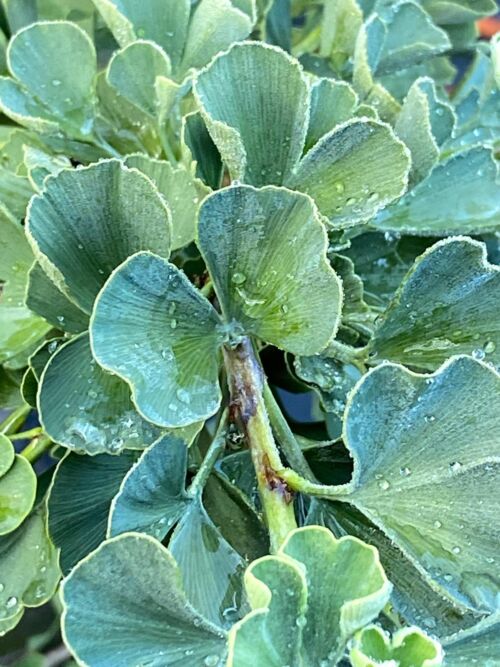
- Ginkgo biloba ‘Jade Butterflies’ is a compact, deciduous dwarf male cultivar from the Ginkgo family. It forms an upright, vase-shaped structure and grows slowly. Its deeply bi‑lobed, jade‑green leaves resemble butterflies, which inspired its name. In autumn, the foliage transforms into a soft cream‑yellow display. This variety prefers fertile, moist soil; however, it also tolerates compacted, poor, or urban soils though will not tolerate wet soils. It thrives in full sun, which enhances its vibrant yellow autumn colour. Additionally, it withstands coastal salt spray and pollution, making it ideal for urban, seaside, and exposed locations. Mature plants reach approximately 3 x 2 metres. Its compact size suits small gardens, courtyards, or container planting. It requires minimal pruning, though shaping in late winter or early spring works well. The term biloba refers to the two-lobed leaves. Although Ginkgo trees are native to China, ‘Jade Butterflies’ was developed in New Plymouth, New Zealand.
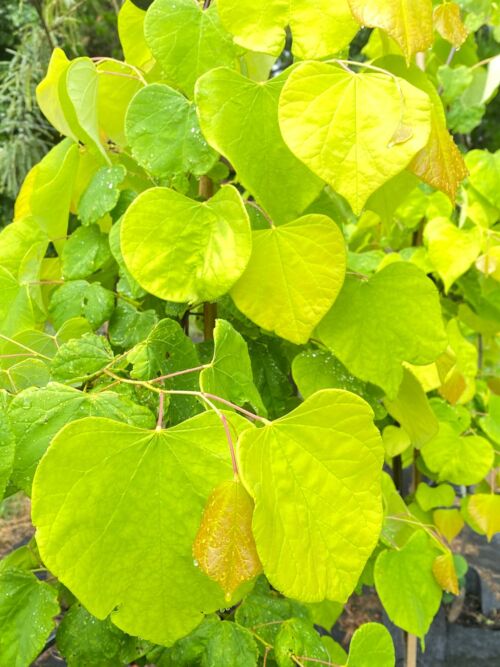
- Cercis canadensis 'Hearts of Gold' is a small, deciduous tree with an open, spreading habit that gradually matures into a broad, rounded crown. In early spring, masses of small magenta, pea-like flowers burst into bloom on bare branches, creating a striking display before the foliage emerges. Soon after flowering, golden yellow, heart-shaped leaves appear, adding light and colour to the garden. As autumn approaches, these leaves transition into warm tones of orange and bronze, offering a final flourish before winter. Because of its compact size reaching approximately 3.5 x 3.0 metres, ‘Hearts of Gold’ is an excellent feature tree for smaller gardens or courtyards. It responds well to pruning, making it easy to maintain a tidy shape. Additionally, it tolerates clay soils, although wet or poorly drained conditions should be avoided. For best results, plant in a more sheltered position to protect its delicate foliage. Interestingly, The 'Hearts of Gold' redbud was discovered in 2002 by Jon Roethling in a private garden in Greensboro, North Carolina, United States. It was then propagated and introduced to the market by Hidden Hollow Nursery in Tennessee.
- 3.5 x 3.0m
- Small 1-5m
- Moderate - Fast
- Tree
- Round-Spreading
- Deciduous
- North America
- Yellow
- Oranges and Bronze
- Magenta
- No
- Moist well drained, Tolerates Clay
- Prefers Sheltered
- Small gardens, Courtyards
- Thuja Green Giant is a resilient, fast-growing evergreen conifer admired for its dense, dark green foliage and upright pyramidal form. Propagated from cuttings, it maintains a uniform habit, remains disease-free, making it ideal for consistent planting. Because of its vigour, Thuja Green Giant is widely used for privacy screens and hedges. Moreover, it serves as a successful shelter belt worldwide. Originating in Denmark, this hybrid combines parent species from North America and Japan. In addition, it tolerates a wide range of soils, from sandy to clay, although it dislikes standing water. It also withstands windy sites and thrives best in full sun. For hedging or shelter, plant approximately 1.5–2.0 meters apart. At maturity, Thuja Green Giant reaches around 12 meters tall and 4 meters wide, creating an impressive and lasting landscape feature.
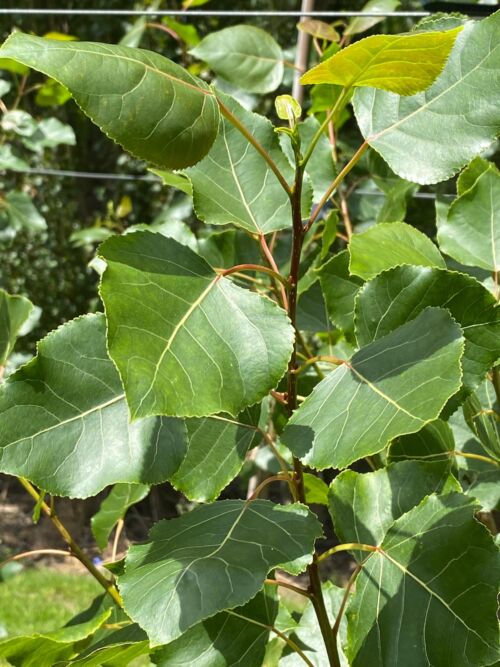
- Populus 'Tasman' - Tasman poplar, is a bold and fast-growing deciduous tree with a broadly columnar shape. During summer, its lush green foliage creates a vibrant canopy. Then, as autumn arrives, the leaves turn a brilliant golden yellow—often earlier than other poplar varieties. Not only visually striking, this tree is also highly functional. It performs exceptionally well in erosion control, large shelter belts, and timber production, thanks to its sturdy form and rapid growth. Moreover, Poplar 'Tasman' thrives in windy and wet conditions, making it ideal for exposed or challenging sites. Its resilience adds long-term value to both rural and urban landscapes. Reaching approximately 20 x 15 metres or more, it offers impressive height and presence. Whether for practical use or aesthetic impact, this tree delivers reliable performance and natural beauty.
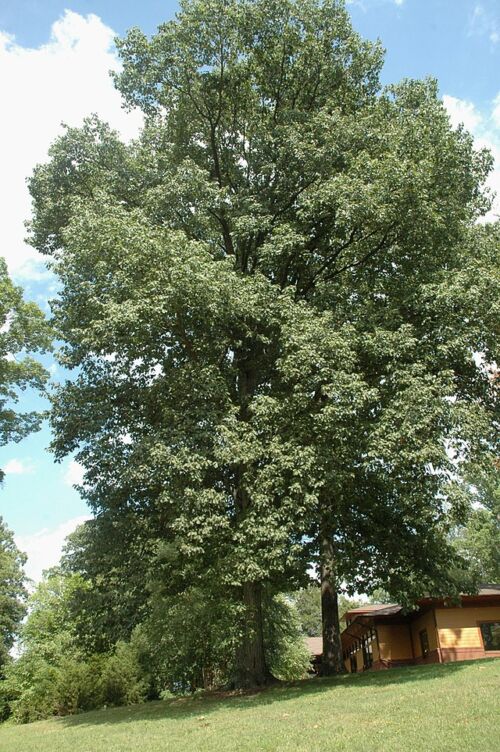
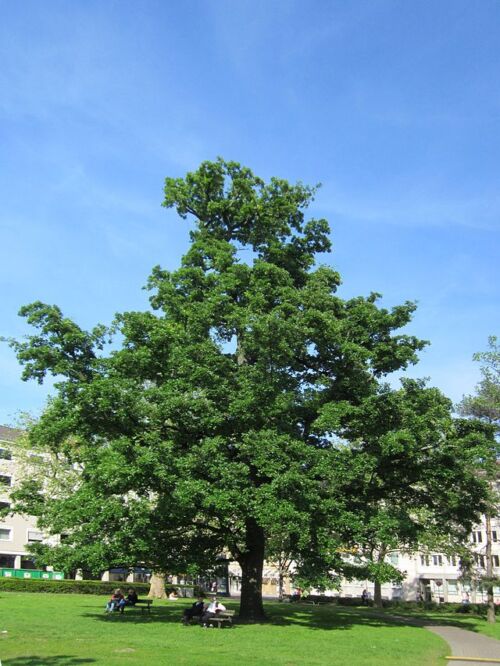
- Quercus rubra, commonly known as Northern Red Oak, is a deciduous tree native to North America. It forms a large, impressive specimen with broad, spreading branches. In spring, new leaves emerge a deep, rich red before turning vibrant green through summer.As autumn arrives, the foliage shifts to striking shades of dark red and orange. This tree thrives in full sun and grows best in deep, well‑drained, slightly acidic loam. However, it also adapts well to clay, sandy, and urban soils. Although tolerant of varied conditions, it prefers consistent moisture and dislikes prolonged flooding. Northern Red Oak makes an excellent specimen or shade tree for larger gardens, estates, parks, or reserves. It grows to approximately 10 × 7 metres in ten years and can eventually mature to around 20 metres.
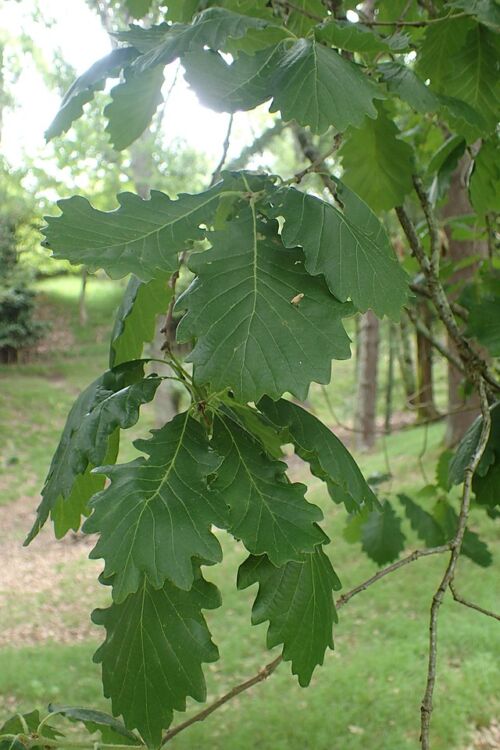
- Quercus cerris – Turkey Oak is a handsome, wide-spreading deciduous tree native to south-eastern Europe and Western Asia. Its rich green, oblong lobed leaves create a striking display before turning golden yellow in autumn, adding seasonal interest to any landscape. This oak thrives in diverse soil types, including sandy, loamy, and heavy clay, though it resents waterlogged conditions. Thanks to its robust root system, it becomes dry tolerant once established. Moreover, it prefers full sun and withstands exposed sites. Growing to approximately 10 x 6m in ten years, Turkey Oak matures to around 25 x 14m. With its impressive size and broad crown, it provides excellent shade, making it a valuable choice for large gardens, parks, or open spaces.
- Quercus canariensis – Algerian or Mirbeck Oak is a large, deciduous tree native to the Western Mediterranean. With a stout trunk and broad crown, it produces striking dark green leaves that create a lush canopy. In warmer climates, it may remain semi-evergreen, offering year-round appeal. This oak thrives in exposed sites, tolerating heat and drier conditions with ease. Moreover, it adapts well to most soils and shows greater tolerance of clay than many other oak species, though it dislikes waterlogged ground. Additionally, Quercus canariensis withstands coastal environments, making it versatile for varied landscapes. It grows approximately 10 x 6m in ten years, and at maturity, it can reach 25 x 25m. With its impressive size and spreading habit, it serves as an excellent shade tree for large gardens or open spaces.
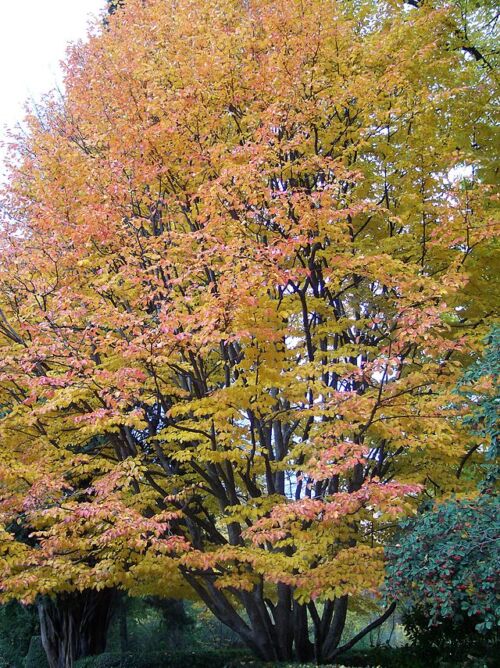
- Parrotia persica – Persian Ironwood is a compact, deciduous tree known for its exceptional autumn colour. Originating from Iran, it’s considered one of the finest small trees for seasonal interest. The botanical term persica refers to its Persian roots, highlighting its natural heritage. This slow-growing, broad-spreading tree often develops multiple stems and features attractive, flaking bark. Its dark green leaves shift dramatically in autumn, turning vivid shades of yellow, orange, rosy pink, and scarlet. In late winter to early spring, clusters of unusual red flowers appear on bare twigs, adding early-season charm. Persian Ironwood tolerates clay soils, though it’s best to avoid overly wet conditions. With a mature size of approximately 8 meters tall and 6 meters wide, it makes an excellent specimen tree.
- Metrosideros collina ‘Springfire’ (Pacific Island Pohutukawa) is a vigorous fast growing tree from the Pacific Islands, admired for its striking grey‑green foliage. As one of the earliest Pohutukawa to bloom, it bursts into vibrant orange‑red flowers that signal the arrival of Spring. This hardy tree tolerates clay soils and, once established, withstands dry conditions. Furthermore, it thrives in coastal and windy sites, making it a versatile choice for challenging environments. Its compact size suits smaller gardens, while regular trimming allows easy shaping into a colourful hedge. However, protect young plants from frost to ensure healthy growth and long‑term success. Growing to approximately 4m tall by 3m wide, ‘Springfire’ offers manageable proportions and year‑round appeal, combining resilience with striking seasonal beauty.