Tolerates Clay Soils
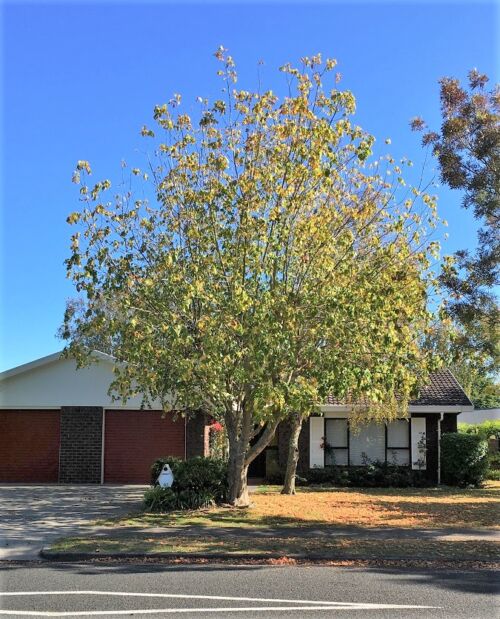
- Acer negundo ‘Kellys Gold’ brings a burst of seasonal brilliance to any garden. This standout deciduous tree is admired for its vibrant foliage and fast growth, making it a striking feature in smaller landscapes. New leaves emerge in a bold butter-yellow, gradually softening to fresh lime-green through summer. As autumn arrives, the foliage shifts back to glowing yellows, ensuring year-round interest and colour. Originating in New Zealand, Kellys Gold is a smart alternative to Ulmus species, which are restricted in Auckland due to Dutch Elm Disease. It reaches around 6m tall by 4m wide but responds well to pruning, allowing easy shaping and maintenance. This versatility makes it ideal for small gardens and urban spaces seeking canopy cover. It creates cool, inviting outdoor areas while thriving in clay soils. However, it prefers well-drained conditions, so avoid overly wet or poorly drained sites.
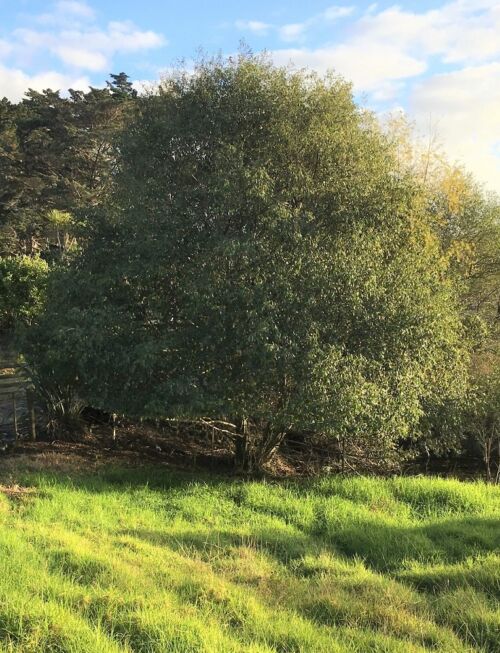
- Alnus jorullensis, commonly known as the Evergreen or Mexican Alder, is a vigorous, fast-growing tree and as the name suggests, native to Mexico and South America. This species thrives in warmer climates, where it often remains evergreen throughout the year. With pale, papery grey bark and green, birch-like serrated foliage, it offers a soft, elegant appearance. Its drooping branches add a graceful touch to any landscape. Moreover, this tree is highly adaptable—it can fix nitrogen and tolerates poor, clay, damp, or even wet soils, making it a resilient choice for challenging sites. Thanks to its rapid growth and tolerance for trimming, Alnus jorullensis is ideal for creating shelter belts or privacy screens. Alternatively, it can be planted as a striking standalone shade tree, especially in areas where quick canopy cover is desired. Growing to approximately 7 metres tall and 3 metres wide, this versatile tree brings both beauty and function to gardens, rural properties, coastal and urban landscapes alike.
- Cercis canadensis 'Forest Pansy' is a small, deciduous tree with an open, spreading habit that gradually matures into a broad, rounded crown. In early spring, masses of small magenta, pea-like flowers burst into bloom on bare branches, creating a striking display before the foliage emerges. Soon after flowering, rich purple-red, heart-shaped leaves appear, adding depth and colour to the garden. As autumn approaches, these leaves transition into warm tones of orange and bronze, offering a final flourish before winter. Because of its compact size reaching approximately 3.5 x 3.0 metres, ‘Forest Pansy’ is an excellent feature tree for smaller gardens or courtyards. It responds well to pruning, making it easy to maintain a tidy shape. Additionally, it tolerates clay soils, although wet or poorly drained conditions should be avoided. For best results, plant in a more sheltered position to protect its delicate foliage. Interestingly, this tree originates from North America, and its Latin name canadensis fittingly means “of Canada” or “from Canada.” Whether you're designing a colourful garden or seeking a low-maintenance ornamental tree, ‘Forest Pansy’ delivers beauty across all seasons.
- 3.5 x 3.0m
- Small 1-5m
- Moderate - Fast
- Tree
- Round-Spreading
- Deciduous
- North America
- Prunus Thundercloud, Fagus Riversii, Fagus Sylv Purp, Acer Tamukeyama, Fraxinus Raywoodii, Acer Bloodgood.
- Purple-Red
- Oranges and Bronze
- Magenta
- No
- Moist well drained, Tolerates Clay
- Prefers Sheltered
- Small gardens, Courtyards
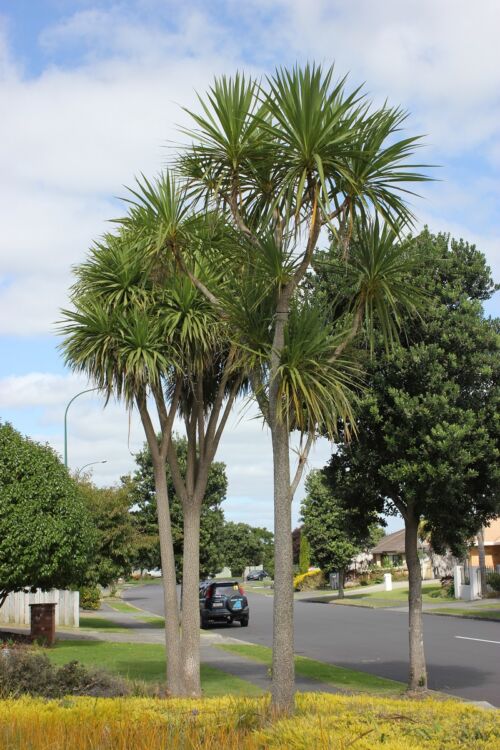
- Cordyline australis, commonly known as the Cabbage Tree or Ti Kouka, is a striking native tree found throughout New Zealand. With its upright trunk and clusters of long, drooping leaves—often reaching up to 1 metre—it resembles a palm and adds architectural flair to any landscape. In late spring, this hardy tree bursts into large heads of creamy white, scented flowers. These blooms are rich in nectar, attracting bees and other pollinators. As summer progresses, the tree produces fruit that draws native birds from January to April, enhancing biodiversity in your garden or property. Cordyline australis thrives in a wide range of environments—from swampy wetlands to dry, windy hill slopes. It’s commonly seen across farmland, open spaces, and scrubland in both the North and South Islands. While it tolerates clay soils, it performs best in free-draining ground and is resistant to coastal winds and harsh conditions. The name “Cabbage Tree” arose from early European settlers who, like Maori, used the tender heart-shoots as a vegetable. Its Latin name, australis, fittingly means “southern” or “of the south,” reflecting its deep roots in New Zealand’s southern landscapes. This iconic tree typically grows to around 6 metres tall and 2 metres wide, making it a bold and resilient choice for coastal gardens, rural properties, and native restoration projects.
- 6 x 2m
- Medium 5-10m
- Slow - Moderate
- Palm
- Upright
- New Zealand/div>
- Nikau Palms
- Green
- White
- Fragrant
- Dry once established, Damp-Wet, Clay
- Coastal, Windy, Hardy
- Bird Feeding, Small Gardens
- Corynocarpus laevigatus – Karaka is a dense, evergreen tree native to New Zealand. Its lush, glossy green foliage creates a bold, tropical impression—perfect for adding instant visual appeal to gardens and landscapes. Flowering in late winter to spring, it produces delicate green-cream clusters. By summer, vibrant orange berry-like fruits emerge, attracting native kererū, who help disperse the seeds. Exceptionally hardy, Karaka withstands strong winds, coastal exposure, and drought. However, it dislikes waterlogged soils. Ideal as a privacy screen or shade canopy, this tree grows to approximately 15–20 metres tall and 8 metres wide.
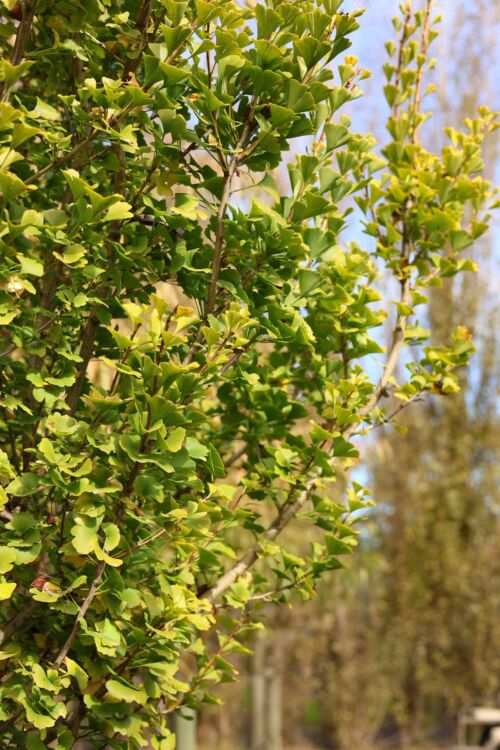
- Ginkgo biloba ‘Autumn Gold’ – Maidenhair Tree is a spectacular male clone from the renowned Ginkgo family. Because it is a selected male variety, it will not produce unpleasant fruit. Developed in San Jose, California, this tree grows with a pyramidal shape, featuring symmetrical branches and distinctive grey, corky bark. Its broad, fan-shaped leaves resemble sections of a maidenhair fern. Throughout summer, the foliage is light green and leathery. As autumn arrives, the tree transforms with brilliant golden-yellow colour that lasts for an extended period, creating a striking seasonal display. ‘Autumn Gold’ thrives in moist, well-drained soil. Moreover, it will tolerate clay conditions, provided the site is not waterlogged. For best growth, plant in a sunny position. Mature specimens typically reach around 6 metres high and 4 metres wide, making this an excellent specimen tree for gardens and landscapes.
- Ginkgo biloba ‘Fastigiata’ – Upright Ginkgo is a deciduous tree with a very neat, upright form. As a selected male variety, it will not produce unpleasant fruit. Its deep green, distinctive maidenhair leaves turn golden yellow in autumn, creating a striking seasonal display. The ‘Fastigiata’ cultivar was discovered and selected in France. By the 1980s, it had emerged as a popular narrow form, valued for its elegant shape and suitability in restricted spaces. This tree is highly effective in narrow streets, tight spaces, and small home gardens. Moreover, it can be trimmed to maintain an even neater appearance, making it versatile for both urban and residential landscapes. It thrives in moist, well-drained soil and will tolerate clay conditions, provided the site is not waterlogged. For best growth, plant in a sunny position. Mature specimens typically reach around 7 metres high and 3 metres wide.
- Ginkgo biloba – Maidenhair Tree is a hardy, deciduous tree with an ancient heritage originating in China. It develops into a graceful pyramidal form, featuring symmetrical branches and distinctive grey, corky bark. During summer, broad fan-shaped leaves emerge, resembling sections of a maidenhair fern. These leathery, light-green leaves create a lush canopy. As the seasons change, the tree transforms with spectacular autumn colour, displaying bright golden-yellow foliage that lasts for an extended period. This tree thrives best in moist, well-drained soil. Moreover, it will tolerate clay conditions, provided the site is not waterlogged. For optimal growth, plant in full sun. Mature specimens typically reach around 6 metres high and 4 metres wide, making them ideal for both gardens and landscapes.
- Gleditsia triacanthos ‘Sunburst’ – Honey Locust is a deciduous tree with a neatly rounded crown and graceful weeping branches. Its lacy, double-pinnate foliage emerges lime-yellow in spring, deepens to fresh green in summer, and finally glows bright yellow in autumn, offering year-round interest. Successive flushes of new growth appear through summer, creating a striking contrast against older leaves. Native to North America, ‘Sunburst’ has become a popular choice for both residential and landscape plantings. This tree tolerates a wide range of soils, including clay, yet it thrives best in moist, well-drained conditions. For optimal growth, plant in full sun. Mature specimens typically reach around 6 metres high and 5 metres wide, making them excellent lawn, shade, or specimen trees.
- Knightia excelsa, commonly known as Rewarewa, is a striking evergreen native to New Zealand. It forms a slender, erect, and tapering tree with long, green serrated leaves that adds texture and structure to the landscape. In spring, it produces very unusual tubular reddish-brown flowers with yellow tips that are highly attractive to native birds, adding both ecological value and seasonal interest. Because of its upright habit, Rewarewa is ideal for smaller gardens and narrow spaces. Additionally, it is well-suited to coastal gardens. While it tolerates clay soils, overly wet conditions should be avoided. Likewise, phosphate-based fertilizers are not recommended. Typically, it grows to approximately 7 x 3 metres, making it a manageable yet elegant choice for urban and rural settings alike. Interestingly, the Latin name Excelsa refers to its tall, strong stature.
- 7 x 3m
- Medium 5-10m
- Moderate
- Tree
- Columnar
- Evergreen
- New Zealand
- Liriodendron tulipifera fastigiata, Olea El Greco, Dacrydium Cupressinum, Acer Bowall, Poplar crow’s nest, Quercus robur fastigiata, Carpinus Betulus fastigiata, Dacrycarpus Dacrydoidies, Cupressus totem
- Green
- Reddish Brown
- No
- Prefers Moist well drained, Will tolerate clay, Not Wet
- Coastal, Wind
- Avenue, Small Garden, Bird Feeding, Narrow Spaces
- Kunzea ericoides, commonly known as Kanuka, is a tall, fast-growing New Zealand native tree with a broad, spreading crown. Because of its vigorous growth, it’s widely recognised and valued in native landscapes. Although its tiny needle-like leaves resemble Manuka, they feel noticeably softer to the touch. During summer, small white flowers blanket the tree, creating an almost snow-like effect that’s highly attractive to bees. Compared to Manuka, Kanuka grows larger and produces smaller seeds. Once established, it withstands windy coastal conditions and thrives in dry soils. Furthermore, it tolerates clay, though overly wet areas should be avoided. Extremely hardy, Kanuka reaches approximately 6 x 4 metres. As a result, it’s used extensively as a cover tree to protect newly planted native revegetation, offering both shelter and ecological support.
- Leptospermum scoparium – Manuka or Tea Tree is a compact, native New Zealand tree known for its resilience and beauty. It’s ideal for gardens seeking year-round interest and biodiversity. Dark green foliage is narrow, lance-shaped and sharply pointed. From late autumn to early spring, the tree bursts into single or double flowers, offering a vibrant display and nectar for bees. These are followed by its berries, which resemble tiny hot cross buns. Manuka is also prized for its high-quality honey, making it a valuable addition to any landscape. Hardy and adaptable, Manuka tolerates clay soils and thrives in windy coastal areas or dry conditions once established. Avoid overly wet soils for best results. It typically grows to around 5 meters tall and 3 meters wide.
- Liquidambar styraciflua – American Sweetgum is a striking deciduous tree known for its straight trunk and corky bark. It starts narrow and upright, gradually forming a broad, conical crown as it matures. Its green summer foliage transforms into vivid yellows, reds, purples, and oranges in autumn, creating an exceptional seasonal display. Native to North America, American Sweetgum thrives in moist areas and even tolerates poor drainage or clay soils. However, it performs best in moist, well‑drained soil with full sun. Reaching approximately 7 x 5 m, it makes an excellent avenue, specimen, or shade tree.
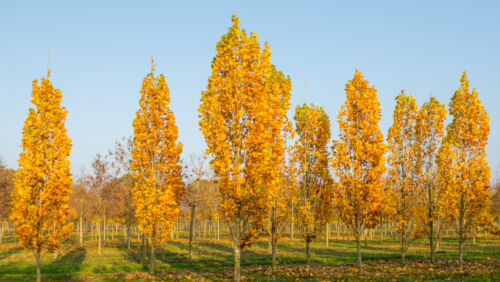
- Liriodendron tulipifera ‘Fastigiata’ – Upright Tulip Tree is a deciduous tree with a strong, columnar growth habit. Its upright branches hold distinctive green, lyre shaped leaves that turn a rich butter yellow in autumn, adding seasonal interest to any landscape. In late spring, slightly fragrant tulip shaped flowers appear. They are greenish yellow with an attractive orange band at the base, creating a subtle yet elegant display. The upright tulip tree prefers full sun and well drained soil. However, it adapts to clay provided you avoid excessive moisture. Because it grows to around 8 × 3 metres and maintains a tidy, slender form, it suits formal landscapes, avenues, and compact urban spaces.
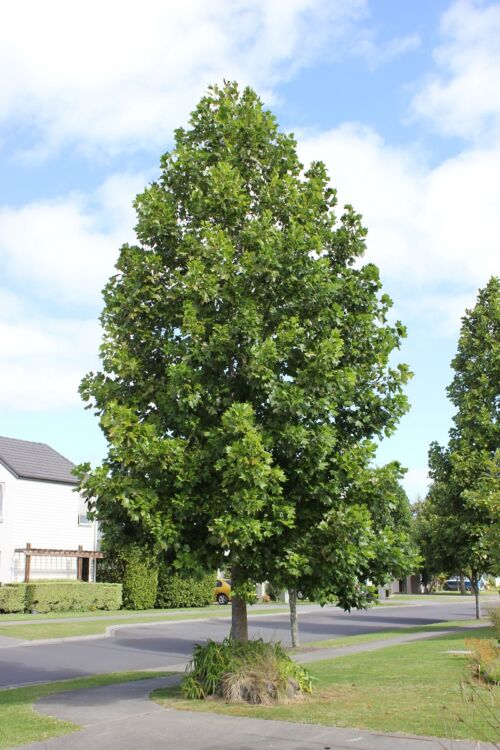
- Liriodendron tulipifera, commonly known as the Tulip Tree, is a fast-growing, pyramidal deciduous tree with a clean trunk and graceful spreading branches. Its large, lyre-shaped green leaves create a lush summer canopy and turn a vibrant butter-yellow in autumn, adding seasonal interest. In late spring, fragrant tulip-like flowers appear, showcasing greenish-yellow petals with a striking orange band at the base. These blooms make the tree a standout feature in any landscape. The Tulip Tree thrives in moist, well-drained soil and tolerates clay, provided it is not overly wet. It grows approximately 10 x 6 meters in 10 years and can reach 30 x 15 meters at maturity. Ideal as a shade or specimen tree, it also works beautifully in avenues to create a bold statement. The name “Tulipifera” refers to its distinctive tulip-shaped flowers, which are its most charming feature.
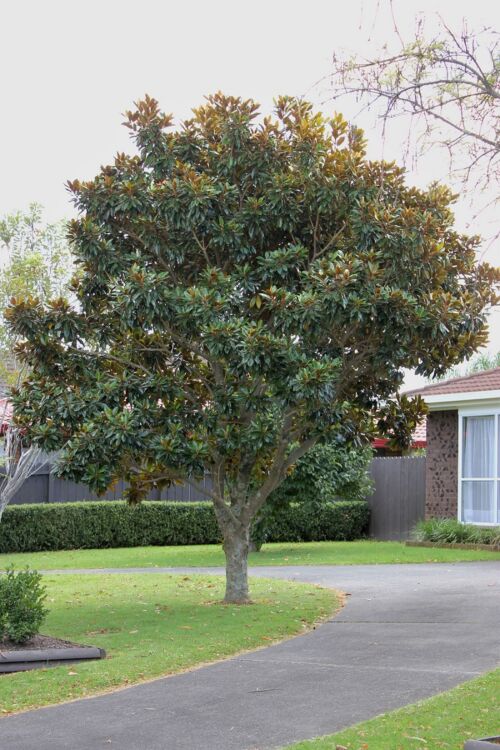
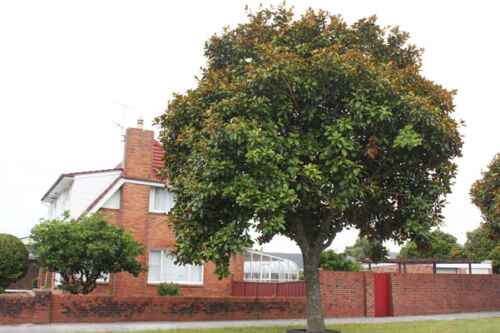
- Magnolia grandiflora ‘Little Gem’ is a compact evergreen tree originating from the USA. With its rounded form and slower growth, it provides year‑round structure and elegance in the garden. The glossy deep green leaves, highlighted by russet undersides, are typical of grandiflora magnolias. Moreover, creamy white flowers appear freely from an early age, filling the air with fragrance and charm. This magnolia tolerates clay soils; however, avoid overly wet conditions. In addition, it grows to approximately 5m tall by 3m wide but can be pruned easily to maintain shape and height. Because of its size and adaptability, ‘Little Gem’ is excellent for smaller gardens or large pots, offering beauty and versatility in both traditional and modern landscapes
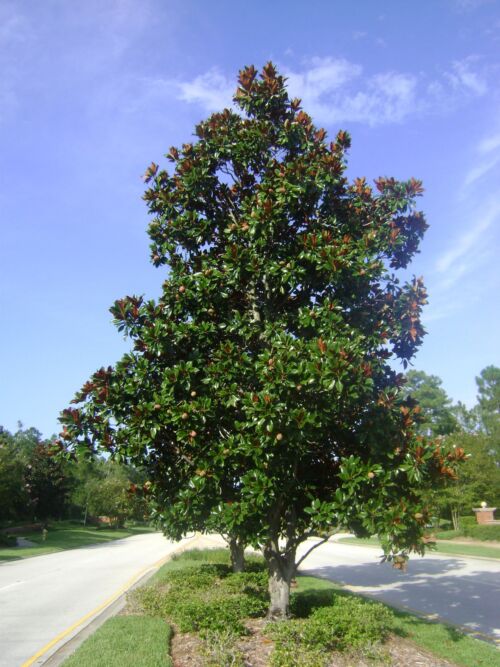
- Magnolia grandiflora 'DD Blanchard' is a compact, pyramidal form of the classic Southern Magnolia. This evergreen tree showcases large, dark green glossy leaves with striking coppery undersides, adding year-round interest and texture to your garden. In summer, it produces creamy white, fragrant blooms that enhance its ornamental appeal. It thrives in moist, well-drained soil and will tolerate clay, although overly wet conditions should be avoided. Full sun exposure encourages optimal growth and flowering. Originating from the United States, this variety makes an excellent shade tree, avenue planting, or specimen feature. It grows to approximately 7 × 4 metres in 10 years and can reach 15 × 10 metres at full maturity.
- Magnolia grandiflora ‘Ferruginea’ commonly known as the Southern Magnolia, takes its common name from its origins in the Southern United States. It forms a large, sturdy, and elegant evergreen tree with a rounded crown and year‑round foliage make it a striking specimen in any landscape. The glossy dark green leaves are distinguished by rust‑coloured felt beneath, creating a unique contrast. In spring, immense creamy white flowers appear, filling the garden with fragrance and beauty. This magnolia thrives in clay soils, although overly wet conditions should be avoided. Moreover, it tolerates coastal, windy, and colder climates, making it versatile for many sites. It grows to approximately 10m tall by 5m wide in 10 years. With time, it can attain a majestic 20m by 10m, offering shade, structure, and elegance as an avenue or specimen tree.
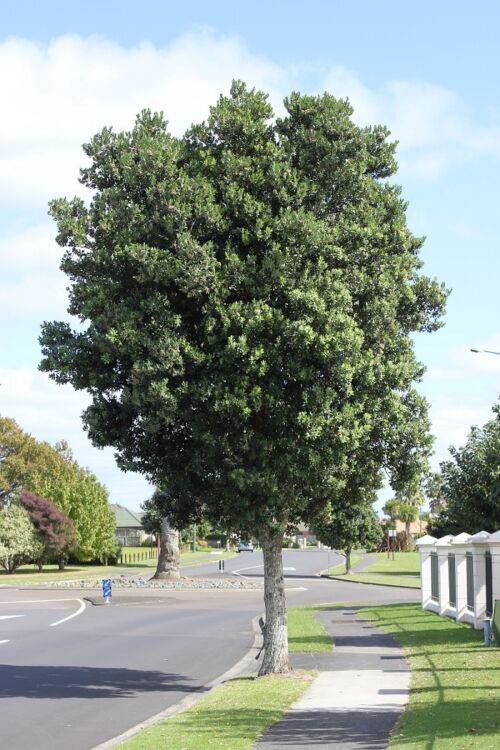
- Metrosideros excelsa 'Maori Princess' is a refined cultivar of the iconic Pohutukawa, selected for its upright, pyramidal growth habit. Its foliage is a distinctive deep green, offering a lush contrast to its vivid red flowers. Because of its compact form and neat structure, this tree is ideal for smaller gardens or urban landscapes. In addition, its tidy shape makes it easy to maintain and visually appealing year-round. In late spring, 'Maori Princess' produces brilliant red flowers that cover the tree in a spectacular display. These blooms are not only eye-catching but also serve as a valuable food source for native birds. Consequently, this tree adds both beauty and biodiversity to your garden. Growing to around 7 x 5 metres, it can be clipped to shape, making it suitable as a screen, hedge, or standout specimen. Metrosideros varieties, including 'Maori Princess', thrive in coastal environments and are impressively resilient. They tolerate poor soil, excess moisture, and even drought. Moreover, they withstand salt-laden winds and arid conditions, making them perfect for exposed sites. While they can grow in clay and wet soils, they perform best in moist, well-drained earth. Therefore, this cultivar is not only tough but also an excellent shade tree for compact outdoor spaces.
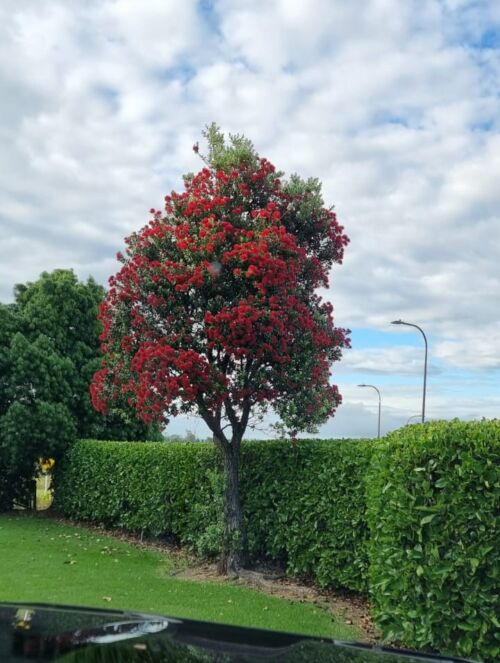
- Metrosideros excelsa 'Scarlet Pimpernel', commonly known as Pohutukawa, is a striking member of New Zealand’s iconic native tree family. This compact evergreen variety features a bushy growth habit and smaller leaves than traditional Pohutukawa, making it ideal for smaller gardens or urban landscapes. Also known as the New Zealand Christmas tree due to its prolific flowering in December when vibrant orange-red flowers bloom which attract bees, birds, and beneficial insects. Renowned for its resilience, 'Scarlet Pimpernel' thrives in coastal environments and tolerates poor soils, excess moisture, drought, and salt-laden winds. It also adapts well to clay and wet conditions, though it prefers moist, well-drained soil for optimal growth. Perfect as a shade tree or trimmed into a screen, this hardy native grows to approximately 4 metres tall and 2 metres wide. A beautiful, low-maintenance choice for coastal and urban planting.