Flowering Trees
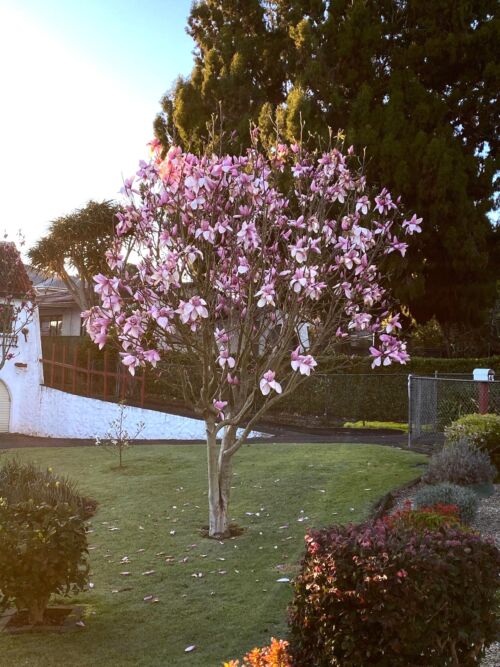
- Magnolia ‘Star Wars’ is a medium-sized deciduous tree that brings elegance to any garden. During summer, it displays large, leathery green leaves that create a lush backdrop. As seasons change, huge star-shaped flowers appear from late winter into early spring. Their white and pink petals, flushed with purple, make a striking display that draws attention. Bred as a hybrid between Magnolia campbellii and Magnolia liliiflora, this New Zealand selection was introduced by Mr. O. Blumhardt of Whangarei. For best growth, plant in moist, well-drained soil and full sun. Moreover, a sheltered position helps keep the blooms tidy and long-lasting. Finally, Magnolia ‘Star Wars’ makes an excellent feature or shade tree for smaller gardens. It grows to approximately 6m tall and 3m wide, offering beauty and structure year-round..
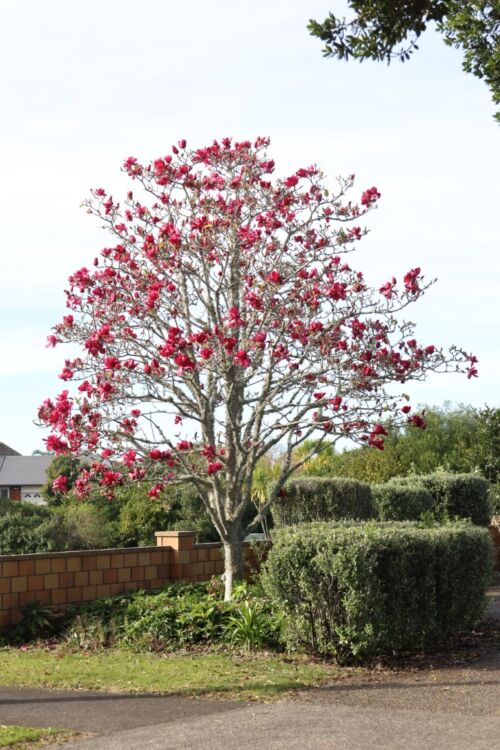
- Magnolia 'Vulcan' is a deciduous tree bred in New Zealand as part of the renowned Jury hybrid series. When young, it forms an erect, open-branched structure that matures into a narrow, rounded form, adding elegance to any garden. During summer, leathery green leaves create a lush canopy. Then, from late winter into early spring, the tree bursts into large, deep port wine-coloured flowers, delivering a spectacular seasonal display. It thrives in full sun and prefers moist, well-drained soil in a sheltered position. It typically grows to around 6 × 4 metres but can be pruned to suit shape and height. With its compact size and striking blooms, it makes a beautiful shade tree for smaller gardens.
- A smaller growing New Zealand bred tree with large leathery green leaves. Huge, deep magenta flowers late winter early spring make a spectacular sight before the tree comes into leaf. Upright branches, spreading habit. From the Jury hybrid series of Magnolias.
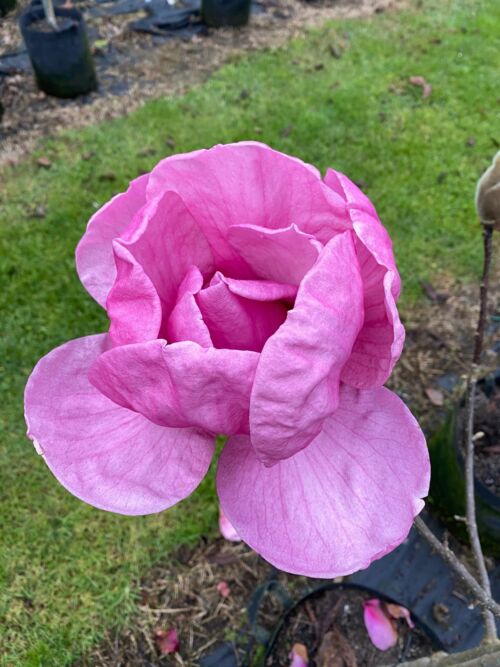
- Magnolia ‘Iolanthe’ is a deciduous tree bred in New Zealand as part of the renowned Jury hybrid series. It develops into a large, rounded tree with an open branching habit, creating a graceful structure in the landscape. During summer, leathery green leaves form a lush canopy. From early spring, the tree bursts into masses of very large, lavender-pink, bowl-shaped flowers, delivering a spectacular seasonal display. It thrives in full sun and prefers moist, well-drained soil in a sheltered position. Growing to approximately 8 × 3.5 metres, it makes an excellent shade tree and a standout garden feature.
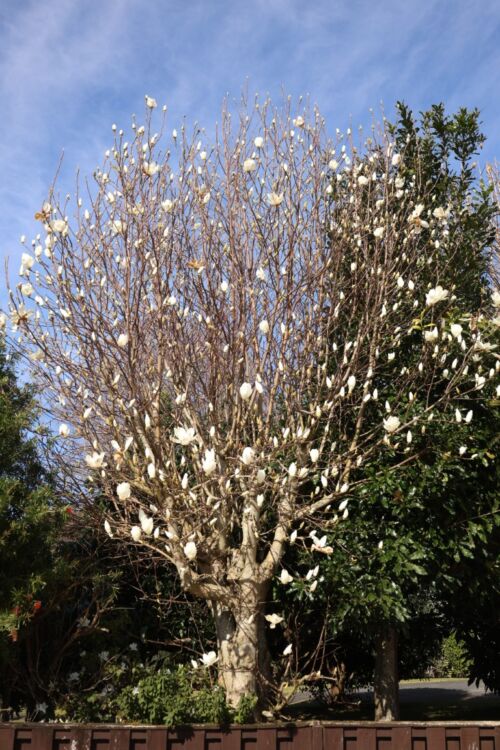
- Yulan Magnolia - Magnolia denudata - is a moderately fast-growing tree with a rounded, dense canopy. Throughout summer, its large, dull green leaves provide lush coverage, gradually transforming into golden-yellow hues as autumn arrives. Then, in late winter to early spring, the tree bursts into bloom with pure white, goblet-shaped flowers that emit a delicate lemon scent. These blossoms appear on bare branches, creating a truly spectacular display. Originally from China, the name "Yulan" translates to "jade orchid" or "jade lily," symbolizing purity and elegance. Moreover, this tree prefers moist, well-drained soil in a sunny position, making it both resilient and easy to care for. Due to its smaller size, it is especially suitable as a feature tree in compact gardens or urban landscapes. Typically, it grows to approximately 5 metres tall and 3 metres wide.
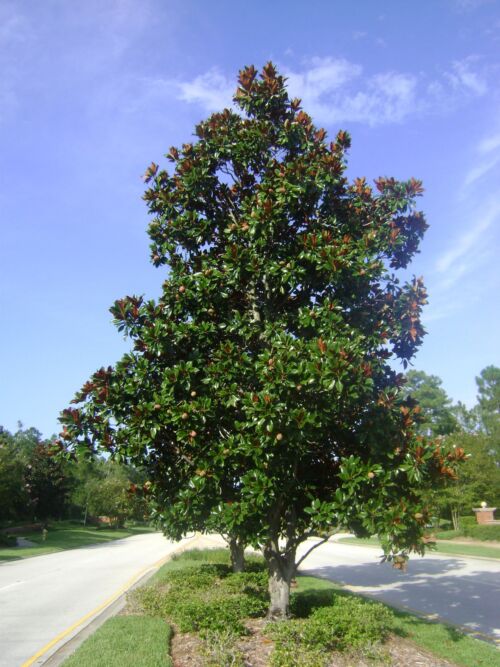
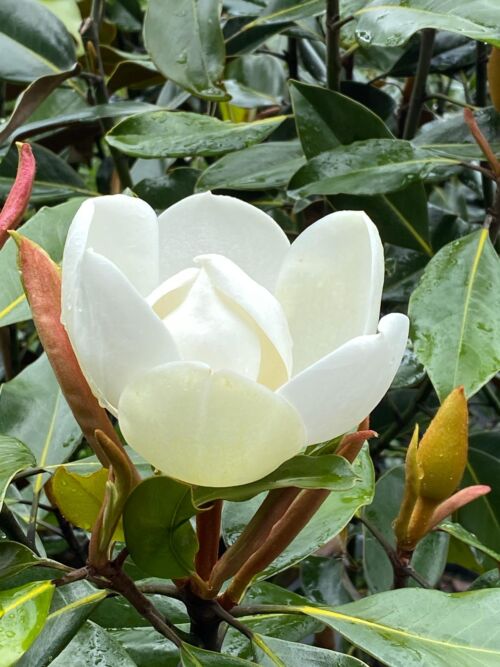
- Magnolia grandiflora 'DD Blanchard' is a compact, pyramidal form of the classic Southern Magnolia. This evergreen tree showcases large, dark green glossy leaves with striking coppery undersides, adding year-round interest and texture to your garden. In summer, it produces creamy white, fragrant blooms that enhance its ornamental appeal. It thrives in moist, well-drained soil and will tolerate clay, although overly wet conditions should be avoided. Full sun exposure encourages optimal growth and flowering. Originating from the United States, this variety makes an excellent shade tree, avenue planting, or specimen feature. It grows to approximately 7 × 4 metres in 10 years and can reach 15 × 10 metres at full maturity.
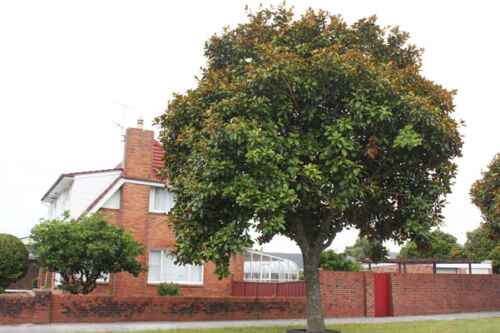
- Magnolia grandiflora ‘Ferruginea’ commonly known as the Southern Magnolia, takes its common name from its origins in the Southern United States. It forms a large, sturdy, and elegant evergreen tree with a rounded crown and year‑round foliage make it a striking specimen in any landscape. The glossy dark green leaves are distinguished by rust‑coloured felt beneath, creating a unique contrast. In spring, immense creamy white flowers appear, filling the garden with fragrance and beauty. This magnolia thrives in clay soils, although overly wet conditions should be avoided. Moreover, it tolerates coastal, windy, and colder climates, making it versatile for many sites. It grows to approximately 10m tall by 5m wide in 10 years. With time, it can attain a majestic 20m by 10m, offering shade, structure, and elegance as an avenue or specimen tree.
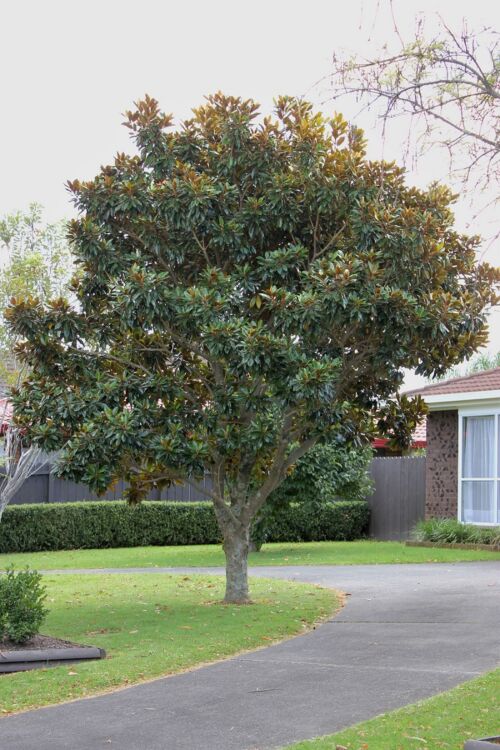
- Magnolia grandiflora ‘Little Gem’ is a compact evergreen tree originating from the USA. With its rounded form and slower growth, it provides year‑round structure and elegance in the garden. The glossy deep green leaves, highlighted by russet undersides, are typical of grandiflora magnolias. Moreover, creamy white flowers appear freely from an early age, filling the air with fragrance and charm. This magnolia tolerates clay soils; however, avoid overly wet conditions. In addition, it grows to approximately 5m tall by 3m wide but can be pruned easily to maintain shape and height. Because of its size and adaptability, ‘Little Gem’ is excellent for smaller gardens or large pots, offering beauty and versatility in both traditional and modern landscapes
- Magnolia grandiflora ‘Kay Parris’ is a compact evergreen tree with upright growth that responds well to pruning. Its shiny green, wavy leaves feature coppery brown felt on the undersides, adding texture and contrast throughout the year. From spring through summer, it produces large, fragrant white flowers that enhance its ornamental appeal. As a seedling variation of ‘Little Gem’, it’s both vigorous and versatile—ideal for screening, hedging, or as a standalone feature in smaller gardens. It thrives in full sun and prefers moist, well-drained soil. While it tolerates clay, avoid overly wet conditions. Typically, it reaches 4 × 3 metres and can be pruned to suit your space.
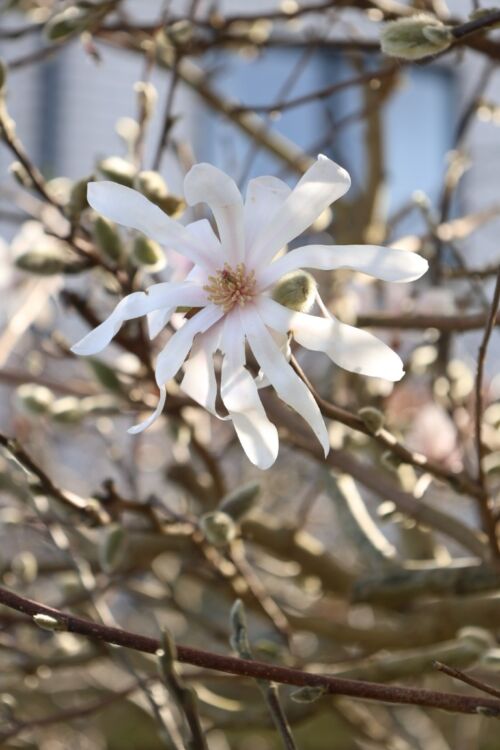
- Magnolia stellata – Star Magnolia is a compact, deciduous shrub or small tree with a multi-branched form. In summer, lime-green leaves provide fresh colour, before turning yellow, bronze, or tan in autumn. Soft, fluffy buds open into star-shaped flowers, each with at least 12 delicate white petals. Blooming from late July, these long-lasting flowers add elegance and charm to the garden. Star Magnolia thrives in moist, well-drained soil and prefers full sun to partial shade in a sheltered position. It is ideal for smaller gardens, courtyards, or large pots, where it can be pruned to maintain shape and height. Typically, it grows to around 3.0 x 2.5 metres, making it a versatile choice for compact spaces.
- A compact, multi branched shrub or small tree with lime green leaves turning golden in autumn. Soft fluffy buds open to flowers slightly larger than normal stellata and has more numerous long petals (sometimes to 36). They are also less floppy, resulting in a waterlily-like appearance (hence the cultivar name). Long lasting from apx late July. Ideal for the smaller garden.
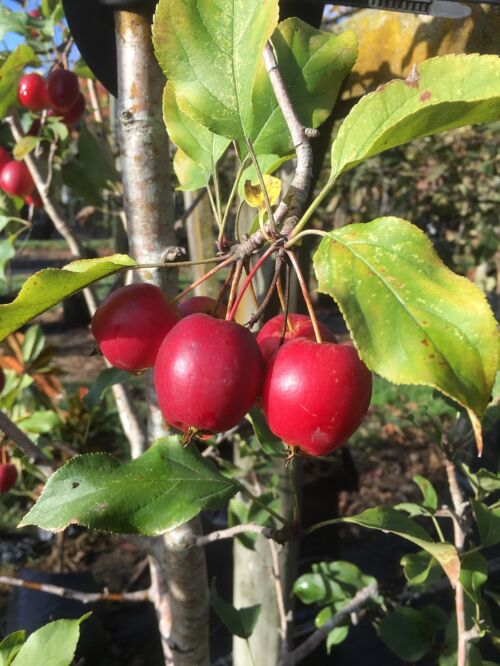
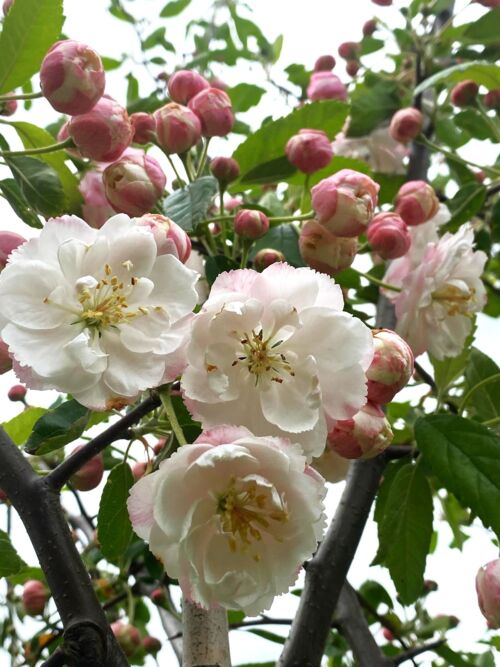
- Malus ‘Jack Humm’ - Crab-apple is a strong growing smaller deciduous tree. Bearing masses of white tinged pink flowers from red buds in spring. In autumn clusters of large bright crimson fruit flushed orange and yellow. One of the best crab-apples for production of fruit suited for jelly’s and jams. Ideal for smaller gardens.
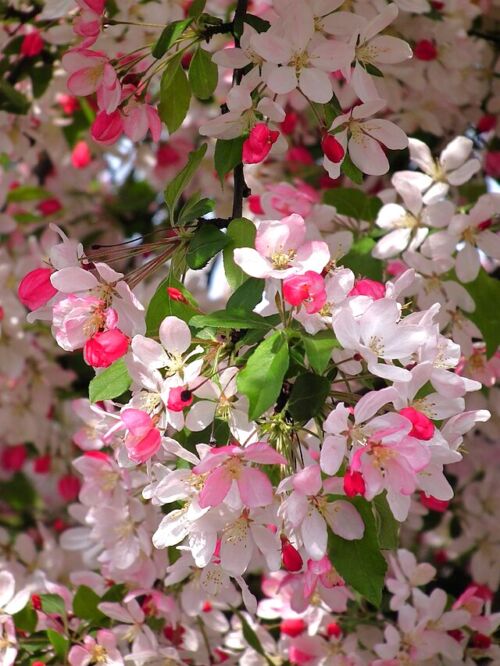
- Malus floribunda, commonly known as the Japanese Crabapple, is a moderately fast-growing ornamental tree with its origins in Japan. With long, gracefully arching branches and small, dark green leaves, it brings elegance and seasonal interest to any garden. As spring arrives, the entire tree bursts into colour with bright pink buds that open into a profusion of small white to pale pink flowers. Shortly after flowering, yellow fruits flushed with red begin to appear. These fruits are not only edible but also attract birds, adding life and movement to the garden. Interestingly, the Latin name floribunda means “flowering freely” or “many-flowering,” perfectly describing this tree’s abundant spring display. Because of its compact size, reaching approximately 3 x 2.5 metres, it’s an excellent choice for smaller gardens, courtyards, or decorative planting schemes. Furthermore, it responds well to pruning, making it easy to maintain a neat and tidy shape.
- Malus ioensis 'Plena', also known as Bechtel’s Crabapple, is a compact, deciduous tree with a rounded, spreading form. Its bright green foliage creates a lush summer canopy. As the seasons shift, the leaves transform into a vibrant orange-red, adding a splash of autumn colour to your garden. In spring, this tree truly shines. It bursts into bloom with large, soft pink double flowers that are both fragrant and eye-catching. Although it produces a few yellow-green fruits, they are not edible. However, the real showstopper is undoubtedly the floral display. For best results, plant in a sunny, sheltered spot with moist, well-drained soil. Thanks to its modest size—reaching approximately 4 x 3 metres—it’s ideal for smaller gardens or limited spaces. Interestingly, Malus ioensis 'Plena' was discovered in the mid-1800s by E.A. Bechtel in the Illinois Prairies of the American Midwest. This origin also gives rise to its other common name: Prairie Crabapple.
-
- Description
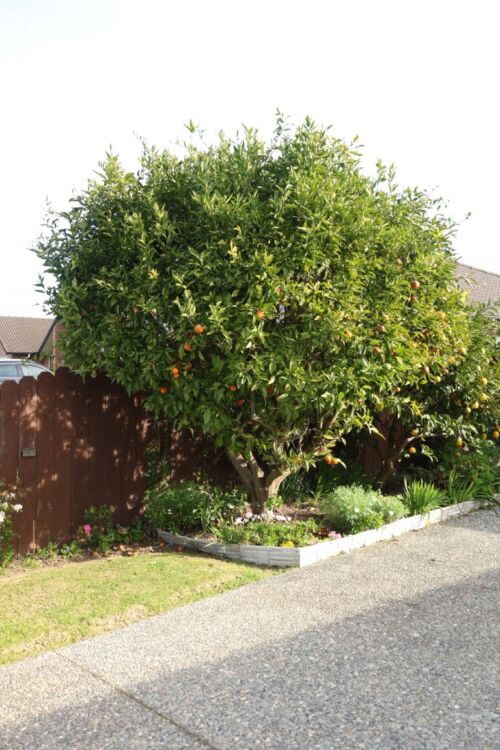
A smaller growing tree with smaller bright orange fruit. Classic mandarin flavour, which is robust, and sweet. Normally seedless but can produce pips if cross pollinated with other pipped citrus. Smaller growing makes it ideal for a smaller garden or large pot. Harvest over winter apx June to August. Feed in spring and summer with citrus fertilisers to encourage maximum fruiting and flowering. Grows to apx 2 x 1.5m Height x Width 2 x 1.5 Height Range Small 1-5m Growth Rate Moderate Plant Type Tree Shape / Habit Round Country of Origin Algeria, Northern Africa Similar to Consider Orange, Tangelo, Satsuma mandarin, - Leaf
Leaf Colour Dark Green - Flower
Flower Colour White Fragrant? Yes - Uses
Fruit Producing Small Garden Yes Yes Note: Growth, height and grade information are given in good faith but are subject to natural variables beyond our control. - A small slow growing tree with dense, upright growth habit. Fruit is slightly larger than other satsumas. Easy peel and seedless with good flavour. Heavy cropping. The latest ripening of the satsuma group. An excellent small home garden choice. Harvest winter months over May to June.
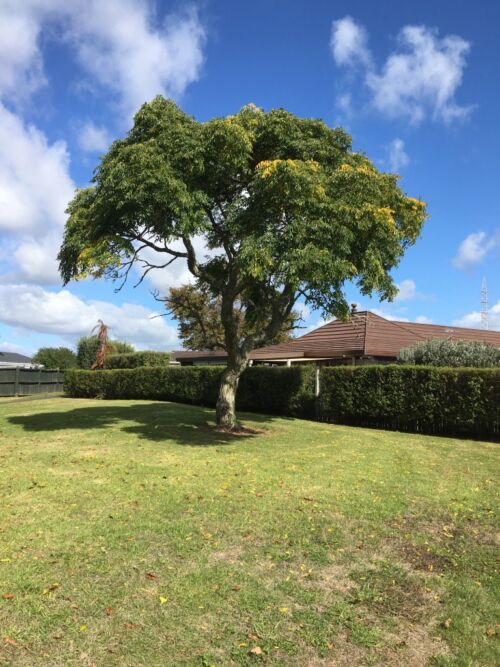
- Melia azedarach – Indian Bead Tree is a round-headed deciduous tree with glossy, compound green leaves. In spring, it produces scented pale lilac flowers. Later, during autumn, loose clusters of smooth oval berries appear, turning from green to bright yellow in winter. Not to be eaten. Tthe tree adapts well to a wide range of soils, provided they are well drained to prevent root rot. It grows best in full sun. Moreover, pruning helps open the crown and encourages the development of well-spaced limbs. Thanks to its dense leaf covering, it is ideal as a lawn specimen or shade tree. This hardy tree withstands frost, wind, and occasional dry periods. Finally, it reaches approximately 7m tall and 5m wide, making it a striking addition to any landscape.
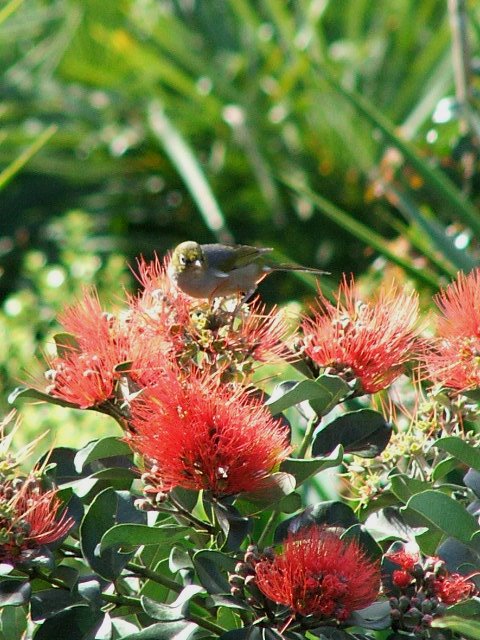
- Metrosideros collina ‘Springfire’ (Pacific Island Pohutukawa) is a vigorous fast growing tree from the Pacific Islands, admired for its striking grey‑green foliage. As one of the earliest Pohutukawa to bloom, it bursts into vibrant orange‑red flowers that signal the arrival of Spring. This hardy tree tolerates clay soils and, once established, withstands dry conditions. Furthermore, it thrives in coastal and windy sites, making it a versatile choice for challenging environments. Its compact size suits smaller gardens, while regular trimming allows easy shaping into a colourful hedge. However, protect young plants from frost to ensure healthy growth and long‑term success. Growing to approximately 4m tall by 3m wide, ‘Springfire’ offers manageable proportions and year‑round appeal, combining resilience with striking seasonal beauty.
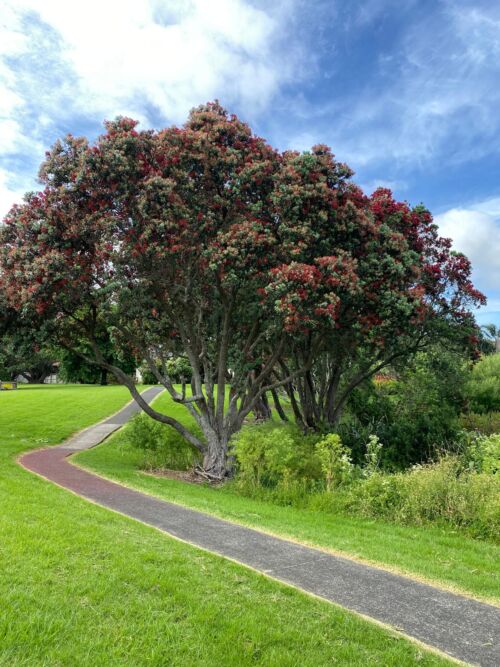
- Metrosideros excelsa, commonly known as Pohutukawa, is one of New Zealand’s most iconic native trees. Excelsa stands out as the giant of the species, with a wide-spreading canopy and olive-green foliage. From December, it bursts into bright crimson, fluffy flowers. For this reason it’s often called the New Zealand Christmas tree. Flowers also attract bees, birds, and beneficial insects. Thriving in coastal environments, Pohutukawa trees are incredibly resilient. They endure poor soil, excess moisture, and even drought. Moreover, they withstand salt-laden winds and dry, exposed landscapes. Their thick roots often anchor into cliff faces, showcasing their strength and adaptability. Pohutukawa prefers moist, well-drained earth, but will grow in a wide range of soils. With proper space, this majestic tree can grow up to 15 metres tall and 10 metres wide, making it a stunning feature in larger gardens or coastal settings.
- Metrosideros excelsa 'Lighthouse' is a compact, upright evergreen tree discovered on Rangitoto Island in the Auckland region. Its green leaves feature striking silver-grey undersides, adding texture and contrast to the foliage. In December, vibrant red flowers burst into bloom, covering the entire tree. These blossoms not only dazzle but also produce seeds that attract and nourish small birds. Thriving in coastal environments, this Pohutukawa is impressively resilient. It tolerates poor soils, excess moisture, and even drought conditions with ease. Moreover, it withstands salt-laden winds and arid landscapes. While it adapts to clay and wet soils, it performs best in moist, well-drained earth. Ideal as an avenue or specimen tree, 'Lighthouse' grows to approximately 7 meters tall and 4 meters wide, making it a standout feature in any garden.