Flowering Trees
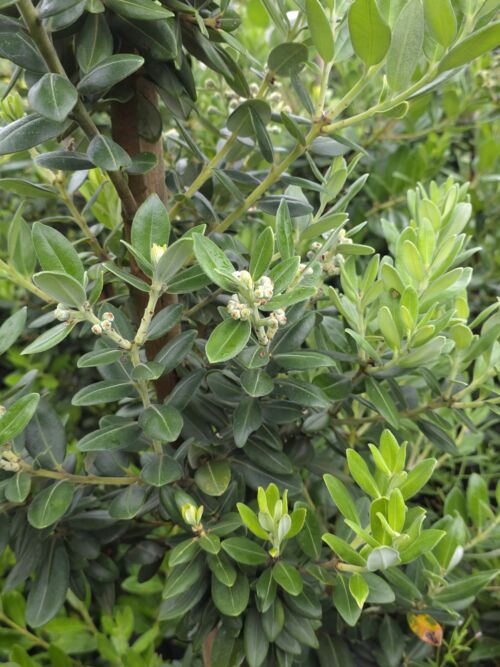
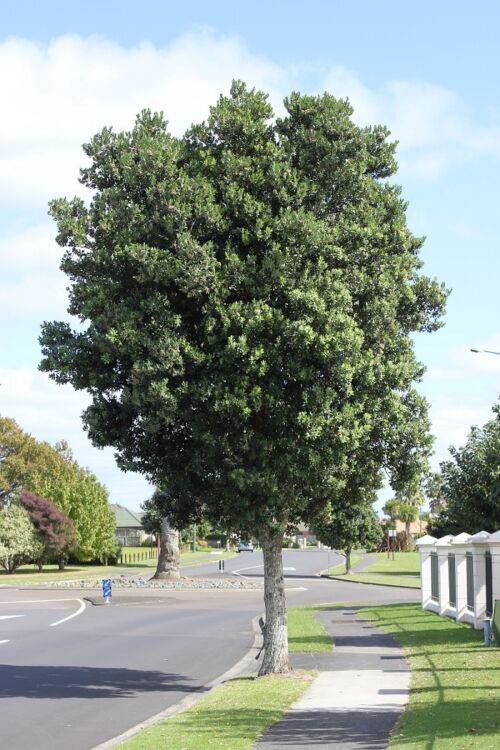
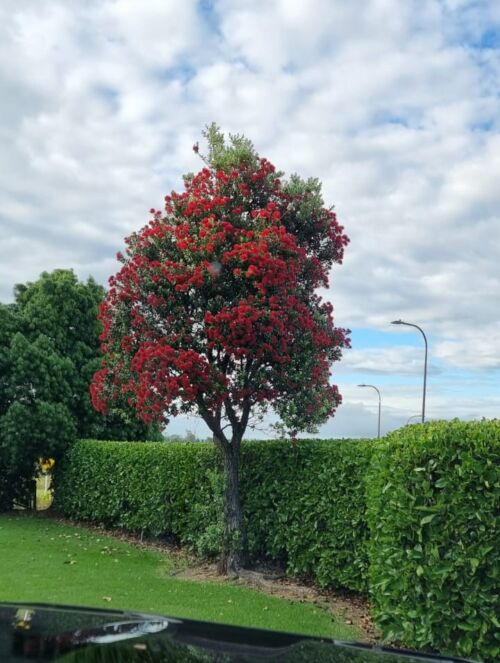
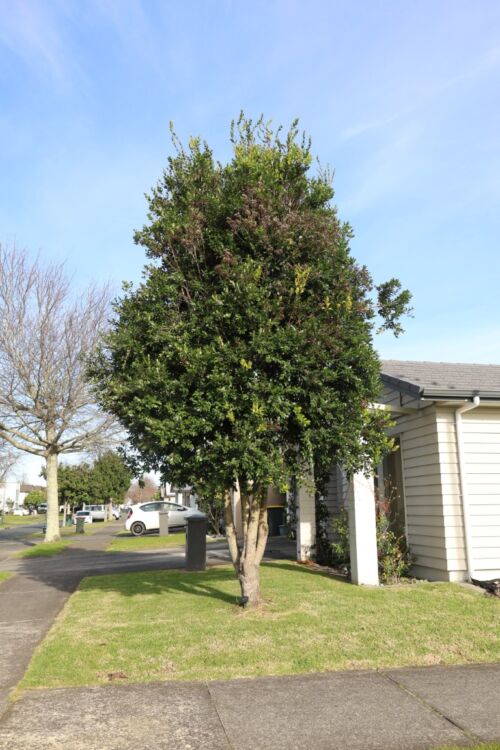
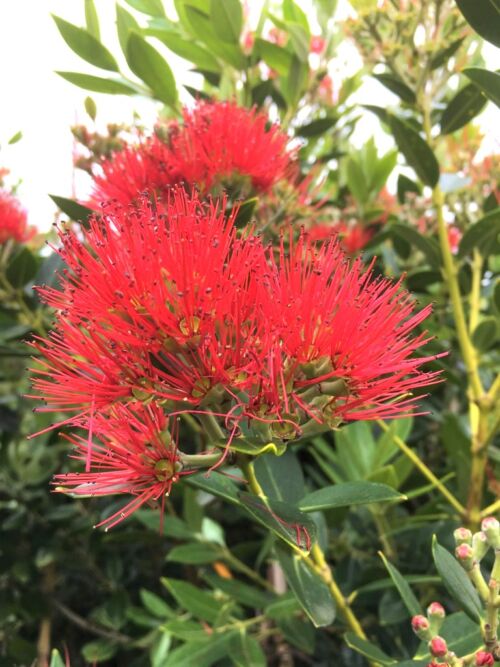
- Metrosideros excelsa ‘Long Bay’ – Pohutukawa is a striking evergreen New Zealand native tree. Originating from Long Bay on Auckland’s North Shore, it features fresh lime-green foliage on new growth, adding vibrant colour throughout the year. In late spring, ‘Long Bay’ bursts into brilliant red flowers that cover the tree in a spectacular display. These blooms are not only eye-catching but also provide an important food source for native birds, enhancing biodiversity. Moreover, Metrosideros excelsa flourish in coastal environments and show remarkable resilience. They endure poor soil conditions, excess moisture, and drought, while also withstanding harsh elements such as salt-laden winds and arid landscapes. Additionally, this variety tolerates clay and wet soils, though it thrives best in moist, well-drained earth. Growing to approximately 7 x 5 metres, it makes a beautiful coastal shade tree and a standout feature in any landscape.
- Metrosideros excelsa 'Maori Princess' is a refined cultivar of the iconic Pohutukawa, selected for its upright, pyramidal growth habit. Its foliage is a distinctive deep green, offering a lush contrast to its vivid red flowers. Because of its compact form and neat structure, this tree is ideal for smaller gardens or urban landscapes. In addition, its tidy shape makes it easy to maintain and visually appealing year-round. In late spring, 'Maori Princess' produces brilliant red flowers that cover the tree in a spectacular display. These blooms are not only eye-catching but also serve as a valuable food source for native birds. Consequently, this tree adds both beauty and biodiversity to your garden. Growing to around 7 x 5 metres, it can be clipped to shape, making it suitable as a screen, hedge, or standout specimen. Metrosideros varieties, including 'Maori Princess', thrive in coastal environments and are impressively resilient. They tolerate poor soil, excess moisture, and even drought. Moreover, they withstand salt-laden winds and arid conditions, making them perfect for exposed sites. While they can grow in clay and wet soils, they perform best in moist, well-drained earth. Therefore, this cultivar is not only tough but also an excellent shade tree for compact outdoor spaces.
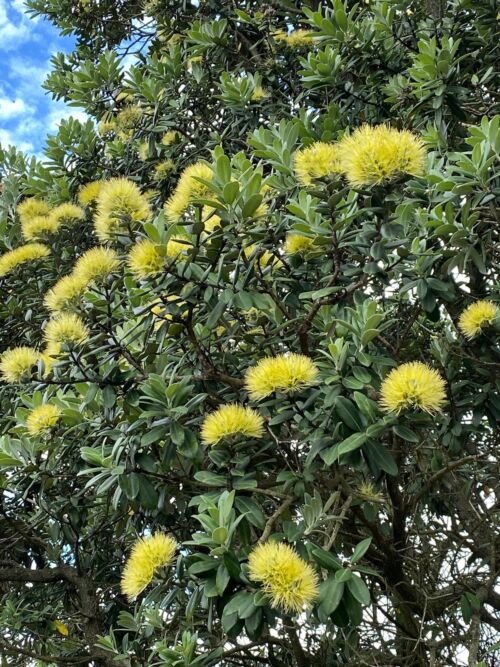
- Metrosideros excelsa 'Moon Maiden' is a striking natural hybrid of the classic New Zealand Pohutukawa. Unlike its red-flowered relatives, it blooms with sulphur-yellow flowers in December, creating a luminous display. These dazzling blossoms also produce seeds that attract and nourish small native birds, adding life and movement to your garden. As an evergreen, 'Moon Maiden' forms a broad-headed canopy, offering excellent shade. Its thick green leaves feature silver-grey undersides, adding visual depth. Metrosideros thrive in coastal environments and are impressively resilient. They endure poor soil, excess moisture, and drought, making them ideal for exposed or challenging sites. In addition, they tolerate clay and wet soils—an advantage in areas with thin or heavy ground. However, they perform best in moist, well-drained earth. Growing to approximately 6 meters tall and 5 meters wide, 'Moon Maiden' makes a stunning specimen, avenue tree or shade tree
- Metrosideros excelsa 'Scarlet Pimpernel', commonly known as Pohutukawa, is a striking member of New Zealand’s iconic native tree family. This compact evergreen variety features a bushy growth habit and smaller leaves than traditional Pohutukawa, making it ideal for smaller gardens or urban landscapes. Also known as the New Zealand Christmas tree due to its prolific flowering in December when vibrant orange-red flowers bloom which attract bees, birds, and beneficial insects. Renowned for its resilience, 'Scarlet Pimpernel' thrives in coastal environments and tolerates poor soils, excess moisture, drought, and salt-laden winds. It also adapts well to clay and wet conditions, though it prefers moist, well-drained soil for optimal growth. Perfect as a shade tree or trimmed into a screen, this hardy native grows to approximately 4 metres tall and 2 metres wide. A beautiful, low-maintenance choice for coastal and urban planting.
- Metrosideros excelsa x robusta 'Mistral', commonly known as Pohutukawa, is a stunning native tree discovered on the Coromandel Peninsula, located on the north-western coast of New Zealand’s North Island. As a natural hybrid of Metrosideros excelsa and robusta, Mistral offers a more compact and upright form. Its fresh green foliage matures into a darker shade, creating year-round interest. Moreover, its tidy growth habit makes it ideal for smaller spaces. In late spring, Mistral bursts into deep scarlet red flowers that blanket the entire tree, creating a breathtaking display. Not only are these blooms visually striking, but they also attract native birds, adding ecological value to your garden. Growing to approximately 5 x 3 metres, this tree is easily clipped into shape. Therefore, it works beautifully as a screen, hedge, or standout specimen in compact landscapes. Metrosideros varieties thrive in coastal environments and are impressively resilient. They tolerate poor soils, excess moisture, and even drought conditions. Furthermore, they withstand salt-laden winds and arid climates, making them perfect for exposed sites. While they can grow in clay and wet soils, they perform best in moist, well-drained earth. As a result, Mistral is not only hardy but also an excellent shade tree for smaller gardens.
- Metrosideros excelsa x umbellata ‘Maungapiko’ – Pohutukawa is an evergreen tree native to New Zealand. As a cross between Southern Rata and Pohutukawa, it develops a narrow, upright form with an open habit. Its slender, glossy dark‑green leaves create a striking contrast in any landscape. Bright crimson flowers appear in December and January, slightly later than most Pohutukawa varieties. This cultivar also tolerates frost better than others. Additionally, Maungapiko thrives in coastal conditions and withstand poor soils, drought, and salt‑laden winds. Although they cope with clay soils, these trees perform best in moist, well‑drained ground and full sun. Growing up to 8 metres tall and 3 metres wide, ‘Maungapiko’ makes a stunning feature for urban gardens, coastal settings, or cooler regions. Can also be used as a shelter belt.
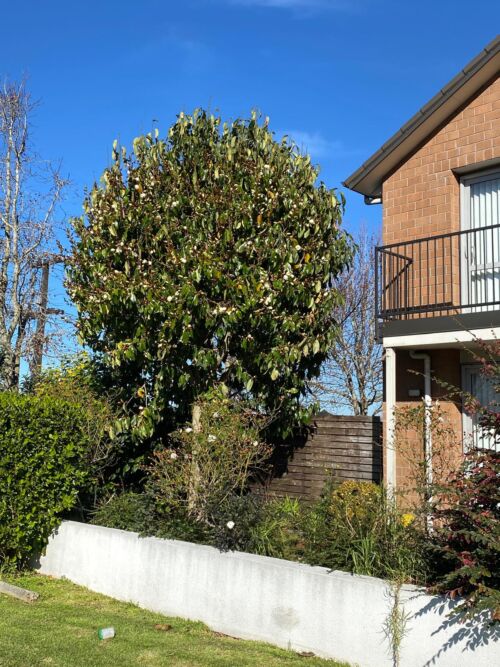
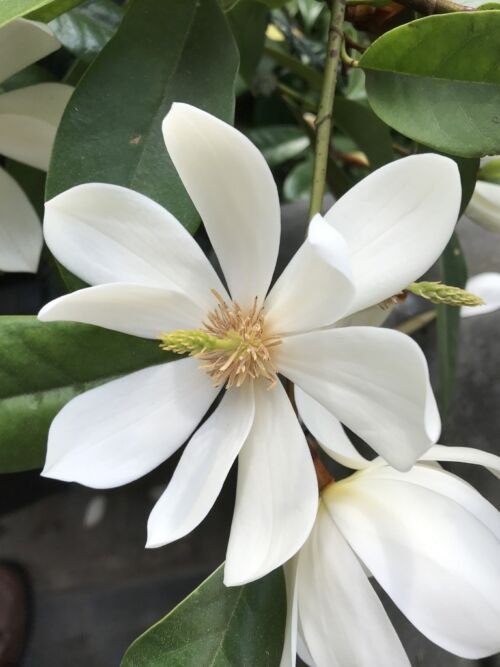
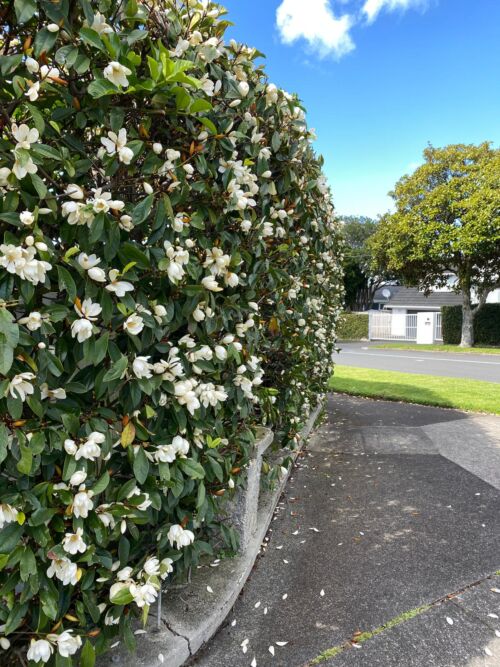
- Michelia ‘Bubbles’ is an evergreen, compact tree that grows to a small or medium size. Its bushy form is enhanced by large, leathery leaves that begin fresh green and mature to a deep, glossy shade. In spring and summer, strongly scented creamy white flowers appear in abundance. They bloom over a long succession, creating a striking display that adds fragrance and beauty to the garden. This cultivar was developed in Whangarei, New Zealand. It is a hybrid of Michelia figo and Michelia doltsopa, both native to Asia, combining their best qualities into one resilient tree. Michelia ‘Bubbles’ thrives in full sun or partial shade. It prefers rich, moisture-retentive yet free-draining soil, making it versatile for different garden conditions. Growing to approximately 4 x 2 metres, it is an excellent choice as a specimen tree. Moreover, it works well as a trimmed shelter screen, offering structure and year-round greenery.
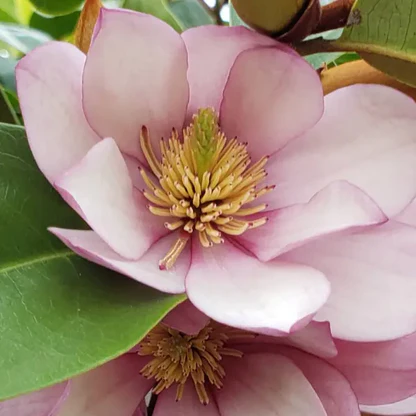
- Michelia ‘Fairy Blush’ is an evergreen, dense, and bushy shrub with soft pale‑green leaves. From late winter to spring, it produces fragrant lilac‑pink flowers that add colour and scent to the garden. Bred by renowned New Zealand nurseryman Mark Jury in Tikorangi, Taranaki, this variety is admired for its reliability and charm. As the plant does not tolerate heavy, waterlogged, or clay soils, excellent drainage is essential. It grows best in slightly acidic, free‑draining ground that keeps the roots healthy. The shrub responds well to pruning, which makes it ideal for hedging or screening. Alternatively, when left to grow as a small specimen tree, it reaches around 3.5 × 2.5 metres. Because of its compact size, it suits smaller gardens, courtyards, or even large containers as a potted feature.
- Michelia ‘Fairy White’ is an evergreen large shrub or small tree with dark green foliage and a naturally bushy habit. From early spring, it forms long brown buds that open into star‑shaped, pure‑white, fragrant flowers from approximately September to November. Bred in 2013 by renowned New Zealand nurseryman Mark Jury in Tikorangi, Taranaki, this variety is valued for its beauty and reliability. Excellent drainage is essential, as the plant cannot tolerate heavy, waterlogged, or clay soils. It performs best in slightly acidic, free‑draining soil that keeps the root zone healthy. The plant responds well to pruning, making it ideal for hedging or screening. Alternatively, if allowed to grow into a small specimen tree, it reaches around 3.5 × 2.5 metres. Its compact form makes it perfect for smaller gardens, courtyards, or use as an attractive potted tree.
- Michelia ‘Inspiration’ is a smaller evergreen tree with an pyramidal growth habit. Its shiny, long dark-green leaves form a lush backdrop, while velvet-brown buds open to porcelain-white, star-shaped flowers. These blooms appear from early spring over many weeks, releasing a wonderful fragrance. Originating in Lyttelton, New Zealand, this cultivar thrives in moist, well-drained, slightly acidic soil. It prefers full sun to partial shade and adapts well to subtropical or temperate climates. Fast-growing and frost tolerant, Michelia ‘Inspiration’ trims easily to create larger screening. Reaching approximately 4 x 3 metres, Inspiration is easily trimmed to shape and height making it suitable for smaller gardens, offering both beauty and structure throughout the year
- Port Wine Magnolia - Michelia figo is a slow-growing, compact shrub that features a rounded shape and vibrant lime-green foliage. In early spring, it bursts into bloom with masses of small, cream-colored flowers streaked with purple, which release a rich fragrance. As a result, it becomes a standout feature in any garden. Depending on light conditions, the shrub’s form can vary. When grown in shade, it tends to develop a looser, more open structure. Conversely, plants grown in full sun are typically more compact and display denser foliage. Moreover, it thrives in humus-rich, well-drained, slightly acidic soil, making it adaptable to a range of garden environments. Whether planted in sun or shade, Port Wine Magnolia performs beautifully. It can be trimmed into a neat, low hedge, allowed to grow as a striking standalone specimen, or placed in a large decorative pot for added versatility. Originating from Western China, this elegant shrub typically reaches up to 3 metres tall and 2.5 metres wide.
- Michelia ‘Gracipes’ is a compact, evergreen tree with a rounded form, making it ideal for smaller gardens. Its dark, olive-green leaves feature a distinctive brown felt underside, adding subtle texture and year-round interest. From late winter into early spring, this wonderful tree produces small, round, perfumed cream flowers with prominent stamens. These blooms emerge from furry brown buds, creating a charming and fragrant display. For best results, plant in moist, well-drained soil in a sheltered, sunny position. While it is slow-growing, it responds well to trimming and can be shaped into a hedge or left to grow on showcased as a specimen tree. Interestingly, Michelia ‘Gracipes’ was bred and developed in New Zealand. Although its lineage may include Chinese species such as Michelia yunnanensis, this particular cultivar is proudly of New Zealand origin. It prefers protection from strong winds so it’s well-suited to sheltered urban gardens. Reaching approximately 4 x 3 metres at maturity, it offers compact beauty and refined structure.
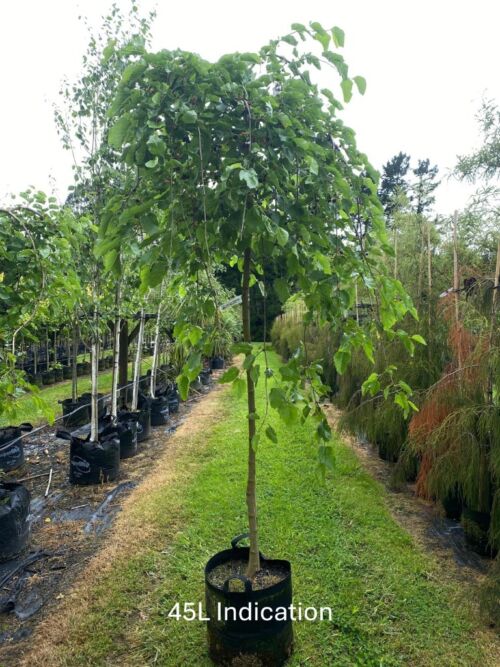
- Morus alba ‘Pendula’ - Weeping White Mulberry, is a deciduous ornamental tree with a cascading, weeping form. Typically grafted onto a standard stem, its arching branches create an elegant silhouette that makes it a standout feature in smaller garden spaces. Throughout the growing season, this tree has large, glossy-green, leaves that shift to golden yellow in autumn, adding seasonal interest. In late spring, very small pale green flowers appear, followed by sweet, edible fruits. These fruits transition from greenish-white to rich pink or deep purple as they ripen—though you’ll need to be quick to get them, as birds are fond of them too. Moreover, this tree is self-fertile and easy to maintain. Height can vary depending on grafting, with our 2025 stock grafted on a clear stem at approximately 1.8 metres. Native to China, Pendula takes its name from the Latin word pendulus, meaning “hanging” or “weeping,” which perfectly describes its graceful form. Whether used as a focal point or tucked into a courtyard, Morus alba ‘Pendula’ brings charm, fruit, and structure to any garden.
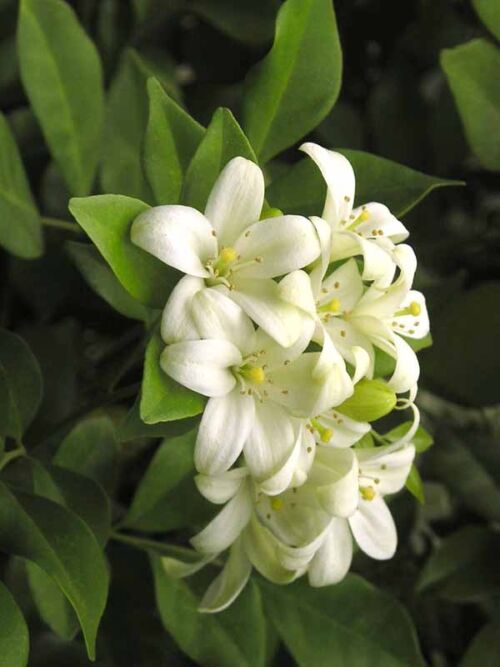
- Murraya paniculata, commonly known as Orange Jessamine, is a small tropical evergreen tree or shrub with glossy, dark green pinnate leaves. It grows densely and compactly, while also maintaining a moderate growth rate. In spring, it produces masses of highly fragrant white flowers with a citrus-like scent. These blooms smell similar to orange blossoms and become most fragrant at night. Orange Jessamine is native to a wide region across tropical and subtropical Asia and Australia and grows best in rich, moist, well-drained soil and thrives in full sun to part shade. Moreover, it performs well in sheltered locations protected from strong winds. This popular shrub is ideal for creating small hedges or borders and is well suited to compact gardens and containers. The common hedging height is 1.0–3.0 m, although it can reach 4 × 3 m when left untrimmed.
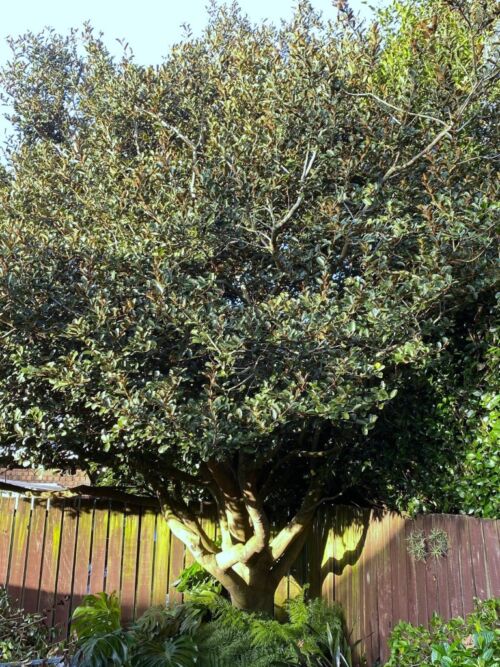
- Myrsine salicina – Toro is a fresh-looking, evergreen tree with a compact, upright form. Native to New Zealand, it adds year-round greenery to gardens and landscapes. Its thick, smooth, and elongated leaves give it a lush appearance. In spring, it produces clusters of small cream to pale pink flowers, followed by vibrant red to purple fruits that attract native birds. The term salicina refers to plants with narrow, pointed, willow-like leaves. Toro is ideal for coastal areas and responds well to trimming, making it easy to shape. Perfect as a small garden tree, it typically grows to around 6 meters tall and 3 meters wide. Its tidy form and resilience make it a versatile choice for various outdoor settings.
- Olea europaea, commonly known as the European olive, is a versatile and iconic tree traditionally found throughout the Mediterranean Basin. Although native to this region, it is now widely cultivated across the globe, including Australia, New Zealand, North and South America, and South Africa. Just a few of the many varieties include, Kalamata, Koroneiki, Ascolano, El Greco J5 Typically grown as a small tree, the olive is prized for its fruit, which is harvested for oil, eating, or both. Its adaptability and resilience make it a popular choice for a variety of climates and landscapes. Because it originates from the Mediterranean, Olea europaea thrives in full sun, tolerates coastal winds and extended dry periods once established. It performs well in warmer, sunny environments and is remarkably drought tolerant. In addition, it makes a beautiful lightly dappled shade tree. With a mature size of approximately 7 x 3 metres, it’s ideal for gardens, courtyards, or orchard-style plantings, bringing both ornamental charm and practical value.
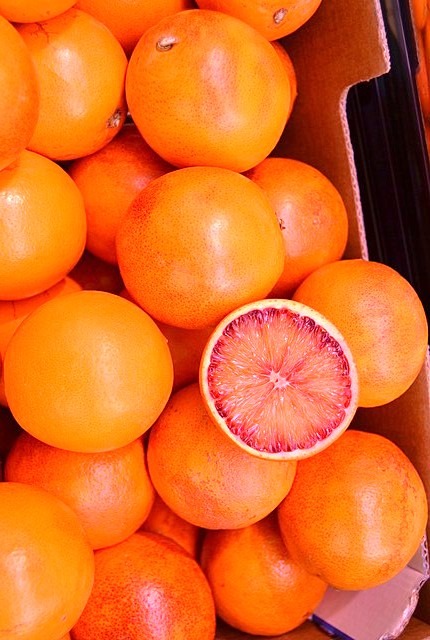
- Orange ‘Blood Orange’ (Citrus sinensis) is an attractive evergreen citrus with very few thorns and minimal seeds. It grows with an upright habit, glossy green leaves, and fragrant white spring blossoms. These features make it an appealing choice for home gardens.The tree produces high‑quality orange fruit with flesh streaked red, offering a tangy‑sweet flavour that develops best with hot days and cool nights. You can harvest the fruit through winter, typically from July to August. Blood oranges originated as a natural mutation of sweet oranges in the Mediterranean, especially in Sicily, during the 17th or 18th century. This long history contributes to their unique colour and flavour profile. The tree thrives in full sun and prefers well‑drained, slightly acidic soil. It suits urban gardens and smaller spaces, growing to around 3.5 × 2.5 metres. With the right conditions, it produces reliable crops and adds ornamental value throughout the year.
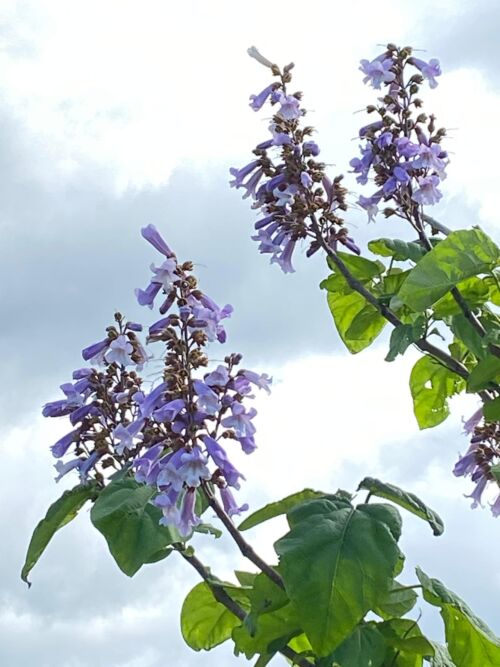
- Paulownia tomentosa ‘Princess Tree’, also known as the Empress Tree, is a fast-growing, broad-spreading deciduous tree that instantly adds a tropical feel to any garden. Thanks to its vigorous growth and lush form, it quickly becomes a focal point in both formal and informal landscapes. Its exceptionally large, soft green leaves form a dramatic canopy, making it an excellent choice for shade. Then, in spring, it bursts into bloom with fragrant violet-blue flowers featuring delicate white centres. These stunning blossoms add vibrant colour and a sweet scent, enhancing the overall garden experience. Although it prefers moist, well-drained soil in a sunny, sheltered position, it will also tolerate mild coastal conditions. This adaptability makes it suitable for a wide range of environments. Native to China and South Korea, this majestic tree typically reaches around 8 metres in height and 6 metres in width. As a result, it stands out beautifully in both small and large garden spaces.
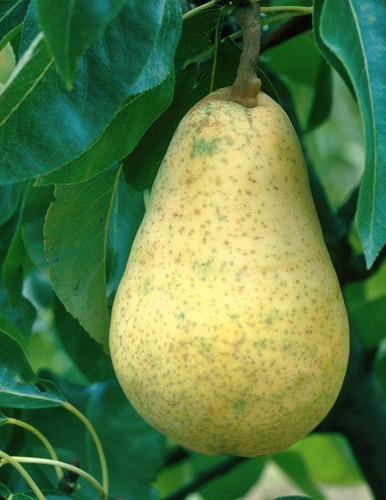
- Pear ‘ Williams Bon Chretien’ (Pyrus communis) is a large long necked, green- yellow fruit, that is ideal for eating and bottling. Harvest is apx Feb March. Branches are more horizontal making it an excellent choice for espaliering. Also known as the Bartlett pear. HERITAGE Pollinators: Beurre Bosc Winter Nelis, Conference, Doyenne du Comice.
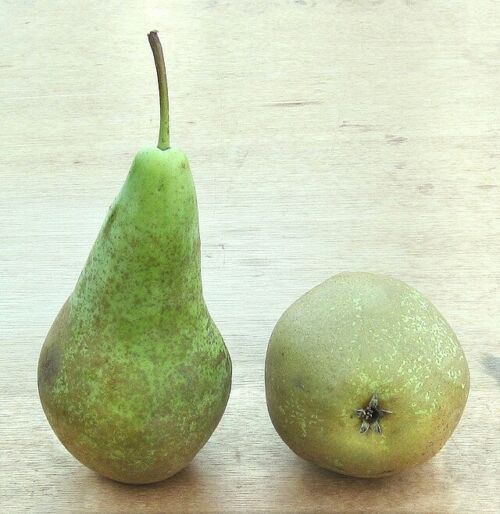
- a { text-decoration: none; color: #464feb; } tr th, tr td { border: 1px solid #e6e6e6; } tr th { background-color: #f5f5f5; }Pear ‘Conference’ (Pyrus communis) is a heritage deciduous fruit tree that originated in England. It shows a strong, upright growth habit, often appearing dense and naturally columnar. Because it grows taller than it does wide, it fits well into many garden spaces. The fruit has a classic long neck, green skin with light russeting, and a juicy, sweet flavour. Trees grow best in full sun and benefit from shelter from strong winds. They also prefer deep, fertile, well‑drained soil. The name ‘Conference’ comes from the National British Pear Conference held in London in 1885, where the variety won first prize. It is partially self‑fertile and typically harvests around March to April. Reaching approximately 4 × 3 metres, it makes an ideal addition to home orchards and gardens.